
 English
 русский
 Español
 عربى


He Yutong — OEM/ODM Pet Apparel Sales Executive
Summer Sailor Dog Dress: A Complete Guide to Nautical Pet Apparel for Spring and Summer Collections
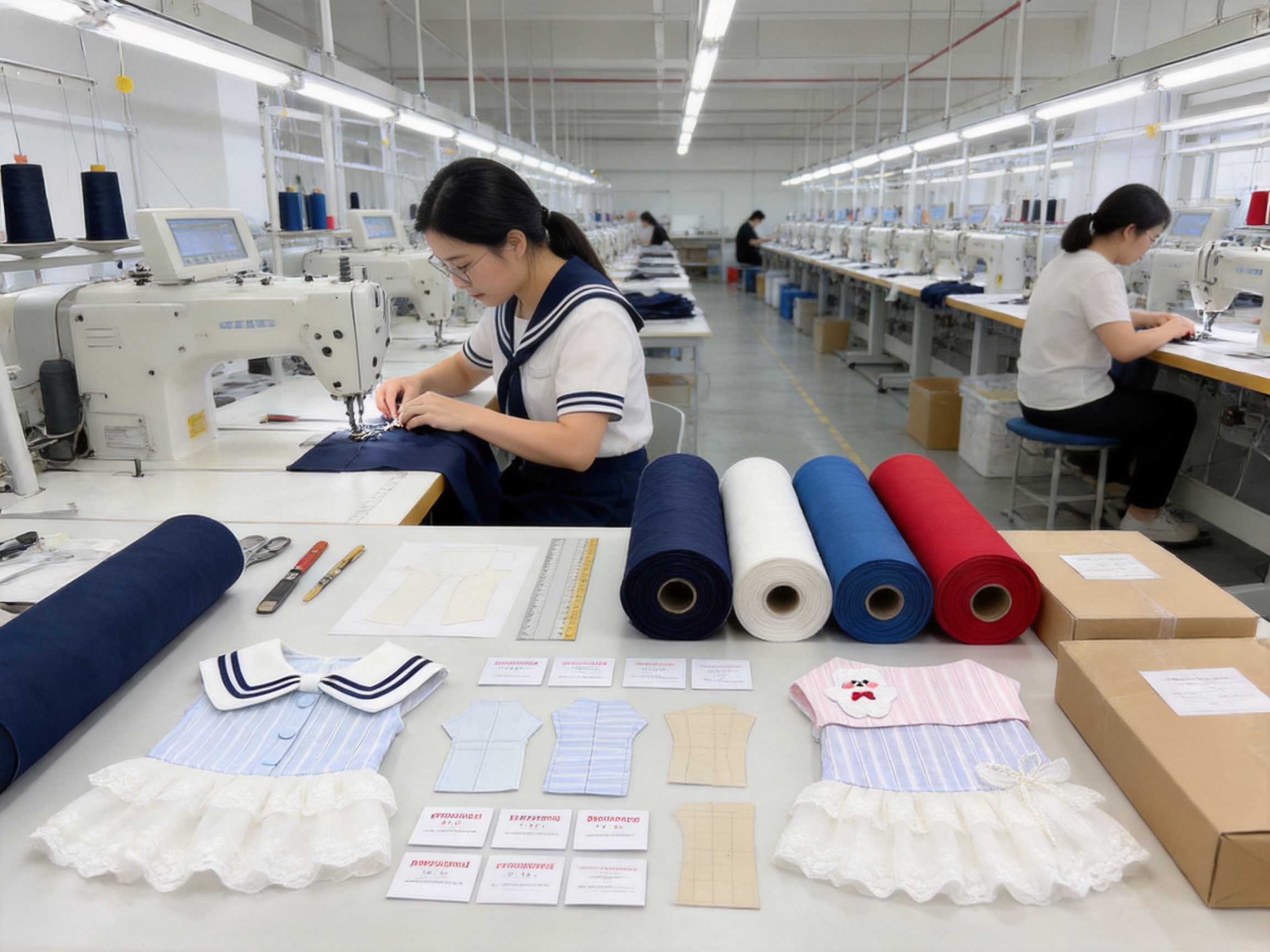
The Summer Sailor Dog Dress brings a classic nautical look into the modern pet apparel market. Designed for small dogs, this dress combines a recognizable sailor collar, a lightweight pleated skirt, breathable blended fabric, and an easy pullover construction. The result is a fashionable garment that supports everyday comfort while giving retailers, pet boutiques, distributors, private-label brands, and wholesalers an attractive seasonal product for their collections.
Pet owners increasingly view clothing as more than a practical accessory. A well-designed dog dress can provide light coverage, create memorable photography opportunities, support seasonal styling, and help pets participate in family outings and social events. At the same time, buyers in the B2B pet apparel market need products that are visually appealing, commercially practical, consistently manufactured, and suitable for customization. This sailor-inspired dog dress addresses these requirements through a combination of recognizable design, flexible sizing, production support, and OEM/ODM capabilities.
Unlike ordinary pet garments that depend only on prints or decorative details to create visual interest, this style uses its silhouette as the primary design feature. The sailor collar establishes the nautical theme, while the pleated skirt produces a neat and refined appearance. The clean shape makes the product suitable for spring and summer displays, vacation-themed campaigns, boutique collections, social media promotions, and special-event pet fashion.
Product Overview
The Summer Sailor Dog Dress is a pullover-style garment created for small dog breeds. It is made from a soft, breathable blended fabric intended for warmer seasons. The garment is designed to provide a comfortable fit without unnecessarily restricting natural movement. Its visual identity comes from the combination of a sailor-inspired upper section and a lightweight pleated skirt.
The nautical theme gives the product broad commercial appeal. Marine-inspired fashion is familiar to consumers and can be presented in many ways, including coastal, vacation, resort, summer holiday, yacht-club, seaside, and classic preppy styling. Because the theme is recognizable without being overly complicated, retailers can place the dress in multiple seasonal merchandising programs.
The product is suitable for small dogs in sizes XS through XXL. The available range allows businesses to offer more than one size within a single product listing or collection. It also provides a foundation for private-label brands that want to coordinate dog apparel with accessories, owner-and-pet fashion, travel products, or seasonal gift sets.
For manufacturers and wholesale buyers, the product is especially useful because its design can be adapted without losing its core identity. Colors, fabric selections, labels, packaging, surface decoration, and size grading may be customized according to market requirements. This makes the dress appropriate both as a ready-to-market seasonal item and as a base style for a private-label development program.
Key Design Advantages
Recognizable Nautical Styling
The sailor collar gives the dress an immediate visual identity. Consumers can understand the theme at a glance, which is valuable in online stores, retail displays, and catalog photography. A strong visual theme helps a product stand apart from basic dog dresses that rely on plain colors or generic shapes.
The nautical concept also supports flexible storytelling. Retailers can market the dress as a summer vacation outfit, a seaside photo accessory, a coastal lifestyle product, or a stylish daily garment. This versatility allows the same item to be promoted through different campaigns during the selling season.
Lightweight Pleated Skirt
The pleated skirt adds structure and movement while maintaining a lightweight appearance. Pleats create a more polished silhouette than a simple flat skirt and help the dress look attractive in product photography. They also contribute to the garment’s boutique-style presentation, making it suitable for retailers that want their pet apparel range to appear coordinated and fashion-focused.
Compared with heavily layered or overly decorative dresses, a lightweight pleated design can be easier to position for warm-weather use. It provides visual volume without making the product appear unnecessarily bulky. This balance is important for small dogs, which may be more comfortable in garments that are light and easy to wear.
Soft and Breathable Fabric
The dress uses a soft, breathable blended fabric selected for spring and summer applications. Fabric comfort is a major consideration in pet apparel because dogs may wear their clothing during walks, visits, travel, photography sessions, or extended social activities. A breathable material can help support a more comfortable wearing experience in warmer conditions.
The fabric also contributes to the product’s overall hand feel and presentation. A soft surface can make the dress more appealing when handled by consumers in a boutique or showroom. For online retailers, fabric quality can be emphasized through close-up photography, product descriptions, and customer-focused explanations of comfort and seasonal suitability.
Comfortable Movement
A fashionable appearance should not prevent a dog from moving naturally. The dress is designed with a comfortable fit that allows small dogs to walk, stand, sit, and participate in ordinary activities. This makes it more suitable for daily outings than garments intended only for brief photo sessions.
The product should still be selected according to each dog’s actual measurements. Weight ranges are useful for initial guidance, but neck circumference, chest circumference, and back length are more reliable indicators of fit. Retailers should provide the complete measurement chart to customers and recommend measuring the dog before ordering.
Easy Pullover Construction
The pullover construction simplifies dressing and removal. This is an important practical advantage because many pet owners prefer garments that can be put on without complicated fasteners, multiple adjustment points, or time-consuming preparation.
For retail customers, easy dressing can improve product satisfaction and reduce frustration. For brands, it is also a useful selling point that can be highlighted in product listings, packaging copy, and visual demonstrations. A pullover design may be particularly convenient for small dogs that are accustomed to wearing clothing but do not tolerate complicated dressing routines.
Why This Dog Dress Can Stand Apart from Competing Products
The pet apparel market includes many basic dresses, printed shirts, hoodies, and seasonal costumes. Competition is therefore not limited to price. A successful product must offer a clear reason for consumers and business buyers to choose it. The Summer Sailor Dog Dress has several characteristics that help distinguish it from generic alternatives.
More Than a Decorative Print
Many low-cost dog dresses create a theme through a printed graphic alone. While printing can be effective, a print-only product may look ordinary when viewed from a distance. This sailor dress creates its identity through the collar and garment construction itself. The nautical theme is integrated into the silhouette, giving the product a stronger boutique appearance.
Suitable for Multiple Selling Occasions
A narrowly themed costume may sell primarily during one holiday or event. In contrast, the sailor theme can be used throughout spring and summer. It may be presented for vacations, beach trips, pet photography, birthday gatherings, weekend outings, resort travel, or everyday warm-weather styling.
This broader use case can help retailers maintain product visibility over a longer period. It also allows businesses to create several marketing messages without changing the core garment. A product that can be used across multiple occasions may have better collection flexibility than one tied to a single event.
Balanced Fashion and Practicality
Some highly decorative pet garments prioritize appearance over comfort, while very practical garments may lack visual appeal. This dress is positioned between the two extremes. The sailor collar and pleated skirt deliver a fashionable look, while the breathable material, lightweight construction, and pullover design support practical wear.
This balance is valuable for online retail because consumers often want products that photograph well but remain usable after the initial purchase. It is also useful for wholesale buyers who need to offer products that combine strong shelf appeal with reasonable everyday functionality.
Broad Size Availability for Small Dogs
The six-size range from XS to XXL gives sellers more opportunities to serve different small-dog customers. Although the product is intended for small breeds, small dogs vary significantly in body shape and weight. Offering multiple sizes helps retailers reduce the risk of presenting a one-size product that fits only a narrow customer group.
The size range can also support more organized merchandising. A retailer may list all sizes under one product page, create size-specific inventory controls, or use the measurements to recommend the most suitable option. For private-label brands, the existing size framework can serve as a starting point for further grading adjustments.
Product Specifications and Size Guidance
The following measurements provide a general reference for selecting a size. Buyers should measure the dog’s neck, chest, and back length and compare those measurements with the product chart before ordering. Because body shape, coat thickness, and preferred wearing style vary, the chart should be treated as a sizing guide rather than a guarantee of fit for every dog.
| Size | Neck | Chest | Back Length | Approximate Dog Weight |
|---|---|---|---|---|
| XS | 22 cm | 33 cm | Approx. 22 cm | Approx. 3 lbs |
| S | 24 cm | 37 cm | Approx. 25 cm | Approx. 5 lbs |
| M | 30 cm | 44 cm | Approx. 29 cm | Approx. 5–8 lbs |
| L | 33 cm | 48 cm | Approx. 33 cm | Approx. 8–14 lbs |
| XL | 36 cm | 53 cm | Approx. 36 cm | Approx. 14–17 lbs |
| XXL | 40 cm | 58 cm | Approx. 39 cm | Approx. 17–22 lbs |
The size chart indicates that the dress is intended for a range of small dog body types. When measuring, the neck should be measured around the base of the neck, where a collar normally rests. The chest measurement should be taken around the widest part of the rib cage, generally just behind the front legs. Back length should be measured from the base of the neck to the desired endpoint along the back.
Retailers should advise customers to avoid choosing a size solely by weight. Weight can vary according to height, bone structure, muscle, and body condition. A dog with a thick coat may also need additional room compared with a short-haired dog of the same weight. Clear size guidance can improve customer confidence and reduce avoidable returns.
Seasonal Commercial Applications
Spring and Summer Collections
The dress is designed specifically for spring and summer collections. Its lightweight appearance and breathable fabric support warm-weather merchandising, while the nautical theme provides a seasonal visual direction. Retailers can place it alongside other light-colored garments, coastal accessories, sun-protection products, travel carriers, or outdoor pet goods.
For a complete seasonal assortment, buyers may combine this dress with coordinated bandanas, bows, collars, harness accessories, or matching owner apparel. Even when exact matching products are not available, the nautical theme can be used to create a unified display through blue, white, red, striped, or ocean-inspired visual elements.
Vacation and Travel Promotions
Summer travel is a natural promotional setting for nautical pet apparel. The dress can be presented as a vacation outfit for seaside trips, resort stays, boat-themed photography, or relaxed weekend travel. Product photography showing a small dog in a bright outdoor environment can communicate the intended season quickly.
Retailers should avoid suggesting that the dress is protective equipment. It is a fashion garment and should not replace a properly fitted harness, leash, life jacket, cooling product, or other safety equipment required for a particular activity. Responsible product descriptions help consumers understand the purpose of the garment.
Pet Photography and Social Media
The sailor collar and pleated skirt are visually distinctive, making the dress suitable for pet photography. Boutique owners and online sellers can use studio photography, outdoor lifestyle images, seasonal campaigns, and user-generated content to show the garment from multiple angles.
Photography can emphasize the collar shape, pleated skirt, overall length, fabric texture, and ease of movement. Showing the dress on dogs of different sizes within the available range may also help customers understand fit. For B2B buyers, the product’s photographic appeal can increase its usefulness in social media campaigns and seasonal promotional calendars.
Pet Boutique Displays
The clean silhouette makes the dress suitable for boutique presentation. It can be displayed on pet mannequins, hangers, small garment racks, or styled flat-lay arrangements. The nautical theme can be supported with simple merchandising props such as blue-and-white color blocks, seasonal signage, or travel-themed displays.
A boutique may also position the dress as a gift item. Customers purchasing gifts for dog owners often look for products that are attractive, easy to understand, and suitable for a variety of occasions. Its clear design concept makes the dress easier to explain than a product with an unclear or highly niche theme.
OEM and ODM Customization Options
Customization is an important requirement for brands and distributors seeking to build differentiated pet apparel collections. The manufacturer supports OEM and ODM development for businesses that want to sell the sailor dress under a private label or adapt it to a specific market.
Custom Colors and Fabrics
Color customization allows a buyer to align the dress with a brand identity or seasonal palette. A business may request classic nautical colors, softer pastel combinations, high-contrast retail colors, or an exclusive palette designed for a particular market.
Fabric customization can also be considered according to the intended use, target price, and seasonal positioning. Buyers may discuss alternative blended fabrics, surface finishes, weight, hand feel, and breathability requirements during development. Any fabric change should be evaluated through sampling to confirm that the collar, pleats, drape, comfort, and overall appearance remain consistent with the intended design.
Size Grading and Fit Development
Although the standard product includes sizes XS through XXL, private-label buyers may require different measurements. Size grading can be adjusted to address the body proportions of a target customer base or the fit preferences of a particular sales channel.
For example, a retailer may need a more compact range for extra-small dogs, a broader chest fit, or modified back lengths. These requirements should be communicated clearly during the sampling stage. Accurate measurement specifications help the production team create patterns that are consistent across the size range.
Brand Labels and Packaging
Private-label customization may include woven brand labels, care labels, hang tags, and retail packaging. These details help transform a standard garment into a cohesive branded product. Labels can communicate size, material information, care instructions, brand identity, and product positioning.
Packaging may be developed for wholesale cartons, boutique presentation, e-commerce fulfillment, or gift-oriented retail. Buyers can discuss packaging structure, labeling requirements, barcode placement, protective materials, and language needs according to their distribution markets.
Decoration and Branding Techniques
Available decoration options include embroidery, heat transfer printing, woven patches, and silicone logos. The appropriate method depends on the design, surface area, desired texture, wash-care requirements, and target price.
Embroidery can provide a classic and dimensional appearance. Heat transfer printing is useful for detailed graphics and selected brand applications. Woven patches create a distinct textile effect, while silicone logos offer a modern, tactile finish. A development sample should be reviewed before mass production to confirm placement, scale, color, durability, and compatibility with the fabric.
Seasonal and Exclusive Style Development
Brands that want a more exclusive collection can use the sailor dress as a design starting point. The collar shape, skirt construction, decorative details, color blocking, and trim can be developed into a broader seasonal family. This may include matching variations for different sizes, coordinated cat apparel, or related small-pet products.
Exclusive style development is especially useful for businesses that want to reduce direct product comparison. Instead of competing only with identical catalog items, a retailer can build a recognizable collection with its own colors, labels, packaging, and visual language.
Manufacturing Capabilities and Production Strengths
Taizhou Feile Pet Products Co., Ltd. is a professional pet apparel manufacturer integrating design, production, and sales. The company is headquartered in Taizhou, Zhejiang, and has five years of offline manufacturing experience. Its cross-border online division began operations in November 2025, with a focus on one-stop OEM and ODM pet apparel solutions for global sellers and brands.
The company operates 48 fully automatic sewing production lines. This equipment base supports organized production and helps the factory manage repeat orders, seasonal programs, and customized developments. Automated sewing equipment can contribute to stable processing when patterns, construction details, and production standards have been confirmed.
The professional team includes 77 employees working across design, pattern making, production, and quality control. This integrated structure is valuable because successful pet apparel production requires coordination between creative development and technical execution. A visually attractive design must also be translated into workable patterns, consistent sizes, suitable sewing operations, and repeatable quality standards.
Daily production capacity is approximately 3,000 pieces. Capacity is an important consideration for wholesalers and distributors planning seasonal launches. A factory with organized production resources can help buyers move from sample approval to bulk manufacturing more efficiently, subject to order details, material availability, production scheduling, and customization requirements.
The company’s product range covers dog apparel, cat apparel, and small pet apparel, with more than 800 SKUs in total. This broad product base demonstrates experience across multiple pet garment categories. It also creates opportunities for buyers to source complementary products from one manufacturing partner rather than managing several separate supply relationships.
The company introduces approximately 8–12 new styles each week. Frequent development supports buyers that require updated collections and trend-responsive products. For seasonal businesses, ongoing style development can provide additional options for spring, summer, holiday, travel, and promotional assortments.
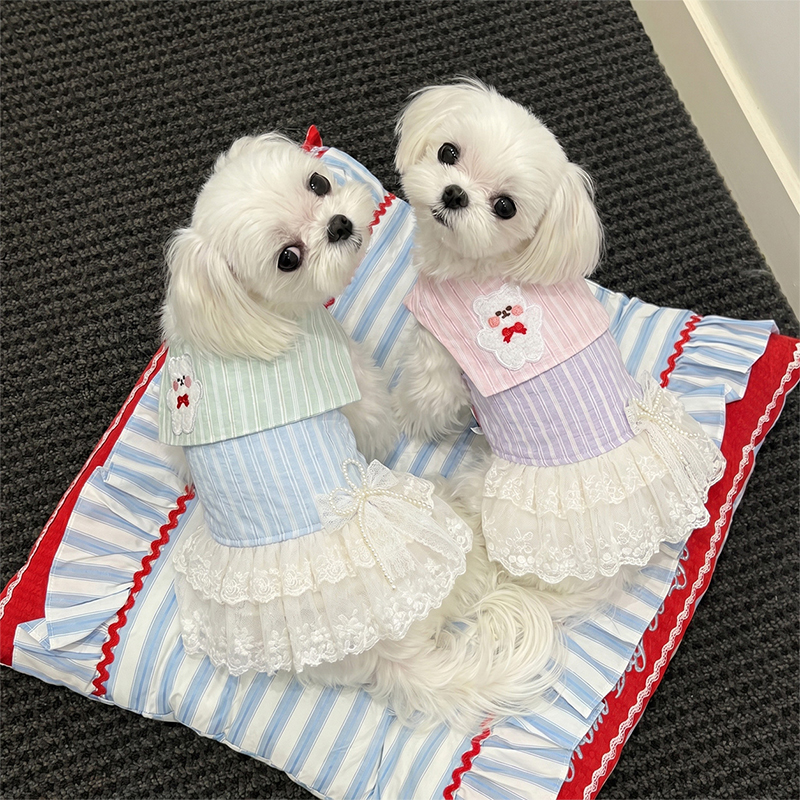
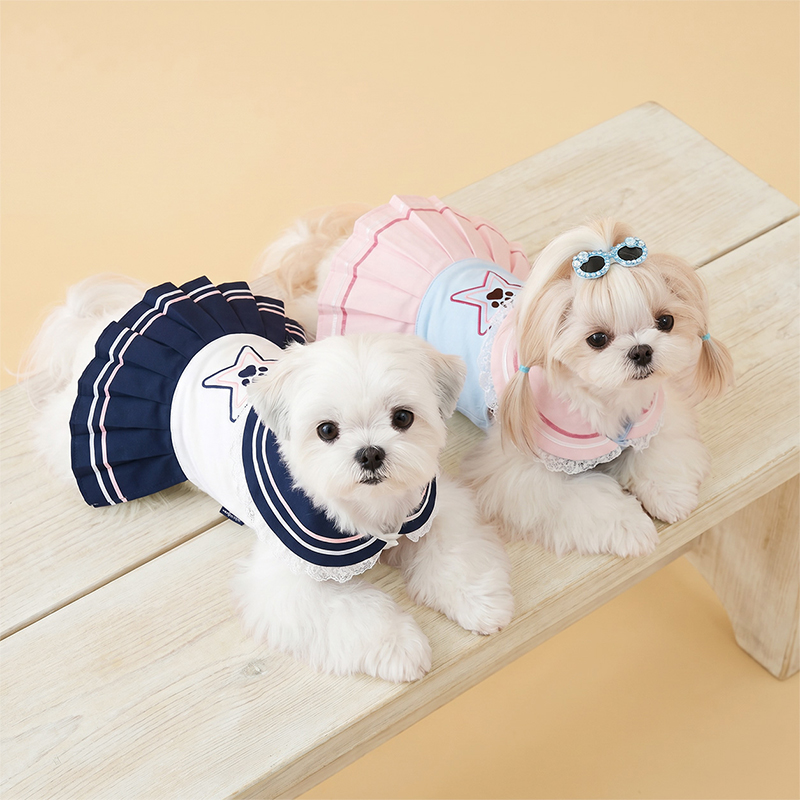
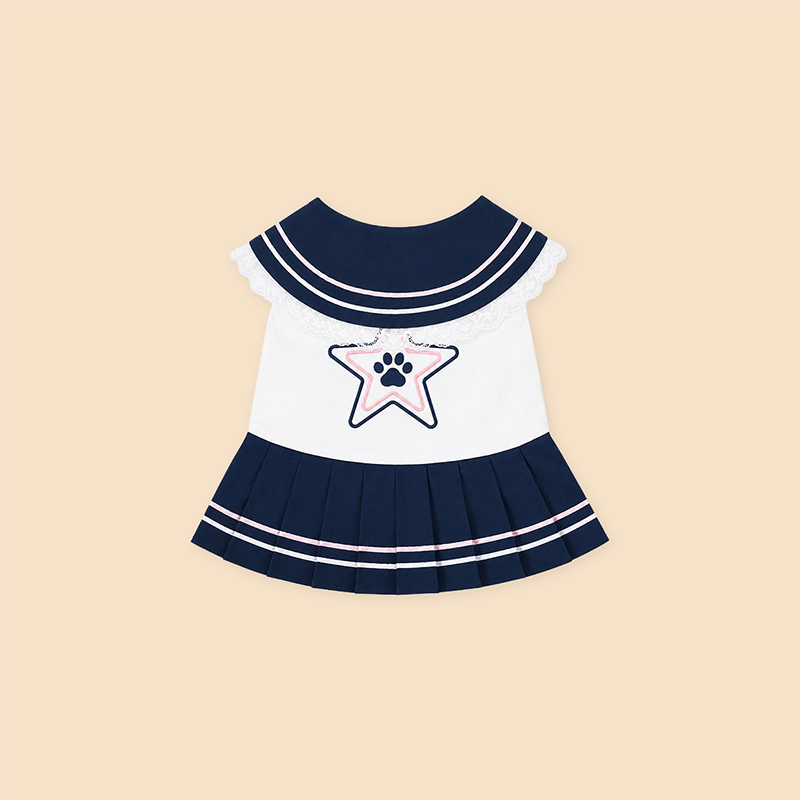
Summer Sailor Dog Dress Nautical Style Pet Apparel
Production Process from Design to Delivery
Design and Market Evaluation
Product development begins with a design concept that considers appearance, target season, pet comfort, and commercial use. For the sailor dog dress, the main concept is a fashionable nautical silhouette suitable for small dogs during warmer months. The design process considers the collar, skirt proportions, fabric behavior, dressing method, and size range.
Market evaluation helps determine how the garment may be positioned. A B2B buyer may be targeting pet boutiques, online marketplaces, regional distributors, private-label stores, or seasonal gift channels. Each channel may have different requirements for color, packaging, pricing, photography, and minimum order quantity.
Pattern Making and Sample Development
After the design direction is confirmed, pattern making translates the visual concept into garment components. The pattern team considers neck opening, chest width, back length, skirt volume, seam allowances, and construction sequence. Small-dog apparel requires careful proportion control because minor changes can significantly affect fit and appearance.
Samples are produced before bulk manufacturing. A sample allows the buyer and production team to evaluate fabric, color, collar shape, pleat quality, label placement, decoration, sizing, and overall wearability. For customized programs, sample approval is especially important because the final product may differ from the original standard version.
Material Preparation
Material preparation includes fabric selection, color confirmation, trims, labels, packaging components, and any decorative elements. The materials must be matched to the approved specifications. For a warm-weather dress, the fabric should support the intended balance of softness, breathability, lightweight construction, and visual presentation.
Material preparation also supports production efficiency. When all components are confirmed before cutting and sewing, the risk of interruptions or mismatched details may be reduced. Buyers should finalize color references, logo files, label information, packaging artwork, and care instructions as early as possible.
Cutting and Sewing
Once materials and patterns are approved, fabric is prepared for cutting. Consistent cutting is necessary to maintain size accuracy and ensure that the collar and pleated skirt are assembled correctly. Sewing operations must follow the approved construction standards for each size.
The 48 fully automatic sewing production lines provide the factory with substantial equipment support for organized garment manufacturing. Production line planning may be adjusted according to style complexity, order quantity, material requirements, and delivery schedule. A structured line system can help coordinate operations and improve repeatability for larger orders.
Quality Control
Quality control is integrated into the manufacturing process. Inspection may focus on fabric condition, stitching, seam appearance, collar alignment, pleat formation, size measurements, logo placement, label accuracy, and packaging requirements. The objective is to ensure that finished products correspond with the approved sample and specifications.
For pet apparel, quality control should also consider practical wearing conditions. Loose threads, rough edges, poorly positioned decorations, or inconsistent openings may affect comfort or customer satisfaction. Buyers should communicate any market-specific standards or testing requirements before production begins.
Final Inspection and Packing
Before shipment, finished garments are checked against order requirements. The final stage may include quantity verification, size sorting, color checking, folding, labeling, packing, and carton preparation. Proper packing helps protect the garments during transportation and supports efficient receiving at the buyer’s warehouse or fulfillment center.
Businesses with special packaging requirements should provide detailed instructions for carton markings, inner packaging, barcode labels, polybag information, and assortment ratios. Clear documentation helps reduce handling errors and supports a smoother transition from factory production to retail distribution.
Order Terms for Wholesale Buyers
The standard minimum order quantity is 500 pieces per order. The standard single-color minimum is at least 300 pieces for each color. These quantities are designed for wholesale, distributor, private-label, and retail programs rather than individual consumer purchases.
The standard production lead time is 10–15 days after order confirmation and receipt of the deposit. The actual schedule for a customized project may depend on sample approval, fabric sourcing, decoration, packaging, size grading, and order complexity. Buyers should confirm the final production calendar before placing a time-sensitive order.
Standard payment terms require a 50 percent deposit to confirm the order, with the remaining 50 percent balance paid before shipment. These terms provide a clear structure for production scheduling and order completion. Customized projects, large-volume orders, and special material requirements may require additional discussion.
Wholesale buyers should prepare a complete order brief before requesting a quotation. The brief may include product style, quantities by size, quantities by color, fabric requirements, logo files, label specifications, packaging instructions, destination market, and expected delivery date. Complete information allows the factory to provide a more accurate production plan and pricing proposal.
Advantages for Different Types of Business Buyers
Pet Apparel Wholesalers
Wholesalers need products that can be distributed across multiple retail customers. The sailor dress offers a strong theme, a six-size range, and seasonal usability. Its recognizable appearance can make it easier for wholesale customers to understand and present to their own buyers.
The standard MOQ supports larger purchasing programs, while the factory’s production capacity can help accommodate repeat orders and collection expansion. Wholesalers may also combine the dress with other dog apparel styles to create a broader seasonal assortment.
Distributors
Distributors often require reliable product information, repeatable quality, and supply coordination. The manufacturer’s integrated design, pattern, production, and quality-control team can support a more organized sourcing process. The available product range also creates opportunities to develop a category-specific catalog rather than carrying only one isolated style.
Distributors can position the product toward boutiques, independent pet stores, online sellers, and regional chains. The nautical theme is broad enough to work across different retail environments while remaining distinctive in a product lineup.
Private-Label Brands
Private-label brands can use the dress as a ready-made base style or as the foundation for an exclusive development. Custom labels, care labels, hang tags, packaging, colors, fabrics, and decorative elements support brand differentiation.
For a growing brand, a recognizable silhouette can help establish a consistent design language. The sailor collar and pleated skirt may become part of a broader collection that includes seasonal variations, coordinated accessories, or matching styles for other pets.
Online Retailers
Online retailers benefit from products that are visually clear and easy to explain. The sailor theme can be communicated in a product title, photography, size guide, and seasonal marketing content. The product’s design details also provide several opportunities for visual merchandising, including close-ups of the collar, pleats, fabric, and fit.
Online retailers should provide accurate measurements and explain that the garment is intended for small dogs. Showing the size chart prominently can help reduce confusion. Lifestyle images should be supported by measurement information so that customers can make informed choices.
Pet Boutiques
Pet boutiques often compete through curation, presentation, and product character. The dress fits boutique environments because it has a defined style rather than a generic appearance. It can be displayed as part of a coastal, travel, summer, or classic fashion story.
Boutique buyers may also benefit from private-label packaging and exclusive color development. These options can help the store create a more distinctive presentation and reduce direct comparison with mass-market products.
Recommended Retail and Marketing Positioning
The most effective product positioning should combine style, seasonality, comfort, and convenience. A description may emphasize the classic sailor collar, lightweight pleated skirt, breathable fabric, pullover design, and suitability for small dogs. It should also explain that the dress is intended for fashion use and should be selected according to the dog’s measurements.
Visual campaigns can use several creative directions. A coastal campaign may feature seaside colors and vacation styling. A preppy campaign can emphasize clean lines and classic fashion. A photography campaign can highlight the skirt’s movement and the collar’s distinctive shape. A daily-outing campaign can focus on the comfortable pullover design and lightweight construction.
Seasonal promotions may begin before spring and continue through summer travel periods. Retailers can use early collection launches, vacation edits, weekend outfit campaigns, and photo-ready pet fashion promotions. Because the product is not tied to a single holiday, it can remain relevant throughout a longer seasonal selling cycle.
Product copy should avoid making unsupported claims such as guaranteed cooling, medical benefits, or complete protection from sunlight. The garment should be presented accurately as a soft, breathable, lightweight fashion dress for small dogs. Honest communication helps support customer trust and reduces misunderstanding.
Care, Handling, and Consumer Guidance
Care instructions should be finalized according to the actual fabric composition and decoration used in the approved production version. Private-label buyers should ensure that care labels match the selected material and any printing, embroidery, patch, or silicone logo application.
Consumers should inspect the garment before use and select a size that allows comfortable movement. The dress should not be worn if it causes excessive tightness, rubbing, restricted breathing, or discomfort. Pets should be supervised when wearing clothing, especially during active play, outdoor movement, or interactions with other animals.
The dress is intended for small dog breeds and should not be treated as a substitute for functional safety equipment. During travel or outdoor activities, the dog should use suitable restraint, harness, leash, or protective gear as appropriate. The dress should also be removed if the dog shows signs of distress or overheating.
For retailers, providing these simple guidelines demonstrates responsible product stewardship. Clear instructions can also improve the post-purchase experience and help customers understand how to use a fashion garment appropriately.
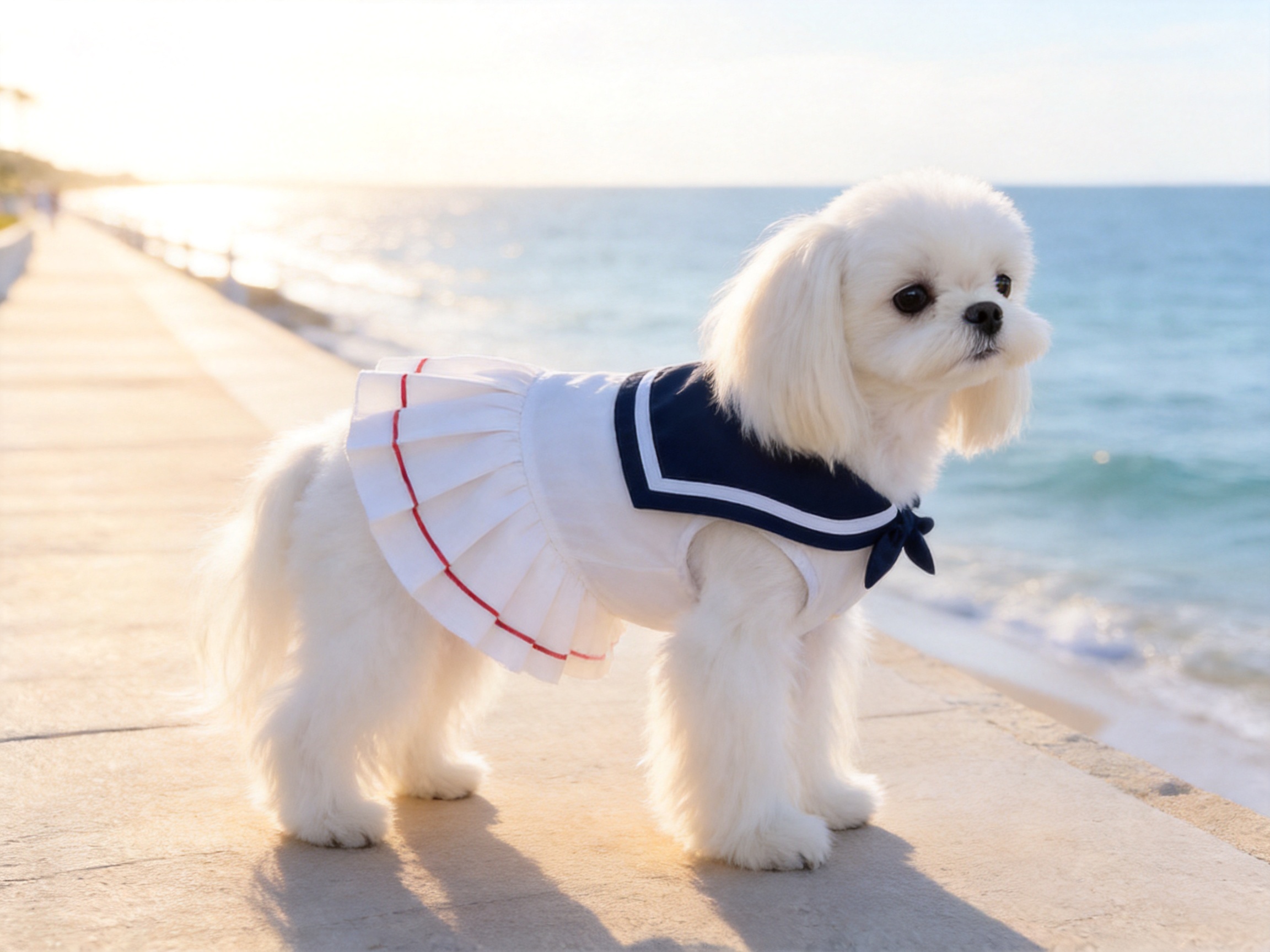
How to Build a Coordinated Pet Apparel Collection
A single sailor dress can serve as the starting point for a complete seasonal collection. The first step is to establish a color story. Traditional nautical colors may include navy, white, red, and marine blue, while contemporary collections may use pale blue, cream, coral, mint, or soft yellow.
The second step is to coordinate product categories. A brand may develop matching dog shirts, lightweight jackets, bandanas, bows, collars, or carrier accessories. Cat apparel and small-pet clothing can also be designed with related colors or motifs, allowing a retailer to create a multi-pet seasonal theme.
The third step is to maintain consistent branding. Woven labels, hang tags, packaging, and photography should use a unified visual language. Consistency helps consumers recognize the collection and may improve the perceived value of products across different price levels.
The fourth step is to plan inventory by size and color. Demand may vary between extra-small and larger small-dog sizes, and retailers should use historical sales data where available. A staged launch can help test color and size demand before larger replenishment orders are placed.
Why Manufacturing Integration Matters
Integrated manufacturing can simplify communication for B2B buyers. When design, pattern making, production, and quality control operate within one organization, feedback can move more directly between departments. This is especially important for customized pet apparel, where small changes to measurements or decoration may affect the entire production process.
An integrated factory can also help identify technical issues earlier. For example, a requested logo may need adjustment because of its size or placement, a fabric may require a different sewing method, or a proposed pleat may need refinement to maintain a clean appearance. Early technical feedback can reduce unnecessary sampling delays.
The company’s broad SKU base and regular new-style development further support buyers that want to expand beyond one product. A buyer may begin with the sailor dress, evaluate market response, and then request additional seasonal garments from the same supplier. This approach can help establish a more consistent supply relationship.
Production capacity is another important consideration. With 48 fully automatic sewing production lines and a daily capacity of approximately 3,000 pieces, the factory is equipped to support structured wholesale programs. Capacity alone does not replace planning, but it provides a useful foundation for seasonal launches, repeat purchasing, and multi-style orders.
Sample Approval and Development Recommendations
Before confirming a bulk order, buyers should review a physical sample whenever possible. The sample should be checked for collar shape, skirt proportions, pleat consistency, fabric hand feel, stitching, size measurements, dressing convenience, and overall appearance on a suitable small dog.
For custom projects, the buyer should also confirm every branding detail. This includes logo artwork, thread or print colors, label dimensions, label position, hang-tag wording, packaging artwork, barcode information, and care instructions. Written approval reduces the risk of differences between expectations and bulk production.
Size samples should be reviewed across the range rather than only in one size. A collar and pleated skirt may look correct in a middle size but require adjustment in the smallest or largest size. Reviewing the full range helps ensure that the final collection maintains balanced proportions.
Buyers should also consider the intended retail environment. A product for a premium boutique may require a softer fabric, refined packaging, and a more detailed label system. A high-volume online program may prioritize competitive pricing, efficient packing, and strong lifestyle photography. The same basic style can therefore be developed differently according to business strategy.
Frequently Asked Questions
What type of product is the Summer Sailor Dog Dress?
It is a nautical-style dress for small dogs. The design combines a classic sailor collar with a lightweight pleated skirt and is intended for spring and summer pet apparel collections.
Which dogs is the dress designed for?
The dress is designed for small dog breeds and is available in sizes XS, S, M, L, XL, and XXL. Buyers should compare the dog’s neck, chest, and back measurements with the size chart before ordering.
Is the dress suitable for warm weather?
The dress uses soft, breathable blended fabric and a lightweight construction intended for warmer seasons. It is a fashion garment, so the dog should be monitored for comfort and should not wear it if showing signs of overheating or distress.
How is the dress put on?
The garment uses a pullover construction. This makes it convenient to put on and remove compared with styles that require multiple complicated fasteners.
What are the main design features?
The main features are the sailor-inspired collar, pleated skirt, soft breathable material, lightweight structure, comfortable fit, and easy pullover construction.
Can the product be customized?
Yes. OEM and ODM services may include custom colors, fabrics, size grading, private labels, brand logos, embroidery, heat transfer printing, woven patches, silicone logos, woven labels, care labels, hang tags, packaging, seasonal collection development, and exclusive style customization.
What is the standard minimum order quantity?
The standard MOQ is 500 pieces per order. The standard single-color MOQ is at least 300 pieces for each color. Buyers with customized or large-volume requirements should confirm the final conditions with the manufacturer.
What is the standard production lead time?
The standard production lead time is 10–15 days after order confirmation and receipt of the deposit. Customized projects may require additional time for sampling, material preparation, branding, and approval.
What are the standard payment terms?
The standard terms are a 50 percent deposit to confirm the order and a remaining 50 percent balance paid before shipment.
Can a buyer request a sample before mass production?
Yes. Sample production is available before mass manufacturing. A sample should be reviewed for fit, fabric, colors, decoration, labels, packaging, and construction before the bulk order is finalized.
Can the dress be sold under a private label?
Yes. Private-label support can include brand labels, care labels, hang tags, packaging, and selected decoration methods. Buyers should provide complete brand specifications and artwork during development.
Does the manufacturer produce other pet apparel?
Yes. The company’s product categories include dog apparel, cat apparel, and small pet apparel, with more than 800 SKUs in total. This gives buyers the opportunity to develop broader pet clothing collections.
How should customers choose the correct size?
Customers should measure the dog’s neck, chest, and back length and compare those measurements with the size chart. Weight can provide additional guidance, but it should not be the only sizing factor.
Is this dress safety equipment?
No. It is a fashion garment and should not replace a harness, leash, restraint, life jacket, cooling product, or other functional safety equipment. Pets should be supervised while wearing it.
What information should a wholesale buyer provide when requesting a quotation?
The buyer should provide the desired style, quantity, sizes, colors, fabric preferences, logo requirements, label details, packaging needs, destination market, and expected delivery date. Complete information helps the manufacturer prepare a more accurate quotation and production plan.
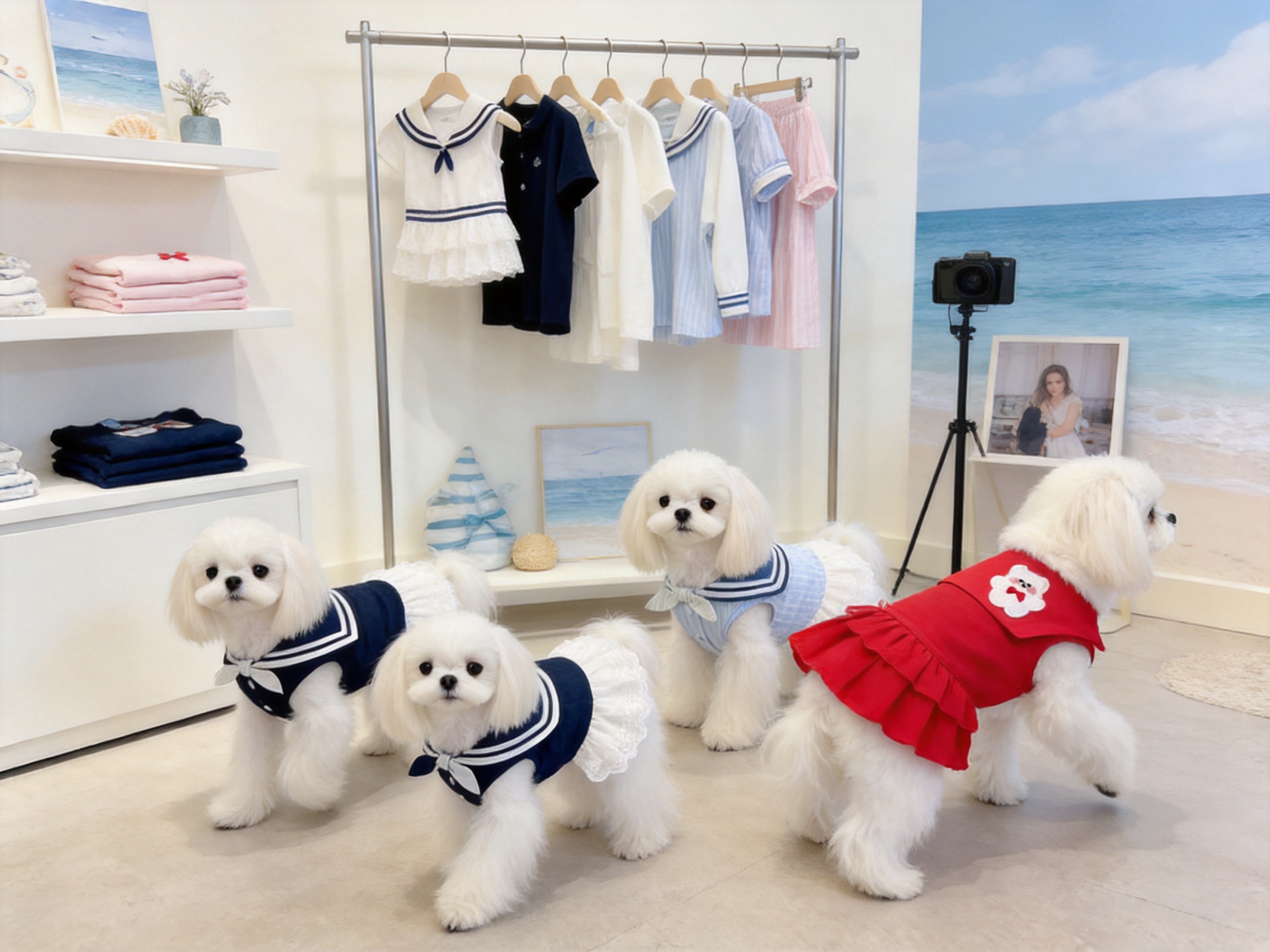
Conclusion
The Summer Sailor Dog Dress offers a strong combination of seasonal styling, practical construction, and wholesale development potential. Its sailor collar creates an immediate nautical identity, while the pleated skirt gives the garment a polished boutique appearance. Soft breathable blended fabric, lightweight construction, comfortable movement, and pullover convenience make the dress suitable for many spring and summer uses.
For retailers, the product can support vacation promotions, pet photography, daily outings, boutique displays, and seasonal collections. For wholesalers, distributors, private-label brands, and online sellers, the six-size range and customization options provide flexibility for different markets. Custom colors, fabrics, labels, packaging, decorations, and exclusive styles allow buyers to create a more differentiated product program.
The manufacturer adds value through integrated design and production capabilities, 48 fully automatic sewing production lines, a 77-person professional team, approximately 3,000 pieces of daily production capacity, more than 800 pet apparel SKUs, and the regular development of 8–12 new styles each week. These strengths support businesses seeking a stable OEM/ODM partner for small pet clothing lines.
With clear specifications, sample approval, organized production planning, and accurate quality requirements, the sailor dress can become more than an individual seasonal item. It can serve as the foundation for a coordinated nautical pet apparel collection designed for modern retailers and global pet fashion markets.
References
1. Product specification sheet for the Summer Sailor Dog Dress, including material, construction, seasonal positioning, size range, and available customization services.
2. Manufacturer-provided company information concerning design, production, quality control, product categories, manufacturing experience, production lines, team size, daily capacity, and new-style development.
3. Manufacturer-provided wholesale order terms concerning minimum order quantity, single-color quantity, production lead time, deposit, and balance payment.
4. General apparel product-development principles concerning pattern making, sample approval, material preparation, sewing production, quality inspection, labeling, and packaging.
5. General pet apparel retail guidance concerning measurement-based sizing, supervised use, seasonal garment selection, and the distinction between fashion clothing and safety equipment.
Taizhou Feile Pet Products Co., Ltd. | Pet Apparel Manufacturer | OEM/ODM Pet Apparel | Small Pet Clothes Factory
Product: Summer Sailor Dog Dress Nautical Style Pet Apparel

NEXT:No next article
- Lolita Cake Dress
- Cool Style Tassel Top Pet Lolita Dress
- Sweet Bow Princess Dog Dress
- Denim Pinafore Dress With Pockets Cute Casual Small Dog Outfit
- French Doll-neck Dog Dress Elegant Pet Wear
- Korean Sweet Lolita Dog Dress Cute Party Outfit
- Flutter Sleeve Dog Dress Lightweight Summer Pet Wear
- Ruffle Flutter Sleeve Pet Dress Cute Princess Style
- French Style Embroidered Dog Dress Elegant Pet Apparel
- Mint Green Heart Spaghetti Strap Tulle Dog Dress Princess Party Outfit
- Gingham Bow Dog Dress Cute Summer Pet Outfit
- Navy Star Pleated Dog Dress Elegant Casual Pet Wear
- Summer Sailor Dog Dress Nautical Style Pet Apparel
- Dog Cooling Shirt Color-Block Lightweight Summer Pet Wear
- Dog Printed High-Neck Base Layer Top Thermal Stretch Pet Underwear
- Lightning Racing Performance Sportswear Breathable Athletic Pet Shirt
- Rustic Brown Plaid Dog Shirt Casual Outdoor Pet Wear
- Cream Embroidered Dog Blouse Elegant Pet Shirt
- Korean Style Pink Textured Tulle Camisole Small Dog Fashion Top
- Star & Letter Casual Pet T-Shirt Daily Wear Dog Top
- +86-13362661217
- 13362661217@163.com
- 128 Houxin Street, Hongjia, Jiaojiang, Taizhou, Zhejiang, China
