
 English
 русский
 Español
 عربى


Lin Ruoqi — International Pet Apparel Sales Manager
Vintage Christmas Plaid Hunting Vest Sherpa-Lined Pet Wear: A Seasonal Outerwear Solution for Modern Pet Brands
Seasonal pet apparel is becoming increasingly important for retailers, private-label brands, boutiques, distributors, and online sellers seeking products with a clear visual identity. Rather than offering another basic sweater with a printed holiday motif, buyers are looking for pet garments that combine practical warmth, recognizable styling, and strong merchandising potential. The Vintage Christmas Plaid Hunting Vest Sherpa-Lined Pet Wear answers this demand through a distinctive combination of Scottish-inspired red-and-green plaid, warm sherpa-style fleece lining, brown PU leather trim, and a classic hunting-vest silhouette.
This product is designed as more than a simple cold-weather layer. Its appearance connects Christmas fashion with countryside heritage, traditional hunting apparel, European manor-house aesthetics, and autumn-to-winter outdoor styling. As a result, it can support several retail themes at once, including Christmas collections, country-inspired pet fashion, winter lifestyle campaigns, holiday photography, and boutique seasonal assortments.
For pet apparel buyers, the product also offers an opportunity to create a more coordinated collection. The plaid exterior establishes the primary seasonal statement, the cream-brown lining introduces a warm tactile contrast, and the brown trim creates a structured finish. Together, these details give the garment a more developed visual concept than many conventional festive pet products.
Manufactured by Taizhou Feile Pet Products Co., Ltd., this style is supported by OEM and ODM development services, flexible branding options, professional production management, quality inspection, and international shipping support. The manufacturer’s experience across dog apparel, cat apparel, and small pet clothing allows buyers to use one sourcing partner for multiple product categories and seasonal programs.
A Distinctive Product Concept for Autumn and Winter Pet Fashion
The central strength of this vest is its clearly defined design direction. Many seasonal pet garments rely on generic Christmas graphics, snowflake prints, Santa imagery, or standard knitwear silhouettes. Those products may be commercially useful, but they can also appear interchangeable when displayed beside competing items. The Vintage Christmas Plaid Hunting Vest takes a different approach by building its identity around a complete visual theme.
The red-and-green plaid is immediately associated with Christmas, winter gatherings, countryside traditions, and classic holiday decoration. However, the plaid is not presented as an isolated pattern. It is integrated into a hunting-vest-inspired garment shape, strengthened by brown PU leather trim, and balanced with a warm sherpa-style interior. This coordinated design language gives buyers a product that can serve as a visual anchor for a premium or boutique holiday assortment.
The garment’s styling is also versatile. It can be marketed as a Christmas vest, a winter walking layer, a country-style pet jacket, or a seasonal photo accessory. This flexibility is useful for retailers because it allows one product to appear in several campaigns without changing its fundamental identity. A seller may feature it in a Christmas gift guide, a November outdoor petwear collection, a holiday photography promotion, or a winter boutique display.
In a competitive market, products with a recognizable story are often easier to present than products that offer only a color or a basic functional benefit. The hunting-vest concept gives retailers a ready-made narrative: a classic countryside garment adapted for pets and enhanced with winter warmth. That narrative can be communicated through product photography, collection names, packaging, social media campaigns, and in-store displays.
Key Design Elements
Scottish-Inspired Red-and-Green Plaid
The plaid exterior is the most visible feature of the garment. Its rich red-and-green color combination creates an immediate holiday association while retaining a traditional, heritage-inspired appearance. Compared with bright novelty prints, this palette has a more mature and coordinated character. It can appeal to customers who want festive pet clothing that looks stylish and photographable rather than overly cartoon-oriented.
Plaid also performs well in visual merchandising because it adds pattern and contrast without requiring a large graphic. On a retail rack, the pattern can help the garment stand out among solid-colored jackets, fleece pullovers, and printed sweaters. In online listings, the red-and-green surface creates an identifiable thumbnail image, which may help shoppers distinguish the product from less detailed seasonal styles.
For private-label development, the plaid concept can be adjusted in various ways. Buyers may explore different red and green ratios, darker heritage tones, brighter Christmas colorways, alternate plaid scales, or entirely new checks based on their target market. This allows the same basic silhouette to support multiple collections while maintaining a recognizable design foundation.
Sherpa-Style Fleece Lining
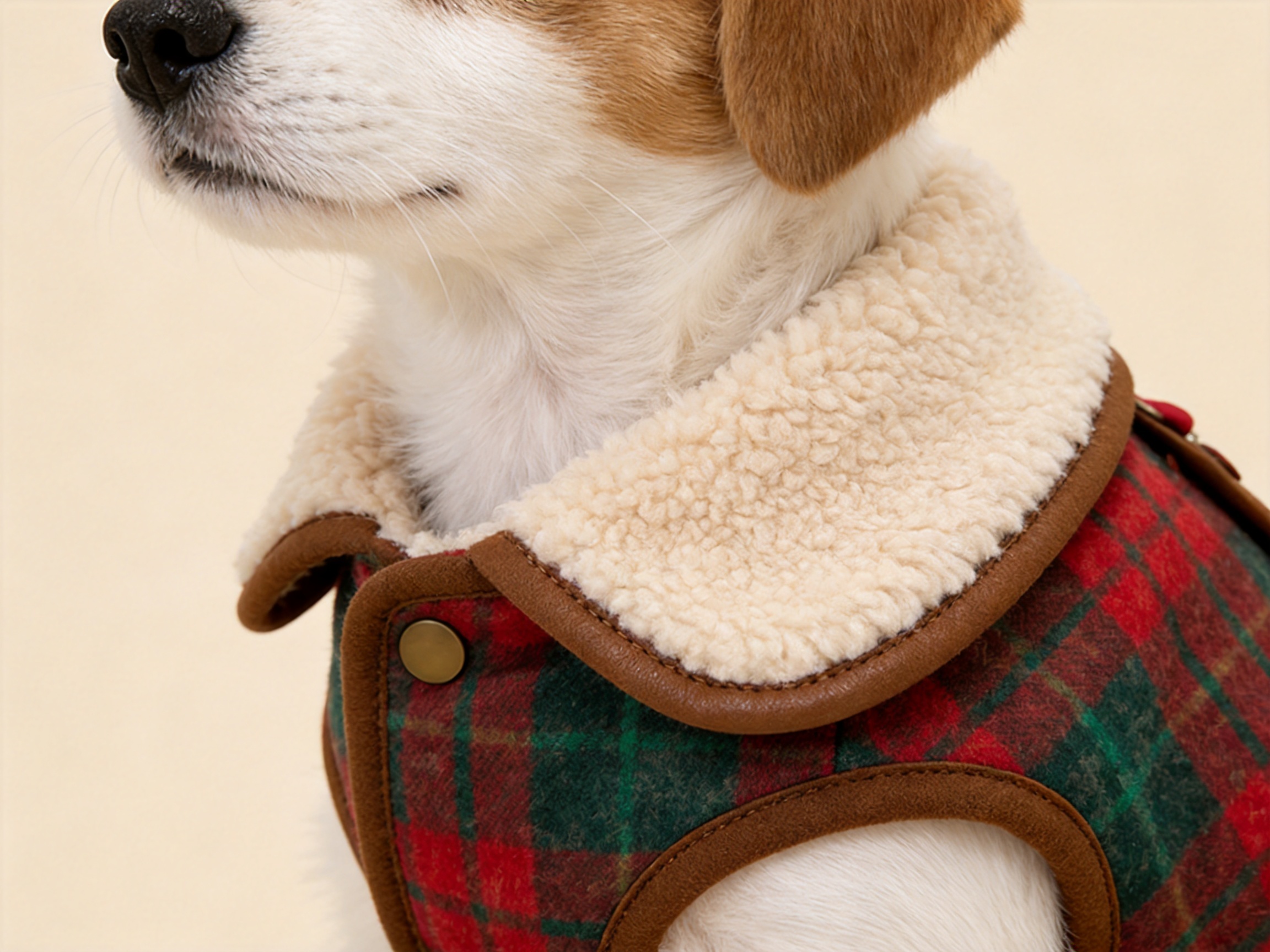
The warm cream-brown sherpa-style lining adds softness and visual depth to the vest. It provides a cozy winter-ready interior and reinforces the garment’s countryside character. The cream-brown color also creates a natural contrast with the red-and-green shell, making the vest appear warmer and more substantial when viewed from the opening, collar, or edges.
From a product-positioning perspective, the lining supports several customer expectations. Pet owners generally want winter apparel to look comfortable, feel soft, and provide a sense of warmth. Retailers can communicate these benefits through close-up photography, lifestyle images, texture-focused product descriptions, and seasonal merchandising language.
The sherpa-style interior also helps differentiate the vest from thin holiday costumes. Although the garment has a strong festive appearance, it is positioned as functional outerwear suitable for autumn and winter use. This combination of appearance and utility can be valuable for brands that want to avoid offering products that are worn only for a single holiday event.
Brown PU Leather Trim
Brown PU leather trim introduces a structured accent that supports the hunting-vest inspiration. Against the plaid fabric, the brown trim creates clear visual boundaries and adds a refined country-outdoor character. It also helps prevent the overall design from appearing too soft or informal.
The brown tone works naturally with both the red-and-green plaid and the cream-brown lining. This color coordination is important because it gives the garment a complete appearance. Rather than combining unrelated decorative elements, the vest uses a restrained palette in which each component supports the others.
For brands developing a private-label collection, the trim can become an important customization area. Buyers may request alternative trim colors, different trim widths, selected logo applications, or adjustments to the placement of decorative details. These options can help retailers develop a recognizable signature version while preserving the garment’s original seasonal concept.
Hunting-Vest-Inspired Silhouette
The silhouette provides one of the product’s strongest advantages over ordinary Christmas sweaters and novelty dresses. A vest format is easy to understand, visually structured, and suitable for customers who prefer a practical layer rather than a costume-like item. It also gives the product a unisex appearance that may be appropriate for a wider range of dogs and small pets.
The shape is inspired by traditional hunting and countryside garments, but it is adapted for pet apparel. This creates a balance between heritage styling and seasonal fashion. The garment can be presented as classic, rustic, vintage, outdoorsy, or festive depending on the retailer’s preferred positioning.
Compared with a simple pullover, a vest can also provide a more tailored visual effect. The plaid front, trim details, and lining make the garment appear layered and designed, even when used as part of a straightforward winter outfit. This can improve perceived value in boutique environments and premium online collections.
Advantages Compared with Conventional Seasonal Pet Apparel
More Defined Visual Identity
A common challenge in seasonal pet apparel is differentiation. Many Christmas products use similar colors and familiar motifs, making it difficult for buyers to create a collection that feels original. The Vintage Christmas Plaid Hunting Vest addresses this issue by combining several coordinated design references: Scottish plaid, countryside hunting apparel, sherpa warmth, and vintage holiday styling.
This layered identity provides more merchandising possibilities than a garment based only on a printed Christmas image. A retailer can build a full story around country Christmas, rustic winter, heritage holiday, or countryside manor style. The product therefore has greater potential to support themed collections and campaign photography.
Suitable for Multiple Selling Environments
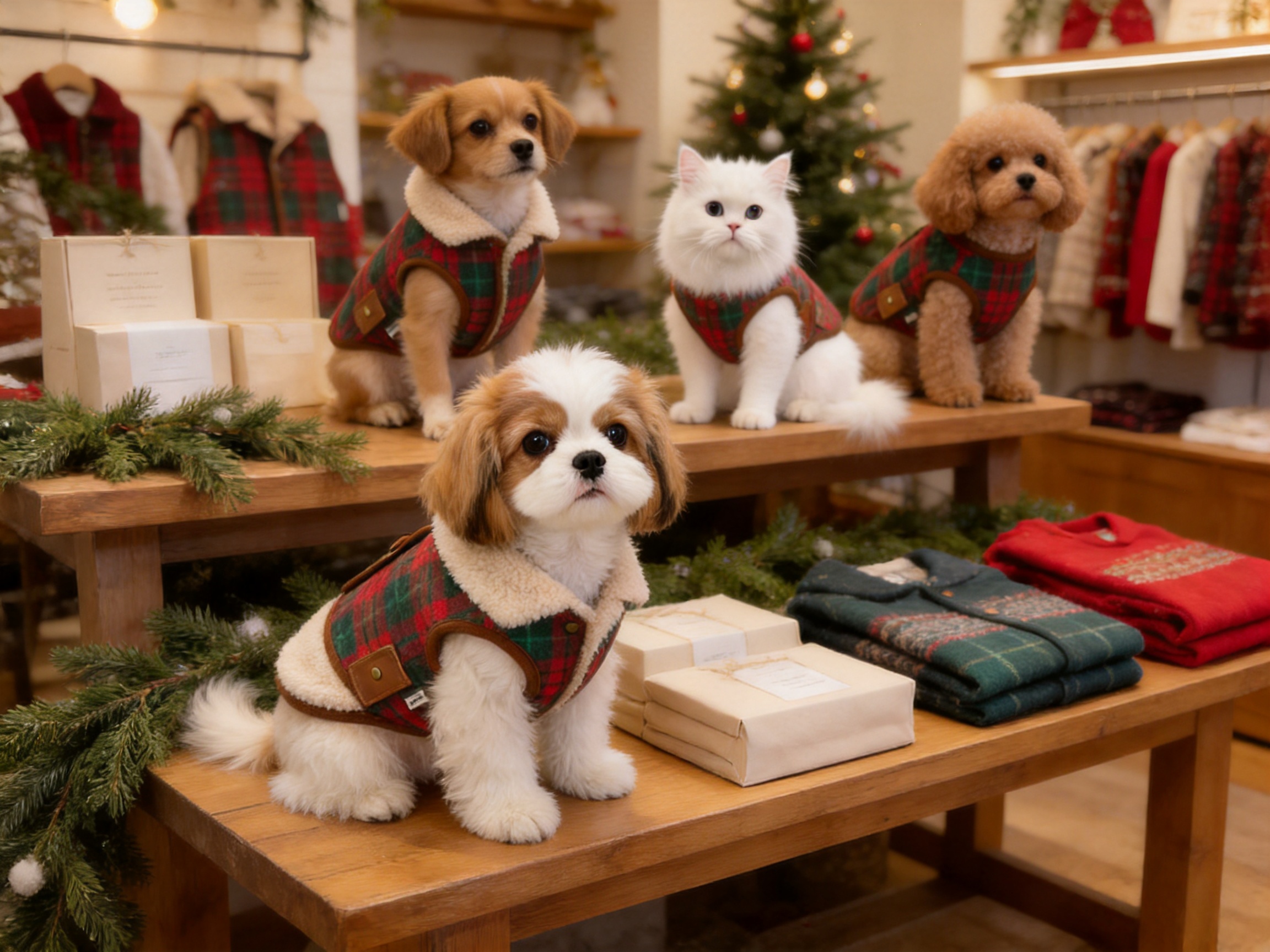
The vest can be used in pet boutiques, online stores, seasonal pop-up shops, gift stores, specialty outdoor retailers, and private-label e-commerce collections. Its color palette is highly seasonal, but its hunting-vest shape and warm lining make it relevant beyond a single Christmas day.
It may be introduced in early autumn as part of a transitional outerwear collection, promoted during November and December as a Christmas gift, and continued into winter as a cold-weather walking layer. This extended selling period can be more attractive than products designed solely for a short holiday window.
Strong Photography and Social Media Potential
Pet apparel must often perform visually before its functional details are fully considered. The plaid pattern, sherpa texture, and brown trim create several photogenic elements. The product can be styled with wooden interiors, winter landscapes, evergreen branches, rustic furniture, holiday market settings, or classic countryside backgrounds.
Its visual theme is suitable for product pages, short-form videos, seasonal lookbooks, influencer content, customer-generated photography, and holiday greeting campaigns. Pet owners may also be interested in using the vest for family photographs, seasonal events, and social media posts, creating opportunities for organic product visibility.
Alternative to Sweaters and Dresses
Christmas sweaters and festive dresses remain popular, but they do not suit every customer or every pet. Some owners prefer outerwear with a more practical or gender-neutral appearance. Others may want a garment that feels connected to outdoor use rather than indoor holiday dressing.
The hunting vest provides a useful alternative. It delivers seasonal character without relying on a dress format or novelty knit design. This expands the range of customers a retailer can serve and helps create a more balanced seasonal assortment.
Premium-Looking Material Combination
Even before customization, the combination of plaid fabric, sherpa-style lining, and PU leather trim gives the vest a layered appearance. Multiple textures and coordinated colors can increase perceived product value and make the garment more suitable for boutique presentation.
For wholesale buyers, this material combination may support a higher-value product tier within a larger assortment. The vest can sit above basic printed garments while remaining distinct from technical outdoor jackets. It therefore occupies a useful middle position between novelty apparel and premium winter outerwear.
Product Specifications and Size Range
The vest is available in six sizes: XS, S, M, L, XL, and XXL. The measurements are intended to help buyers and end customers select a suitable size, but pet body shapes vary considerably. Retailers should encourage customers to measure the neck, chest, and back length of the pet before ordering.
| Size | Neck | Chest | Back Length | Suggested Weight |
|---|---|---|---|---|
| XS | 22 cm | 33 cm | Approximately 22 cm | Approximately 3 lbs |
| S | 24 cm | 37 cm | Approximately 25 cm | Approximately 5 lbs |
| M | 30 cm | 44 cm | Approximately 29 cm | Approximately 5–8 lbs |
| L | 33 cm | 48 cm | Approximately 33 cm | Approximately 8–14 lbs |
| XL | 36 cm | 53 cm | Approximately 36 cm | Approximately 14–17 lbs |
| XXL | 40 cm | 58 cm | Approximately 39 cm | Approximately 17–22 lbs |
The size range is designed to support small pets and a selection of small-to-medium dogs within the available measurements. Because chest shape, coat thickness, body length, and preferred garment fit can differ between breeds, the size chart should be treated as a measurement reference rather than a substitute for individual fitting.
For wholesale listings, it is recommended that buyers display the neck, chest, and back measurements prominently. A simple measuring guide can reduce customer confusion and help minimize avoidable returns. Retailers may also choose to photograph the garment on pets of different body types to provide a clearer understanding of fit and scale.
OEM and ODM Customization Opportunities
The product is suitable for buyers who want a ready-developed seasonal concept as well as brands that want to create a customized version. Taizhou Feile Pet Products Co., Ltd. supports OEM and ODM development for pet apparel brands, wholesalers, distributors, boutiques, and private-label retailers.
Fabric and Pattern Development
Customization may include plaid pattern development, color combinations, lining options, trim details, and garment styling. A brand targeting traditional Christmas shoppers may choose a rich red-and-green palette, while a boutique serving modern interiors may prefer muted forest green, burgundy, cream, or charcoal accents.
Pattern scale can also influence the visual character of the product. A larger check may create a bold statement, while a smaller check can appear more refined and understated. Buyers should consider their target customer, retail environment, photography style, and existing product range when selecting a direction.
Size Grading
Size grading can be discussed for brands requiring a different measurement range. Some retailers may focus on toy breeds and small pets, while others may require additional sizes for medium-sized dogs. Adjustments should be evaluated through pattern development and sample fitting to ensure that the proportions remain appropriate across the range.
When expanding sizes, buyers should consider more than simply increasing every measurement by the same percentage. Chest depth, arm opening, back length, trim placement, and lining behavior may all require adjustment. Professional pattern-making support is therefore valuable when developing a larger or more specialized size set.
Branding and Labeling
Branding options include embroidered logos, silicone or rubber logo applications, printed graphics, custom woven labels, wash labels, hang tags, and branded packaging. These elements allow a retailer to turn a seasonal product into a consistent part of its private-label identity.
For a classic product such as this vest, branding can be applied in a restrained manner. A woven label may be placed on the outer seam, a small embroidered mark can be integrated near the trim, or a branded hang tag can communicate the collection story. Buyers should balance brand visibility with the original vintage appearance of the garment.
Packaging Development
Standard export packaging is available, while customized retail packaging can be developed for specific programs. Packaging may include branded polybags, printed boxes, paper inserts, care instructions, seasonal cards, or coordinated hang tags.
Customized packaging is particularly useful for holiday sales because it can make the item feel more suitable as a gift. A carefully designed package can also support in-store presentation and create a consistent appearance across a broader Christmas collection.
Manufacturing Capabilities and Production Strengths
The product is manufactured by Taizhou Feile Pet Products Co., Ltd., a professional pet apparel manufacturer headquartered in Taizhou, Zhejiang, China. The company integrates design, production, and sales and provides one-stop OEM and ODM support for global cross-border sellers and brands.
The manufacturer has five years of offline manufacturing experience. Its cross-border online division officially began operations in November 2025, with a focus on serving international buyers seeking pet apparel development and production support. This combination of established manufacturing experience and dedicated cross-border service provides a foundation for communication with overseas customers.
Integrated Design and Production
Integrated design and production can simplify the development process for buyers. Instead of coordinating separately with designers, pattern makers, sewing factories, packaging suppliers, and quality inspection providers, a buyer can discuss the primary requirements with one production partner.
For a product such as the Vintage Christmas Plaid Hunting Vest, this integration is valuable because the design depends on coordination between the outer fabric, lining, trim, size grading, construction details, and branding. Changes to one element may affect the others. A connected production workflow can help identify these relationships earlier during sample development.
48 Fully Automatic Sewing Production Lines
The company operates 48 fully automatic sewing production lines. This production infrastructure supports organized manufacturing and helps accommodate different pet apparel programs. Automated and standardized sewing processes can contribute to repeatability when production volumes are scaled from samples to bulk orders.
For buyers, production capacity matters because seasonal apparel operates on a schedule. Christmas collections often require samples, approvals, production, packaging, and shipping to be completed before a specific retail period. A manufacturer with a developed production system is better positioned to manage planned bulk orders than a small workshop with limited line capacity.
Professional Team Structure
The company has a 77-person professional team covering design, pattern making, production, and quality control. This division of responsibilities supports a complete product-development workflow.
Design personnel can help translate a buyer’s concept into a workable garment. Pattern makers can adapt measurements and construction details. Production staff can manage manufacturing operations, while quality-control personnel can inspect finished goods and identify issues before shipment. This structure is especially useful for private-label programs that require more communication than a standard ready-to-order item.
Daily Production Capacity
The reported daily production capacity is 3,000 pieces. Capacity should always be planned according to product complexity, order mix, material availability, customization requirements, and quality-control procedures. Nevertheless, this level of production capability demonstrates that the manufacturer is equipped to support more than very small experimental orders.
For distributors and seasonal retailers, scalable capacity can support repeat orders when a product performs well. It may also help brands coordinate multiple styles within one collection, provided that production schedules and material requirements are confirmed in advance.
Broad Product Coverage
The company’s product categories include dog apparel, cat apparel, and small pet apparel, with more than 800 SKUs in total. This breadth gives buyers the opportunity to build a broader seasonal program with a single manufacturing partner.
A Christmas collection, for example, may include dog vests, cat garments, small-pet clothing, lightweight layers, warm jackets, and coordinated accessories. Working with a supplier that understands multiple pet categories can help maintain consistency in materials, color themes, labeling, packaging, and quality expectations.
Frequent New-Style Development
The manufacturer launches approximately 8–12 new styles weekly. This ongoing development is relevant to buyers operating in fast-moving online markets. Pet fashion trends can change quickly, and seasonal collections often require early access to new silhouettes and visual themes.
Frequent development also provides inspiration for brands that may not have a large internal design department. Buyers can select an existing concept, request modifications, or use a current style as the starting point for a more specialized ODM project.
Quality Management Considerations
Quality is especially important in pet apparel because the product must combine appearance, comfort, fit, and durability. A visually attractive garment that is uncomfortable or poorly fitted can lead to negative customer feedback. For this reason, production quality should be evaluated across materials, construction, measurement accuracy, trim attachment, lining consistency, and packaging condition.
For the Vintage Christmas Plaid Hunting Vest, buyers should pay particular attention to plaid alignment, seam consistency, trim attachment, lining coverage, edge finishing, and the relationship between the outer shell and inner layer. These details affect both the appearance and the customer’s perception of value.
Sample approval is an important stage of the process. Buyers should review the sample for measurements, fit, color, tactile feel, label placement, and overall styling. If the garment will be sold through a private label, the sample should also be checked against branding guidelines and packaging requirements.
During bulk production, quality inspection can help confirm that finished goods correspond to the approved sample. Buyers may establish inspection standards for dimensions, color tolerance, sewing quality, decoration placement, visible defects, and carton packing. Clear standards reduce ambiguity and support more consistent production outcomes.
Order Terms and Production Planning
The standard minimum order quantity is 500 pieces per order. The single-color minimum is at least 300 pieces for each color. These quantities are suitable for wholesalers, distributors, seasonal retailers, and brands planning a meaningful product launch rather than a very limited one-off test.
The standard production lead time is 10–15 days after order confirmation and receipt of the deposit. Actual schedules for customized designs may vary according to fabric sourcing, pattern changes, sample approval, branding, packaging, order quantity, and production availability. Buyers should confirm the complete schedule before placing an order, especially when the product is intended for a fixed holiday selling period.
Payment terms are 50% deposit to confirm the order, with the remaining 50% balance paid before shipment. These terms provide a clear production structure for both parties. Buyers should ensure that specifications, quantities, colors, labels, packaging, and shipping details are finalized in the order confirmation documents.
For Christmas collections, advance planning is recommended. Buyers should allow time for concept selection, sample review, revisions, production, inspection, packaging, customs procedures, and international transportation. Although the stated manufacturing lead time is relatively short, the complete supply-chain schedule may be longer depending on destination and logistics arrangements.
Recommended Retail Positioning
Country Christmas Collection
The most natural positioning is a country Christmas collection featuring rustic textures, traditional colors, wood-inspired displays, evergreen elements, and heritage styling. The vest can serve as the principal garment in this collection, supported by complementary solid-color layers or matching accessories.
Vintage Winter Petwear
Retailers may also position the product as vintage winter petwear rather than limiting its use to Christmas. This approach highlights the hunting-vest silhouette, sherpa-style lining, and brown trim. The red-and-green plaid remains seasonal, but the overall story extends into autumn and winter lifestyle merchandising.
Holiday Photography Apparel
Pet photography is a strong use case because the garment has a clear visual identity. Retailers can promote it for family portraits, holiday cards, festive gatherings, outdoor winter sessions, and social media content. Photography-focused positioning may appeal to customers who want a memorable seasonal look even if the garment is not worn every day.
Premium Boutique Gift
With customized packaging and carefully developed branding, the vest can be offered as a boutique gift for pet owners. The product’s layered construction and distinctive styling give it a more substantial presentation than a basic printed accessory. This positioning can be strengthened through gift-ready packaging, a quality-focused product story, and detailed size guidance.
How to Build a Product Listing Around the Vest
A strong product listing should present the garment’s appearance and practical benefits together. The opening section can introduce the vintage Christmas plaid concept, followed by information about the sherpa-style lining and hunting-vest silhouette. Detailed measurements should appear clearly below the main product description.
Photography should include a front view, back view, close-up images of the plaid and trim, and a view that communicates the inner lining. Lifestyle photographs can show the garment in autumn or winter settings, while a clean product image can help customers assess the actual color and shape.
Retailers should avoid relying only on phrases such as “cute” or “festive.” More informative language can explain that the product combines a red-and-green plaid shell, warm sherpa-style interior, brown PU leather trim, and a country-inspired vest shape. This gives customers a clearer reason to choose the item over a conventional Christmas sweater.
Care and fitting information should be presented in a straightforward manner. Customers should be encouraged to measure their pet rather than selecting a size solely by breed name. If the product is customized, the listing should also explain the available color options, branding features, minimum order requirements, and expected production schedule.
Four Visual Placement Points
The following image positions can be used within a product article, catalog page, or wholesale presentation.
Vintage Christmas Plaid Hunting Vest Sherpa-Lined Pet Wear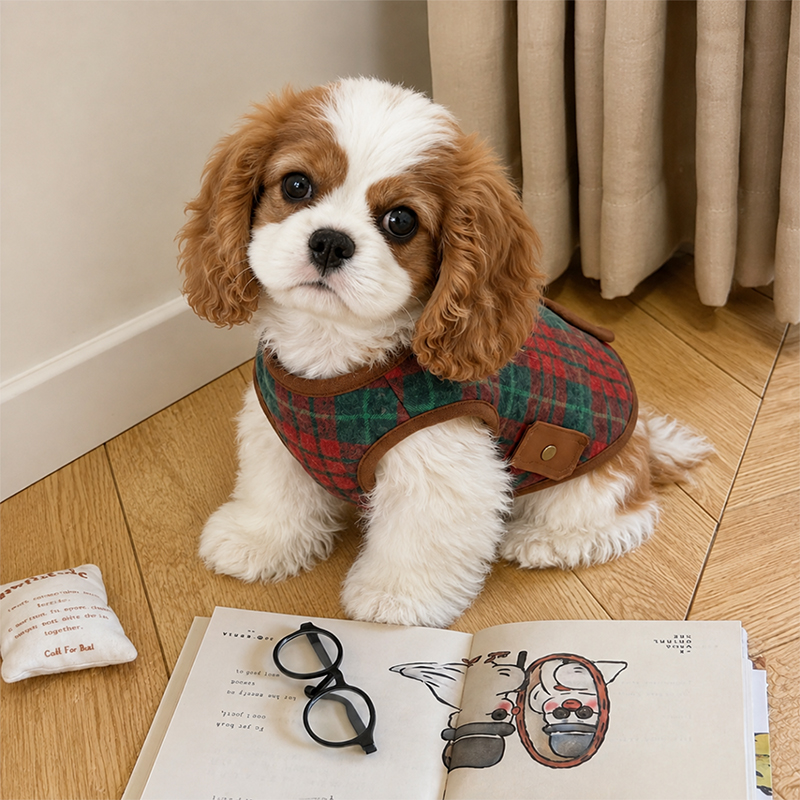
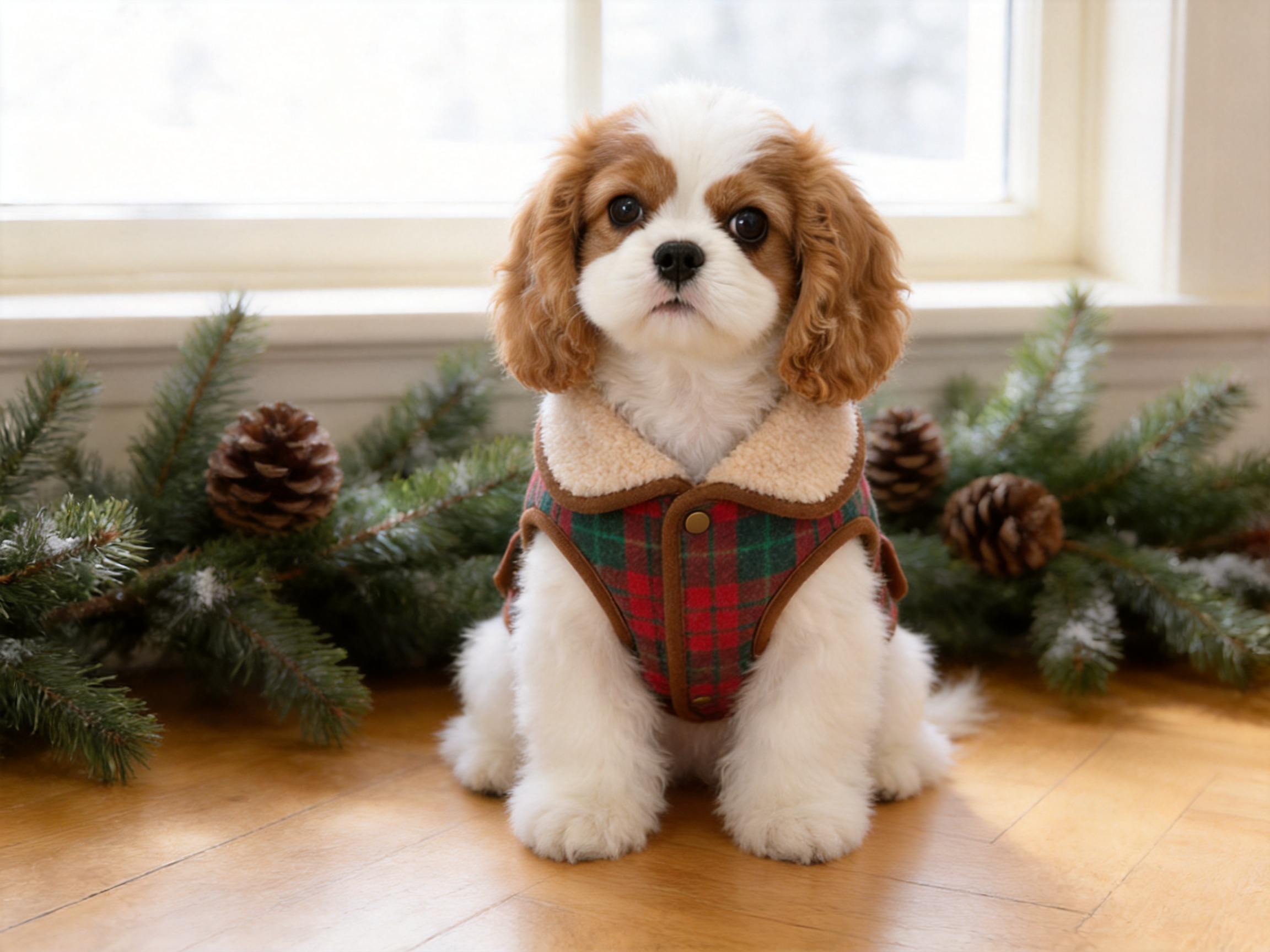
Sustainability and Responsible Product Development
Although the supplied product information focuses primarily on design and manufacturing, responsible buyers may wish to discuss material choices, packaging efficiency, production waste, and product longevity during development. A durable and wearable seasonal garment can offer greater value when it is suitable for repeated use across multiple autumn and winter occasions rather than being treated as a single-use costume.
Buyers can ask about fabric composition, trim specifications, packaging materials, cutting efficiency, and production waste-management practices as part of their sourcing review. They may also explore packaging reductions, recyclable paper components, or reusable retail presentation where appropriate for their market.
Longer product use depends partly on fit and care. Accurate sizing information, appropriate washing guidance, and clear product instructions can help customers maintain the garment and reduce avoidable dissatisfaction. These considerations are relevant to both product quality and brand reputation.
Why This Product Fits Current Wholesale Demand
Wholesale buyers increasingly need products that are visually differentiated, easy to explain, and suitable for online presentation. The Vintage Christmas Plaid Hunting Vest meets these requirements through a combination of instantly recognizable color, tactile winter detailing, and a clear lifestyle concept.
It is also adaptable. A buyer can order the standard design for a seasonal retail program or use it as a foundation for a private-label development. The same product can be adjusted through colors, plaid patterns, lining choices, trim details, size grading, labels, and packaging.
The manufacturer’s broad catalog and production resources add further value. With more than 800 SKUs across dog, cat, and small-pet apparel, buyers can develop a complete collection rather than relying on a single item. The ability to launch new styles regularly also supports retailers that need fresh seasonal options throughout the year.
Compared with generic competitors, the vest’s strongest advantage is not one isolated feature. Its advantage comes from the way its elements work together. The plaid establishes the Christmas theme, the sherpa-style lining communicates warmth, the PU leather trim adds structure, and the hunting silhouette provides a distinctive alternative to common festive garments.
Frequently Asked Questions
What type of product is the Vintage Christmas Plaid Hunting Vest?
It is a seasonal pet vest designed for autumn and winter use. It combines a red-and-green plaid exterior, a warm cream-brown sherpa-style fleece lining, brown PU leather trim, and a vintage hunting-vest-inspired silhouette.
Which pets can wear this product?
The vest is intended for pets that match the available size range. The listed sizes run from XS to XXL. Buyers and end customers should compare the pet’s neck, chest, and back measurements with the size chart before ordering.
Is the vest intended only for Christmas?
No. Its plaid color combination gives it a strong Christmas identity, but the warm lining and country-inspired design also make it suitable for autumn and winter outings, seasonal photography, boutique displays, and general cold-weather petwear collections.
How does this vest differ from a standard Christmas sweater?
The vest uses a structured hunting-inspired silhouette rather than a conventional knitwear shape. It also combines plaid fabric, sherpa-style lining, and brown PU leather trim, creating a vintage countryside appearance instead of relying solely on a printed holiday graphic.
Can the colors or plaid pattern be customized?
Yes. Customization may include plaid pattern development and color combinations. Buyers should discuss preferred color direction, pattern scale, fabric requirements, and target market during the development process.
Can the lining and trim be customized?
Lining options and trim details can be discussed as part of OEM or ODM development. Buyers may request changes that support their brand identity, product positioning, or intended retail price range.
What branding options are available?
Branding options include embroidered logos, silicone or rubber logo applications, printed graphics, custom woven labels, wash labels, hang tags, and branded packaging.
What is the minimum order quantity?
The standard minimum order quantity is 500 pieces per order. The minimum quantity for a single color is at least 300 pieces per color.
What is the standard production lead time?
The stated standard production lead time is 10–15 days after order confirmation and receipt of the deposit. Customized designs and packaging may require a different schedule, which should be confirmed before production.
What are the payment terms?
The standard terms are a 50% deposit to confirm the order and a remaining 50% balance payable before shipment.
Does the manufacturer support private-label orders?
Yes. The manufacturer supports OEM and ODM development for pet apparel brands, wholesalers, distributors, boutiques, and private-label retailers.
What manufacturing resources does the company have?
Taizhou Feile Pet Products Co., Ltd. reports 48 fully automatic sewing production lines, a 77-person professional team, and a daily production capacity of 3,000 pieces. Its team covers design, pattern making, production, and quality control.
Does the manufacturer produce other pet clothing?
Yes. Its product coverage includes dog apparel, cat apparel, and small pet apparel, with more than 800 SKUs in total.
Can the product be shipped internationally?
International shipping support is available. Buyers should confirm destination requirements, packaging specifications, shipping methods, customs documentation, and delivery schedules as part of the order process.
Conclusion
The Vintage Christmas Plaid Hunting Vest Sherpa-Lined Pet Wear offers a well-defined alternative to ordinary seasonal pet clothing. Its value comes from a coordinated design concept that combines Scottish-inspired plaid, sherpa-style warmth, brown PU leather trim, and a classic hunting-vest silhouette. This combination gives the product strong Christmas appeal while preserving enough outdoor and countryside character for broader autumn and winter use.
For retailers, the vest offers visual differentiation, multiple merchandising possibilities, and strong photography potential. For wholesalers and distributors, the six-size range and seasonal appeal provide a practical addition to winter pet apparel programs. For private-label brands, OEM and ODM services allow the style to be adapted through colors, patterns, lining, trim, sizing, labels, and packaging.
Behind the product is a manufacturer with integrated design and production capabilities, 48 fully automatic sewing production lines, a 77-person team, a reported daily capacity of 3,000 pieces, and a catalog covering dog, cat, and small pet apparel. These resources support both standard bulk orders and customized development projects.
With appropriate planning, quality review, and retail presentation, this vest can become the centerpiece of a vintage Christmas or country-inspired winter petwear collection. It offers the seasonal recognition customers expect while giving brands a more distinctive story and a more developed product appearance than many conventional festive garments.
References
Taizhou Feile Pet Products Co., Ltd. Product Specification Sheet: Vintage Christmas Plaid Hunting Vest Sherpa-Lined Pet Wear.
Taizhou Feile Pet Products Co., Ltd. Manufacturing and Company Information: Design, Production, OEM/ODM Services, and Product Categories.
International Organization for Standardization. General Principles for Size Designation of Clothes.
American Society for Testing and Materials. Consumer Product Evaluation and Textile Testing Principles.
General textile and apparel quality-control practices for measurement verification, seam inspection, trim attachment, packaging review, and pre-shipment inspection.
Product: Vintage Christmas Plaid Hunting Vest Sherpa-Lined Pet Wear

NEXT:Lace-Trim Bow Dog Tank Top: A Scalable Summer Apparel Solution for Pet Fashion Collections
- Lolita Cake Dress
- Cool Style Tassel Top Pet Lolita Dress
- Sweet Bow Princess Dog Dress
- Denim Pinafore Dress With Pockets Cute Casual Small Dog Outfit
- French Doll-neck Dog Dress Elegant Pet Wear
- Korean Sweet Lolita Dog Dress Cute Party Outfit
- Flutter Sleeve Dog Dress Lightweight Summer Pet Wear
- Ruffle Flutter Sleeve Pet Dress Cute Princess Style
- French Style Embroidered Dog Dress Elegant Pet Apparel
- Mint Green Heart Spaghetti Strap Tulle Dog Dress Princess Party Outfit
- Gingham Bow Dog Dress Cute Summer Pet Outfit
- Navy Star Pleated Dog Dress Elegant Casual Pet Wear
- Summer Sailor Dog Dress Nautical Style Pet Apparel
- Dog Cooling Shirt Color-Block Lightweight Summer Pet Wear
- Dog Printed High-Neck Base Layer Top Thermal Stretch Pet Underwear
- Lightning Racing Performance Sportswear Breathable Athletic Pet Shirt
- Rustic Brown Plaid Dog Shirt Casual Outdoor Pet Wear
- Cream Embroidered Dog Blouse Elegant Pet Shirt
- Korean Style Pink Textured Tulle Camisole Small Dog Fashion Top
- Star & Letter Casual Pet T-Shirt Daily Wear Dog Top

- +86-13362661217
- 13362661217@163.com
- 128 Houxin Street, Hongjia, Jiaojiang, Taizhou, Zhejiang, China
