
 English
 русский
 Español
 عربى


Lin Ruoqi — International Pet Apparel Sales Manager
British Plaid Pet Suit: A Refined OEM/ODM Opportunity for Autumn and Winter Pet Apparel
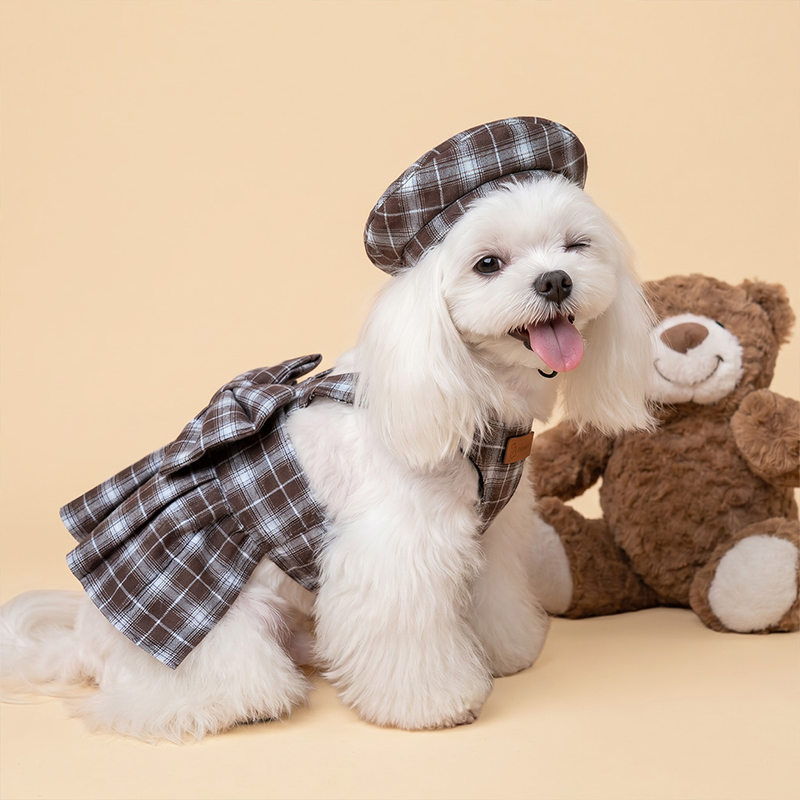
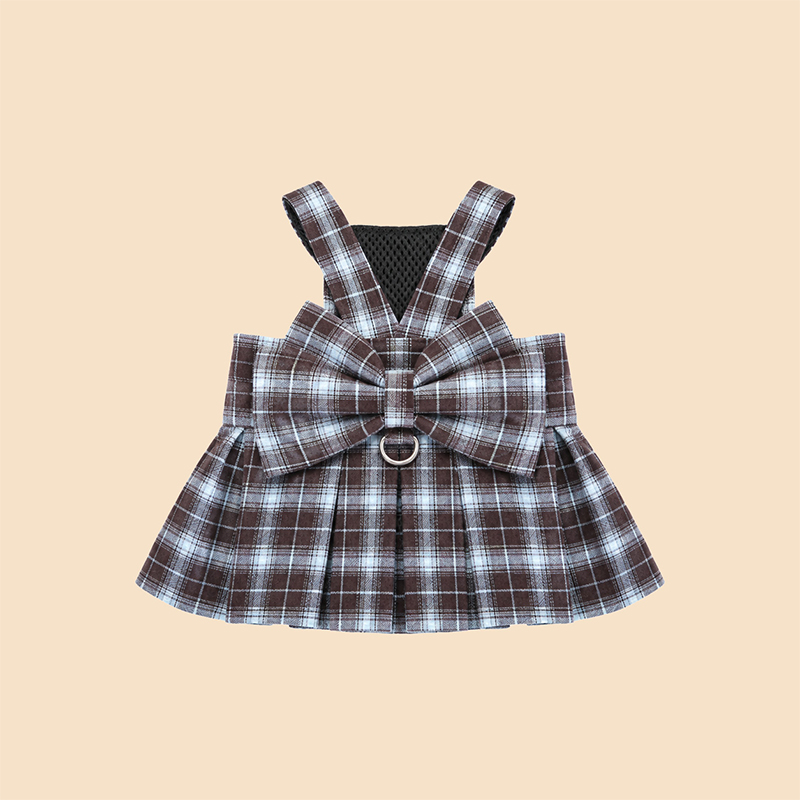
The British Plaid Pet Suit combines heritage-inspired styling, practical pet-wear proportions, and scalable manufacturing support in one distinctive product concept. Designed for small and medium-sized dogs, this garment brings together Scottish plaid, British collegiate influence, and suit-inspired structural detailing to create an appearance that is more tailored and sophisticated than conventional novelty pet clothing.
For pet apparel brands, wholesalers, distributors, boutiques, online retailers, and private-label businesses, the product offers more than a decorative pattern. It provides a complete design direction that can support autumn and winter collections, seasonal campaigns, pet photography, special occasions, and coordinated owner-and-pet fashion assortments. Its visual identity is clear, recognizable, and adaptable, making it suitable for businesses seeking a differentiated alternative to basic sweaters, generic coats, and purely cute pet outfits.
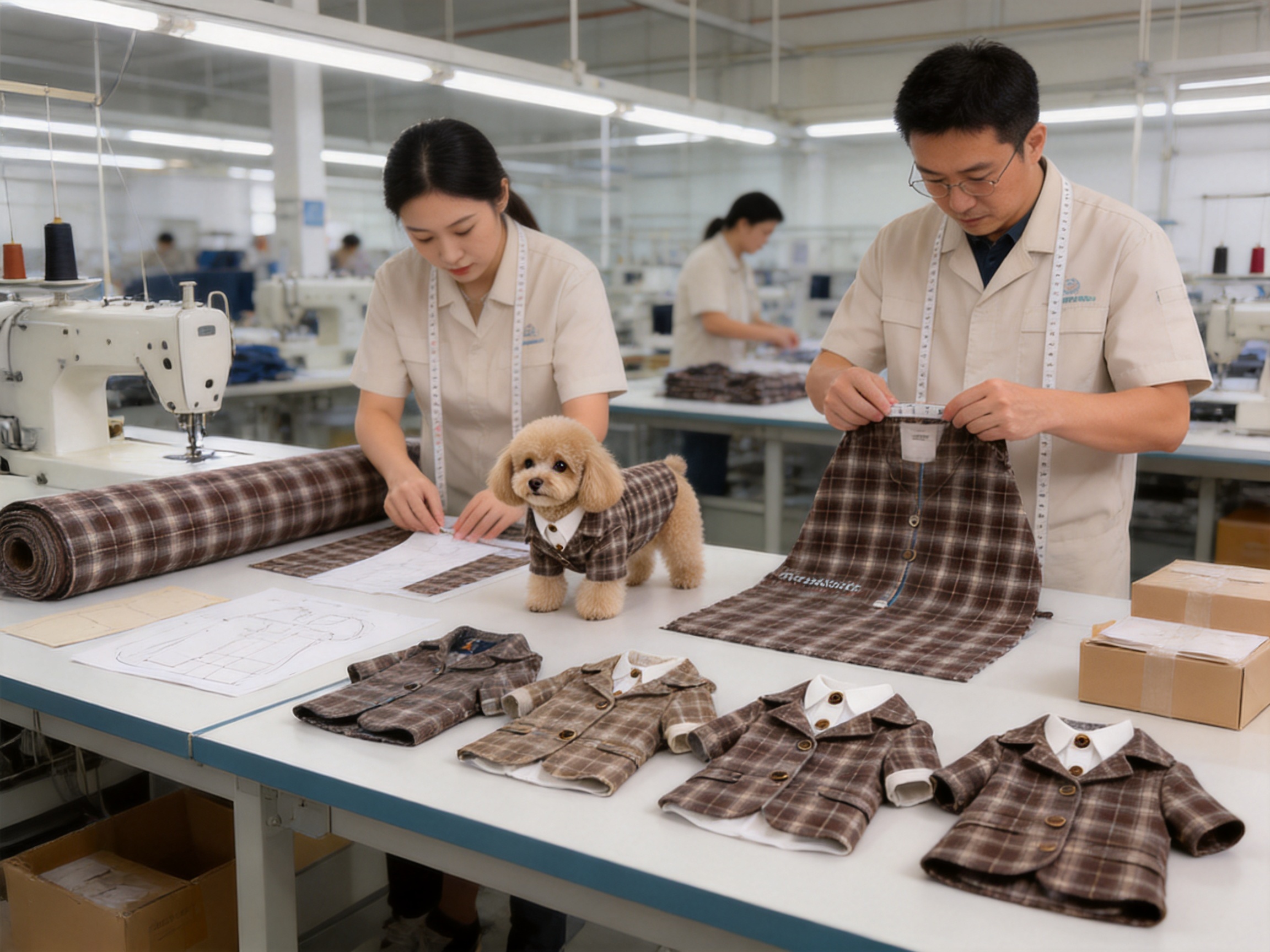
The product is manufactured by Taizhou Feile Pet Products Co., Ltd., a professional pet apparel manufacturer based in Taizhou, Zhejiang, China. The company integrates design, pattern making, production, quality control, and sales support, providing OEM and ODM services for international pet product businesses. With five years of offline manufacturing experience, a 77-person professional team, 48 fully automatic sewing production lines, and a reported daily production capacity of approximately 3,000 pieces, the manufacturer is positioned to support both product development and bulk production requirements.
1. Product Concept and Market Positioning
The British Plaid Pet Suit is built around a strong fashion concept: classic British heritage interpreted for modern pet apparel. Rather than placing a plaid print on an otherwise ordinary dog shirt, the design uses the character of tailoring, collegiate clothing, and gentleman-inspired fashion to give the garment a more structured visual identity.
This distinction is commercially important. In a crowded pet apparel market, many products compete primarily through color, cartoon graphics, seasonal prints, or simple functional features. While those products can attract attention, they may not offer a coherent style story for retailers building a curated collection. The British Plaid Pet Suit offers a recognizable theme that can be extended across multiple colors, patterns, accessories, photography settings, and seasonal promotions.
The design is particularly suitable for autumn and winter because plaid naturally communicates warmth, tradition, and seasonal comfort. The pattern can be associated with countryside fashion, British school uniforms, heritage tailoring, and holiday-season dressing. These associations make the product useful for retailers that want to develop a visually consistent cold-weather assortment rather than selling isolated items without a common identity.
Its target customers include owners of small and medium-sized dogs who enjoy dressing their pets for walks, gatherings, photographs, celebrations, and social media content. It may also appeal to buyers looking for a refined outfit for birthdays, holiday events, family portraits, weddings, parties, and other occasions where a dog’s appearance is part of the overall presentation.
For business buyers, the product can be positioned in several ways. It may serve as a premium-looking everyday outfit, a seasonal boutique item, a special-event garment, a photography prop, or a foundation product for a private-label British-inspired collection. This flexibility increases its commercial value because different sales channels can communicate the product in different ways while retaining the same underlying design language.
2. Design Advantages Over Conventional Pet Clothing
2.1 A Stronger Visual Identity
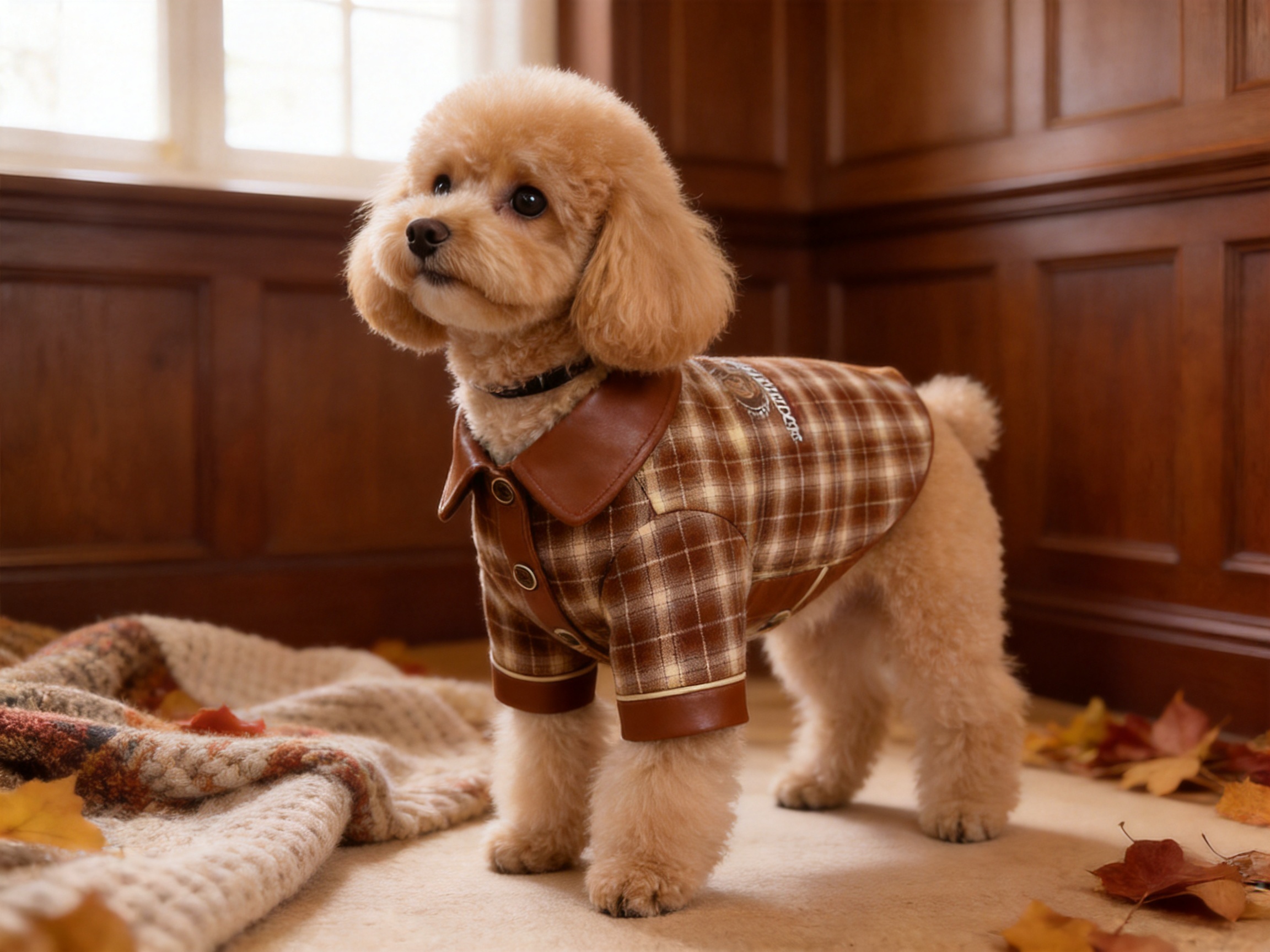
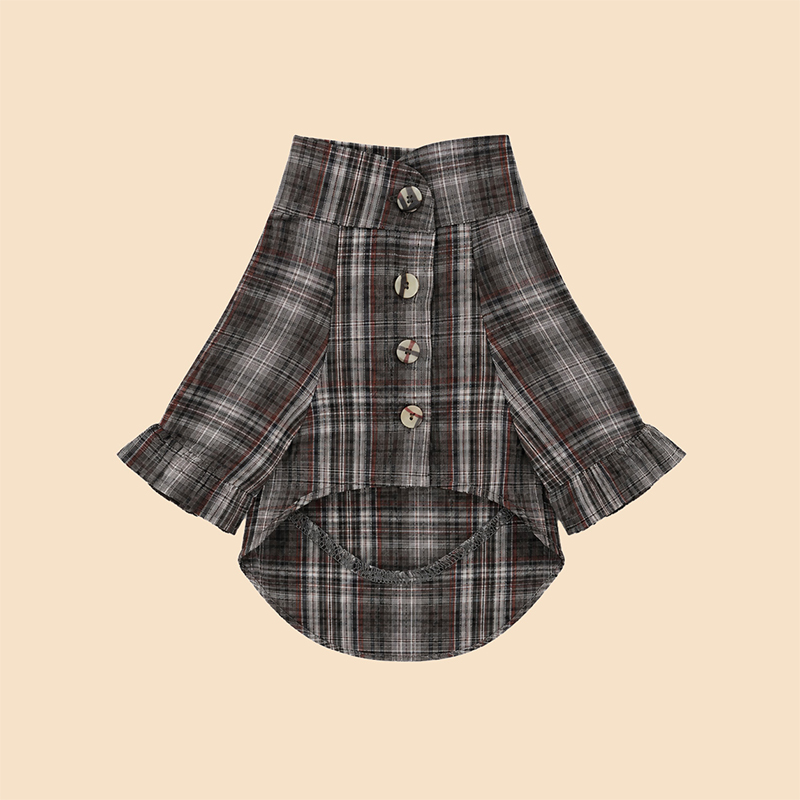
The first advantage of the British Plaid Pet Suit is its clear visual identity. Scottish plaid is immediately recognizable and carries a heritage association that many basic pet garments do not possess. The pattern creates visual depth through the interaction of lines, checks, and contrasting tones, helping the product stand out in online listings and boutique displays.
Many competing pet garments rely on a single solid color or a simple printed graphic. Such designs may be easy to produce, but they can appear interchangeable when displayed beside similar products. A plaid suit-inspired design gives retailers a more memorable product story. Customers can understand the style at a glance, and the garment can be photographed in settings that reinforce its identity, such as autumn parks, traditional interiors, holiday scenes, or collegiate-inspired environments.
2.2 Tailored Appearance Without Human-Size Construction
The product uses suit-inspired structural detailing while maintaining proportions appropriate for pets. This is an important design advantage because simply shrinking human formalwear often leads to uncomfortable or impractical results. Pet bodies differ from human bodies in shoulder shape, chest depth, movement, and gait. A successful pet suit must therefore interpret the visual language of tailoring without copying human construction literally.
The British Plaid Pet Suit follows this principle by adapting the formalwear concept for everyday pet dressing. Its proportions are intended for small and medium-sized dogs, and its overall appearance suggests a refined jacket or coordinated suit while remaining within the practical framework of pet apparel. This approach allows the product to look formal, polished, and photographically appealing without becoming visually excessive.
2.3 A Gentleman-Inspired Alternative to Cute Petwear
Pet fashion often emphasizes cuteness through bows, cartoon faces, bright novelty prints, or exaggerated decorative elements. These products have a place in the market, but they do not serve every customer. Some owners prefer a mature, classic, or fashion-forward style for their pets. The British Plaid Pet Suit addresses this segment with a gentleman-inspired direction.
The refined styling may appeal to customers who enjoy traditional menswear, British fashion, classic interiors, or understated luxury. It can also help retailers broaden their assortment beyond highly playful products. When combined with accessories such as bow ties, collars, scarves, or matching human apparel, the suit can become part of a more complete lifestyle presentation.
2.4 Strong Seasonal Relevance
Seasonality is one of the product’s key commercial strengths. Autumn and winter collections require visual themes that communicate warmth, comfort, and occasion. Plaid naturally fits these requirements and can be introduced into product launches from early autumn through the winter holiday period.
Retailers may promote the garment around back-to-school themes, fall photography, Thanksgiving-related campaigns, winter travel, Christmas gatherings, New Year celebrations, or general cold-weather pet fashion. Even where the garment is not intended as heavy outdoor protection, its appearance makes it suitable for seasonal content and indoor or mild-weather dressing.
The product can also help retailers refresh their assortments each year. Because the plaid pattern and color combinations can be customized, the same core design direction may be reintroduced in new seasonal colorways. This creates continuity for the manufacturer and brand recognition for the retailer while still giving customers a reason to explore new versions.
3. Product Specifications and Size Selection
The British Plaid Pet Suit is available in six sizes: XS, S, M, L, XL, and XXL. The size range is intended to cover a selection of small and medium dog breeds. Because dog body shapes vary significantly even within the same weight category, buyers should use the neck, chest, and back-length measurements as the primary basis for selection.
| Size | Neck | Chest | Back Length | Approximate Weight |
|---|---|---|---|---|
| XS | 22 cm | 33 cm | Approx. 22 cm | Approx. 3 lbs |
| S | 24 cm | 37 cm | Approx. 25 cm | Approx. 5 lbs |
| M | 30 cm | 44 cm | Approx. 29 cm | Approx. 5–8 lbs |
| L | 33 cm | 48 cm | Approx. 33 cm | Approx. 8–14 lbs |
| XL | 36 cm | 53 cm | Approx. 36 cm | Approx. 14–17 lbs |
| XXL | 40 cm | 58 cm | Approx. 39 cm | Approx. 17–22 lbs |
The listed weight ranges are approximate and should not replace direct measurement. A dog’s coat thickness, body length, chest shape, and preferred fit can affect the correct size. For wholesale listings, retailers should publish the full measurement table and advise customers to measure the dog before ordering.
For OEM and ODM buyers, size grading can be discussed during development. The standard range may be retained, expanded, or adjusted according to the target market. A retailer specializing in toy breeds may place greater emphasis on XS, S, and M, while a broader pet clothing distributor may require additional grading or fit adjustments for different body types.
Accurate size communication is especially important for structured garments. A poorly fitted product can restrict movement, create discomfort, or reduce customer satisfaction even when the design itself is attractive. A clear measurement chart, sample review process, and appropriate size recommendations can reduce returns and support better long-term product performance.
4. Materials, Pattern Direction, and Customization Potential
The standard product is defined by Scottish plaid styling and a suit-inspired appearance. Buyers may request customized plaid colorways, pattern variations, garment colors, and selected structural details. This makes the product suitable for both direct wholesale purchasing and private-label development.
Color selection is one of the simplest ways to adapt the product to a specific market. Traditional combinations such as red, black, green, navy, gray, camel, and cream can reinforce the heritage character. More contemporary combinations may use muted pastels, dark jewel tones, neutral checks, or high-contrast fashion colors. A retailer can therefore choose between a classic interpretation and a more modern seasonal presentation.
Pattern scale may also influence the final appearance. Smaller checks can create a restrained and refined look, while larger plaid patterns provide stronger visual impact. Buyers should consider the size of the dog when selecting the pattern scale. A very large check may dominate a small garment, while a smaller check may provide a more balanced appearance on compact body shapes.
Structural details can be adjusted according to market positioning and production requirements. Depending on the development plan, buyers may explore changes to collar treatments, edging, decorative panels, closures, pockets, trim, or other suit-inspired elements. Any modification should be reviewed through sampling to ensure that the finished design remains comfortable and practical for pets.
Branding options include embroidered logos, printed graphics, silicone or rubber logo applications, custom woven labels, wash labels, hang tags, and branded packaging. These options allow the same base product to serve different customer segments. A boutique may prefer a subtle woven label, while an online private-label brand may require a complete retail packaging program with branded inserts and care information.
Customization should be planned carefully because every additional detail can affect cost, lead time, minimum order quantities, and quality-control requirements. A clear technical specification helps the manufacturer prepare accurate samples and reduces the risk of misunderstanding during bulk production.
5. Advantages for Retailers, Wholesalers, and Private-Label Brands
5.1 Product Differentiation
The British Plaid Pet Suit gives retailers a stronger point of difference than a generic dog shirt. Its concept can be described through several coordinated keywords: British preppy, classic, tailored, heritage, gentleman, autumn, winter, and formal pet fashion. These terms can support product titles, collection pages, social media campaigns, and merchandising displays.
A defined concept also helps retailers create a more coherent product assortment. For example, the suit can be displayed with plaid leashes, matching collars, neutral sweaters, berets, scarves, or seasonal accessories. Even when the supporting items are sourced separately, the British-inspired theme can create the impression of a complete collection.
5.2 Broad Content and Photography Applications
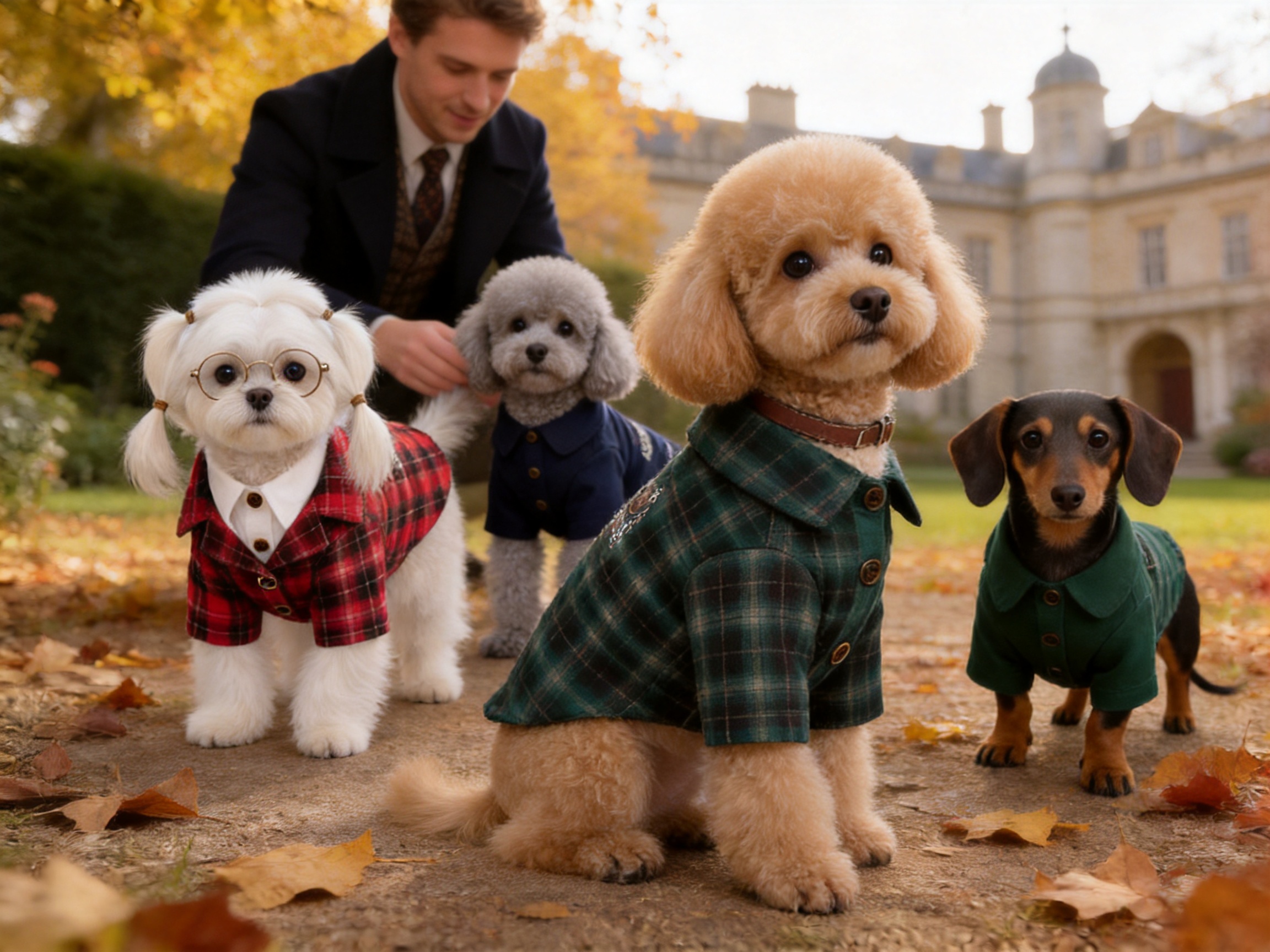
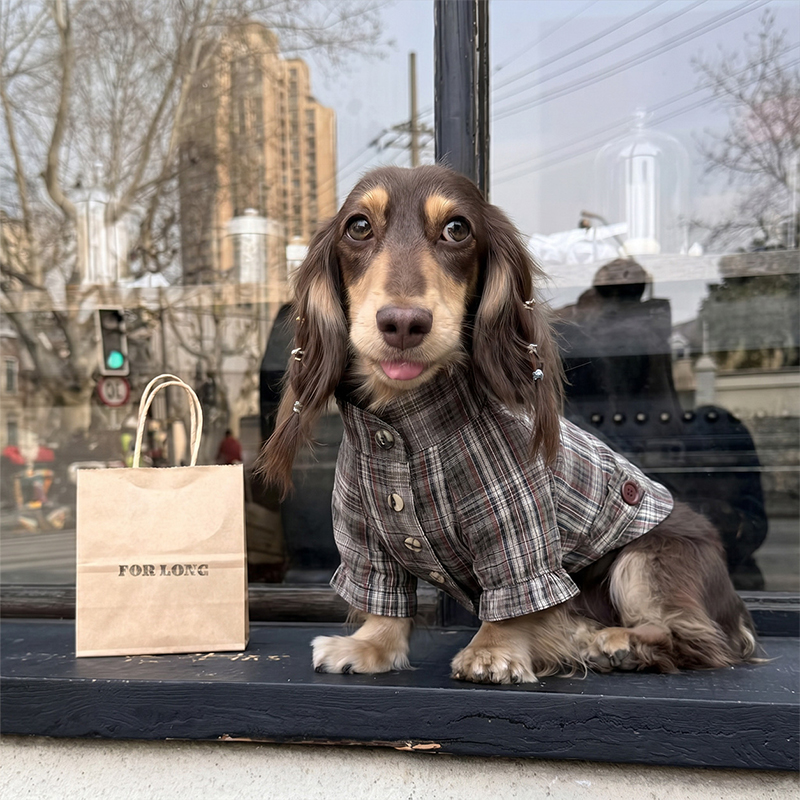
The garment is highly suitable for visual marketing. Plaid patterns photograph well because they provide texture, contrast, and recognizable lines. The suit-inspired design can be shown in standing portraits, walking scenes, seated poses, group photographs, or coordinated owner-and-pet images.
Pet photography studios may use the product as a seasonal wardrobe option. Online retailers can present it in autumn and winter lifestyle imagery. Social media creators may feature it in holiday content, family portraits, or themed pet videos. The product’s visual identity can therefore generate marketing value beyond its basic function as clothing.
5.3 Suitable for Multiple Price Positions
The design can be positioned at different price levels depending on fabric selection, construction details, branding, packaging, and order volume. A basic version may be appropriate for a broad online market, while a more customized version with refined trims and premium packaging may suit boutiques or specialty retailers.
This flexibility is useful for manufacturers and buyers because the product concept does not depend on one fixed sales channel. A distributor may purchase a standard configuration for fast resale, while a private-label customer may invest in customized materials and branding to build a more exclusive collection.
5.4 Repeatable Seasonal Development
One successful plaid product can become the starting point for a broader seasonal program. Buyers may develop multiple colorways, matching accessories, different levels of structural detail, or related items for cats and small pets. Because the manufacturer covers dog apparel, cat apparel, and small pet apparel, collection expansion may be possible through the same production partner.
The company reports more than 800 total SKUs and introduces approximately 8–12 new styles weekly. This product development activity may help customers identify complementary designs and maintain a regular flow of new products. For online retailers, consistent newness can support seasonal campaigns and reduce reliance on a single permanent bestseller.
6. Manufacturing Capabilities and Production Strengths
Product design is only one part of a successful pet apparel program. Reliable production, consistent sizing, quality control, communication, and delivery planning are equally important. Taizhou Feile Pet Products Co., Ltd. presents itself as an integrated pet apparel manufacturer with capabilities covering design, pattern making, manufacturing, quality inspection, and sales support.
The company has five years of offline manufacturing experience and operates a cross-border online division that began official operation in November 2025. This combination of physical manufacturing experience and international online business support is relevant to overseas buyers that require clear communication and coordinated sourcing assistance.
The reported 48 fully automatic sewing production lines indicate a substantial production infrastructure. Automated sewing equipment can support repeatable operations, stable output, and efficient handling of larger orders. While equipment alone does not guarantee quality, a well-organized production system can help reduce variation when combined with experienced operators, appropriate process controls, and inspection procedures.
The company’s 77-person professional team covers design, pattern making, production, and quality control. This structure is valuable for OEM and ODM customers because product development often requires cooperation between several functions. A design team may interpret a buyer’s visual direction, pattern makers may translate it into pet-specific proportions, production staff may evaluate manufacturing practicality, and quality-control personnel may verify the finished goods.
The stated daily production capacity is approximately 3,000 pieces. This capacity may support regular wholesale programs and seasonal replenishment, subject to product complexity, material availability, production scheduling, and order volume. For businesses preparing autumn and winter launches, production capacity can be especially important because seasonal products often operate within a limited selling window.
The company’s product range covers dog apparel, cat apparel, and small pet apparel, with more than 800 SKUs. This breadth suggests experience with different garment sizes, pet body shapes, product categories, and design requirements. Buyers seeking to develop a larger pet fashion line may benefit from working with a supplier that can support more than one product type.
7. From Design Brief to Finished Product
7.1 Design Consultation
An OEM or ODM project typically begins with a design brief. The buyer may provide reference images, sketches, color targets, branding requirements, target price ranges, expected quantities, and intended sales markets. For the British Plaid Pet Suit, the brief may specify the desired balance between classic heritage styling and contemporary pet fashion.
At this stage, buyers should clarify whether they want a standard product or a substantially customized design. They should also identify the target dog sizes, expected fabric characteristics, logo placement, packaging format, and required delivery window. Early clarity allows the manufacturer to evaluate feasibility before sampling begins.
7.2 Pattern Making and Pet-Specific Adaptation
Pattern making is particularly important in pet apparel because the garment must follow the animal’s body while allowing movement. A pattern that looks attractive on a flat sketch may not perform correctly when worn. Neck opening, chest width, back length, leg clearance, and overall balance must be considered together.
The manufacturer’s pattern-making function can help convert the suit-inspired concept into pet-specific proportions. This is one of the product’s central advantages over low-quality garments that imitate human clothing without accounting for canine anatomy. The aim is to preserve the visual language of a tailored suit while maintaining a practical relationship with the dog’s body.
7.3 Sample Development
Sample development allows buyers to assess appearance, fit, construction, trim, branding, and packaging before bulk production. Samples should be reviewed from both a visual and practical perspective. A buyer should examine whether the plaid lines align as expected, whether the garment sits correctly, whether closures are secure, and whether the dog can walk, sit, and move comfortably.
For customized colorways, the sample also provides an opportunity to evaluate how the plaid interacts with the structure of the garment. Some color combinations may appear attractive in a digital image but lack sufficient contrast in actual fabric. Physical sampling helps reduce this risk.
7.4 Bulk Production
Once the sample, specifications, and order details are confirmed, the factory can schedule bulk production. The stated standard minimum order quantity is 500 pieces per order, with a single-color minimum of at least 300 pieces per color. These quantities are suitable for distributors, established retailers, and private-label businesses planning a meaningful seasonal launch.
The reported standard production lead time is 10–15 days after order confirmation and receipt of the deposit. Actual timing may vary depending on customization, fabric preparation, logo applications, packaging requirements, order size, and production scheduling. Buyers should confirm the final schedule in writing before placing the order, especially for time-sensitive seasonal programs.
7.5 Quality Inspection and Shipment
Quality inspection should cover measurements, sewing consistency, plaid alignment, color accuracy, logo placement, cleanliness, packaging, and general appearance. For a structured plaid product, visual consistency is especially important because pattern distortion or uneven detailing can be easily noticed.
The company supports quality inspection and international shipping according to different sourcing requirements. Buyers should establish inspection standards before production begins. A clear checklist can help both parties understand acceptable tolerances and reduce disputes at the shipment stage.
8. Quality Considerations for a Plaid Pet Suit
Quality in pet apparel involves more than fabric appearance. The product must be comfortable, appropriately sized, sufficiently durable for its intended use, and free from construction details that could create avoidable risks during normal wear.
For the British Plaid Pet Suit, the first consideration is the relationship between structure and comfort. Suit-inspired details should enhance the appearance without making the garment excessively stiff, heavy, or restrictive. The neckline should sit comfortably, and the chest area should provide sufficient room for movement.
Second, plaid pattern presentation should be reviewed carefully. Depending on the design, buyers may expect reasonable alignment across panels and a balanced visual arrangement. Pattern placement should be discussed during sampling, particularly when the garment includes multiple panels or decorative structural elements.
Third, stitching and finishing should be consistent. Loose threads, uneven seams, weak attachment points, and rough interior areas may affect both appearance and wearability. Quality-control inspections should examine high-stress areas such as closures, openings, decorative attachments, and seams around the chest.
Fourth, branding components should be securely applied. Embroidery, labels, silicone badges, rubber logos, and hang tags each require appropriate attachment methods. The selected branding method should suit the garment’s material and intended care process.
Finally, packaging should protect the product during international transportation. Standard export packaging may be suitable for wholesale shipments, while customized retail packaging may be more appropriate for private-label brands selling directly to consumers. Packaging decisions should consider product protection, storage efficiency, presentation, and regulatory or labeling requirements in the target market.
9. MOQ, Payment, and Order Planning
The standard minimum order quantity is 500 pieces per order. The stated single-color minimum is at least 300 pieces for each color. These requirements reflect the practical economics of fabric purchasing, cutting, sewing, quality inspection, and packaging.
For a retailer testing the market, a 500-piece order can be divided across sizes according to expected demand. A buyer may allocate more units to the most commercially common sizes while maintaining a smaller quantity in the smallest and largest available sizes. The best allocation depends on the target customer base, sales history, channel demographics, and local dog population.
Color planning should also be strategic. A classic dark plaid may have broad appeal, while a brighter seasonal colorway may attract attention but carry greater demand uncertainty. Buyers can use one core color for dependable volume and one or more additional colors for visual variety. Since the stated single-color minimum is 300 pieces, color assortment planning should be completed before order confirmation.
The standard payment terms are a 50 percent deposit to confirm the order, with the remaining 50 percent balance paid before shipment. Buyers should budget for the deposit, balance payment, freight, customs-related charges where applicable, packaging, labeling, and any development or sampling expenses.
For customized designs, private-label orders, or large-volume purchases, buyers should request detailed pricing and production schedules. The final quotation may depend on material selection, pattern complexity, logo application, packaging, size distribution, color count, and shipping requirements.
10. Commercial Applications
10.1 Pet Boutiques
Pet boutiques can use the British Plaid Pet Suit as a statement piece within a curated autumn and winter display. The garment’s heritage styling may complement premium collars, grooming products, seasonal toys, and gift items. In a boutique environment, staff can explain the design story and help customers select a suitable size.
10.2 Online Retail
Online stores can emphasize the suit’s distinctive styling through strong product photography and clear descriptions. Useful selling points include the British plaid pattern, tailored appearance, autumn-winter relevance, available size range, customization potential, and suitability for photography and special occasions.
Online retailers should avoid relying only on weight ranges. Product pages should show neck, chest, and back-length measurements and explain how customers can measure their dogs. A model reference section may also help shoppers understand the scale and appearance of the garment.
10.3 Wholesale Distribution
Distributors can offer the product to independent pet shops, grooming salons, photography studios, and specialty retailers. Its recognizable concept may make it easier for sales representatives to present than a generic garment with no clear story.
Distributors may also develop regional color assortments. For example, a market with strong demand for traditional styling may prefer classic red and green checks, while a fashion-oriented market may favor navy, gray, or muted contemporary combinations.
10.4 Pet Photography and Events
The British Plaid Pet Suit is well suited to pet photography because its visual structure remains recognizable in photographs. It can be used for holiday portraits, family sessions, studio packages, wedding-related pet appearances, adoption events, and seasonal promotional campaigns.
Photography businesses may purchase several sizes to serve different dogs. They may also coordinate the garment with backdrops, props, owner clothing, or themed packages. Because the product offers a more formal appearance, it can help create a polished visual result without requiring complex styling.
10.5 Coordinated Petwear Collections
Brands can use the suit as part of a coordinated collection that includes matching accessories or complementary items. A plaid collar, scarf, bow tie, leash, blanket, or owner accessory can reinforce the British theme. The same color palette can be carried across dog, cat, and small-pet products to create a broader seasonal assortment.
11. Sustainability and Responsible Product Development
Responsible product development begins with producing items that have a clear market purpose and a realistic sales plan. A distinctive, versatile design may have a longer commercial life than a highly specific novelty item that becomes difficult to sell after one season.
Buyers can also consider material efficiency, packaging reduction, durable construction, and responsible order planning. Accurate size grading and clear customer guidance may reduce returns, unnecessary transportation, and unsold inventory. When developing customized versions, brands should avoid adding decorative components that do not contribute meaningfully to appearance, comfort, or product value.
Manufacturing efficiency is another part of responsible sourcing. A factory with established production lines, experienced staff, and integrated quality-control procedures may be better positioned to reduce avoidable waste than an unstructured production arrangement. Buyers should nevertheless request specific information about materials, packaging, production standards, and applicable compliance requirements for their target market.
Any sustainability claims used in marketing should be supported by appropriate documentation. Terms such as recycled, organic, biodegradable, or environmentally friendly should not be used without verification. A transparent approach protects both the retailer and the end customer.
12. Why an Integrated Manufacturer Matters
Working with an integrated manufacturer can simplify communication during product development. Instead of coordinating separately with a designer, pattern maker, sewing factory, packaging supplier, and inspection service, a buyer may manage these activities through one primary production partner.
This arrangement can be particularly useful for first-time pet apparel brands. A business may have a strong concept but limited experience with canine garment construction, size grading, production tolerances, or packaging. An experienced manufacturer can help identify practical issues before they become expensive problems.
Integrated production may also support faster adjustments. If a sample requires a change to the pattern, trim, logo, or construction, the relevant departments can review the issue within the same production organization. This does not eliminate the need for buyer approval, but it can reduce delays caused by fragmented communication.
Taizhou Feile Pet Products Co., Ltd. states that its team covers design, pattern making, production, and quality control. Combined with its range of more than 800 SKUs and weekly new-style development, this structure may provide useful support for customers seeking both standard products and customized collections.
13. Recommended Buyer Workflow
A practical sourcing workflow can begin with defining the commercial purpose of the product. Buyers should decide whether they want a standard wholesale item, a lightly customized version, or a complete private-label product. This decision affects sampling, branding, packaging, cost, and lead time.
Next, buyers should identify target customers and selling channels. A premium boutique, a discount marketplace, a photography studio, and a regional distributor may require different versions of the same basic design. The intended channel should guide fabric, color, packaging, and price decisions.
The buyer should then confirm the desired size range and order allocation. Measurements should be reviewed against the target market rather than assumed from human apparel sizing. If the market includes dogs with different body proportions, the buyer should discuss whether adjustments or additional grading are necessary.
Color and plaid selection should follow. Buyers should request available options or submit reference colors for evaluation. They should also consider whether the same colorway will be used across other products in the collection.
Branding and packaging requirements should be documented in a technical file. This file may include logo artwork, dimensions, color references, label wording, care information, barcode requirements, packaging instructions, and carton marks.
After sample approval, the buyer should confirm the purchase order, quantities, payment terms, delivery schedule, inspection requirements, and shipping arrangements. A final pre-production review can help ensure that the bulk goods match the approved sample.
14. Image Placement
The following image positions may be used for product photographs, detail views, size presentation, or factory and production imagery within a finished article layout.
15. Frequently Asked Questions
Q1: What type of product is the British Plaid Pet Suit?
It is a suit-inspired pet garment featuring Scottish plaid styling and a British preppy, classic, tailored appearance. It is designed for small and medium-sized dogs and is especially suitable for autumn and winter collections.
Q2: What makes this product different from a basic plaid dog shirt?
The product is built around a complete heritage-fashion concept rather than using plaid as a simple surface print. Its suit-inspired structural detailing, gentleman-inspired direction, and tailored visual character create a more refined appearance than a basic shirt with a check pattern.
Q3: Which dog sizes are available?
The standard range includes XS, S, M, L, XL, and XXL. The approximate weight range extends from about 3 pounds to about 22 pounds, but buyers should select sizes using the listed neck, chest, and back-length measurements.
Q4: Is the product suitable for all dog breeds?
The product is intended for small and medium-sized dogs, but individual body shapes vary. Owners should measure the dog directly and compare the measurements with the size chart before ordering. For specialized breeds or unusual body proportions, buyers should discuss fit requirements with the manufacturer.
Q5: Can the plaid color be customized?
Yes. Customization may include plaid colorways, pattern variations, garment color combinations, and selected structural details. The final options should be confirmed during the sampling and quotation process.
Q6: Can a private-label brand add its own logo?
Yes. Branding options include embroidered logos, printed graphics, silicone or rubber logo applications, custom woven labels, wash labels, hang tags, and branded packaging.
Q7: What are the standard order quantities?
The stated minimum order quantity is 500 pieces per order. The single-color minimum is at least 300 pieces for each color. Buyers should confirm whether special customization or packaging requirements affect the final minimum.
Q8: How long does production take?
The standard production lead time is stated as 10–15 days after order confirmation and receipt of the deposit. Customized designs, material preparation, branding, packaging, order size, and production schedules may affect the actual timing.
Q9: What payment terms are available?
The standard terms are a 50 percent deposit to confirm the order and a 50 percent balance paid before shipment.
Q10: Can the factory support other pet apparel categories?
Yes. The company reports product coverage across dog apparel, cat apparel, and small pet apparel, with more than 800 SKUs in total. This may support broader seasonal collection development.
Q11: Is the garment suitable for photography and special occasions?
Yes. Its plaid pattern and tailored appearance make it suitable for pet photography, family portraits, holiday campaigns, celebrations, weddings, parties, and other special occasions. It may also be used as a refined everyday fashion item.
Q12: What should buyers confirm before placing a bulk order?
Buyers should confirm the final measurements, colorways, fabric and construction details, logo applications, packaging, size distribution, order quantity, inspection standards, payment schedule, production lead time, and shipping arrangements.
16. Conclusion
The British Plaid Pet Suit offers a compelling combination of recognizable heritage styling, tailored visual character, seasonal relevance, and OEM/ODM flexibility. Its strongest advantage is the clarity of its design direction. It is not merely a plaid garment; it is a British-inspired pet fashion product that can support a complete autumn and winter merchandising story.
For customers seeking an alternative to conventional cute petwear, the gentleman-inspired appearance provides a more mature and sophisticated option. For retailers, the design offers strong photography potential, multiple promotional applications, and opportunities for coordinated collections. For private-label brands, customizable colorways, pattern variations, structural details, branding, and packaging provide a foundation for differentiation.
The manufacturing platform adds further value. Taizhou Feile Pet Products Co., Ltd. reports five years of offline manufacturing experience, a 77-person professional team, 48 fully automatic sewing production lines, daily capacity of approximately 3,000 pieces, and coverage of design, pattern making, production, and quality control. These capabilities are relevant to buyers that need more than a catalog product and want support from concept development through bulk production.
With appropriate size planning, careful sample approval, clear branding specifications, and realistic seasonal forecasting, the British Plaid Pet Suit can serve as a versatile product for boutiques, wholesalers, distributors, online retailers, photography businesses, and private-label pet fashion brands.
References
1. Product specification and size information supplied for the British Plaid Pet Suit.
2. Company manufacturing information supplied for Taizhou Feile Pet Products Co., Ltd., including production lines, staffing, capacity, product categories, and SKU development.
3. General principles of pet apparel sizing, canine garment construction, and fit evaluation.
4. General references on British heritage fashion, Scottish plaid design, collegiate styling, and seasonal apparel merchandising.
5. General guidance on OEM and ODM product development, private-label branding, quality inspection, packaging, and international wholesale sourcing.
Product: British Plaid Pet Suit

NEXT:Plaid Preppy Knit-Layered Dog Dress: A Differentiated Pet Apparel Solution for Modern Retailers
- Lolita Cake Dress
- Cool Style Tassel Top Pet Lolita Dress
- Sweet Bow Princess Dog Dress
- Denim Pinafore Dress With Pockets Cute Casual Small Dog Outfit
- French Doll-neck Dog Dress Elegant Pet Wear
- Korean Sweet Lolita Dog Dress Cute Party Outfit
- Flutter Sleeve Dog Dress Lightweight Summer Pet Wear
- Ruffle Flutter Sleeve Pet Dress Cute Princess Style
- French Style Embroidered Dog Dress Elegant Pet Apparel
- Mint Green Heart Spaghetti Strap Tulle Dog Dress Princess Party Outfit
- Gingham Bow Dog Dress Cute Summer Pet Outfit
- Navy Star Pleated Dog Dress Elegant Casual Pet Wear
- Summer Sailor Dog Dress Nautical Style Pet Apparel
- Dog Cooling Shirt Color-Block Lightweight Summer Pet Wear
- Dog Printed High-Neck Base Layer Top Thermal Stretch Pet Underwear
- Lightning Racing Performance Sportswear Breathable Athletic Pet Shirt
- Rustic Brown Plaid Dog Shirt Casual Outdoor Pet Wear
- Cream Embroidered Dog Blouse Elegant Pet Shirt
- Korean Style Pink Textured Tulle Camisole Small Dog Fashion Top
- Star & Letter Casual Pet T-Shirt Daily Wear Dog Top
- +86-13362661217
- 13362661217@163.com
- 128 Houxin Street, Hongjia, Jiaojiang, Taizhou, Zhejiang, China
