
 English
 русский
 Español
 عربى


Qiu Manzhen — Product After-Sales Service Supervisor
Plaid Preppy Knit-Layered Dog Dress: A Differentiated Pet Apparel Solution for Modern Retailers
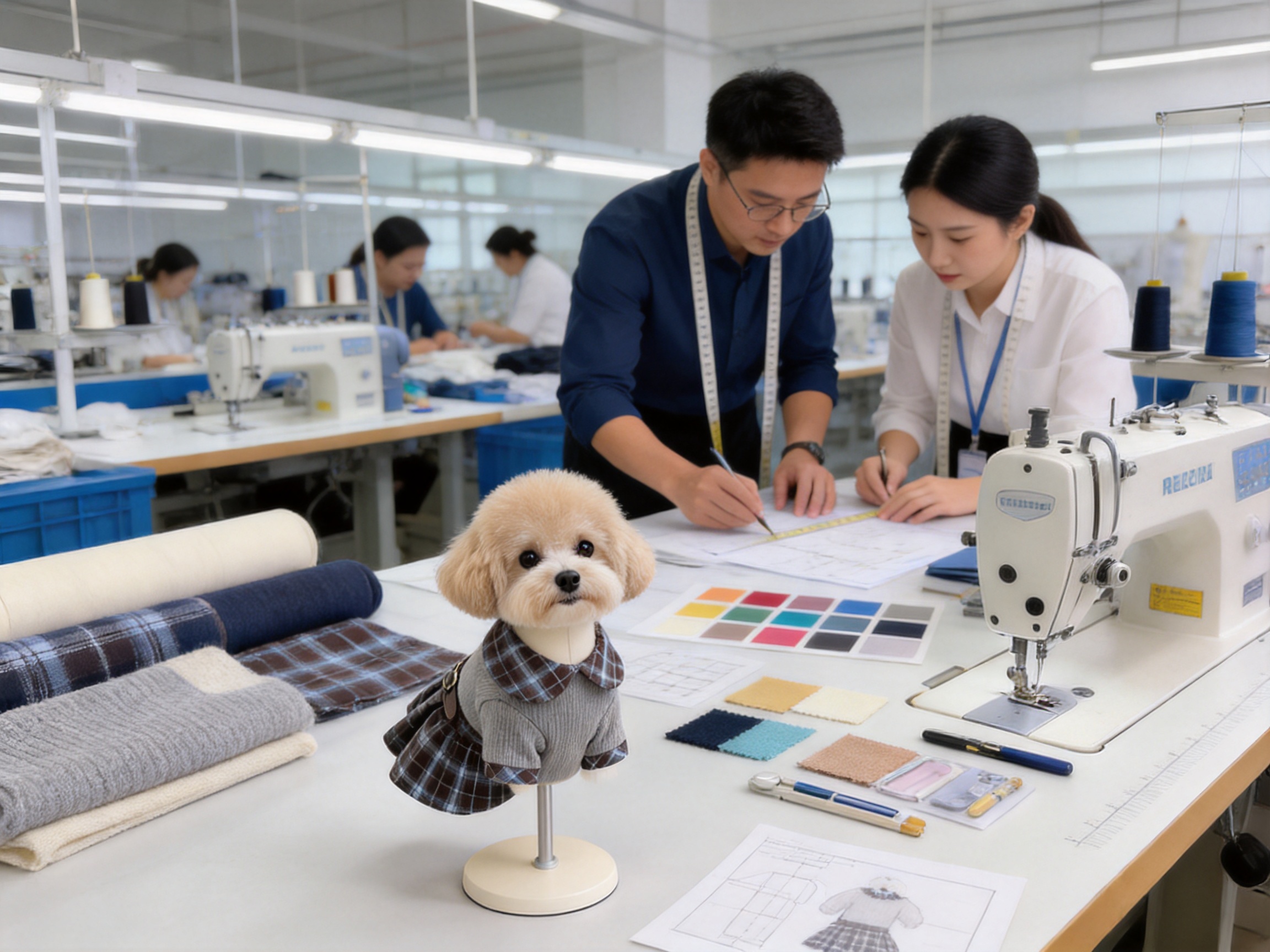
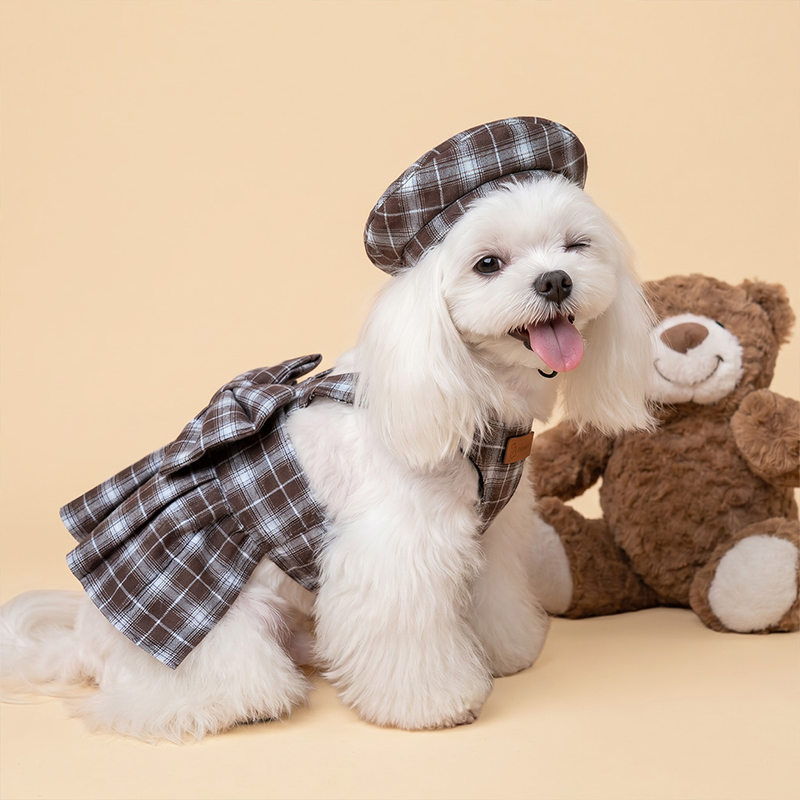
The Plaid Preppy Knit-Layered Dog Dress is designed for pet apparel buyers who want more than a basic printed garment. It combines the visual appeal of a coordinated knit top and plaid skirt with the practical simplicity of a one-piece dog dress. This approach gives the product a distinctive fashion identity while maintaining the convenience required for everyday petwear.
With its preppy styling, tiered skirt, soft visual contrast, and dog-specific proportions, the dress is suitable for small and medium dog breeds. It can be positioned as a seasonal fashion item, a boutique product, a photography accessory, or part of a broader private-label pet clothing collection. The style is particularly appropriate for retailers developing sweet, collegiate, Korean-inspired, youthful, or fashion-oriented product assortments.
For wholesale buyers, the product also represents a flexible manufacturing opportunity. The core silhouette can be adapted through knit colors, plaid patterns, skirt combinations, size grading, labels, packaging, and other branding elements. This enables brands to create a recognizable collection while preserving the key design concept that makes the garment commercially attractive.
1. Product Overview and Design Concept
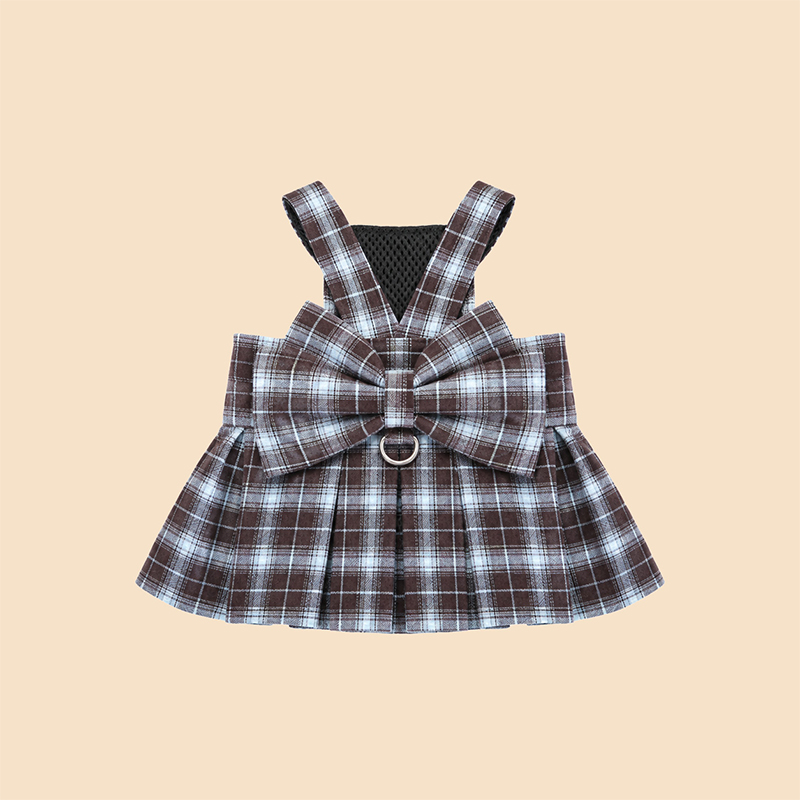
The Plaid Preppy Knit-Layered Dog Dress is built around a faux-layered construction. The upper section presents the appearance of a knit garment, while the lower portion forms a plaid tiered skirt. Rather than requiring the dog to wear separate pieces, the garment creates the coordinated look within a single dress.
This design decision provides several benefits. A genuine two-piece outfit can be difficult to put on, may shift during movement, and can create additional fitting or styling issues. The faux-layered structure delivers a similar visual effect without the need to coordinate separate garments. For pet owners, this can make dressing faster and more convenient. For retailers, it creates a product with an immediately understandable styling story.
The design draws from preppy fashion, a category commonly associated with clean lines, collegiate references, coordinated colors, and structured but approachable styling. The plaid skirt introduces a recognizable school-inspired pattern, while the knit-look upper area softens the overall appearance. The result is less formal than a traditional uniform-inspired dress and more distinctive than a simple patterned pet garment.
The tiered skirt is an important visual feature. A single flat skirt can look similar to many standard dog dresses available in the market. By contrast, the layered skirt creates additional depth, movement, and visual rhythm. It gives the product a more developed silhouette and can make the dress more noticeable in online product photography.
The garment is intended for small and medium dog breeds and is available in six sizes: XS, S, M, L, XL, and XXL. The size range allows retailers to address multiple body profiles within the target segment rather than limiting the collection to only the smallest toy breeds.
2. Key Product Specifications
The following specifications provide a practical overview for buyers evaluating the product for wholesale, retail, or private-label development.
| Specification | Product Information |
|---|---|
| Product name | Plaid Preppy Knit-Layered Dog Dress |
| Category | Dog dresses and fashion pet apparel |
| Suitable breeds | Small and medium dog breeds |
| Available sizes | XS, S, M, L, XL, XXL |
| Seasonal positioning | Spring, autumn, and winter |
| Style direction | Preppy, sweet, collegiate, youthful |
| Construction | Faux-layered knit top with a plaid tiered skirt |
| Color development | Custom knit colors, plaid patterns, and skirt combinations |
| Branding options | Embroidery, printing, silicone or rubber logos, woven labels, wash labels, hang tags, and packaging |
| Manufacturing services | OEM, ODM, sampling, production, quality inspection, and international shipping support |
The dress is positioned primarily as a fashion item rather than as technical outerwear. Its value lies in appearance, styling flexibility, comfort-oriented pet proportions, and the ability to become part of a coordinated seasonal collection. Retailers can merchandise it with other preppy accessories, matching colorways, bows, collars, harnesses, or seasonal photography themes.
3. Why the Faux-Layered Structure Creates a Stronger Retail Proposition
Many dog dresses rely on a single fabric, a single print, or a simple A-line shape. These products can be practical, but they may be difficult for retailers to differentiate when displayed beside similar garments. The Plaid Preppy Knit-Layered Dog Dress addresses this issue through visual composition.
The faux-layered design combines two familiar fashion elements in one garment. The knit upper section suggests softness and warmth, while the plaid skirt introduces pattern and movement. Because these components appear coordinated, the product can communicate a complete outfit at a glance. This is useful for e-commerce listings, where shoppers often make initial decisions based on a single product image.
The construction also gives the dress a stronger identity than a standard plaid-print dress. A printed plaid surface alone may communicate a pattern but not necessarily a complete style concept. In this product, the plaid is part of a larger preppy narrative. The knit-and-skirt relationship creates contrast between texture, color, and silhouette.
Another advantage is styling simplicity. Pet owners do not need to select a separate top, skirt, or accessory to create a coordinated look. The dress is ready to wear as a complete visual statement. Retailers can therefore describe it using clear merchandising language such as “layered look,” “preppy outfit,” “school-inspired style,” or “one-piece coordinated dress.”
The tiered skirt further separates the product from flat, uncomplicated silhouettes. Its layered appearance can create a sense of volume without relying on excessive decoration. This makes the dress suitable for everyday outings as well as special occasions, pet photography, social media content, and seasonal campaigns.
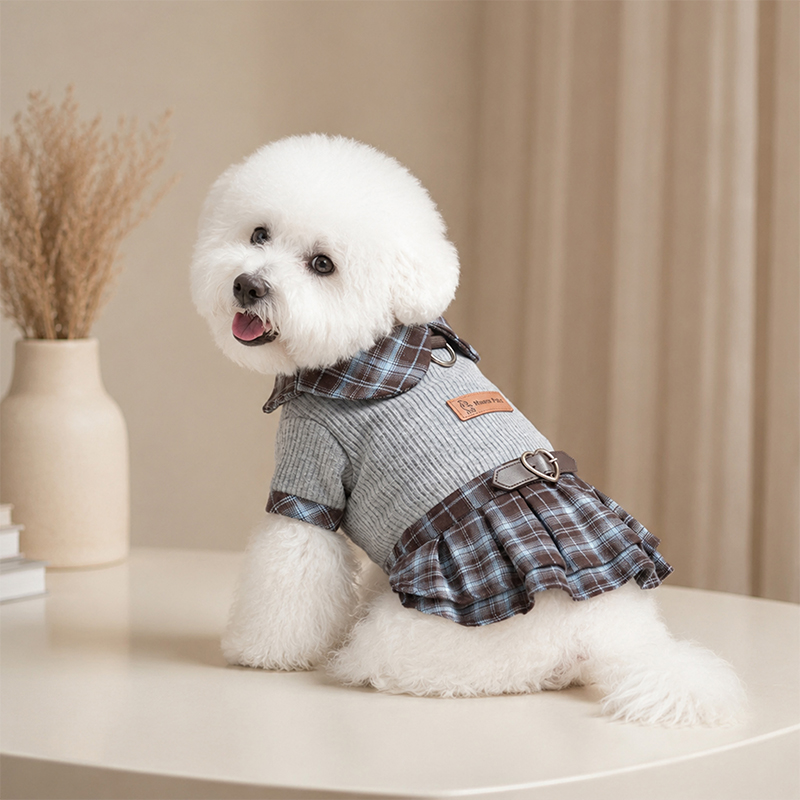
Plaid Preppy Knit-Layered Dog Dress
4. Advantages Compared with Conventional Dog Dresses
4.1 More Distinctive Than a Single-Print Dress
A single-print dog dress generally depends on its fabric pattern to create visual interest. Although plaid remains commercially recognizable, a basic plaid dress may be difficult to distinguish from competing products. The knit-layered construction adds another design dimension, giving buyers a more complete fashion concept.
The product does not simply apply plaid to the entire garment. Instead, it uses plaid selectively in the skirt area and combines it with a contrasting upper section. This creates a balanced appearance and allows customization through multiple color relationships. A retailer can maintain the same basic silhouette while offering different plaid palettes for different markets.
4.2 Easier to Style Than Separate Garments
Separate pet garments may provide styling flexibility, but they also increase the number of pieces that must be selected, fitted, stored, and cleaned. The one-piece construction reduces this complexity. Owners can achieve a layered appearance with one garment, which can be especially valuable for quick dressing before walks, visits, events, or photographs.
For retailers, the one-piece format simplifies product presentation. The product can be shown on its own, with accessories added as optional styling suggestions. It can also be included in gift sets or seasonal displays without requiring shoppers to understand how several pieces should be coordinated.
4.3 Stronger Visual Merchandising Potential
The preppy styling offers a clear theme for merchandising. It can be integrated into back-to-school campaigns, autumn fashion edits, spring lifestyle collections, holiday photography, or boutique displays focused on coordinated pet and owner fashion.
The product is also suitable for online merchandising because its layered appearance can be explained quickly in a product title and displayed clearly in front, side, and lifestyle images. A distinct silhouette can improve the visual variety of a catalog, helping a retailer avoid an assortment composed entirely of similar basic dresses.
4.4 Suitable for Multiple Customer Occasions
The dress can be marketed for daily wear, casual outings, pet-friendly cafés, family photographs, birthday events, seasonal parties, and social media content. Its design is decorative without being restricted to a single formal occasion.
This versatility can help retailers create several sales messages around one product. For example, a spring campaign may emphasize sweet styling, while an autumn campaign may focus on the knit-look upper section and plaid skirt. The same product can therefore support more than one promotional narrative.
4.5 Adaptable for Private-Label Collections
Private-label buyers often need a product that is recognizable but adaptable. A completely fixed design can limit brand development, while an overly generic base may not give a collection a strong identity. This dress offers a middle ground. The layered preppy concept remains consistent, while colors, patterns, labels, packaging, and selected details can be modified.
Buyers may request different knit shades, revised plaid colorways, adjusted skirt combinations, or branding applications. Multiple versions can then be launched as a coordinated collection. The result is a family of products with visual consistency but enough variation to encourage repeat purchases and broader merchandising.
5. Fit, Sizing, and Selection Guidance
Correct sizing is essential in pet apparel. Dogs vary significantly in body shape, chest depth, neck size, coat thickness, and back length. Buyers should therefore treat the measurements below as a sizing reference rather than relying only on breed names or estimated weight.
| Size | Neck | Chest | Back Length | Approximate Weight |
|---|---|---|---|---|
| XS | 22 cm | 33 cm | Approximately 22 cm | Approximately 3 lb |
| S | 24 cm | 37 cm | Approximately 25 cm | Approximately 5 lb |
| M | 30 cm | 44 cm | Approximately 29 cm | Approximately 5–8 lb |
| L | 33 cm | 48 cm | Approximately 33 cm | Approximately 8–14 lb |
| XL | 36 cm | 53 cm | Approximately 36 cm | Approximately 14–17 lb |
| XXL | 40 cm | 58 cm | Approximately 39 cm | Approximately 17–22 lb |
Pet owners should measure the neck at the position where a collar naturally rests, measure the chest around the broadest part of the rib cage, and measure the back from the base of the neck to the desired garment endpoint. A flexible tape should be used without pulling tightly against the body.
When a dog falls between two sizes, the chest measurement should receive particular attention because sufficient room is important for movement and comfort. Coat thickness should also be considered, especially during autumn and winter. A dog with a dense coat may require additional allowance compared with a short-haired dog of the same weight.
Wholesale buyers should publish the complete measurement chart with their retail listings. Weight guidance is useful for quick reference, but it should not replace body measurements. Clear size information can reduce returns, improve customer confidence, and help establish a more reliable shopping experience.
6. Comfort-Oriented Pet Apparel Development
Fashion appeal is important, but a dog dress must also be compatible with normal pet movement. The product is developed around pet-specific proportions rather than simply scaling down a human garment. This distinction matters because dogs have different neck, chest, shoulder, and back structures from people.
A suitable dog dress should permit ordinary activities such as walking, sitting, standing, turning, and resting. The garment should not place unnecessary pressure around the neck or chest, and the skirt should not interfere with leg movement. Retailers can support proper use by providing fitting instructions and advising customers to supervise pets when introducing new clothing.
The one-piece format can also reduce the risk of separate layers becoming misaligned during normal movement. Since the visual components are joined together, the style remains coordinated while the dog walks or changes position. This is a practical advantage over outfits that depend on multiple independent pieces.
Comfort is influenced by more than measurements. Fabric hand feel, seam placement, trim selection, garment weight, and finishing quality all contribute to the wearing experience. During product development, these factors should be evaluated through samples and wear-oriented checks rather than by appearance alone.
For seasonal use, the knit-look upper area contributes to the visual impression of warmth and softness. However, the dress should be selected according to the dog’s individual tolerance, local climate, activity level, and coat type. It should not be presented as a substitute for technical cold-weather protection in extreme conditions.
7. Customization and OEM/ODM Development
The product is suitable for brands, wholesalers, distributors, online retailers, pet boutiques, and private-label businesses seeking a differentiated dog clothing item. OEM and ODM services enable buyers to select the level of customization appropriate for their market and budget.
7.1 Color and Pattern Customization
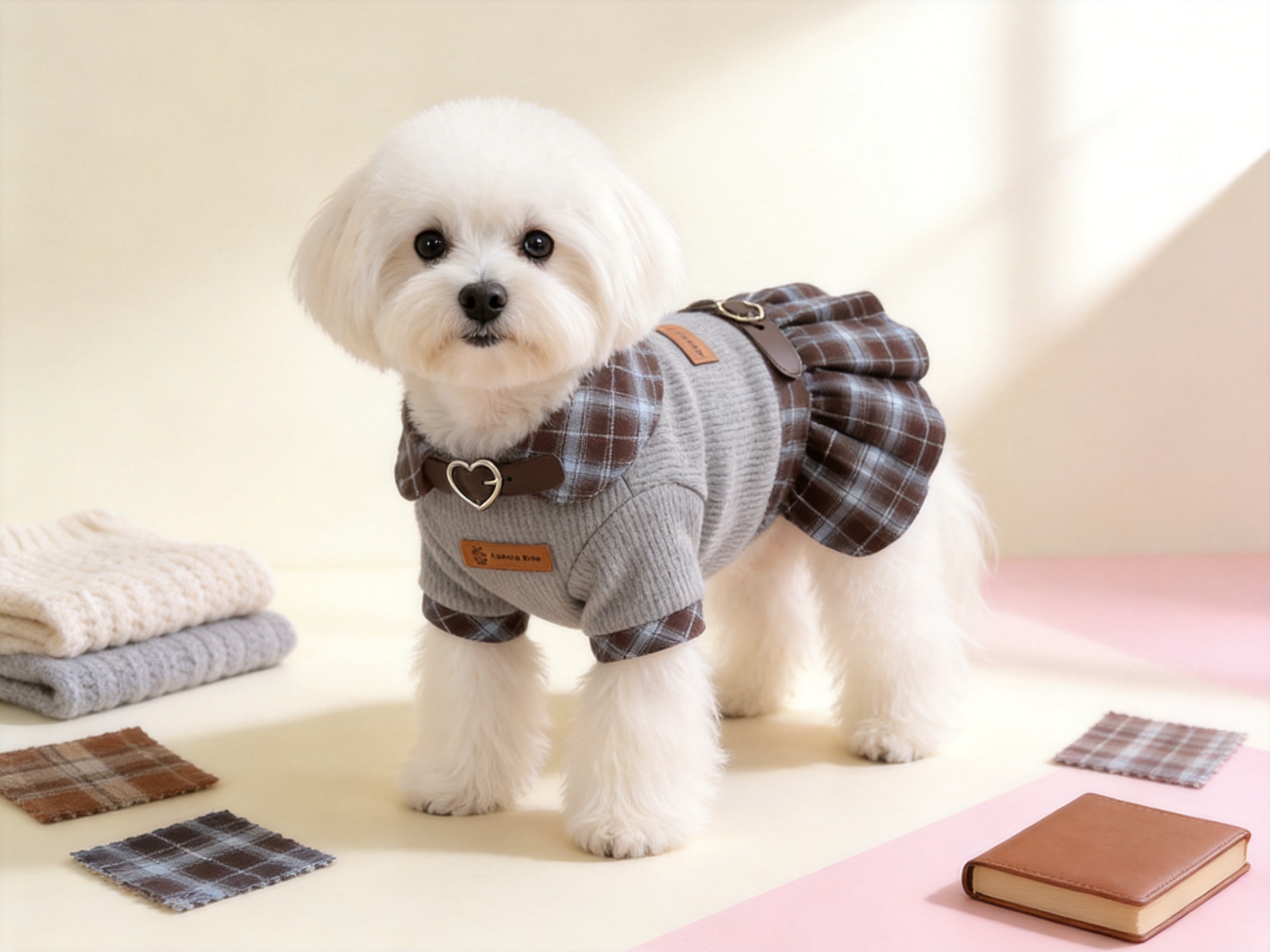
The simplest development route is to retain the established silhouette while adjusting the knit color, plaid pattern, or skirt color combination. This approach can produce a new market version without changing the complete garment structure.
For example, a retailer may request neutral plaid for a minimalist collection, pastel colors for a sweet spring range, darker tones for autumn merchandising, or brighter combinations for a youthful online store. The preppy character can be preserved while the color direction is adapted to regional preferences and brand identity.
7.2 Size Grading and Market Requirements
Different markets may use different size expectations. Buyers can discuss size grading according to their customer base, target breeds, and selling channels. A specialty boutique serving toy breeds may emphasize smaller sizes, while a broader online retailer may require more balanced stock across the full range.
Size development should be handled systematically. Changes to one measurement can influence the relationship between the neck, chest, back length, skirt proportion, and overall appearance. Sample review is therefore important before bulk production begins.
7.3 Branding Applications
Branding can be incorporated through embroidered logos, printed graphics, silicone or rubber logo applications, custom woven labels, wash labels, hang tags, and branded packaging. The most suitable method depends on the brand image, order quantity, placement, garment area, and desired durability.
A small woven label may suit a subtle boutique identity, while a hang tag can communicate product information and care instructions at the point of sale. Branded packaging can help create a more complete unboxing experience for online customers. Buyers should confirm artwork, color references, placement, and approval samples before production.
7.4 Sample Development
Sample development provides an opportunity to evaluate the garment before committing to bulk production. Buyers can review appearance, color balance, measurements, pattern placement, logo execution, packaging, and general finishing.
For a layered dress, sample evaluation should also examine whether the knit top and plaid skirt appear visually integrated. The tier arrangement should be checked for consistency, and the garment should be assessed on a suitable dog model or dress form whenever possible.
7.5 Seasonal Collection Development
The core dress can serve as one item within a larger seasonal collection. Related products may use similar plaid colors, knit tones, labels, or packaging. This allows retailers to build a coordinated range rather than presenting the dress as an isolated item.
A seasonal collection may include several dog dress styles, cat clothing items, small pet garments, or accessories with matching color references. Consistent visual language can make the retailer’s assortment easier for customers to recognize and browse.
8. Manufacturing Capabilities and Production Strengths
The manufacturer is Taizhou Feile Pet Products Co., Ltd., a pet apparel company headquartered in Taizhou, Zhejiang, China. The company integrates design, production, and sales and provides OEM and ODM services for customers in international markets.
The company reports five years of offline manufacturing experience. Its cross-border online division began operation in November 2025, with a focus on providing one-stop pet apparel solutions for global cross-border sellers and brands. This combination of production experience and newer international service development supports buyers who need both manufacturing execution and communication for export-oriented projects.
The manufacturing operation includes 48 fully automatic sewing production lines. These lines are supported by a professional team of 77 employees covering design, pattern making, production, and quality control. The reported daily production capacity is 3,000 pieces.
For buyers, production capacity is valuable when it is combined with organization and quality management. A manufacturer must be able to translate approved designs into repeatable production while maintaining consistency across sizes, colors, and batches. The presence of dedicated teams for design, pattern making, production, and inspection provides a structure for managing these stages.
The company’s product range covers dog apparel, cat apparel, and small pet apparel, with more than 800 SKUs in total. It also reports the launch of approximately 8–12 new styles per week. This product development activity can be useful for customers who need regular assortment updates or want to monitor emerging pet fashion directions.
8.1 Design and Pattern-Making Coordination
Design quality depends on more than the initial sketch. A pet apparel design must be translated into patterns that account for body shape, movement, seam relationships, fabric behavior, and size grading. Pattern-making expertise is especially relevant to a faux-layered garment because the upper section and skirt must maintain a visually balanced relationship across sizes.
Coordinating design and pattern making can reduce the risk that a product looks attractive in a drawing but loses its proportions during production. Buyers should use the sample stage to confirm that the intended preppy silhouette remains clear in every target size.
8.2 Automated Sewing Production
Fully automatic sewing production lines can support repeatability and organized workflow. Automation does not eliminate the need for human inspection, but it can help standardize certain operations and improve production efficiency for confirmed orders.
For a dress with multiple visual sections, production consistency matters. Differences in seam alignment, skirt tier positioning, or finishing may affect how the product appears in retail photography and on the dog. Structured production lines can assist with maintaining uniformity across a batch.
8.3 Quality Control Responsibilities
Quality control should cover raw materials, color consistency, measurements, sewing, trims, branding, packaging, and final appearance. For this product, inspections may include checking the relationship between the knit-look upper section and plaid skirt, confirming size measurements, examining seam security, and reviewing the overall finish.
Buyers can establish inspection criteria before production. A written specification should identify acceptable measurement tolerances, approved colors, logo placement, packaging requirements, and any special construction details. Clear standards help align the factory and buyer before bulk goods are completed.
8.4 Production Capacity for Wholesale Programs
The reported daily capacity of 3,000 pieces can support wholesale and private-label programs that require planned production rather than small experimental purchases. At the same time, capacity must be matched with material availability, confirmed specifications, approved samples, and production scheduling.
Standard order terms specify a minimum order quantity of 500 pieces per order, with a single-color minimum of at least 300 pieces for each color. The stated production lead time is 10–15 days after order confirmation and receipt of the deposit. Payment terms are listed as a 50% deposit to confirm the order and a 50% balance before shipment.
These terms should be reviewed with the manufacturer for each project, particularly when the design includes custom patterns, multiple colorways, special packaging, or revised size grading. Large-volume and customized orders may require a detailed production schedule and separate quotation.
9. Quality and Production Workflow
A reliable workflow generally begins with product brief confirmation. The buyer and manufacturer should agree on the intended market, size range, colors, branding, packaging, quantity, and delivery expectations. This stage is important because unclear specifications can create avoidable changes later.
The next stage is design and sample development. The buyer reviews the proposed sample for appearance and construction. For the Plaid Preppy Knit-Layered Dog Dress, this may include checking whether the knit top communicates the intended softness, whether the plaid pattern is correctly positioned, and whether the tiered skirt has the desired visual fullness.
After sample approval, materials and production details should be confirmed. The factory then prepares for bulk manufacturing, including material sourcing, pattern preparation, line planning, sewing, finishing, and inspection.
During production, quality checks may be performed at different stages. In-process inspections can identify problems before the entire order is completed. Final inspections can then verify the finished garments against the approved sample and order specifications.
Packaging is the final presentation stage. Standard export packaging or customized retail packaging may be selected. Buyers selling through e-commerce should consider how the garment will appear when unpacked, stored, photographed, and shipped to the end customer.
10. Applications for Different Sales Channels
10.1 Pet Boutiques
Pet boutiques can use the dress as a focal item in a preppy or seasonal display. Its layered styling gives sales staff a clear explanation to offer customers, while the size range supports multiple small and medium dog profiles.
Boutiques may pair the dress with collars, bows, hair accessories, seasonal bandanas, or coordinated owner-and-pet color themes. A display featuring plaid, knit textures, and collegiate-inspired colors can create a cohesive visual environment.
10.2 Online Retailers
Online stores can emphasize the one-piece construction, layered appearance, size selection, and customization potential. Product photography should show the garment from several angles and provide close views of the upper section, skirt tiers, seams, and labels.
Search and merchandising language may include terms such as preppy dog dress, plaid dog clothing, layered pet dress, collegiate dog outfit, sweet dog apparel, and seasonal dog fashion. Product descriptions should remain accurate and should clearly distinguish style features from technical performance claims.
10.3 Distributors and Wholesalers
Distributors can position the product as a differentiated addition to their pet apparel catalog. The six-size range, multiple customization options, and recognizable design theme make it suitable for supplying independent stores and online sellers.
Wholesale presentations should include the size chart, packaging information, available branding methods, order quantities, sample process, and expected production schedule. Colorway examples can help downstream retailers understand how the style may be adapted for different customer groups.
10.4 Private-Label Brands
Private-label brands can use the design as part of a signature apparel line. The brand may retain the layered preppy silhouette while developing exclusive plaid combinations, logo placements, hang tags, and packaging.
This approach can help a new collection appear coordinated from its first launch. Rather than starting with unrelated garments, the brand can establish a consistent fashion direction and extend it through additional styles over time.
11. Photography and Merchandising Recommendations
The product’s strongest selling points are visual, so photography should communicate the layered construction clearly. A front view can show the relationship between the knit-look top and plaid skirt. A side view can demonstrate the back length and overall silhouette. Detail images can highlight the plaid tiers, labels, logo applications, or fabric contrast.
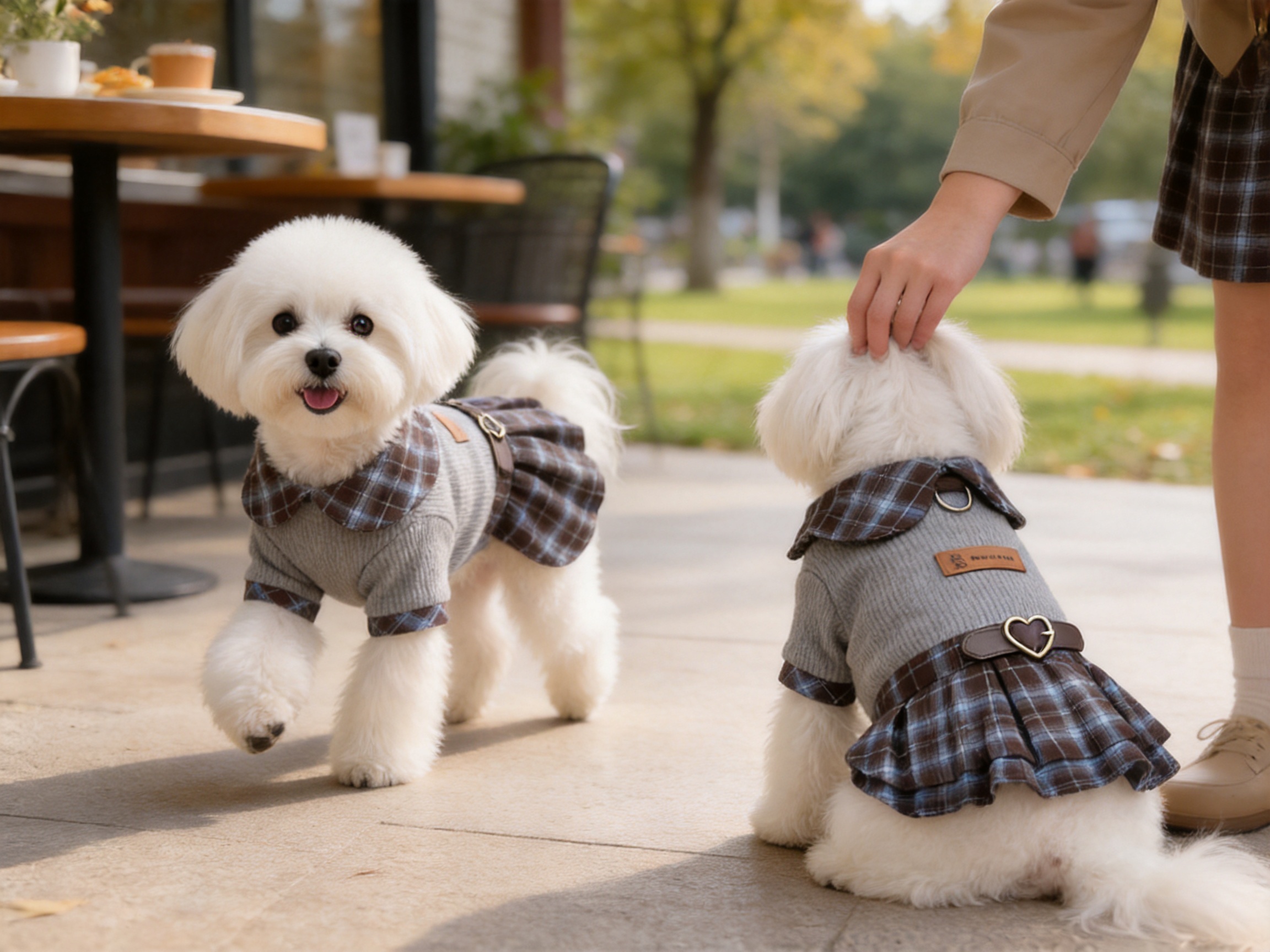
Lifestyle photography can place the dress in settings such as a park, café, home interior, seasonal event, or outdoor walkway. These settings help customers understand that the garment can be used for ordinary outings as well as special photographs.
Retailers should avoid relying only on a flat image. A dog model in a natural standing or walking position can show how the skirt falls and how the garment relates to the body. However, the dog should be comfortable and safely supervised during photography.
Merchandising copy should explain the faux-layered construction directly. Terms such as “two-piece look in one dress” or “knit-layered top with plaid tiered skirt” can help shoppers understand the product quickly. Clear language is especially important when the garment is compared with simple plaid dresses.
12. Care, Use, and Customer Communication
Care instructions should be confirmed according to the final materials and construction selected for production. Buyers should request the appropriate wash label information from the manufacturer and include it in retail packaging or product descriptions.
Pet owners should inspect clothing regularly for loose threads, damaged seams, or worn trims. The garment should be removed if it becomes damaged or if the dog shows signs of discomfort. Supervision is recommended when pets wear clothing, particularly during the first use or when the dog is not accustomed to apparel.
Retailers can improve customer satisfaction by explaining that the dress is intended for suitable everyday and seasonal fashion use, not as a restraint or substitute for specialized protective equipment. Customers should also be encouraged to select the size using actual measurements rather than weight alone.
13. Order Planning for International Buyers
International buyers should begin by identifying the intended sales channel, estimated order volume, target season, preferred colors, and desired branding. These decisions influence sample development, production planning, packaging, and shipping arrangements.
The listed MOQ is 500 pieces per order, with a minimum of 300 pieces for each color. Buyers planning several colorways should calculate inventory carefully. A collection with too many colors may divide the order volume and increase stock complexity, while too few colors may limit visual variety.
Production is listed at 10–15 days after order confirmation and deposit receipt. Buyers should allow additional time for sample approval, artwork confirmation, material preparation, inspection, export handling, and international transportation. Seasonal programs should be planned well before the intended retail launch.
Payment terms are stated as 50% deposit and 50% balance before shipment. All commercial terms, specifications, inspection arrangements, shipping documents, and packaging requirements should be confirmed in writing before production begins.
14. Frequently Asked Questions
Q1: What type of product is the Plaid Preppy Knit-Layered Dog Dress?
It is a one-piece dog dress that combines a knit-look upper section with a plaid tiered skirt. The garment creates the appearance of a coordinated two-piece outfit while remaining a single pet apparel item.
Q2: Which dogs are the main target customers?
The dress is designed for small and medium dog breeds. The available sizes are XS, S, M, L, XL, and XXL. Because body shapes vary, customers should compare their dog’s neck, chest, and back measurements with the size chart before ordering.
Q3: Is the dress suitable for every season?
The product is positioned for spring, autumn, and winter fashion collections. Actual suitability depends on climate, activity level, coat type, and the dog’s individual comfort. It should not be treated as technical extreme-weather protection.
Q4: How is this dress different from a basic plaid dog dress?
A basic plaid dress may use plaid as the primary or only visual feature. This product combines plaid with a knit-look upper section and tiered skirt construction, creating a more dimensional preppy outfit appearance.
Q5: Can the colors be customized?
Yes. Customization can include knit colors, plaid patterns, skirt color combinations, and selected design details. Buyers should confirm the available development options and minimum quantities for each project.
Q6: Can a private label be added?
Yes. Branding options may include embroidered logos, printed graphics, silicone or rubber logo applications, custom woven labels, wash labels, hang tags, and branded packaging.
Q7: Does the manufacturer provide OEM and ODM services?
Yes. The manufacturer provides OEM and ODM services for pet apparel brands, wholesalers, distributors, retailers, and private-label businesses. Services can include sample development, seasonal collection planning, bulk production, quality inspection, and international shipping support.
Q8: What is the minimum order quantity?
The standard MOQ is 500 pieces per order. The stated single-color MOQ is at least 300 pieces for each color. Customized projects should be confirmed individually because requirements may vary according to design and production details.
Q9: What is the stated production lead time?
The standard production lead time is 10–15 days after order confirmation and receipt of the deposit. Buyers should also account for sampling, approval, packaging preparation, inspection, and transportation time.
Q10: What manufacturing resources are available?
The manufacturer reports 48 fully automatic sewing production lines, a 77-person professional team, and a daily production capacity of 3,000 pieces. Its teams cover design, pattern making, production, and quality control.
Q11: Does the company produce only dog clothing?
No. Its product categories include dog apparel, cat apparel, and small pet apparel. The company reports more than 800 SKUs and regular development of new styles.
Q12: What information should a buyer prepare before requesting a quotation?
A buyer should prepare the expected quantity, size breakdown, colorways, logo requirements, packaging needs, target delivery date, shipping destination, and any requested changes to the standard design. Providing this information early can make quotation and production planning more efficient.
15. Final Assessment
The Plaid Preppy Knit-Layered Dog Dress offers a commercially useful combination of recognizable style and practical one-piece construction. Its knit-look upper section, plaid tiered skirt, and preppy character provide stronger visual differentiation than a basic single-print dress. The layered appearance can attract customers seeking fashionable pet clothing without the complexity of coordinating separate garments.
For retailers, the product supports multiple merchandising themes, including spring fashion, autumn collections, collegiate styling, sweet petwear, photography, and boutique lifestyle displays. For private-label buyers, the ability to customize colors, plaid patterns, size grading, logos, labels, and packaging creates room for brand development.
The manufacturing platform further supports wholesale use. With design, pattern-making, production, and quality control functions, 48 fully automatic sewing production lines, a reported daily capacity of 3,000 pieces, and a broad pet apparel catalog, the supplier is positioned to support structured OEM and ODM programs.
Buyers should evaluate samples carefully, confirm measurements and finishing requirements, and plan quantities according to the stated MOQ and color minimums. When supported by accurate sizing information, clear product photography, and appropriate seasonal merchandising, this dress can serve as a distinctive addition to small and medium dog apparel collections.
References
1. Product specification sheet for the Plaid Preppy Knit-Layered Dog Dress, including design features, size information, customization options, and order terms.
2. Manufacturer-provided company profile for Taizhou Feile Pet Products Co., Ltd., including production resources, product categories, staffing, and reported manufacturing capacity.
3. Internal pet apparel product development information concerning OEM and ODM sampling, size grading, branding applications, quality inspection, packaging, and international order support.
4. Standard apparel merchandising principles for product differentiation, seasonal assortment planning, e-commerce presentation, and private-label collection development.
Product: Plaid Preppy Knit-Layered Dog Dress

NEXT:Denim Tiered Dog Skirt for Casual Street-Style Pet Fashion Collections
- Lolita Cake Dress
- Cool Style Tassel Top Pet Lolita Dress
- Sweet Bow Princess Dog Dress
- Denim Pinafore Dress With Pockets Cute Casual Small Dog Outfit
- French Doll-neck Dog Dress Elegant Pet Wear
- Korean Sweet Lolita Dog Dress Cute Party Outfit
- Flutter Sleeve Dog Dress Lightweight Summer Pet Wear
- Ruffle Flutter Sleeve Pet Dress Cute Princess Style
- French Style Embroidered Dog Dress Elegant Pet Apparel
- Mint Green Heart Spaghetti Strap Tulle Dog Dress Princess Party Outfit
- Gingham Bow Dog Dress Cute Summer Pet Outfit
- Navy Star Pleated Dog Dress Elegant Casual Pet Wear
- Summer Sailor Dog Dress Nautical Style Pet Apparel
- Dog Cooling Shirt Color-Block Lightweight Summer Pet Wear
- Dog Printed High-Neck Base Layer Top Thermal Stretch Pet Underwear
- Lightning Racing Performance Sportswear Breathable Athletic Pet Shirt
- Rustic Brown Plaid Dog Shirt Casual Outdoor Pet Wear
- Cream Embroidered Dog Blouse Elegant Pet Shirt
- Korean Style Pink Textured Tulle Camisole Small Dog Fashion Top
- Star & Letter Casual Pet T-Shirt Daily Wear Dog Top
- +86-13362661217
- 13362661217@163.com
- 128 Houxin Street, Hongjia, Jiaojiang, Taizhou, Zhejiang, China
