
 English
 русский
 Español
 عربى


Lin Ruoqi — International Pet Apparel Sales Manager
Home Wear Pet Base Layer: A Comfortable, Customizable Foundation for Modern Pet Apparel Collections
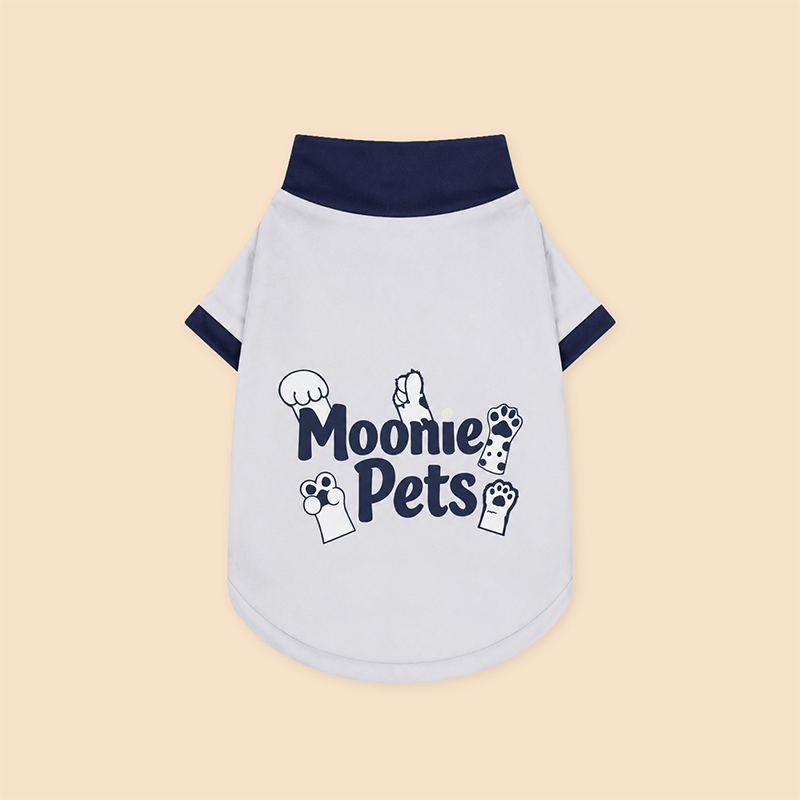
The Home Wear Pet Base Layer is a short-sleeve pet top designed for comfort, easy layering, and everyday versatility. Combining a gentle Korean casual aesthetic with practical garment construction, it gives cats and dogs a soft layer for indoor relaxation, neighborhood walks, café outings, pet gatherings, and seasonal styling. Its low-saturation gray and white stripes create a calm, adaptable appearance, while the centered hand-drawn dog illustration adds a playful retro accent without making the garment visually overwhelming.
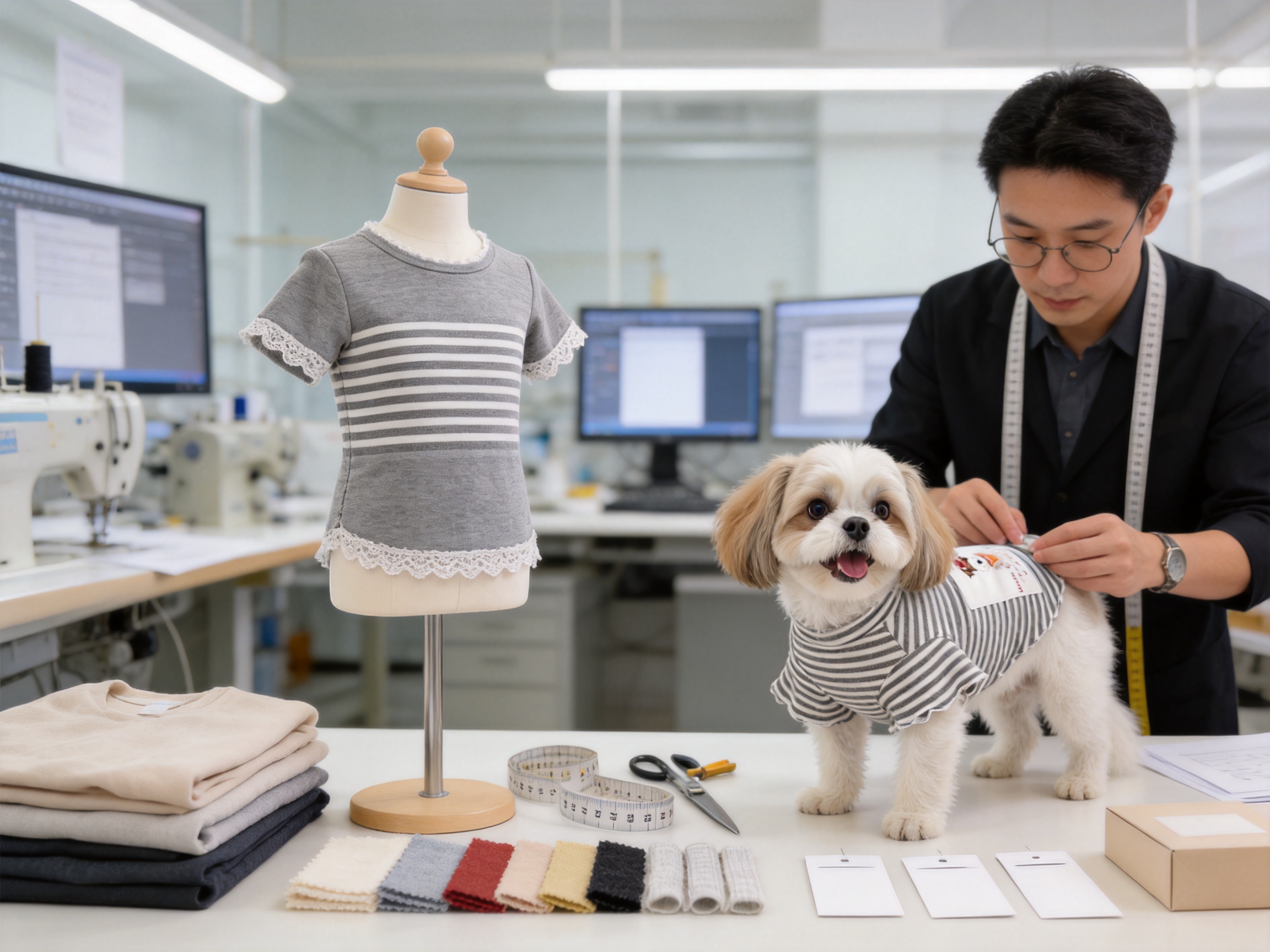
For pet apparel brands, importers, retailers, and wholesalers, this product offers more than a simple basic shirt. It is a commercially adaptable garment that can serve as a reliable core style in a dog and cat clothing collection. Its lightweight brushed knit fabric, elastic construction, reinforced lace binding, and easy-care performance address several common concerns in pet clothing: restricted movement, uncomfortable seams, difficult layering, coat matting, rapid fading, and poor fit across different body types.
The product is also suitable for OEM and ODM development. Buyers can request different colors, stripe arrangements, illustration concepts, size grading, logo applications, labels, packaging, and other brand-specific details. This flexibility allows a standard base-layer concept to become a private-label product, seasonal capsule item, promotional garment, or repeatable core style for a broader pet apparel program.
1. A Practical Pet Top Designed for Everyday Use
Many pet garments are created for a single purpose, such as cold-weather protection, formal dressing, outdoor visibility, or special occasions. A base layer must work differently. It needs to be comfortable enough for extended indoor wear, light enough to fit underneath another garment, and attractive enough to be worn on its own. The Home Wear Pet Base Layer is designed around this balance.
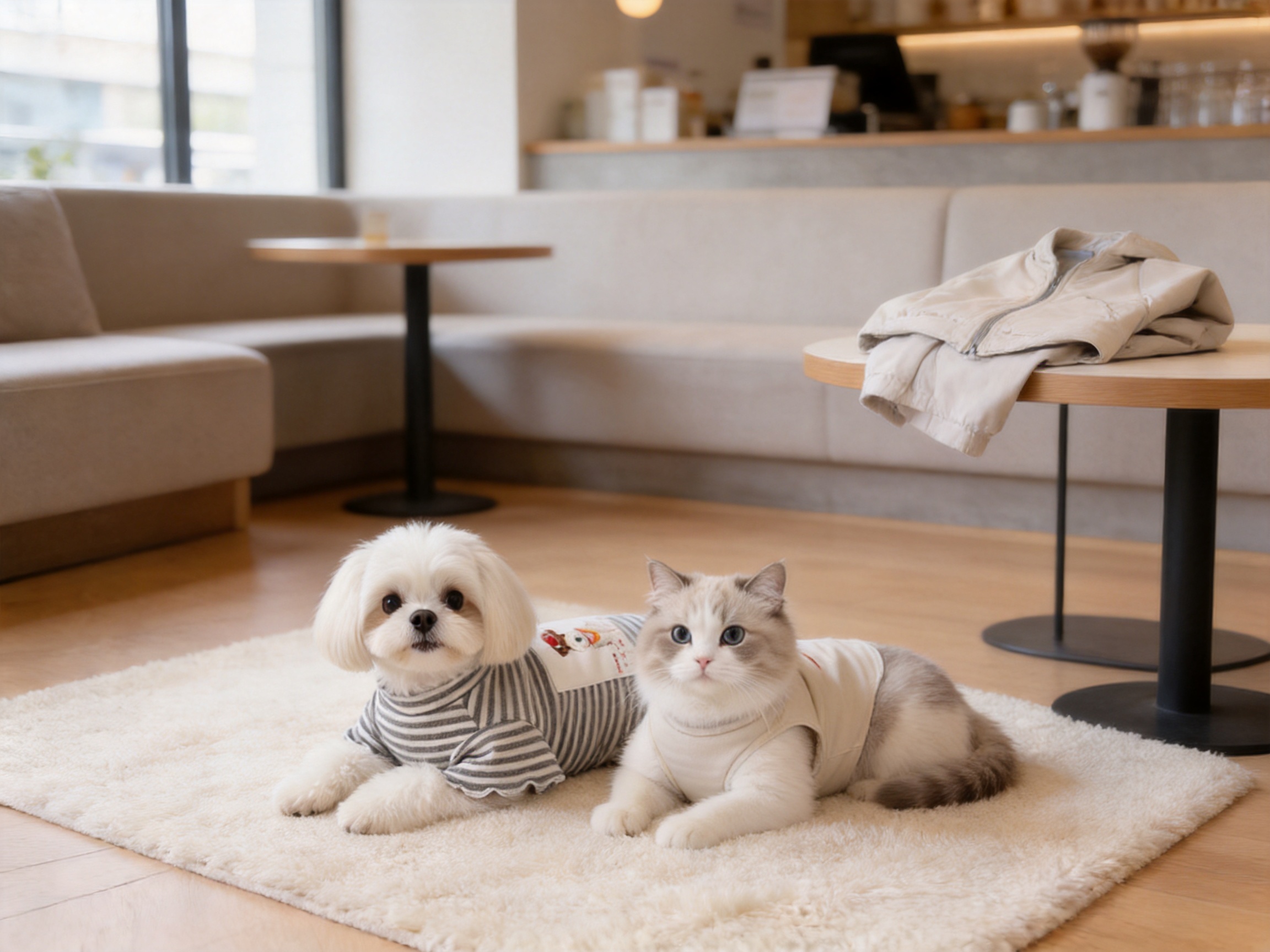
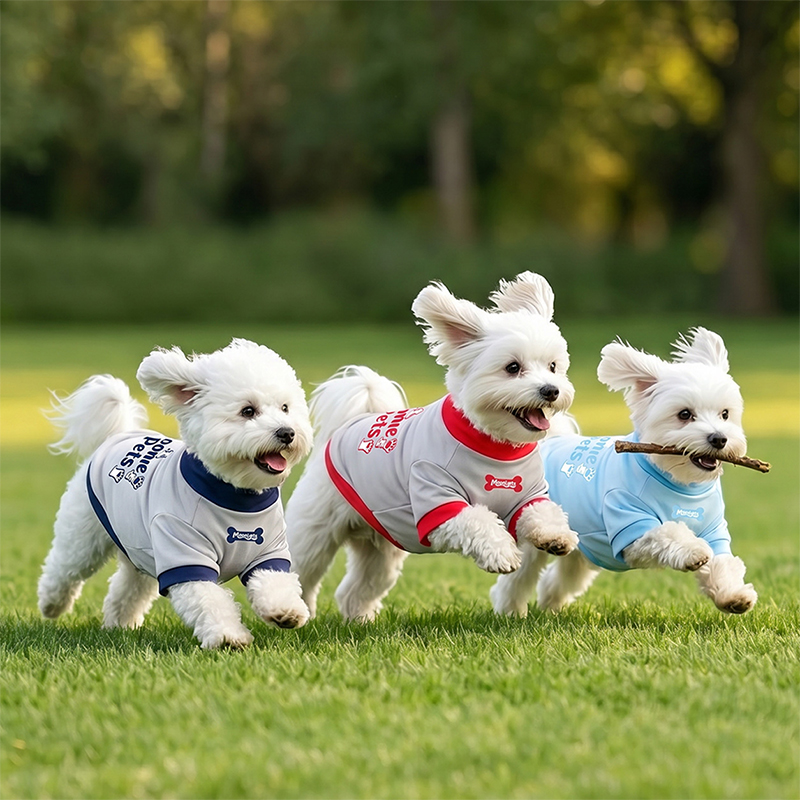
The short-sleeve structure provides coverage while leaving the limbs relatively unrestricted. This makes it appropriate for pets that do not enjoy bulky clothing or for owners who want a garment that can be worn during several activities. At home, it provides a soft layer over the torso and covers the belly, helping reduce exposure to cool indoor surfaces. During walks, it can be paired with a vest, jacket, or harness-compatible outer layer. For photoshoots and social occasions, the stripes and front illustration offer a recognizable visual identity.
The garment’s understated styling is particularly useful for commercial collections. Gray and white are broadly appealing colors that complement many coat shades, including white, cream, black, brown, gray, and mixed-color fur. The muted palette also makes the top easier to coordinate with denim-look pet accessories, neutral outerwear, suspender skirts, soft harnesses, and seasonal jackets.
Unlike highly decorative garments that may be used only occasionally, a simple base layer can encourage repeat wear. A customer may use it for morning lounging, a short trip to the groomer, an afternoon walk, a café visit, or an indoor photograph. This versatility increases the practical value of the product and gives retailers more opportunities to position it across different merchandising themes.
2. Korean Casual Styling with a Commercially Versatile Appearance
The Home Wear Pet Base Layer follows a gentle Korean casual style. This design direction is characterized by simple visual elements, soft color coordination, and a relaxed appearance rather than excessive ornamentation. The result is a garment that feels modern and approachable while remaining suitable for pets of different ages and personalities.
The low-saturation stripe pattern is one of the product’s most important visual features. High-contrast patterns can sometimes dominate a pet’s appearance or make an item difficult to coordinate with other accessories. The gray and white stripes in this design create visual texture while preserving a clean, soft impression. They can be marketed as a daily basic, a minimalist pet outfit, or part of a coordinated family lifestyle collection.
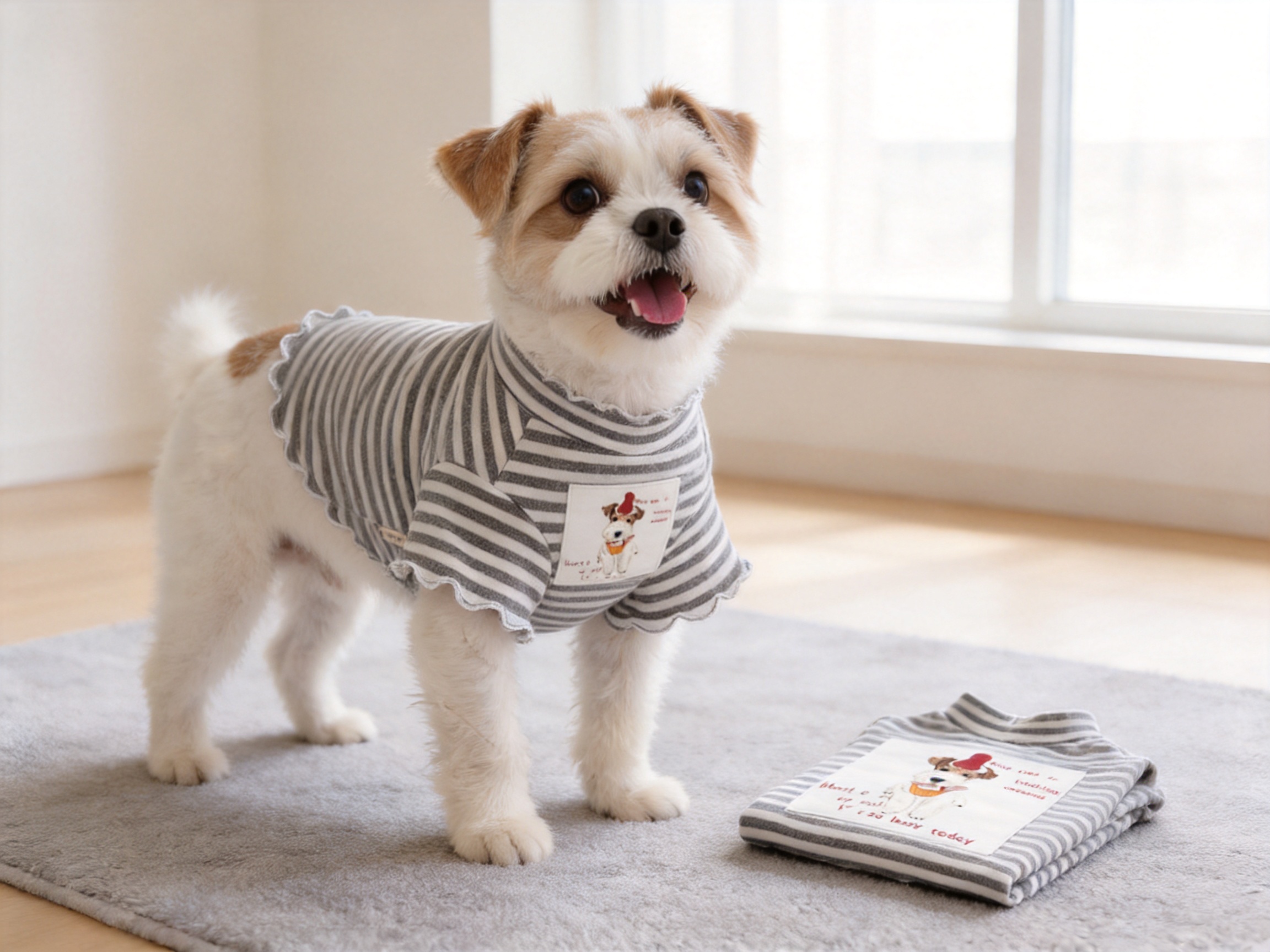
The square hand-drawn dog illustration patch on the front introduces personality. It gives the garment a focal point without turning it into a costume. The retro-inspired image can appeal to owners who prefer artistic, nostalgic, or social-media-friendly pet products. It also provides a visual area that can be adapted during OEM development. Depending on the buyer’s target market, the illustration concept could be revised to feature a different animal, character style, seasonal icon, or brand-approved artwork.
For retailers, the design can fit several product descriptions and sales themes. It may be presented as a homewear shirt, a lightweight dog top, a cat base layer, a Korean-style pet sweater alternative, or a soft transitional-season garment. This naming flexibility helps sellers test different customer segments without changing the fundamental product structure.
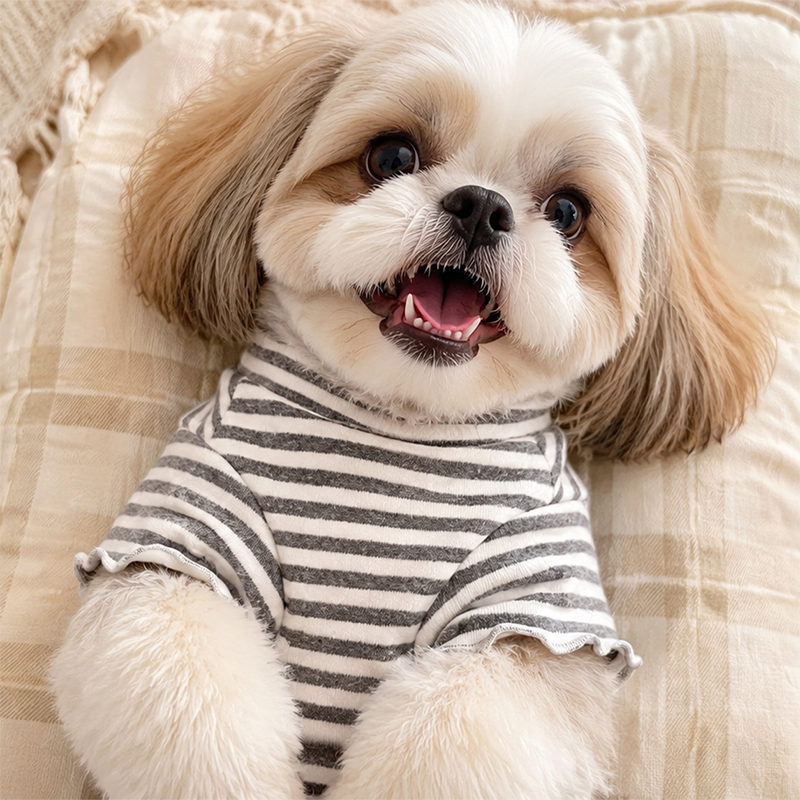
Home Wear Pet Base Layer
3. Soft Brushed Knit Fabric for Comfort and Movement
Comfort is a decisive factor in pet apparel. A garment may look attractive in a product photograph, but if it feels stiff, traps heat, rubs the skin, or restricts movement, pets may resist wearing it. The Home Wear Pet Base Layer uses a high-elastic brushed knit fabric intended to provide a soft hand feel, breathability, and stretch.
The brushed surface creates a gentle, plush touch that is suitable for direct contact with the pet’s body. This is especially valuable for indoor wear, when the garment may remain on the pet for longer periods. A soft textile can help reduce the irritation associated with rough fibers, hard seams, and rigid materials. While every pet has individual sensitivities, the skin-friendly construction supports a more comfortable wearing experience for a broad range of cats and dogs.
Stretch is equally important. Pets bend, turn, sit, lie down, climb, and move in ways that differ from human movement. A low-stretch garment can pull across the chest or shoulders, twist around the torso, and cause discomfort during normal activity. The high-elastic knit helps the top follow body movement more naturally. It can accommodate ordinary changes in posture while reducing the feeling of restriction around the limbs and chest.
Breathability makes the product suitable for indoor environments and mild outdoor conditions. It is not positioned as a heavy winter coat, which is an advantage when the intended use is layering or transitional-season dressing. The lightweight construction gives owners more control over warmth. The base layer can be worn independently in a comfortable home environment or combined with a thicker outer garment when temperatures fall.
Compared with rigid woven fabrics or heavily padded styles, a brushed knit top is also easier to fold, store, pack, and ship. This can be relevant for both consumers and commercial buyers. Retailers can present the garment in compact packaging, while online sellers can manage inventory efficiently across multiple sizes and colors.
4. Construction Details That Improve Wearability
The product’s advantages come not only from its fabric but also from the way the garment is finished. Pet clothing is exposed to pulling, stretching, washing, scratching, and repeated movement. Small construction details can therefore have a significant effect on customer satisfaction.
Elastic Collar, Cuffs, and Hem
Gray wavy lace binding is applied along the collar, cuffs, and hem. This detail creates a softer transition between the garment and the pet’s body. It helps cover and reinforce the edges of the fabric while adding a decorative finish consistent with the gentle style.
Edge binding can also reduce the perception of hard seams. Pets are sensitive to areas that press, rub, or catch on fur. A carefully finished collar is particularly important because it sits close to the neck and may be noticed immediately by the animal. The cuff and hem treatment contributes to a neat appearance while helping the garment withstand ordinary pulling and stretching.
Coverage for Indoor Warmth
The body shape covers the pet’s belly, an area that can come into contact with cool floors, drafts, or outdoor dirt. For pets that spend time resting on tile, wood, or other hard surfaces, a light garment can offer an additional layer between the body and the environment.
This belly coverage is not intended to replace a specialized cold-weather coat or medical garment. Instead, it supports everyday comfort at home and makes the product practical during mild conditions. The design is especially suitable for owners who want modest warmth without the bulk of thick fleece or padded clothing.
Coat-Friendly Surface
Long-haired pets can be challenging to dress. Rough or overly adhesive fabrics may contribute to tangling, flattening, or matting, particularly around the belly and underarms. The soft brushed knit surface is designed to reduce friction against the coat. Although regular grooming and correct sizing remain important, a smoother, softer textile can make daily wear more manageable.
The shape also helps keep the belly away from dirty floors. This can be useful for pets with longer fur, light-colored coats, or a tendency to collect dust and debris underneath the body. A cleaner belly area may reduce the frequency of wiping after indoor or outdoor activity.
5. Eco-Friendly Digital Printing and Skin-Conscious Decoration
The front hand-drawn dog print is produced using an eco-friendly digital printing approach. Unlike some decorative applications that rely on thick adhesive films or rigid patches, digital printing can create a design with a softer surface and less noticeable buildup. This is beneficial for a garment intended to remain comfortable during sitting, resting, and movement.
A hard decoration can rub against the chest or create an uncomfortable point of pressure. It may also crack, peel, or become visually worn after repeated washing. The printing method used for this product is intended to avoid a hard adhesive feel and reduce friction against the pet’s skin. This supports the garment’s central purpose as a soft, everyday base layer rather than a purely decorative costume.
Digital printing also supports customization. Wholesale buyers can develop new artwork without committing to a complicated production process for every design variation. Brand owners may request a custom illustration, an alternative animal, a seasonal graphic, or a coordinated print that matches other products in a collection. This is especially useful for small and medium-sized brands seeking distinctive products without creating an entirely new garment pattern.
From a product development perspective, the print area can become a brand storytelling element. A retailer may use illustrations inspired by local culture, nature, travel, family life, or a particular pet lifestyle. A collection can include several related drawings while maintaining the same striped base layer and construction standards. This gives buyers a way to create assortment variety without losing manufacturing efficiency.
6. Pilling and Fade Resistance for Repeat Wear
Pet clothing must withstand more than ordinary fashion use. It may be exposed to fur, saliva, food, outdoor dust, scratching, rolling, and frequent laundering. For this reason, resistance to pilling and fading is an important advantage in a basic garment.
The Home Wear Pet Base Layer is designed to resist pilling during regular use and washing. Pilling occurs when loose fibers gather into small balls on the fabric surface, affecting both appearance and tactile quality. A fabric with improved pilling resistance can maintain a cleaner look over a longer period, which is important for a garment marketed as an everyday essential.
Color retention is also important for striped garments. If the gray stripes fade unevenly or the illustration loses clarity quickly, the product may appear worn before the fabric itself has reached the end of its useful life. The product’s fade-resistant performance is intended to help maintain the original visual balance through repeated care.
Care instructions should still be followed according to the final production specification. Appropriate washing temperature, gentle handling, and avoidance of harsh chemicals can help preserve the print, stretch, and surface texture. Retailers can support customer satisfaction by including clear care labels and practical washing guidance in the product packaging.
7. Suitable for Cats and Dogs of Different Ages
The Home Wear Pet Base Layer is designed for cats and dogs of all ages, provided the selected size and fit are appropriate. Young pets may benefit from a soft, flexible top during indoor rest or mild outings. Adult pets can wear it as a daily basic, while older pets may appreciate a lightweight layer that does not add unnecessary bulk.
Age alone does not determine suitability. Body shape, coat thickness, activity level, and personal tolerance should also be considered. A narrow-chested dog, a broad-chested dog, a long-bodied breed, and a compact cat may require different fit adjustments even if their weight is similar. This is why accurate measurement and thoughtful size selection are essential.
The stretch fabric provides some flexibility, but it should not be treated as a substitute for correct sizing. The neck should sit comfortably without pressure, the chest should permit normal breathing and movement, and the back length should provide useful coverage without interfering with toileting. A garment that is too tight may restrict movement, while one that is too loose may twist or catch on furniture.
For brands serving multiple markets, the base style can be developed with additional size grading. Custom patterns can be created for specific breed groups, body types, or regional demand. This is a major advantage over generic one-size pet clothing, which may fit only a narrow segment of the market.
8. Size Reference for Wholesale and Retail Planning
The standard size range includes XS through XXL. The measurements below are provided as a practical reference for product planning. Because individual pets vary in body shape and measurement technique, buyers should confirm the final production chart and recommend that customers measure the neck, chest, and back before ordering.
| Size | Neck | Chest | Back Length | Approximate Weight |
|---|---|---|---|---|
| XS | 22 cm | 33 cm | Approx. 22 cm | Approx. 3 lbs |
| S | 24 cm | 37 cm | Approx. 25 cm | Approx. 5 lbs |
| M | 30 cm | 44 cm | Approx. 29 cm | Approx. 5–8 lbs |
| L | 33 cm | 48 cm | Approx. 33 cm | Approx. 8–14 lbs |
| XL | 36 cm | 53 cm | Approx. 36 cm | Approx. 14–17 lbs |
| XXL | 40 cm | 58 cm | Approx. 39 cm | Approx. 17–22 lbs |
The weight figures are approximate and should not be used as the only basis for selecting a size. Chest circumference is often the most important measurement for a pet top, particularly for breeds with deeper chests or dense coats. Back length can also affect coverage and overall appearance. For wholesale listings, including a measurement diagram and fit notes can reduce returns and help customers choose more confidently.
9. Layering Performance Across Seasons
Layering is one of the strongest commercial and functional benefits of this product. The garment is thin and lightweight enough to fit beneath vests, suspender skirts, jackets, and other outerwear. This allows owners to adapt the pet’s clothing to changing temperatures without purchasing a completely different base wardrobe.
During spring and autumn, the top may be worn independently for mild weather. In cooler indoor environments, it can provide a comfortable first layer. During winter, it may be combined with a padded vest or coat. The smooth, flexible construction helps reduce the bulk that can occur when multiple rigid garments are stacked together.
Layering also creates opportunities for cross-selling. A retailer can display the base layer beside a vest, skirt, harness, scarf, or rain jacket. Coordinated color stories can encourage customers to purchase more than one item. Because gray and white are neutral, the top can serve as a stable foundation for brighter seasonal accessories.
For professional pet photographers, the design is equally useful. A neutral stripe pattern photographs cleanly, while the front illustration provides a recognizable detail in close-up images. The top can be used for adoption photographs, social media content, birthday sessions, café-themed shoots, and lifestyle campaigns. Its casual appearance is broad enough to fit both playful and understated visual concepts.
10. OEM and ODM Customization Opportunities
The base garment is suitable for buyers who want a ready-developed product as well as brands that need a more personalized design. OEM and ODM support can cover several stages, from initial concept development to production, inspection, and shipment.
Color and Pattern Customization
Buyers can request custom colors, stripe patterns, and related visual treatments. A brand may choose warm beige and cream for a natural collection, navy and white for a nautical theme, or seasonal tones for a limited release. Pattern width, spacing, direction, and contrast can also be reviewed during development.
Print and Artwork Development
The hand-drawn front print can be revised according to the buyer’s brand identity. Artwork may include a custom animal illustration, a series of related graphics, a simple logo-centered design, or a seasonal theme. The final artwork should be reviewed for scale, placement, color stability, and suitability for the selected fabric.
Fit and Size Grading
Custom size specifications can be developed for different cat and dog breeds. Pattern adjustments may address chest depth, back length, neck opening, sleeve proportion, or overall ease. This is important for buyers targeting specific breed communities or markets where local sizing expectations differ.
Brand Identification
Logo embroidery, heat transfer printing, and silicone or rubber logo applications are available options. Buyers can select the method according to the desired appearance, order quantity, product positioning, and comfort requirements. Personalized woven labels, wash labels, hang tags, and branded packaging can further transform the base garment into a complete private-label product.
Customization should be evaluated as a complete system. A logo’s location should not interfere with the pet’s skin or movement. Labels should be placed where they are easy to read but unlikely to cause irritation. Packaging should protect the fabric and communicate sizing, material, care information, and brand identity clearly.
11. Manufacturing Capabilities Behind the Product
Taizhou Feile Pet Products Co., Ltd. is a professional pet apparel manufacturer based in Taizhou, Zhejiang, China. The company integrates design, production, and sales, providing one-stop support for global pet apparel brands, importers, wholesalers, and cross-border sellers.
The company reports five years of offline manufacturing experience and began operating its cross-border online division in November 2025. Its production organization is supported by 48 fully automatic sewing production lines and a professional team of 77 employees covering design, pattern making, production, and quality control.
A reported daily production capacity of approximately 3,000 pieces gives the company the ability to support both repeat orders and larger seasonal programs. Capacity is important for pet apparel buyers because demand can change quickly around holidays, weather shifts, promotional campaigns, and marketplace trends. A manufacturer with organized production resources can help brands replenish popular products more efficiently.
The company’s product range includes dog apparel, cat apparel, and small pet apparel, with more than 800 total stock-keeping units. This breadth suggests experience with different garment structures, animal body shapes, materials, and finishing requirements. It also allows buyers to develop a broader collection with one manufacturing partner rather than coordinating separate suppliers for every category.
The company introduces approximately 8–12 new styles each week. Continuous style development can help buyers monitor changing consumer preferences and identify new silhouettes for seasonal assortments. It also reflects an ability to work with frequent design variation while maintaining a structured production process.
12. Production Process from Design to Shipment
A dependable pet apparel program requires more than sewing capacity. It requires coordination between design, pattern development, materials, sampling, production, inspection, and logistics. The manufacturing process for a customized base layer can be organized into several stages.
Design and Product Review
The process begins with a review of the buyer’s target market, desired style, size range, fabric expectations, decoration requirements, and price positioning. For the Home Wear Pet Base Layer, the design review may focus on stripe scale, print placement, sleeve length, binding details, and suitable use as a layering garment.
Pattern Making and Fit Development
Pattern specialists translate the design into garment panels and construction specifications. The chest, neck, back length, sleeve opening, hem shape, and ease are considered together. For pet apparel, fit development must account for movement, fur, body shape, and practical dressing. Samples can then be evaluated on appropriate size references before bulk production begins.
Material and Trim Preparation
The brushed knit fabric, binding, printing materials, labels, thread, and packaging components must be coordinated before production. Material inspection can help identify issues in color, stretch, surface feel, width, and consistency. Since the product relies on a soft hand feel and stable stripes, fabric selection is especially important.
Sampling and Approval
Samples provide an opportunity to verify the appearance and construction before committing to bulk quantities. Buyers can review the fabric, stripes, illustration, logo position, labels, size proportions, and packaging. Any necessary revisions can be documented and approved as part of the production standard.
Cutting and Sewing
Once the materials and specifications are approved, the fabric is prepared for cutting. Accurate cutting helps maintain size consistency and stripe alignment. Sewing operations then assemble the body, sleeves, collar, cuffs, and hem. Automatic sewing equipment can improve production efficiency and support repeatability across a larger order.
Printing and Finishing
The front illustration or customized decoration is applied according to the approved artwork. Finishing includes edge inspection, thread trimming, label attachment, measurement checks, and visual review. Special attention may be given to the wavy lace binding because it contributes both to the appearance and to the edge comfort of the garment.
Quality Inspection and Packing
Quality control can cover measurements, stitching, print clarity, fabric defects, color consistency, binding security, and overall appearance. Approved products are folded and packed according to the buyer’s requirements. Branded packaging, hang tags, wash labels, and shipping marks can be included for private-label orders.
13. Why Manufacturing Control Matters to Buyers
Product quality is closely connected to process control. A pet top may have an appealing concept, but inconsistent sizing, uneven stitching, weak decoration, or poor packaging can damage customer trust. Buyers therefore need a supplier that can manage the complete production chain instead of treating each stage as an isolated task.
Integrated design and manufacturing support can reduce communication gaps. When the same production partner understands the pattern, material, decoration, and finishing requirements, it becomes easier to identify potential problems early. For example, a print that looks attractive in a design file may need adjustment to remain comfortable and proportionate on a small garment. A pattern intended for a short-haired dog may require different ease when adapted for a long-haired pet.
Quality control is also important for repeat orders. Brands often need later production runs to match the original sample in color, measurements, print position, and labeling. Documented specifications and experienced production management help create a more consistent result across batches.
The company’s flexible MOQ is designed to support different business stages. The standard minimum order quantity is 500 pieces per order, with a single-color minimum of at least 300 pieces per color. These terms provide a structured starting point for wholesale and private-label development while allowing buyers to plan inventory by color and size.
14. Standard Order Terms and Commercial Planning
The standard production lead time is 10–15 days after order confirmation and receipt of the deposit. The payment structure is 50% deposit to confirm the order, with the remaining 50% balance paid before shipment. Customized designs, private-label orders, and large-volume purchases may require a detailed production schedule and quotation.
Buyers should plan additional time for artwork approval, sample development, size revisions, packaging confirmation, and shipping arrangements when ordering customized products. Early communication is especially important for seasonal launches. A brand preparing for a winter campaign, holiday collection, or marketplace promotion should allow sufficient time for sampling and inspection before the goods are needed in the destination market.
Inventory planning should also consider the size distribution. A balanced size order may not be appropriate for every customer base. Buyers targeting small companion dogs may require a larger proportion of XS, S, and M, while a broader dog apparel retailer may need increased L, XL, or XXL quantities. Historical sales data, regional breed preferences, and channel performance can help determine the most effective size mix.
15. Competitive Advantages of the Base-Layer Concept
The Home Wear Pet Base Layer offers several advantages compared with heavier, more specialized, or heavily decorated pet garments.
First, it provides multi-purpose wearability. A single product can serve as homewear, a light walking top, a layering piece, and a photo-ready outfit. This wider use range can create better value for end customers and more merchandising flexibility for retailers.
Second, it balances comfort and appearance. The brushed knit fabric and elastic construction address movement and tactile comfort, while the stripes, lace binding, and hand-drawn print create a distinctive look. Some basic pet shirts prioritize function and appear generic; some fashion garments prioritize decoration and compromise comfort. This product is positioned between those extremes.
Third, it is easy to coordinate. The neutral color palette works with different coats and accessories, making it easier for customers to build outfits. This can support bundle promotions and repeat purchases.
Fourth, the product is suitable for private-label development. Custom colors, prints, sizes, logos, labels, and packaging allow brands to differentiate their collections without starting from an untested concept. This can shorten product development time while preserving opportunities for brand identity.
Fifth, the company offers manufacturing depth. With automatic sewing lines, a dedicated professional team, broad pet apparel experience, regular new-style development, and production capacity of approximately 3,000 pieces per day, the supplier is equipped to support both development and repeat production.
16. Recommended Retail Positioning
Retailers can position the product as a daily essential rather than an occasional novelty. Suggested merchandising categories include lightweight dog tops, cat clothing, indoor petwear, Korean-style pet fashion, transitional-season apparel, and layering basics.
Product photography should show the top both independently and under a light outer layer. Close-up images can highlight the brushed surface, hand-drawn front print, and wavy lace details. Lifestyle images can show relaxed indoor use, a casual walk, or a café outing. Size charts should be presented clearly, with instructions for measuring chest, neck, and back length.
For online marketplaces, the main product description should emphasize softness, stretch, lightweight construction, easy layering, belly coverage, and suitability for cats and dogs. Care information and a note about approximate sizing can help set realistic expectations. Because pet body shapes vary, customers should be encouraged to compare measurements rather than choosing solely by breed name or weight.
For physical stores, the top can be displayed with vests, skirts, jackets, or neutral accessories. Grouping it with complementary products can communicate its role as a foundation garment. Retailers may also create seasonal displays around indoor comfort, spring walks, autumn layering, or pet photography.
17. Frequently Asked Questions
Q1: What is the Home Wear Pet Base Layer made of?
The garment is made from a high-elastic, skin-friendly brushed knit striped fabric. It is designed to provide a soft hand feel, breathability, and stretch for comfortable daily wear.
Q2: Is the product suitable for both cats and dogs?
Yes. The product is intended for cats and dogs of different ages. The correct size should be selected according to the pet’s neck, chest, and back measurements. Custom sizing can be discussed for wholesale and OEM orders.
Q3: Can the top be worn under another garment?
Yes. Its thin and lightweight construction makes it suitable for layering under vests, suspender skirts, jackets, and other outerwear. This makes it useful across changing temperatures and different styling needs.
Q4: Does the garment restrict movement?
The high-elastic brushed knit fabric is designed to stretch with normal movement and reduce restriction around the limbs and torso. Correct sizing remains important because a garment that is too small may still limit movement.
Q5: Is the front dog illustration uncomfortable for pets?
The design uses an eco-friendly digital printing approach intended to avoid a hard adhesive feel and reduce friction against the skin. The print is integrated as a soft decorative treatment rather than a bulky rigid application.
Q6: Is the product suitable for long-haired pets?
The soft fabric is designed to reduce friction and help minimize coat disturbance compared with rougher materials. Proper grooming, correct sizing, and regular inspection are still recommended for long-haired pets.
Q7: Is the top intended for severe winter weather?
No. It is a lightweight base layer and everyday top rather than a heavy insulated winter coat. It can be worn alone in mild conditions or combined with a warmer outer garment when additional protection is needed.
Q8: Can the stripes and colors be changed?
Yes. Custom colors and stripe patterns are available for suitable OEM and ODM projects. Buyers can discuss the desired palette, pattern scale, and overall collection direction during development.
Q9: Can a brand add its own logo?
Yes. Logo embroidery, heat transfer printing, and silicone or rubber logo applications can be considered. Personalized woven labels, wash labels, hang tags, and branded packaging are also available.
Q10: Can the size range be adjusted?
Yes. Size grading and fit adjustments can be developed for different cats, dogs, breeds, and target markets. Buyers should provide their preferred measurement chart or target body specifications for evaluation.
Q11: Is the garment easy to wash?
The product is designed to resist pilling and fading and to be easy to care for during everyday use. Final care instructions should follow the approved production specification and wash label.
Q12: What is the standard MOQ?
The standard minimum order quantity is 500 pieces per order. The single-color minimum is at least 300 pieces per color. Customized projects may be reviewed separately according to the design and production requirements.
Q13: What is the normal production lead time?
The standard production lead time is 10–15 days after order confirmation and receipt of the deposit. Customized products may require additional time for samples, artwork approval, labels, packaging, and other development steps.
Q14: What are the payment terms?
The standard terms are a 50% deposit to confirm the order and a 50% balance paid before shipment. Buyers should confirm the complete commercial terms and production schedule before placing an order.
Q15: Can the manufacturer support shipping?
Yes. The company provides support for sample development, bulk production, quality inspection, and worldwide shipping coordination. Shipping arrangements should be confirmed according to the destination, order size, and preferred logistics method.
18. Conclusion
The Home Wear Pet Base Layer is designed as a dependable, comfortable, and adaptable garment for modern pet lifestyles. Its soft brushed knit fabric, stretch construction, belly coverage, coat-friendly surface, pilling and fade resistance, and gentle striped appearance make it suitable for repeated everyday use. The front hand-drawn illustration and gray wavy lace binding provide enough character to distinguish it from a generic basic shirt while preserving a clean, easy-to-coordinate style.
For brands and wholesalers, the product offers a strong combination of consumer practicality and manufacturing flexibility. It can be developed in custom colors, patterns, prints, sizes, logos, labels, and packaging. It can also serve as a foundation for a broader pet apparel collection that includes indoor wear, outdoor layering, seasonal accessories, and coordinated lifestyle products.
Taizhou Feile Pet Products Co., Ltd. supports this product concept with integrated design and production capabilities, 48 fully automatic sewing production lines, a 77-person professional team, reported daily output of approximately 3,000 pieces, more than 800 pet apparel SKUs, and regular new-style development. These resources provide a suitable foundation for buyers seeking an experienced OEM/ODM partner for dog apparel, cat apparel, and small pet clothing.
For companies building a practical pet fashion assortment, the Home Wear Pet Base Layer offers a balanced starting point: soft enough for home, versatile enough for outings, attractive enough for photography, and adaptable enough for private-label development.
References
1. Product specification materials for the Home Wear Pet Base Layer, including fabric, construction, applications, customization options, sizing, and order terms.
2. Taizhou Feile Pet Products Co., Ltd. company information regarding manufacturing experience, production capacity, workforce, product categories, and OEM/ODM capabilities.
3. General apparel product development principles covering pattern making, material selection, garment finishing, quality inspection, labeling, and packaging.
4. General pet apparel fitting practices concerning neck measurement, chest measurement, back length, movement allowance, coat compatibility, and size selection.
5. General textile care and performance considerations relating to pilling resistance, color retention, stretch fabrics, digital printing, and repeated washing.
Product: Home Wear Pet Base Layer

NEXT:Plaid Preppy Knit-Layered Dog Dress: A Fashion-Forward Pet Apparel Solution for Modern Retailers
- Lolita Cake Dress
- Cool Style Tassel Top Pet Lolita Dress
- Sweet Bow Princess Dog Dress
- Denim Pinafore Dress With Pockets Cute Casual Small Dog Outfit
- French Doll-neck Dog Dress Elegant Pet Wear
- Korean Sweet Lolita Dog Dress Cute Party Outfit
- Flutter Sleeve Dog Dress Lightweight Summer Pet Wear
- Ruffle Flutter Sleeve Pet Dress Cute Princess Style
- French Style Embroidered Dog Dress Elegant Pet Apparel
- Mint Green Heart Spaghetti Strap Tulle Dog Dress Princess Party Outfit
- Gingham Bow Dog Dress Cute Summer Pet Outfit
- Navy Star Pleated Dog Dress Elegant Casual Pet Wear
- Summer Sailor Dog Dress Nautical Style Pet Apparel
- Dog Cooling Shirt Color-Block Lightweight Summer Pet Wear
- Dog Printed High-Neck Base Layer Top Thermal Stretch Pet Underwear
- Lightning Racing Performance Sportswear Breathable Athletic Pet Shirt
- Rustic Brown Plaid Dog Shirt Casual Outdoor Pet Wear
- Cream Embroidered Dog Blouse Elegant Pet Shirt
- Korean Style Pink Textured Tulle Camisole Small Dog Fashion Top
- Star & Letter Casual Pet T-Shirt Daily Wear Dog Top
- +86-13362661217
- 13362661217@163.com
- 128 Houxin Street, Hongjia, Jiaojiang, Taizhou, Zhejiang, China
