
 English
 русский
 Español
 عربى


Zhan Shiqin — Customer Service and After-Sales Coordinator
Fresh Preppy Plaid and Denim Dog Outfit Set: A Flexible Two-Piece Solution for Modern Petwear Collections
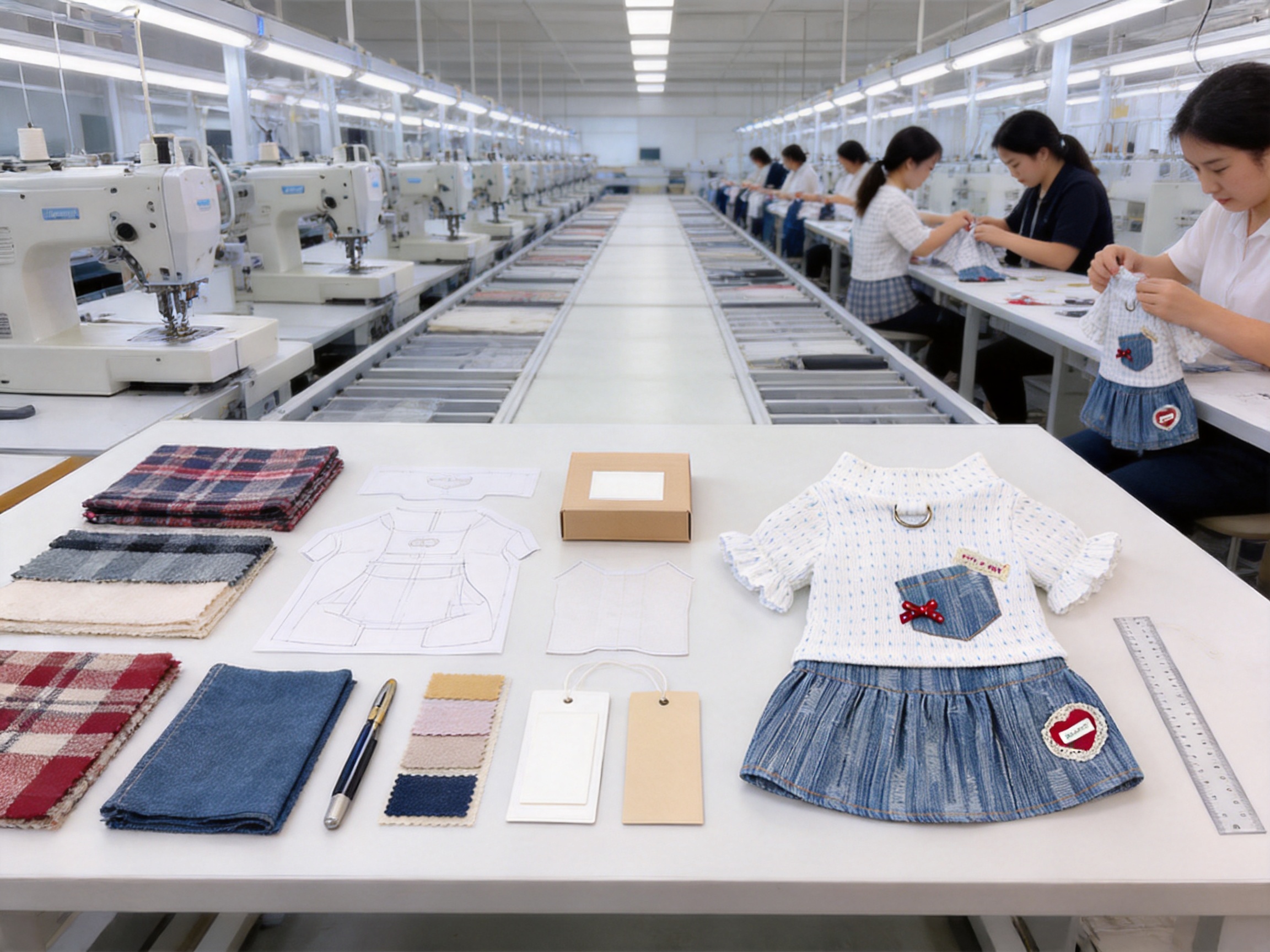
The Fresh Preppy Plaid and Denim Dog Outfit Set is designed for retailers, wholesalers, private-label brands, and pet apparel distributors looking for a distinctive small- and medium-dog clothing product with strong styling flexibility. Combining youthful plaid with casual denim elements, the set presents a fresh alternative to conventional dog dresses, formal uniforms, and single-purpose seasonal garments. Its Japanese-inspired preppy direction gives the outfit a recognizable visual identity, while its two-piece construction creates additional opportunities for wear, merchandising, customization, and collection development.
Pet owners increasingly view clothing as part of a pet’s lifestyle rather than as an occasional novelty. They look for garments that photograph well, coordinate with existing accessories, suit daily outings, and offer enough comfort and practicality for repeated use. Retailers, meanwhile, need products that can support multiple sales angles. A garment that can be presented as a complete outfit, separated into individual pieces, or developed into a larger seasonal range can provide more commercial value than an item with only one styling possibility.
This product responds to those requirements through a coordinated outfit format. The plaid and denim components can be worn together to create a complete preppy appearance or styled individually with other pet garments. This makes the set suitable for everyday walks, weekend outings, pet photography, casual social events, autumn and winter campaigns, and lifestyle-focused product collections.
Beyond its appearance, the set is supported by a manufacturing program that includes product design, pattern making, production, quality control, customization, packaging, sample development, and international shipping coordination. The manufacturing partner operates 48 fully automatic sewing production lines, employs a 77-person professional team, and has a reported daily production capacity of approximately 3,000 pieces. These capabilities are intended to support both standard product orders and the development of customized private-label collections.
1. Product Overview and Collection Positioning
The Fresh Preppy Plaid and Denim Dog Outfit Set belongs to the dog bodysuits and sets category. It is offered in six sizes, from XS through XXL, and is positioned for small and medium dog breeds. The product is suitable for autumn and winter collections, especially those based on casual lifestyle dressing, youthful styling, Japanese-inspired design, or light collegiate themes.
The central design concept is the combination of plaid and denim. Plaid contributes pattern, visual rhythm, and a recognizable preppy character. Denim adds casual texture and a more relaxed fashion direction. Together, these elements create contrast without making the outfit appear too formal or overly decorative. The result is a product that can fit into several retail environments, including pet boutiques, online fashion stores, seasonal gift collections, lifestyle marketplaces, and private-label pet clothing ranges.
The outfit is intentionally different from a traditional British school-uniform-inspired pet dress. Rather than relying entirely on formal tailoring or a uniform-like appearance, it uses a lighter and more youthful approach. This distinction can help retailers build a product story around freshness, versatility, and everyday wearability. It also gives buyers an alternative to heavily embellished dresses, basic fleece garments, and conventional one-piece costumes.
The two-piece format is one of the product’s most important commercial features. The components can be marketed together as a complete outfit, but they can also be displayed or sold as separate styling elements when appropriate. A retailer may photograph the set as a coordinated look, then show additional images of the individual pieces paired with basic tops, sweaters, jackets, or accessories. This creates more content from one product concept and allows the item to participate in a wider wardrobe strategy.
Core Product Specifications
| Specification | Details |
|---|---|
| Product Name | Fresh Preppy Plaid and Denim Dog Outfit Set |
| Product Category | Dog Bodysuits and Sets |
| Recommended Pet Range | Small and medium dog breeds |
| Available Sizes | XS, S, M, L, XL, XXL |
| Recommended Season | Autumn and winter |
| Style Direction | Fresh preppy, Japanese-inspired, casual |
| Construction | Two-piece separates |
| Design Elements | Plaid and denim components with layered details |
| Color Development | Custom colors available |
| Packaging | Standard export packaging or customized retail packaging |
| Customization Support | OEM and ODM development for brands, wholesalers, distributors, retailers, and private-label businesses |
The specifications make the product suitable for both ready-to-order programs and broader seasonal development. Buyers who want a fast addition to an existing petwear assortment can use the standard design. Buyers seeking a more distinctive collection can request adjustments to plaid patterns, denim tones, color combinations, sizing, branding, and selected design details.
2. Why the Two-Piece Construction Creates a Competitive Advantage
Many pet clothing products are designed as one-piece garments. Although a one-piece format may provide a simple customer proposition, it can also limit styling options, merchandising flexibility, and repeat use. Once a customer has purchased the garment, its visual function remains largely fixed. A two-piece set offers a broader range of possibilities because each component can be used independently or together.
For the pet owner, this means one purchase can support multiple looks. The complete outfit can be used for photographs, outings, or special occasions, while the individual pieces may be combined with familiar garments already in the dog’s wardrobe. This flexibility can make the product feel more valuable and useful than an item intended for only one appearance.
For retailers, the same feature supports several merchandising approaches. The set can be presented as a coordinated outfit on a product page, as part of an autumn and winter lookbook, or as a styling solution for customers who want a complete appearance without buying multiple unrelated pieces. The retailer can also create additional content around mix-and-match dressing, which may increase engagement on social media and marketplace listings.
For wholesalers and private-label buyers, two-piece construction creates a foundation for range expansion. The same basic concept may be developed in several plaid colorways, denim shades, logo treatments, or seasonal variations. A buyer can retain the recognizable silhouette and collection identity while adjusting colors or details for different markets. This may be particularly useful for businesses serving more than one region or operating multiple online storefronts.
Advantages Compared with a Conventional One-Piece Outfit
First, the product offers more styling combinations. A one-piece garment presents one complete look, while a two-piece set can be worn as a set or separated into individual components. This gives the consumer more practical value and gives the retailer more ways to present the product.
Second, the set supports greater collection cohesion. Each part can be matched with other items in the same range, such as plain shirts, sweaters, coats, bandanas, or seasonal accessories. The plaid and denim combination acts as a visual anchor that can be repeated throughout a broader collection.
Third, the two-piece structure makes customization more flexible. A buyer may request a modified plaid pattern while keeping the denim component consistent, or adjust the denim color while preserving the original preppy direction. Selected design elements can be developed separately, allowing more controlled product differentiation.
Fourth, separate components can help retailers build stronger product storytelling. Instead of simply stating that the product is a dog outfit, the retailer can explain how the set supports daily dressing, coordinated photography, casual outings, and wardrobe rotation. This additional narrative may be useful for brands that compete through lifestyle positioning rather than price alone.
Finally, the format can encourage repeat engagement. Customers may return to purchase related colors, matching accessories, or other pieces that work with the set. Although repeat purchasing depends on product quality, fit, presentation, and market strategy, a flexible outfit concept provides a stronger foundation for such development than a single-use costume.
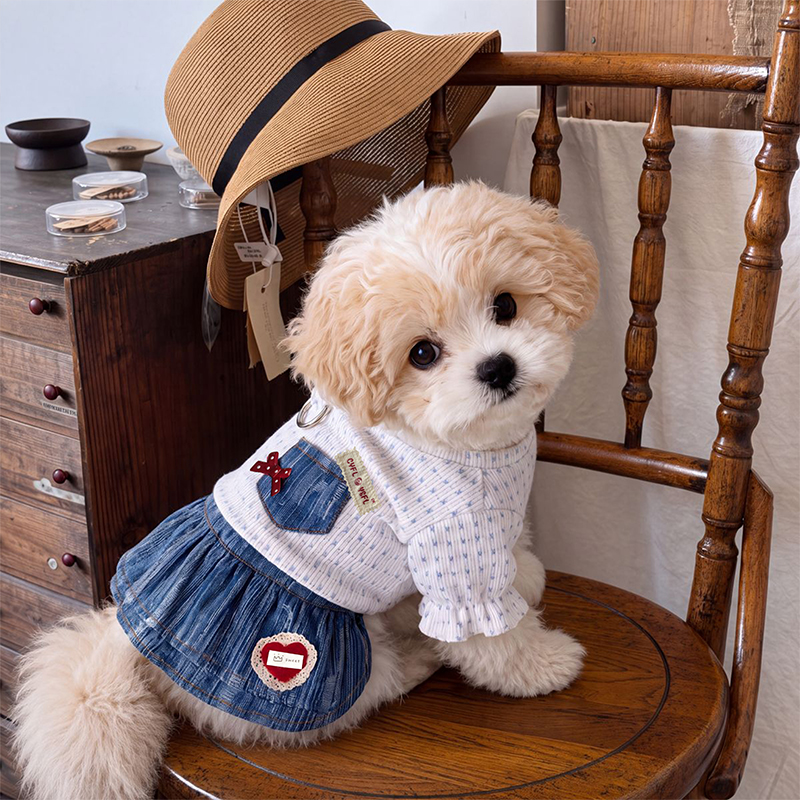
Fresh Preppy Plaid & Denim Dog Outfit Set
3. Design Character: Fresh Preppy Rather Than Overly Formal
The visual language of the outfit is based on a fresh preppy direction. Preppy styling often uses orderly patterns, layered details, and coordinated color relationships, but this product interprets those ideas through a lighter casual lens. The design avoids an excessively formal school-uniform impression and instead emphasizes youthfulness, movement, and everyday wear.
Plaid is central to this identity. It provides a recognizable pattern that can immediately communicate seasonal fashion and collegiate influence. For petwear brands, plaid is also commercially useful because it can be adapted into different color palettes without losing its basic identity. Soft neutral plaid, brighter youthful plaid, or deeper autumn-inspired plaid can all support different brand directions.
Denim introduces a contrasting material impression. It brings a casual, familiar, and versatile character that balances the orderly appearance of plaid. When used with plaid, denim helps prevent the outfit from looking too formal or costume-like. This balance is important for everyday petwear because many customers want clothing that appears fashionable but still feels appropriate for walks and ordinary activities.
Layered details add visual interest without requiring excessive decoration. Clean lines keep the product easy to coordinate, while the combination of materials and patterns gives it enough character for product photography. This balance may be attractive to retailers that want fashionable products with broad appeal rather than highly specialized novelty garments.
Suitable Retail and Lifestyle Themes
The outfit can be positioned within an autumn and winter petwear collection, a Japanese-inspired lifestyle range, a casual weekend collection, or a fresh collegiate-themed campaign. It can also support photography-led marketing, where the visual appeal of the plaid and denim combination becomes a central selling point.
For online retailers, the set can be photographed in several ways. A full-body image can show the coordinated appearance. Detail images can emphasize the plaid pattern, denim elements, and layered construction. Additional lifestyle images can show the components used separately. This variety allows the product page to communicate both its fashion value and its practical flexibility.
For physical retailers, the outfit can be displayed with seasonal props, casual pet accessories, or coordinating items from the same collection. It may work particularly well in displays built around autumn walks, weekend travel, campus-inspired styling, or pet photography. The product’s design character is broad enough to support multiple visual themes while remaining distinctive.
4. Everyday Use and Customer Value
Although the outfit has a clear fashion identity, it is designed with everyday use in mind. The product is suitable for walks, casual outings, photography, social visits, and other ordinary occasions where owners want their pets to look coordinated. The design is not limited to parties or holiday costumes, which can increase the number of situations in which customers may choose to use it.
The product’s casual direction also helps it fit naturally into an existing pet wardrobe. Owners may wear the full set when they want a complete look and use individual components on less formal days. This kind of versatility can be particularly useful for customers who prefer to purchase fewer but more adaptable garments.
Regular cleaning and repeated wear are important considerations in pet apparel. Dogs may encounter outdoor dirt, loose hair, food, moisture, and other sources of soiling. The product description identifies the fabric and construction as intended for everyday use, including regular cleaning and wear. Buyers should still follow the final care instructions provided with the confirmed production version, especially when custom materials, labels, trims, or printing are introduced.
Fit is another important part of customer satisfaction. The product is available in six sizes, but the listed weight ranges are approximate and may overlap. Dogs with similar weights can have different chest shapes, neck sizes, back lengths, and body proportions. Retailers should therefore present the measurement chart clearly and encourage customers to measure their pets before ordering.
Available Size Information
| Size | Neck | Chest | Back Length | Approximate Weight |
|---|---|---|---|---|
| XS | 22 cm | 33 cm | Approx. 22 cm | Approx. 3 lbs |
| S | 24 cm | 37 cm | Approx. 25 cm | Approx. 5 lbs |
| M | 30 cm | 44 cm | Approx. 29 cm | Approx. 5–8 lbs |
| L | 33 cm | 48 cm | Approx. 33 cm | Approx. 8–14 lbs |
| XL | 36 cm | 53 cm | Approx. 36 cm | Approx. 14–17 lbs |
| XXL | 40 cm | 58 cm | Approx. 39 cm | Approx. 17–22 lbs |
Measurements are supplied as a reference for product selection and should be verified against the pet’s actual measurements. For customized production, buyers may discuss size grading and additional fit requirements with the manufacturer. This can be important for brands serving specific breeds, regional markets, or customers who require a wider size curve.
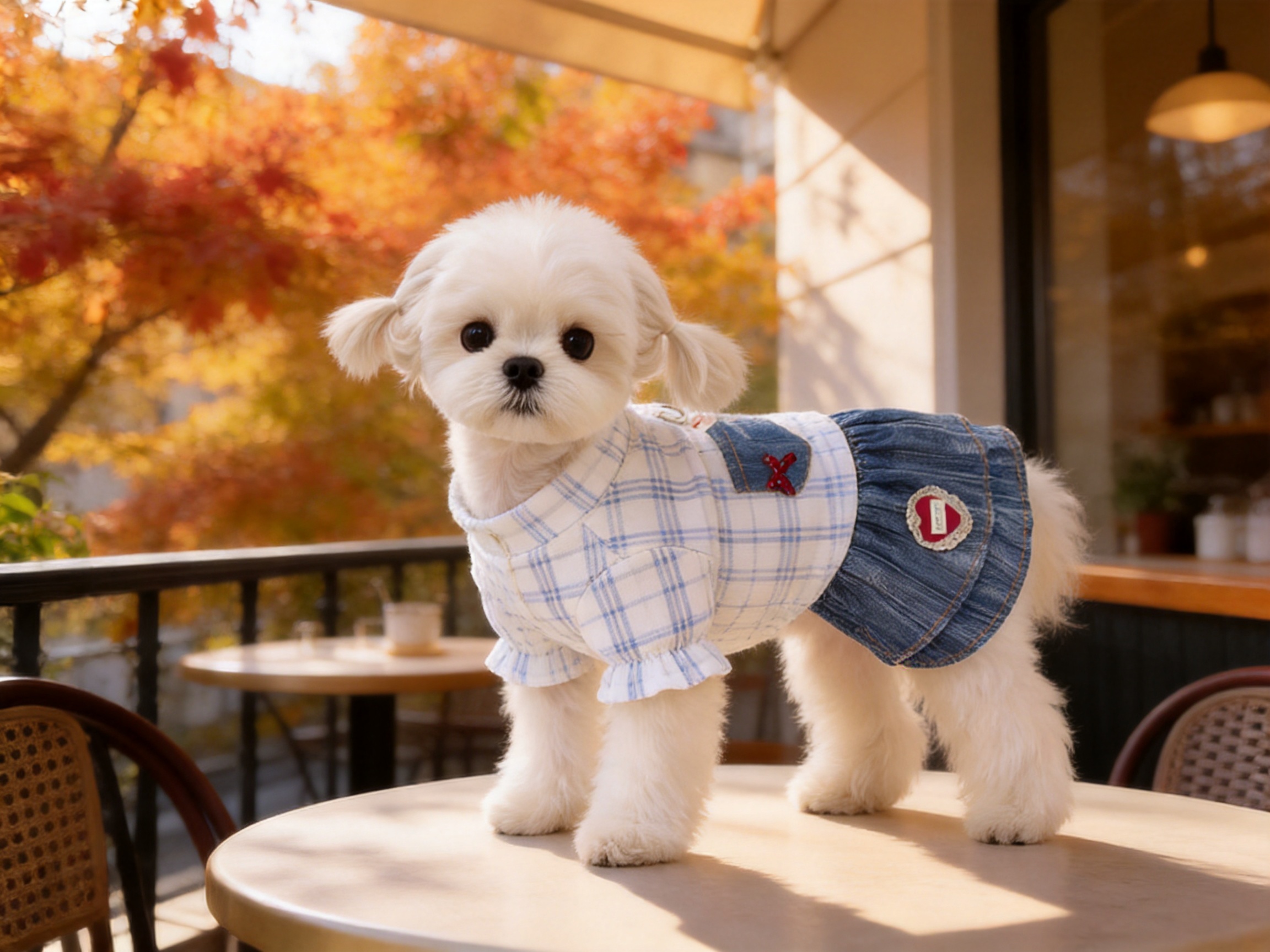
5. OEM and ODM Customization Opportunities
The standard design provides a ready foundation, but the manufacturing program also supports OEM and ODM services. OEM production allows a buyer to apply its own branding and selected specifications to the product. ODM development provides broader support for businesses that want to create a new variation based on a concept, seasonal theme, or collection direction.
Customization may include plaid patterns, denim colors, color combinations, size grading, and selected design details for the individual pieces. This allows buyers to preserve the central idea of a coordinated plaid and denim outfit while developing a visual identity that is more closely aligned with their own customer base.
For example, a retailer may request a muted neutral palette for a minimalist lifestyle collection. Another brand may prefer brighter colors for a youthful online range. A private-label business may ask for a deeper autumn palette to coordinate with coats, scarves, and accessories. These changes can create distinct product versions without requiring an entirely unrelated design concept.
Branding options include embroidered logos, printed graphics, silicone or rubber logo applications, custom woven labels, wash labels, hang tags, and branded packaging. The appropriate branding method depends on the buyer’s visual identity, target price, product surface, order volume, and desired durability. Buyers should confirm artwork requirements, placement, color standards, and sampling procedures before mass production.
Customization for Individual Garment Components
Because the outfit uses two pieces, customization can be considered at both the complete-set level and the individual-component level. A buyer may coordinate the pieces closely for a unified look or intentionally create contrast between the plaid and denim elements. This flexibility can help brands produce capsule collections with several styling relationships.
Patterns may be developed in different scales or color combinations. Denim elements may be adjusted to complement light, medium, or dark plaid. Branding can be placed in a way that maintains the clean appearance of the design rather than overwhelming the pattern. Labels and packaging can then reinforce the collection story through consistent typography, color, and product naming.
For retailers with multiple sales channels, packaging customization can also support channel differentiation. A standard export package may be suitable for wholesale distribution, while a branded retail package may be more appropriate for direct-to-consumer sales. Buyers should communicate packaging dimensions, labeling requirements, barcode needs, and shipping preferences during the development stage.
6. Manufacturing Strengths Supporting Consistent Production
The product is supplied by Taizhou Feile Pet Products Co., Ltd., a professional pet apparel manufacturer headquartered in Taizhou, Zhejiang, China. The company integrates design, production, and sales and reports five years of offline manufacturing experience. Its cross-border online division officially began operations in November 2025, with a focus on one-stop OEM and ODM pet apparel solutions for international sellers and brands.
A key manufacturing advantage is the company’s specialized focus on pet apparel. Its product coverage includes dog apparel, cat apparel, and small pet apparel, with more than 800 SKUs reported across these categories. This breadth suggests experience with different garment formats, pet sizes, design directions, and seasonal product requirements.
The company reports operating 48 fully automatic sewing production lines. Production-line capacity can be valuable for buyers seeking repeatable output, particularly when a product includes multiple sizes, several colorways, or coordinated components. Automated sewing equipment can support production efficiency and process consistency, although final results still depend on pattern accuracy, material control, operator supervision, and inspection procedures.
The reported professional team of 77 people covers design, pattern making, production, and quality control. Having these functions within an integrated organization can simplify communication during product development. It may also help reduce delays caused by transferring technical information among unrelated suppliers. For OEM and ODM projects, the relationship between design, pattern development, sample approval, and bulk production is especially important.
The company reports a daily production capacity of approximately 3,000 pieces. This capacity is relevant for buyers planning seasonal launches, replenishment programs, or multiple styles in one purchase cycle. Production capacity alone does not guarantee immediate delivery, since schedules also depend on fabric availability, artwork approval, sampling, order quantity, inspection requirements, and production-line allocation. However, it indicates that the supplier is structured to support commercial-scale orders rather than only small workshop production.
The company also states that it launches approximately 8 to 12 new styles weekly. For retailers and brand buyers, frequent development can provide access to fresh concepts and help maintain a regularly updated product pipeline. This may be useful in the petwear market, where seasonal changes, social-media trends, and customer preferences can influence demand quickly.
Integrated Product Development Process
A strong pet apparel manufacturing process begins with design interpretation. The buyer’s concept must be translated into a practical garment that considers proportions, construction, size grading, pattern alignment, material behavior, and production feasibility. For a plaid and denim set, visual coordination is particularly important because pattern placement and color relationships affect the final appearance.
Pattern making follows the design stage. Patterns determine the dimensions and shapes of the pieces and must be adjusted across the size range. The listed product range extends from XS to XXL, so the production team must maintain the intended design character while accounting for changes in body proportions. For customized size grading, the buyer can discuss target breeds, measurement requirements, and fit preferences.
Sampling gives the buyer an opportunity to review the actual construction before mass production. During this stage, buyers may assess color, pattern scale, component coordination, logo placement, labels, packaging, and general fit. It is advisable to identify all important changes before bulk production begins, because late alterations can affect cost and lead time.
Bulk production requires coordinated material preparation, cutting, sewing, finishing, labeling, packing, and inspection. A two-piece outfit has more components than a single garment, so piece matching and set completeness should receive attention. Each package should contain the intended components and branding materials according to the confirmed specifications.
Quality control should be organized around agreed standards. These may include measurements, seam appearance, stitching security, pattern alignment, color consistency, label placement, logo execution, packaging accuracy, and visible defects. The company identifies quality inspection as part of its service scope, while buyers can also arrange independent inspection when required by their internal purchasing procedures.
7. Commercial Terms and Order Planning
The standard minimum order quantity is 500 pieces per order. The stated single-color minimum is at least 300 pieces for each color. These terms are relevant for buyers preparing a seasonal launch or evaluating whether the design fits their expected sales volume.
The reported production lead time is 10 to 15 days after order confirmation and receipt of the deposit. This timeframe should be treated as a standard reference rather than an unconditional guarantee. Customized artwork, new materials, revised patterns, special packaging, sampling, holidays, shipping arrangements, and inspection schedules may affect the final production calendar.
The stated payment terms require a 50 percent deposit to confirm the order, with the remaining 50 percent balance paid before shipment. Buyers should confirm the final quotation, payment method, production schedule, sample approval requirements, and shipping terms in a formal order document before production begins.
| Commercial Item | Stated Standard Term |
|---|---|
| Minimum Order Quantity | 500 pieces per order |
| Single-Color Minimum | At least 300 pieces per color |
| Production Lead Time | 10–15 days after order confirmation and deposit receipt |
| Payment Structure | 50% deposit; 50% balance before shipment |
| Packaging | Standard export packaging or customized retail packaging |
| Order Support | Sample development, seasonal collection development, bulk production, inspection, and international shipping coordination |
For large-volume orders, private-label projects, or designs that differ substantially from the standard product, buyers should request a project-specific schedule and quotation. A clear development brief can help the supplier evaluate material availability, pattern work, branding requirements, packaging, and expected delivery timing.
Recommended Buyer Preparation
Before requesting a quotation, buyers should define the intended sales market, target customer, order quantity, color requirements, size distribution, branding method, packaging format, and desired delivery date. Providing reference images or a concise design brief can help clarify the intended result, but all final specifications should be documented in measurable or approved sample form.
Buyers should also determine whether the order will use the standard product or a customized version. Standard orders may follow a more direct process, while customized projects require artwork review, sample development, and approval. If a brand intends to sell the product under a private label, it should prepare logo files, label information, care instructions, packaging artwork, and any market-specific compliance requirements in advance.
Inventory planning is another important consideration. The product is designed for autumn and winter, so buyers should schedule sampling, production, shipping, and launch preparation ahead of the intended selling season. The two-piece format may support multiple sales presentations, but the buyer still needs to forecast the size and color mix carefully to avoid overstocking one variation while running short of another.
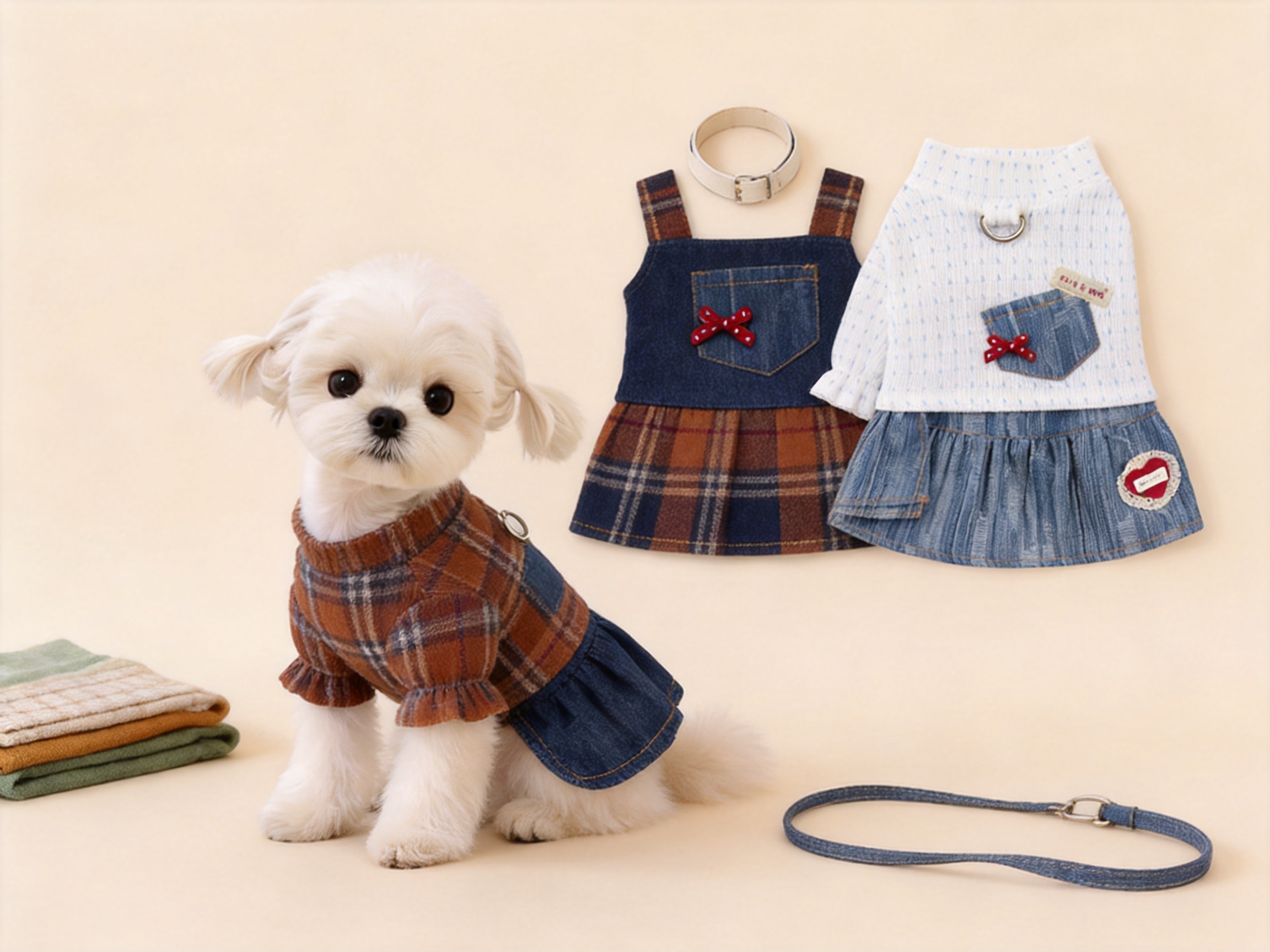
8. How Retailers Can Merchandise the Outfit Set
The product can be sold through several merchandising strategies. The first is the complete-look strategy, where the outfit is presented as a ready-made solution for customers who want a coordinated appearance. Product photography should show how the plaid and denim elements work together and should make the two-piece nature of the product clear.
The second is the mix-and-match strategy. Retailers can show the individual components with other garments from the same collection or with basic items already available in the store. This approach communicates versatility and may help customers understand why the set has value beyond a single occasion.
The third is the seasonal lifestyle strategy. The outfit can be grouped with autumn and winter products, walking accessories, pet photography props, or casual outdoor items. Rather than presenting it only as clothing, the retailer can position it as part of a seasonal experience involving walks, weekend trips, social visits, and everyday photographs.
The fourth is the collection strategy. Buyers can develop related colorways or coordinate the outfit with other plaid, denim, or preppy products. Repeating a visual theme across several items can improve collection recognition and help customers build complete wardrobes for their pets.
Content Opportunities for Online Sales
A product page should explain that the set contains two coordinated pieces and that the pieces can be used together or separately. Clear terminology is important because customers may otherwise assume that the item is a single garment. The page should also include the measurement chart, approximate weight guidance, care information, packaging details, and any relevant customization or availability notes.
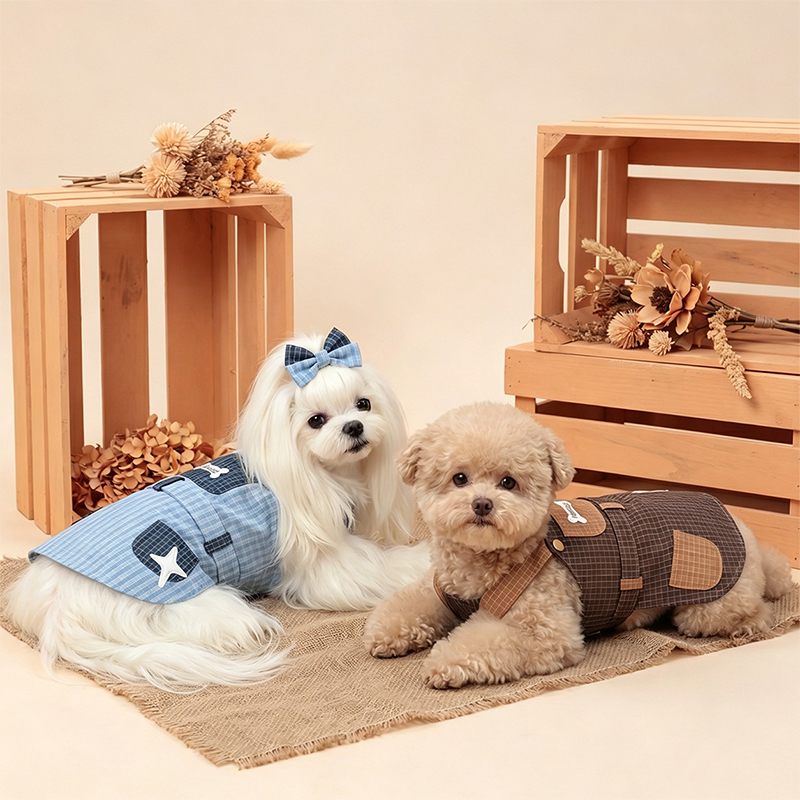
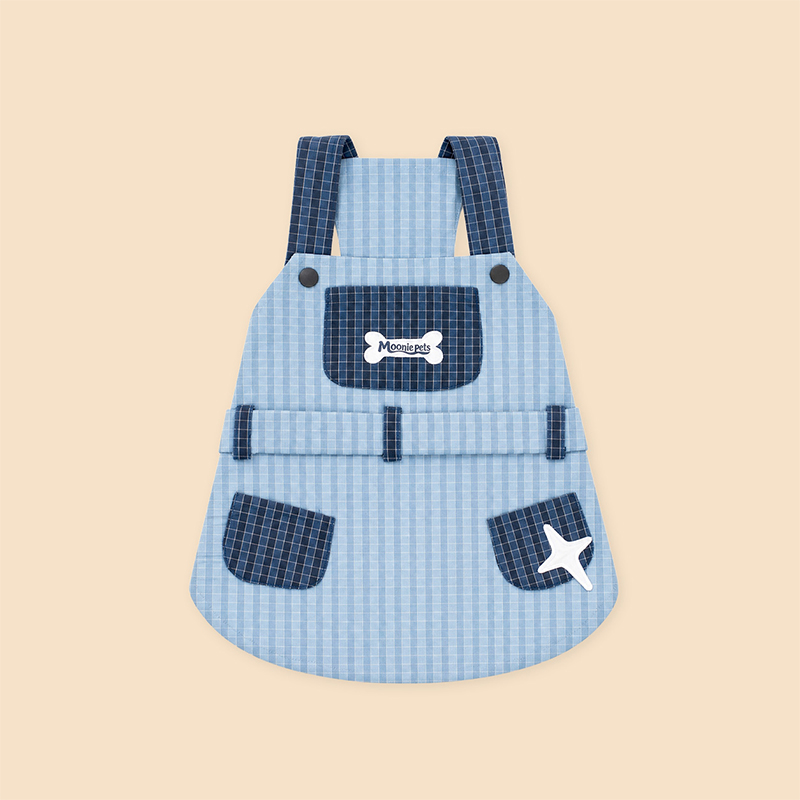
Photography should cover the overall appearance, front and back views where appropriate, close-up details, and individual components. A model dog wearing the complete set can communicate proportion and styling, while flat-lay or close-up images can clarify the construction. Additional images can demonstrate how the separate pieces coordinate with other garments.
Retail copy can emphasize the fresh preppy direction, plaid-and-denim contrast, two-piece flexibility, seasonal suitability, and casual everyday character. It should avoid presenting the outfit as suitable for every dog or every activity without qualification. Fit, supervision, care, and use should be communicated responsibly according to the final approved product specifications.
9. Quality, Fit, and Product Communication
In pet apparel, perceived quality depends on more than appearance. Customers notice whether the garment fits comfortably, stays in place, maintains its shape, survives ordinary cleaning, and looks consistent with the product photographs. Buyers should therefore evaluate both visual design and practical construction during sample approval.
For the plaid component, pattern consistency and color accuracy are important. Buyers should review whether the pattern appears balanced across the visible areas and whether the selected colorway matches the approved standard. For the denim component, they should examine the surface appearance, weight, flexibility, and coordination with the plaid element. Any material changes made during development should be approved before mass production.
Seams, edges, closures, labels, and decorative applications should be reviewed for neatness and security. If embroidery, printed graphics, silicone logos, rubber patches, or woven labels are added, the buyer should evaluate their placement and interaction with the garment. Branding should remain legible while preserving the clean design character of the outfit.
Fit testing should include more than one size whenever possible. A small sample may look correct while larger sizes reveal issues in proportions or pattern placement. Testing across the size range can help identify grading problems before production. Buyers serving particular breeds may also request additional fit comments or customized size development.
Clear product communication helps reduce returns and customer dissatisfaction. The size chart should identify whether measurements refer to the garment or the pet. Approximate weight ranges should be presented as guidance rather than a substitute for measuring the neck, chest, and back. Retailers should also explain that body shape varies among dogs of the same weight.
10. Why This Product Fits Current Petwear Development Needs
The petwear market includes practical clothing, fashion-led collections, seasonal products, accessories, and personalized merchandise. Within this broad market, products with a clear design identity and multiple styling possibilities can help retailers distinguish their assortment. The Fresh Preppy Plaid and Denim Dog Outfit Set offers both of these qualities.
Its design identity is easy to understand. Plaid communicates pattern and seasonal character, while denim adds a casual fashion reference. The fresh preppy direction provides a recognizable story without requiring excessive ornamentation. This can make the product accessible to customers who like fashionable pet clothing but prefer a clean and wearable appearance.
Its styling flexibility is also commercially useful. The two-piece construction allows the product to be presented as a complete outfit or as separate wardrobe components. This supports richer online content, more varied store displays, and broader use after purchase. For wholesalers and brand owners, it creates a framework for additional colors and seasonal versions.
The manufacturing support further strengthens the product’s suitability for commercial use. The supplier offers OEM and ODM services, branding options, sample development, seasonal collection development, bulk production, quality inspection, and international shipping coordination. Its reported production lines, professional staff, SKU range, and ongoing style development provide a foundation for buyers seeking an organized pet apparel supply partner.
Compared with a basic single-piece garment, this set can therefore compete through a combination of design, versatility, customization, and supply capability. Its advantage is not based on one decorative feature alone. Instead, it brings together a flexible construction, a marketable visual theme, a six-size range, and a manufacturing system intended to support both standard and customized orders.
11. Suggested Applications for Different Buyer Types
For Pet Boutiques
Pet boutiques can use the set as a seasonal feature item. Its fresh preppy styling can create a visually attractive display, while the separate components allow staff to demonstrate different outfit combinations. Boutiques may also pair it with collars, leashes, bows, bags, or photo accessories that support the same lifestyle theme.
For Online Petwear Retailers
Online retailers can build a product page around the outfit’s complete-look and mix-and-match benefits. Because the design has strong visual contrast, it can work well in promotional photography and seasonal collection banners. Online sellers should give particular attention to measurements and explain the approximate nature of weight-based sizing.
For Wholesalers and Distributors
Wholesalers can offer the set to multiple retail accounts as a versatile autumn and winter item. Different colorways may be allocated to different customer segments, while the standard two-piece structure maintains collection consistency. The stated order terms and production capacity can be discussed when planning volume purchases.
For Private-Label Brands
Private-label brands can use the product as a base for a branded capsule collection. Custom labels, hang tags, packaging, logo applications, color combinations, and selected design changes can help create a more distinctive market identity. Brands should provide complete artwork and technical instructions before sample development to improve project efficiency.
For Pet Lifestyle and Photography Brands
The outfit’s preppy visual direction is suitable for brands that focus on lifestyle imagery, social content, or pet photography. The coordinated set can provide a recognizable look for campaigns, while the individual pieces create additional styling options across multiple shoots. Seasonal color development can help maintain relevance across different campaigns.
12. Frequently Asked Questions
Q1: What type of product is the Fresh Preppy Plaid and Denim Dog Outfit Set?
It is a two-piece dog outfit in the dog bodysuits and sets category. The design combines plaid and denim elements and is intended for small and medium dog breeds. The pieces can be worn together or separately.
Q2: What style does the outfit represent?
The product follows a fresh preppy, Japanese-inspired, and casual style direction. It uses plaid and denim to create a youthful appearance that is lighter and less formal than a traditional school-uniform-inspired dog outfit.
Q3: Which seasons are most suitable for this product?
The outfit is designed for autumn and winter petwear collections. It can be marketed for daily walks, outings, photography, casual occasions, and seasonal lifestyle campaigns.
Q4: What sizes are available?
The standard size range includes XS, S, M, L, XL, and XXL. The supplied measurement chart includes neck, chest, back length, and approximate weight information. Buyers should confirm final measurements and encourage customers to measure their dogs before ordering.
Q5: Can the product be customized?
Yes. Customization may include plaid patterns, denim colors, color combinations, size grading, and selected design details. Branding options include embroidery, printed graphics, silicone or rubber logos, woven labels, wash labels, hang tags, and branded packaging.
Q6: Is OEM or ODM service available?
Yes. OEM and ODM services are available for pet apparel brands, wholesalers, distributors, retailers, and private-label businesses. The supplier also supports sample development, seasonal collection development, bulk production, quality inspection, and international shipping coordination.
Q7: What is the standard minimum order quantity?
The stated standard MOQ is 500 pieces per order. The stated minimum for a single color is at least 300 pieces per color. Buyers should confirm the applicable terms for customized designs or special production requirements.
Q8: What is the standard production lead time?
The stated production lead time is 10 to 15 days after order confirmation and receipt of the deposit. Customized projects may require additional time for sampling, artwork approval, material preparation, and packaging confirmation.
Q9: What are the payment terms?
The stated payment structure is a 50 percent deposit to confirm the order, with the remaining 50 percent balance paid before shipment. Final payment arrangements should be confirmed in the formal quotation or order agreement.
Q10: What packaging options are available?
The product can use standard export packaging or customized retail packaging. Buyers should discuss packaging artwork, labels, barcodes, carton information, packing quantities, and shipping requirements during order planning.
Q11: What manufacturing capabilities support this product?
The supplier reports 48 fully automatic sewing production lines, a 77-person professional team, and a daily production capacity of approximately 3,000 pieces. Its team covers design, pattern making, production, and quality control. The company also reports more than 800 pet apparel SKUs and the development of 8 to 12 new styles weekly.
Q12: Can the two pieces be developed in different colors?
Customization discussions can include plaid patterns, denim colors, and color combinations for the individual pieces. The final possibilities depend on material availability, order quantity, sampling, and production requirements.
Q13: Is the outfit suitable for all dog breeds?
The standard product is intended for small and medium dog breeds. Because body proportions vary even among dogs with similar weights, customers should compare their pet’s neck, chest, and back measurements with the chart before ordering.
Q14: Can buyers request a larger seasonal collection based on this design?
Yes. The manufacturer supports seasonal collection development. Buyers may discuss related colorways, additional plaid variations, denim tones, branding treatments, and coordinating pet apparel items to build a broader collection around the fresh preppy concept.
13. Conclusion
The Fresh Preppy Plaid and Denim Dog Outfit Set combines a recognizable seasonal style with a commercially flexible two-piece format. Its plaid and denim elements create a youthful, casual, and Japanese-inspired appearance, while its clean layered construction keeps the product suitable for everyday use rather than limiting it to special occasions.
Its strongest advantage over a conventional one-piece dog outfit is flexibility. The set can be worn as a coordinated look, separated into individual styling pieces, integrated with other pet garments, or developed into a larger seasonal range. This benefits pet owners seeking wardrobe versatility and gives retailers more opportunities for product presentation, content creation, and collection merchandising.
The product is also supported by a manufacturing partner with integrated design, pattern making, production, and quality-control capabilities. Reported resources include 48 fully automatic sewing production lines, a 77-person team, approximately 3,000 pieces of daily production capacity, more than 800 pet apparel SKUs, and regular new-style development. These capabilities are relevant to buyers seeking OEM and ODM support for standard orders, private-label programs, and customized seasonal collections.
For brands and distributors, the outfit provides a practical starting point for a modern petwear range. Buyers can use the standard design as supplied or develop custom plaid patterns, denim colors, labels, logos, packaging, size grading, and related collection items. With appropriate sample approval, fit verification, quality inspection, and order planning, the product can serve as a distinctive addition to autumn and winter pet apparel assortments.
References
1. Product specification sheet for the Fresh Preppy Plaid and Denim Dog Outfit Set, including product category, design direction, sizes, customization options, and commercial terms.
2. Supplied dog apparel measurement chart listing neck, chest, back length, and approximate weight ranges for sizes XS through XXL.
3. Manufacturer company profile for Taizhou Feile Pet Products Co., Ltd., including stated production lines, team structure, daily capacity, product categories, SKU range, and style development activity.
4. OEM and ODM pet apparel service information covering sample development, private-label branding, packaging, seasonal collection development, bulk production, quality inspection, and international shipping support.
5. General apparel product development principles concerning pattern making, size grading, sample approval, production inspection, packaging control, and retail product communication.
6. General petwear merchandising considerations concerning seasonal assortment planning, garment versatility, fit communication, lifestyle photography, and mix-and-match product presentation.
Product: Fresh Preppy Plaid & Denim Dog Outfit Set

NEXT:Home Wear Pet Base Layer: A Comfortable, Customizable Foundation for Modern Pet Apparel Collections
- Lolita Cake Dress
- Cool Style Tassel Top Pet Lolita Dress
- Sweet Bow Princess Dog Dress
- Denim Pinafore Dress With Pockets Cute Casual Small Dog Outfit
- French Doll-neck Dog Dress Elegant Pet Wear
- Korean Sweet Lolita Dog Dress Cute Party Outfit
- Flutter Sleeve Dog Dress Lightweight Summer Pet Wear
- Ruffle Flutter Sleeve Pet Dress Cute Princess Style
- French Style Embroidered Dog Dress Elegant Pet Apparel
- Mint Green Heart Spaghetti Strap Tulle Dog Dress Princess Party Outfit
- Gingham Bow Dog Dress Cute Summer Pet Outfit
- Navy Star Pleated Dog Dress Elegant Casual Pet Wear
- Summer Sailor Dog Dress Nautical Style Pet Apparel
- Dog Cooling Shirt Color-Block Lightweight Summer Pet Wear
- Dog Printed High-Neck Base Layer Top Thermal Stretch Pet Underwear
- Lightning Racing Performance Sportswear Breathable Athletic Pet Shirt
- Rustic Brown Plaid Dog Shirt Casual Outdoor Pet Wear
- Cream Embroidered Dog Blouse Elegant Pet Shirt
- Korean Style Pink Textured Tulle Camisole Small Dog Fashion Top
- Star & Letter Casual Pet T-Shirt Daily Wear Dog Top
- +86-13362661217
- 13362661217@163.com
- 128 Houxin Street, Hongjia, Jiaojiang, Taizhou, Zhejiang, China
