
 English
 русский
 Español
 عربى


He Yutong — OEM/ODM Pet Apparel Sales Executive
Raw-Edge Embroidered Denim Vest: A Distressed Casual Layer for Modern Pet Apparel Collections
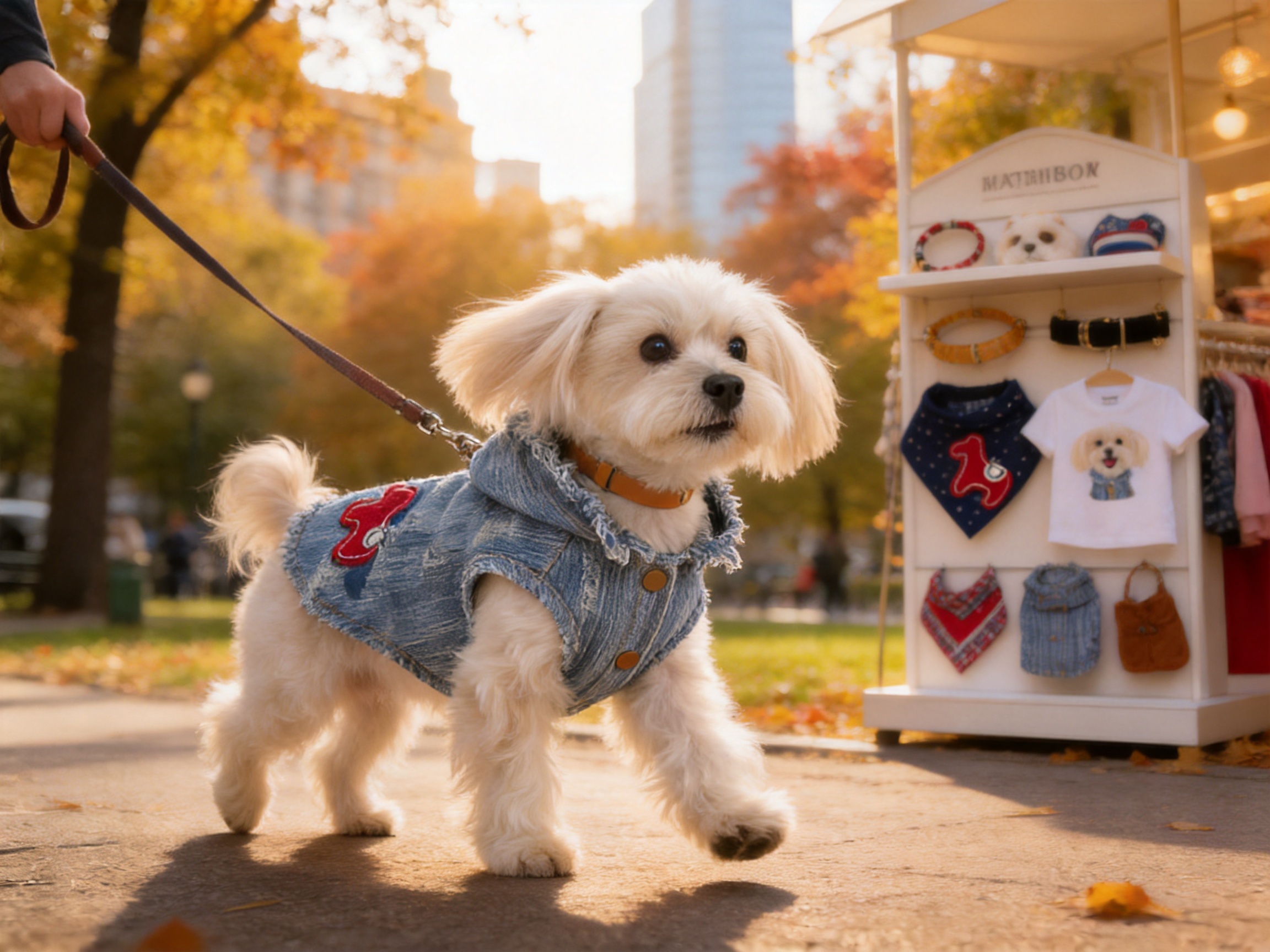
Pet owners increasingly view clothing as more than a practical way to protect animals from cool weather. Apparel has become part of a pet’s everyday identity, with customers looking for garments that combine comfort, easy dressing, seasonal usefulness, and distinctive visual appeal. For retailers and wholesale buyers, this shift creates an opportunity to offer products that stand apart from basic coats, plain fleece pullovers, and ordinary functional vests. The Raw-edge Embroidered Denim Vest Distressed Casual Pet Wear responds to this demand with a recognizable fashion silhouette, soft-washed denim, raw-edge finishing, embroidered details, and a relaxed streetwear-inspired appearance.
Designed for small and medium dog collections, this denim vest is suitable for spring and autumn merchandising. Its lightweight construction makes it practical for everyday outfits, while its blue denim appearance gives it a broad styling range. It can be presented as a standalone fashion item, layered over a lightweight shirt, or incorporated into a seasonal collection built around casual, urban, or youthful pet fashion.
For B2B buyers, the product offers more than an attractive appearance. It is supported by flexible OEM and ODM manufacturing services, customization options, size grading, embroidery development, private-label support, and export-oriented production systems. Taizhou Feile Pet Products Co., Ltd. combines pet apparel development with factory-based manufacturing, quality control, and logistics support to help wholesalers, distributors, pet brands, and online retailers build commercially relevant product lines.
This article examines the vest’s product design, material characteristics, competitive advantages, size structure, customization possibilities, manufacturing capabilities, and suitability for different sales channels. It also explains how the product can support a balanced pet apparel assortment for brands seeking a fashionable yet practical denim category.

Raw-edge Embroidered Denim Vest Distressed Casual Pet Wear
1. Product Overview and Market Positioning
The Raw-edge Embroidered Denim Vest is a casual dog garment created for buyers who want a fashionable alternative to conventional outerwear. Its design is built around a classic denim vest structure, but several details elevate it beyond a basic sleeveless pet jacket. The raw-edge finish introduces a deliberately relaxed visual effect, while distressed treatment adds texture and a contemporary streetwear influence. Embroidered accents provide additional decoration and create opportunities for visual storytelling, themed collections, or private-label branding.
The vest is intended for small and medium dog breeds and is offered in six sizes: XS, S, M, L, XL, and XXL. This range allows retailers to serve a broader segment of the small and medium pet market rather than limiting the product to toy breeds alone. Because dog body shapes vary considerably, buyers should use the supplied neck, chest, and back-length measurements as a reference and recommend that customers measure their pets before purchasing.
Seasonally, the vest is positioned for spring and autumn. These transition periods often create demand for lightweight layers that provide moderate coverage without the bulk of a heavy winter coat. The sleeveless format helps preserve freedom of movement around the front legs, while the denim outer layer gives the garment a more structured appearance than many soft knit or jersey garments.
From a merchandising perspective, the vest fits several product themes:
• Casual pet fashion collections
• Streetwear-inspired dog apparel
• Spring and autumn seasonal launches
• Denim-themed pet lifestyle ranges
• Personalized and private-label pet clothing
• Coordinated owner-and-pet fashion concepts
• Boutique collections for small and medium dogs
The product can therefore occupy a useful middle position between decorative apparel and lightweight outerwear. It is visually distinctive enough for fashion-focused buyers, but practical enough for everyday use and seasonal wardrobe rotation.
2. Design Features That Create Differentiation
2.1 Classic Denim with a Modern Petwear Silhouette
Denim is one of the most recognizable materials in contemporary fashion. Its familiarity helps customers understand the product immediately, while its texture and color provide a stronger visual identity than plain polyester or single-color cotton garments. In pet apparel, denim can make a simple vest look more structured and fashion-oriented without requiring complicated construction.
The classic denim appearance also supports cross-category merchandising. Retailers can place the vest beside dog bandanas, caps, collars, harnesses, graphic T-shirts, or owner denim accessories. This creates opportunities for outfit-based promotions rather than selling the vest as an isolated item.
Compared with a plain vest, the denim construction offers a more substantial visual presence. Compared with a full-sleeve jacket, the sleeveless format is easier to style and may be more appealing to dogs that do not readily accept garments covering the front legs. The design is therefore accessible to customers seeking a fashionable item that remains relatively simple to put on.
2.2 Raw-Edge Finishing
The raw-edge finish is a defining element of the product. Instead of presenting a fully polished, formal edge on every visible section, raw-edge detailing gives the garment a relaxed and intentionally unfinished character. This detail supports the current popularity of casual, vintage, and streetwear-inspired fashion.
For pet brands, raw-edge finishing can help create a recognizable visual signature. Many basic pet garments depend on printed graphics or bright colors to attract attention. This vest uses construction and surface treatment as part of its design language. As a result, it can appeal to customers who prefer understated fashion with texture rather than highly decorative novelty products.
Raw-edge elements also make the product suitable for collections aimed at younger consumers, urban households, creative communities, and customers who treat their pets as part of a lifestyle. The feature should be explained clearly in retail content so that customers understand it is an intentional design choice rather than a manufacturing defect.
2.3 Distressed Streetwear Influence
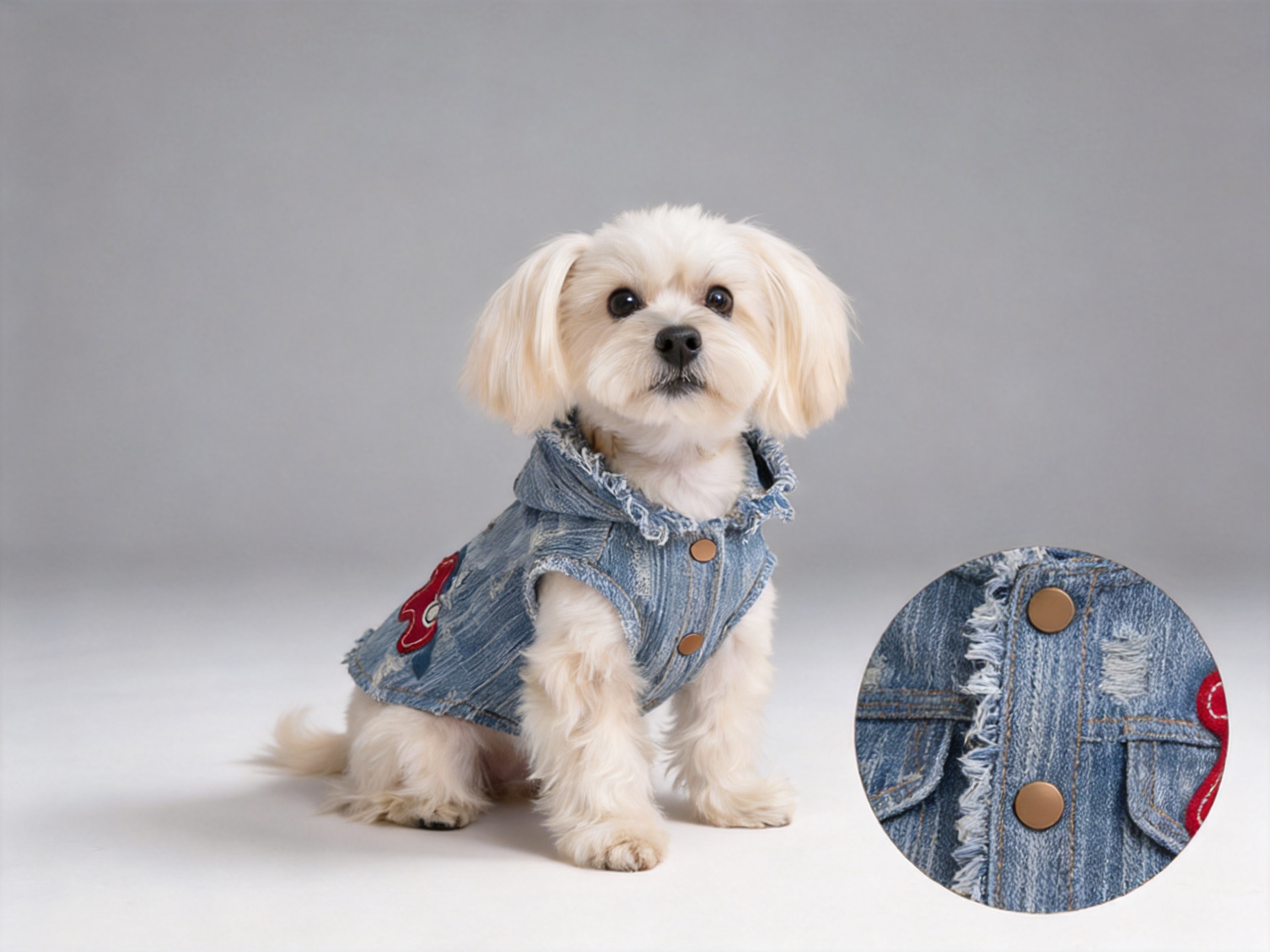
The distressed treatment introduces visual depth and gives the vest a lived-in appearance. It can make the garment look less formal and more relaxed, helping it fit into everyday pet styling. Distressed denim is widely recognized in human apparel, so adapting this language to pet clothing makes the product easy to connect with familiar fashion trends.
For wholesalers and retailers, a distressed style can broaden the range of available pet apparel. Instead of offering only conventional floral prints, novelty costumes, or practical rainwear, buyers can introduce a garment with an urban fashion direction. This is especially useful for online stores that organize products by aesthetic categories such as vintage, casual, cool, minimal, or street style.
Because the distressed appearance is part of the intended design, product photography should show the texture and finish clearly. Close-up images, lifestyle photographs, and side views can help online shoppers understand the surface effect and overall silhouette before purchasing.
2.4 Embroidered Accents
Embroidered details add visual value while maintaining a tactile, premium-oriented appearance. Embroidery generally communicates more permanence and craftsmanship than a simple surface print. It can also become an important tool for customization, allowing brands to develop original motifs, logos, initials, themed graphics, or collection-specific symbols.
The embroidery may be used as a decorative accent in the standard version, while custom buyers can discuss alternative embroidery artwork and placement. For private-label programs, embroidery can be combined with custom woven labels, hang tags, wash labels, and branded packaging to create a more complete retail presentation.
Embroidered design is particularly useful for brands that want to build a consistent visual identity across multiple products. A small logo or signature icon can be repeated on denim vests, shirts, hoodies, and accessories. This helps transform individual garments into parts of a recognizable brand system.
2.5 Button-Front Construction
The button-front design supports easy dressing and gives the garment a familiar vest-like appearance. Customers can open the front, position the vest on the dog, and secure it without needing to pull the entire garment over the head. This may be helpful for dogs that are sensitive to overhead dressing or for owners who prioritize quick outfit changes.
A front-opening design also supports retail communication. Product descriptions can emphasize convenience, while product images can show both the closed and open positions. For wholesale collections, the button-front feature contributes to a balance between fashion styling and practical usability.
2.6 Lightweight Daily-Wear Construction
The vest is described as lightweight and suitable for comfortable daily wear. This makes it appropriate for short walks, casual outings, pet-friendly social events, photography sessions, and seasonal styling. It is not positioned as a heavy winter coat or technical outdoor protection garment. Its value lies in providing a fashionable layer for moderate conditions.
Retailers should present the vest accurately as a spring and autumn fashion layer. Clear positioning helps reduce customer confusion and establishes appropriate expectations. In colder climates, it may be worn over another light garment, but it should not be marketed as a substitute for insulated winter outerwear unless additional product testing supports that claim.
3. Material and Comfort Considerations
The vest uses soft-washed denim fabric. Washing helps create a more relaxed hand feel and contributes to the product’s casual visual character. Compared with very rigid untreated denim, soft-washed fabric is better aligned with everyday petwear because a garment worn by an active dog should not feel unnecessarily stiff or restrictive.
Material selection affects several aspects of product performance, including drape, shape retention, comfort, appearance, sewing behavior, and care requirements. Denim gives the vest a structured look, while the washed finish helps soften that structure. This combination allows the garment to retain a recognizable denim identity without appearing excessively formal or heavy.
Comfort in pet apparel depends on more than fabric softness. The garment must also be appropriately sized, correctly positioned, and free from avoidable pressure points. Neck and chest measurements are therefore important. Buyers should ensure that the vest is not too tight around the chest or neck and that the back length does not interfere with movement or toileting routines.
As with any garment, fit may vary according to breed, body shape, coat thickness, and individual proportions. A compact dog with a broad chest may require a different size from a long-bodied dog with the same weight. For this reason, the size chart should be treated as a measurement guide rather than a replacement for actual fitting.
4. Size Range and Measurement Guide
The product is available in six sizes from XS to XXL. The table below summarizes the supplied measurements and approximate recommended weight ranges.
| Size | Neck | Chest | Back Length | Approximate Weight |
|---|---|---|---|---|
| XS | 22 cm | 33 cm | Approximately 22 cm | Approximately 3 lbs |
| S | 24 cm | 37 cm | Approximately 25 cm | Approximately 5 lbs |
| M | 30 cm | 44 cm | Approximately 29 cm | Approximately 5–8 lbs |
| L | 33 cm | 48 cm | Approximately 33 cm | Approximately 8–14 lbs |
| XL | 36 cm | 53 cm | Approximately 36 cm | Approximately 14–17 lbs |
| XXL | 40 cm | 58 cm | Approximately 39 cm | Approximately 17–22 lbs |
When preparing product listings, retailers should explain how to measure a dog. The neck should be measured around the base of the neck, where a collar would normally sit. The chest should be measured around the fullest part of the rib cage, usually just behind the front legs. The back length should generally be measured from the base of the neck to the desired endpoint of the garment.
Measurements should be taken while the dog is standing naturally. The tape should be close to the body but not pulled tightly. For dogs with thick coats, buyers may need to allow suitable wearing room. However, excessive looseness can cause the vest to shift during movement, so the best choice should balance comfort and stability.
The supplied size information includes approximate weights, but weight alone is not sufficient for reliable sizing. Retailers should prioritize chest and back measurements in customer guidance. Providing a clear sizing diagram or measurement explanation can also reduce returns and improve buyer confidence.
5. Advantages Compared with Basic Pet Vests
5.1 Stronger Visual Identity
Many entry-level pet vests rely on simple solid colors and minimal decoration. While these products may serve practical needs, they can be difficult for fashion-oriented retailers to distinguish from competing items. The Raw-edge Embroidered Denim Vest has a clearer identity built from denim texture, distressed treatment, raw edges, and embroidery.
This layered design language gives buyers more content for product photography and merchandising. The garment can be photographed from multiple angles, styled with accessories, and included in themed campaigns. Its visual character is not dependent on a single printed graphic that may quickly become outdated.
5.2 Fashion and Function in One Product
The vest combines a fashion-forward appearance with practical everyday dressing. The button-front format helps with usability, while the lightweight construction supports seasonal wear. This combination can be more commercially versatile than a highly decorative costume that customers use only occasionally.
A product that can be worn repeatedly has greater potential to become part of a dog’s regular wardrobe. Customers may use it for walks, social occasions, travel, photographs, and casual outings. Repeated use can strengthen perceived value and create opportunities for repeat purchases in related colors, designs, or seasonal garments.
5.3 Broader Styling Potential
Blue denim is a relatively adaptable color. It can coordinate with white, black, gray, red, beige, green, and many other tones. This makes it easier for retailers to pair the vest with existing inventory. A denim vest can be styled with a simple white shirt for a clean look, a bandana for a western theme, or a graphic tee for a casual streetwear outfit.
In contrast, highly specific novelty colors or prints may be more difficult to integrate into a broad collection. The blue denim color provides a familiar base while the distressed and embroidered details supply individuality.
5.4 Suitable for Brand Customization
Customization is a key advantage for B2B buyers. The product can be adapted through garment color, embroidery artwork, logo treatment, labels, hang tags, and packaging. This gives private-label customers greater control over brand presentation than a standard ready-to-ship garment with no personalization options.
Buyers can develop different versions for different markets. One collection may use minimal embroidery and premium packaging, while another may feature bold graphics and youthful labels. The underlying vest silhouette can remain consistent while the surface identity changes.
6. OEM and ODM Development Opportunities
OEM and ODM services allow brands to choose the degree of control they want over the product. An OEM project may begin with the existing denim vest and apply a customer’s branding, embroidery, labels, and packaging. An ODM project may involve broader development work, such as changing the fabric, adjusting the pattern, creating new embroidery, modifying the wash effect, or developing a coordinated seasonal range.
Available customization options include fabric selection, garment colors, embroidery designs, size grading, seasonal collection development, logo embroidery, silicone or rubber logo applications, personalized graphic printing, custom woven labels, wash labels, premium hang tags, and branded packaging.
For a pet apparel brand, this flexibility can support a structured product development process:
1. Define the target customer and retail price position.
2. Select the base silhouette and intended season.
3. Confirm fabric direction, color palette, and surface treatments.
4. Prepare embroidery, print, logo, or label artwork.
5. Review size grading and target dog categories.
6. Develop samples for fit, appearance, and construction review.
7. Confirm packaging and labeling requirements.
8. Approve the final sample and production specifications.
9. Arrange bulk manufacturing and quality inspection.
10. Coordinate shipment and delivery documentation.
This process is especially valuable for online retailers and emerging brands that need a distinctive product but do not maintain their own pattern-making or sewing facilities. A factory partner can help translate a visual concept into a repeatable garment specification.
6.1 Logo and Embroidery Applications
Logo embroidery is suitable for brands seeking a durable and tactile identity. Placement can be considered on the back, chest, pocket area, or another appropriate panel, depending on the final pattern and design requirements. Customers should provide clear artwork and discuss stitch density, thread colors, dimensions, and placement before sample approval.
Silicone or rubber logo applications may offer a more modern technical appearance, while personalized graphic printing can support more detailed or colorful artwork. The appropriate method depends on the desired style, quantity, budget, and durability expectations.
6.2 Labels and Packaging
Custom woven labels and wash labels help create a complete branded product. Woven labels can communicate the brand name or collection identity, while wash labels can provide care information and product details. Premium hang tags can be used to explain the design story, sizing, material, or brand values.
Branded packaging supports shelf presentation and online unboxing. It may include customized bags, boxes, inserts, stickers, or other presentation elements. For independent pet brands, packaging is often an important part of the customer experience because it helps transform a garment into a complete retail product.
7. Manufacturing Strengths and Production Capability
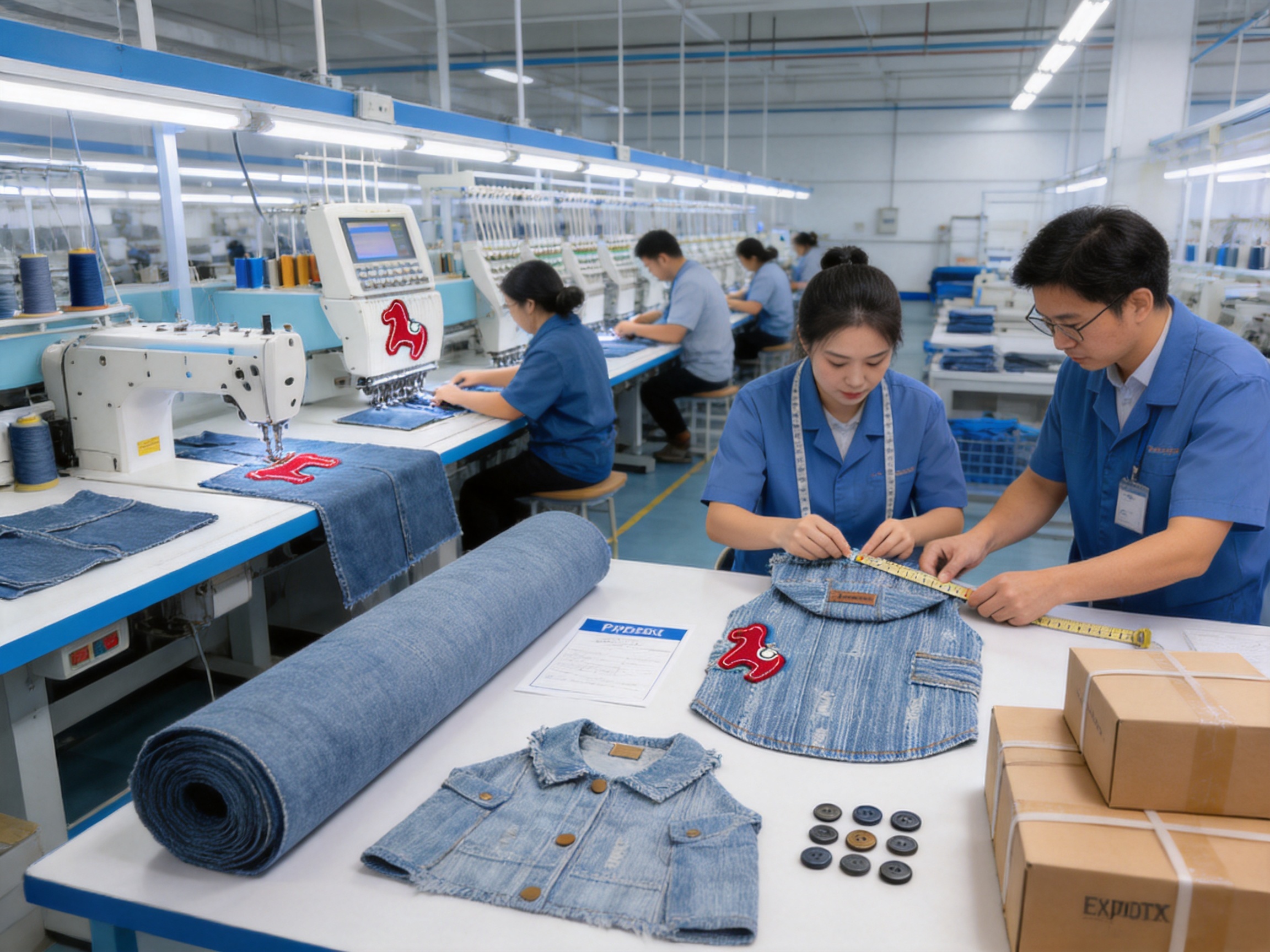
Taizhou Feile Pet Products Co., Ltd. is a professional pet apparel manufacturer integrating design, production, and sales. The company is headquartered in Taizhou, Zhejiang, a region with established textile and garment production resources. According to the supplied company information, the business has five years of offline manufacturing experience and began operating its cross-border online division in November 2025.
The company focuses on one-stop OEM and ODM pet apparel solutions for global cross-border sellers and brands. Its product coverage includes dog apparel, cat apparel, and small pet apparel, with more than 800 SKUs in total. This product breadth can be useful for buyers who want to develop a multi-category pet clothing assortment through one manufacturing partner.
The factory operates 48 fully automatic sewing production lines. A 77-person professional team covers design, pattern making, production, and quality control. Reported daily production capacity is 3,000 pieces. These resources support the transition from sample development to repeat bulk production and may help buyers manage seasonal demand more effectively.
Production capacity alone does not determine product quality, but it provides an important foundation for order planning. A buyer launching a seasonal denim collection needs confidence that approved specifications can be reproduced across a larger quantity. Organized production lines, experienced operators, pattern development, and quality inspection all contribute to consistency.
7.1 Design and Pattern Development
Pattern development is particularly important in pet apparel because animals have different body proportions from humans. A garment must account for neck shape, chest volume, leg movement, back length, and the practical requirements of daily use. Pattern makers help translate the visual concept of a denim vest into a functional shape that can be graded across multiple sizes.
For OEM and ODM customers, professional pattern development can reduce the risk of relying only on a sketch or reference photograph. During sampling, the factory can review proportions, panel placement, button positioning, embroidery areas, and size relationships before bulk production begins.
7.2 Sewing and Assembly
Denim garments require controlled sewing and assembly because the fabric may be heavier and more structured than lightweight woven materials. Seams, edges, buttons, decorative details, and embroidered areas must be integrated without compromising the garment’s appearance or comfort.
Automatic sewing production lines can support repeatability when properly managed. Standardized operations help ensure that multiple pieces follow the approved construction method. Production control is particularly relevant for wholesale orders, where inconsistent finishing across a shipment can create customer complaints and additional sorting costs.
7.3 Quality Control
Quality control should cover fabric appearance, color consistency, measurements, embroidery, stitching, button attachment, edge finishing, packaging, and general workmanship. For a distressed design, inspection should also confirm that the surface treatment is visually consistent with the approved sample while retaining the intended fashion character.
Measurement checks are important because small differences in neck, chest, or back length can affect fit. Quality personnel can compare production pieces against approved specifications and identify deviations before the goods are packed for shipment.
7.4 Production Planning and Delivery
The standard production lead time for the product is stated as 10–15 days after order confirmation and receipt of the deposit. Actual timing may vary according to order quantity, customization complexity, sample approval, material availability, packaging requirements, and seasonal production schedules. Buyers should confirm the final timeline with the factory before placing an order.
The stated minimum order quantity is 500 pieces per order, with a single-color minimum of at least 300 pieces for each color. These terms are suitable for wholesalers, distributors, established online retailers, and brands preparing a meaningful seasonal launch. Buyers developing a new product should plan inventory carefully and evaluate the expected demand for each size and color.
8. Order Terms for Wholesale Buyers
The standard commercial terms provided for this product are summarized below:
| Order Item | Standard Term |
|---|---|
| Minimum order quantity | 500 pieces per order |
| Single-color minimum | At least 300 pieces per color |
| Production lead time | 10–15 days after order confirmation and deposit receipt |
| Payment arrangement | 50% deposit to confirm the order; 50% balance before shipment |
| Packaging | Standard export packaging or customized packaging |
| Customization | Fabric, color, embroidery, labels, packaging, and selected branding options |
These terms provide a starting framework for commercial discussions. For customized designs, private-label orders, or large-volume purchases, buyers should request detailed pricing, sampling arrangements, production schedules, and packaging specifications.
When calculating the total landed cost, buyers should consider more than the unit price. Important factors may include sample fees, custom artwork, embroidery setup, labels, packaging, inspection, freight, import duties, warehousing, and platform-related costs. A detailed cost model helps retailers set appropriate wholesale and retail pricing.
9. Merchandising Strategies for Retailers
9.1 Seasonal Storytelling
The vest is naturally suited to spring and autumn campaigns. Retailers can build content around transitional weather, weekend walks, outdoor cafés, pet photography, neighborhood outings, or seasonal style updates. Rather than presenting the garment as purely decorative, the campaign can describe it as a lightweight layer for moderate conditions.
Spring merchandising may pair the vest with lighter colors, floral accessories, and outdoor imagery. Autumn campaigns can combine it with warm-toned bandanas, knit accessories, or rustic backgrounds. Because denim is visually flexible, the same product can support several campaign directions throughout the year.
9.2 Outfit-Based Selling
Outfit-based selling encourages customers to view the vest as part of a complete look. Retailers can display it with a simple shirt, matching leash, collar, bandana, or small accessory. Even when customers purchase only the vest, coordinated presentation can increase browsing time and encourage additional sales.
Online stores can create “complete the look” sections, while physical boutiques can use mannequins, display dogs, or outfit boards. The blue denim color makes it relatively easy to coordinate with existing products.
9.3 Lifestyle Photography
The product’s raw-edge and distressed details should be visible in photography. A mixture of full-body images, front views, side views, close-ups, and lifestyle scenes can communicate both design and fit. Images should show the button-front construction and the garment’s position on the dog.
Photographs should avoid making the product appear heavier or more protective than it is. Clear visual communication helps customers understand that this is a lightweight casual vest for spring and autumn rather than a technical cold-weather coat.
9.4 Product Page Content
An effective product page should include the garment name, intended season, material description, available sizes, measurement chart, care guidance, fastening information, color, customization availability, and a note about appropriate use. For wholesale buyers, the page should also provide MOQ information and an explanation of private-label options.
Retail copy can emphasize the following product benefits:
• Soft-washed denim appearance
• Casual distressed styling
• Raw-edge design details
• Decorative embroidery
• Lightweight seasonal layering
• Button-front convenience
• Six-size range for small and medium dogs
• Suitable for customized brand collections
10. Suitable Buyer Profiles
10.1 Pet Boutiques
Independent pet boutiques often need products with a stronger story and more visual personality than mass-market basics. The denim vest can provide a fashion-oriented option that complements collars, accessories, treats, and lifestyle products. Its texture and styling make it suitable for display-focused retail environments.
10.2 Online Pet Retailers
Online retailers can use the vest’s distinctive appearance to attract attention in search results, social media campaigns, and seasonal landing pages. Embroidery, distressed denim, and raw edges offer several content points for short-form video and product photography.
10.3 Wholesale Distributors
Distributors can introduce the product to regional pet shops, fashion boutiques, and specialty retailers. The six-size range and adaptable blue denim color may make it easier to propose the product to different store types. Distributors should prepare accurate size information and clearly communicate the intended season and usage.
10.4 Private-Label Pet Brands
Private-label brands can use the existing vest silhouette as a foundation for a branded collection. Logo embroidery, custom labels, hang tags, and packaging help create a more complete product identity. The manufacturer’s broader OEM and ODM capabilities may also support future expansion into related dog, cat, or small pet apparel.
10.5 Cross-Border Sellers
Cross-border sellers often need suppliers that can support product development, packaging, production, and logistics coordination. The company’s cross-border online division and one-stop service model are aligned with this type of sourcing requirement. Buyers should still confirm destination-market labeling rules, packaging standards, product safety expectations, and import documentation before shipment.
11. Quality and Product Management Recommendations
Before bulk production, buyers should approve a final sample that reflects the required fabric, color, embroidery, button placement, raw-edge treatment, size grading, and packaging. The approved sample should be accompanied by clear written specifications and artwork files.
For customized embroidery, the buyer should review the physical sample rather than approving only a digital image. Thread appearance, scale, density, and placement can look different on denim than on a computer screen. A physical sample provides a more reliable basis for approval.
Buyers should also discuss care instructions. Denim garments may require specific washing guidance to preserve color, shape, embroidery, and distressed details. Clear care labels help consumers maintain the product and reduce avoidable complaints.
Inspection arrangements should be agreed upon before production. Depending on the order and market, buyers may request pre-production approval, during-production checks, final random inspection, measurement verification, packaging review, or photographic documentation. These procedures can help ensure that the shipment matches the approved specifications.
Because the product includes distressed and raw-edge features, quality standards should distinguish intentional design characteristics from unacceptable defects. A reference sample or visual standard can help both the buyer and factory evaluate edge appearance, wash variation, embroidery positioning, and surface treatment consistently.
12. Building a Broader Pet Apparel Collection
The denim vest can serve as an anchor product in a larger seasonal assortment. A collection may include matching denim accessories, lightweight shirts, casual hoodies, printed tops, rain layers, and small pet garments. The same embroidery motif or label system can be repeated across the range to create a unified identity.
For dog apparel, the vest can be positioned alongside practical rainwear and warmer outerwear. This helps retailers offer customers a complete seasonal wardrobe rather than a single isolated item. The product can also introduce a fashion direction that complements more functional garments.
For cat apparel and small pet apparel, adaptations may be possible through OEM or ODM development. Any adaptation should account for species-specific body structures, behavior, movement, and comfort requirements. A manufacturer with experience across dog, cat, and small pet categories can help evaluate the pattern and construction changes needed for different animals.
The company reports launching 8–12 new styles weekly. For buyers seeking frequent assortment updates, this product development pace may provide access to new silhouettes and seasonal concepts. However, each style should still be evaluated according to target market demand, size requirements, minimum order quantities, and quality expectations.
13. Why Factory Partnership Matters for This Product
A denim pet vest may appear simple at first glance, but consistent production requires coordination across several stages. The fabric must be selected and prepared, the pattern must fit the intended dog sizes, the raw-edge and distressed details must be controlled, the embroidery must be accurately placed, the buttons must be securely attached, and the finished garment must be inspected before packing.
Working with a factory that handles design, pattern making, production, and quality control in an integrated way can simplify communication. Instead of coordinating separate suppliers for patterns, sewing, embroidery, labeling, and packaging, a buyer may be able to manage the project through one manufacturing partner.
This integrated approach can also support faster development when changes are needed. If the buyer wants to adjust a logo, revise an edge treatment, change a color, or modify a size, the relevant teams can communicate within the same production organization. This does not eliminate the need for careful approval, but it can make the development process more efficient.
Flexible MOQ is another important consideration for growing brands. The stated standard MOQ of 500 pieces provides a defined starting point, while customized designs and large-volume purchases can be discussed separately. Buyers should communicate their expected sales volume and color strategy early so that production planning can be aligned with commercial needs.
14. Q&A: Common Questions About the Denim Pet Vest
Q1: What type of product is the Raw-edge Embroidered Denim Vest?
It is a casual denim dog vest designed with raw-edge detailing, distressed styling, embroidery, a button-front opening, and a lightweight construction. It is intended for small and medium dogs and is suitable for spring and autumn wear.
Q2: Is the vest designed for winter protection?
No. The product is positioned as a lightweight seasonal fashion layer rather than a heavy insulated winter coat. It may be suitable for moderate spring and autumn conditions, but retailers should avoid describing it as extreme-cold protection unless additional specifications support that claim.
Q3: What material is used?
The vest is made from soft-washed denim fabric. The washed finish supports the product’s relaxed appearance and helps create a softer feel than very rigid untreated denim.
Q4: Which dogs can wear this vest?
The vest is designed for small and medium dog breeds. It is available in XS, S, M, L, XL, and XXL. The correct size should be selected using neck, chest, and back-length measurements rather than weight alone.
Q5: How should a customer choose the correct size?
Measure the dog’s neck around the base, the chest around the fullest part of the rib cage, and the back from the base of the neck to the desired garment endpoint. Compare these measurements with the size chart and consider the dog’s body shape and coat thickness.
Q6: What makes the product different from a plain denim vest?
The product combines several design features: raw-edge finishing, distressed surface treatment, embroidered details, a soft-washed denim appearance, and a button-front construction. Together, these elements create a more distinctive streetwear-inspired style.
Q7: Can the embroidery be customized?
Yes. Custom embroidery designs and logo embroidery are available as part of the OEM and ODM service options. Buyers should confirm artwork, dimensions, thread colors, placement, and sampling requirements with the manufacturer.
Q8: Are other branding methods available?
Customization may include silicone or rubber logo applications, personalized graphic printing, custom woven labels, wash labels, premium hang tags, and branded packaging. The most suitable method depends on the design, quantity, budget, and intended market.
Q9: Can the garment color be changed?
Custom garment colors are available for suitable projects. Buyers should discuss fabric availability, color matching, minimum quantities, sample development, and production timing before confirming a custom color.
Q10: What is the standard MOQ?
The standard minimum order quantity is 500 pieces per order. The stated minimum for a single color is at least 300 pieces per color. Customized projects may require separate commercial discussion.
Q11: What is the standard production lead time?
The stated production lead time is 10–15 days after order confirmation and receipt of the deposit. The final schedule may change according to customization, sample approval, materials, packaging, quantity, and seasonal production conditions.
Q12: What are the payment terms?
The standard payment arrangement is a 50% deposit to confirm the order, with the remaining 50% balance paid before shipment.
Q13: Is customized packaging available?
Yes. The product can be supplied in standard export packaging or customized packaging. Branded hang tags, labels, bags, boxes, and other presentation elements can be discussed as part of the project.
Q14: Can the manufacturer support a complete pet apparel collection?
Yes. The company provides OEM and ODM solutions across dog apparel, cat apparel, and small pet apparel. Its reported product range includes more than 800 SKUs, allowing buyers to explore broader seasonal and category-based collections.
Q15: What should a buyer confirm before bulk production?
The buyer should confirm the final sample, fabric, color, measurements, embroidery artwork, button details, raw-edge and distressed treatment, labels, packaging, quantity, payment terms, inspection requirements, and delivery schedule.
15. Conclusion
The Raw-edge Embroidered Denim Vest Distressed Casual Pet Wear offers a strong combination of recognizable fashion, seasonal practicality, and customization potential. Its soft-washed denim, raw-edge details, distressed finish, embroidery, and button-front construction give it a more distinctive identity than a basic pet vest. The lightweight format makes it suitable for spring and autumn collections, while the six-size range supports small and medium dog assortments.
For retailers, the vest can support casual, urban, vintage, and lifestyle merchandising themes. For wholesalers and distributors, it provides a visually differentiated product that can be introduced to boutiques, online stores, and specialty pet businesses. For private-label brands, OEM and ODM options create opportunities to add custom colors, embroidery, labels, packaging, and coordinated collection elements.
The manufacturing support behind the product is equally important. Taizhou Feile Pet Products Co., Ltd. combines design, pattern making, production, and quality control, with 48 fully automatic sewing production lines, a 77-person professional team, reported daily capacity of 3,000 pieces, and experience across dog, cat, and small pet apparel. These capabilities provide a foundation for sample development, bulk manufacturing, seasonal launches, and long-term brand cooperation.
With accurate sizing, appropriate seasonal positioning, clear product photography, and carefully managed customization, this denim vest can become a commercially useful addition to modern pet apparel collections. It offers the visual appeal needed to attract fashion-conscious customers while retaining the practical structure and manufacturing flexibility required by professional wholesale buyers.
References
1. Product specification materials for the Raw-edge Embroidered Denim Vest Distressed Casual Pet Wear.
2. Supplied product size chart covering neck, chest, back length, and approximate weight ranges.
3. Supplied OEM and ODM customization information for pet apparel manufacturing.
4. Supplied company profile for Taizhou Feile Pet Products Co., Ltd., including production lines, staffing, product categories, SKU range, and manufacturing capacity.
5. General apparel product development principles covering pattern making, garment construction, sizing, sampling, quality control, labeling, and packaging.
Product: Raw-edge Embroidered Denim Vest Distressed Casual Pet Wear

NEXT:Elegant Monogram Gentleman Style Pet Trousers: A Premium OEM/ODM Opportunity for Modern Pet Fashion
- Lolita Cake Dress
- Cool Style Tassel Top Pet Lolita Dress
- Sweet Bow Princess Dog Dress
- Denim Pinafore Dress With Pockets Cute Casual Small Dog Outfit
- French Doll-neck Dog Dress Elegant Pet Wear
- Korean Sweet Lolita Dog Dress Cute Party Outfit
- Flutter Sleeve Dog Dress Lightweight Summer Pet Wear
- Ruffle Flutter Sleeve Pet Dress Cute Princess Style
- French Style Embroidered Dog Dress Elegant Pet Apparel
- Mint Green Heart Spaghetti Strap Tulle Dog Dress Princess Party Outfit
- Gingham Bow Dog Dress Cute Summer Pet Outfit
- Navy Star Pleated Dog Dress Elegant Casual Pet Wear
- Summer Sailor Dog Dress Nautical Style Pet Apparel
- Dog Cooling Shirt Color-Block Lightweight Summer Pet Wear
- Dog Printed High-Neck Base Layer Top Thermal Stretch Pet Underwear
- Lightning Racing Performance Sportswear Breathable Athletic Pet Shirt
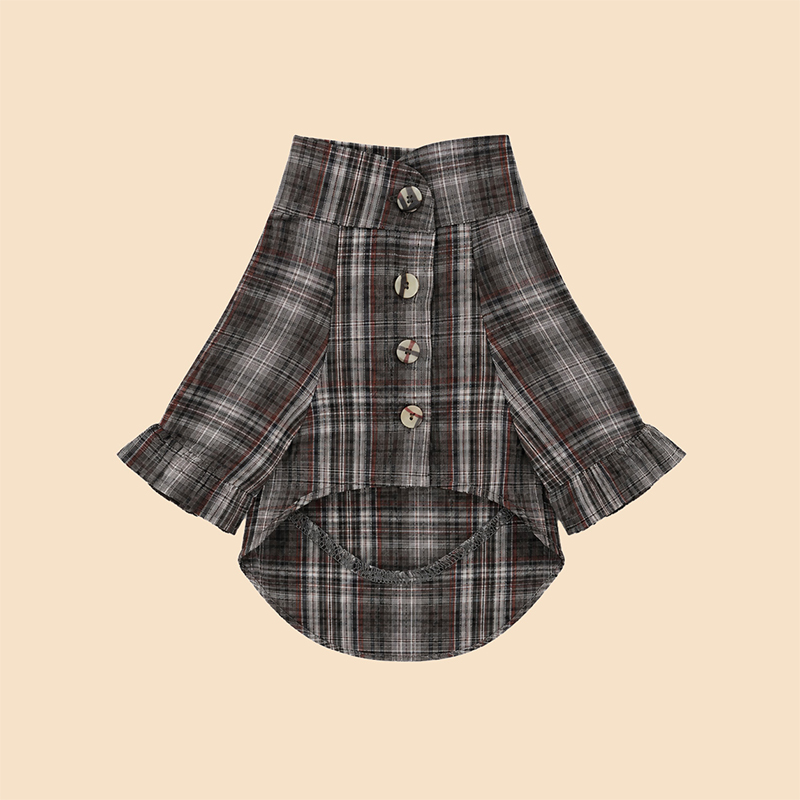
- Rustic Brown Plaid Dog Shirt Casual Outdoor Pet Wear
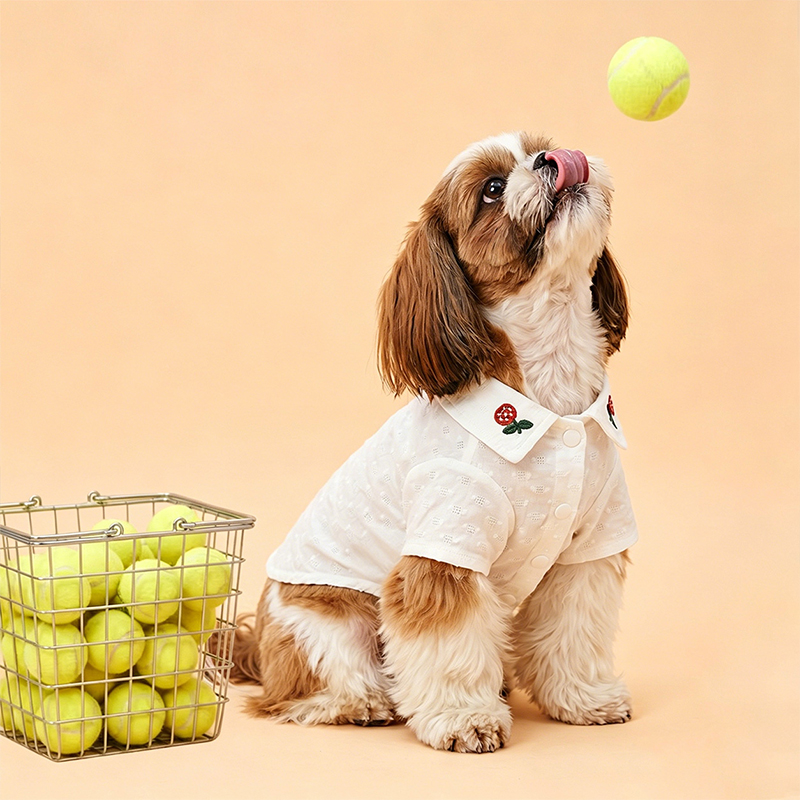
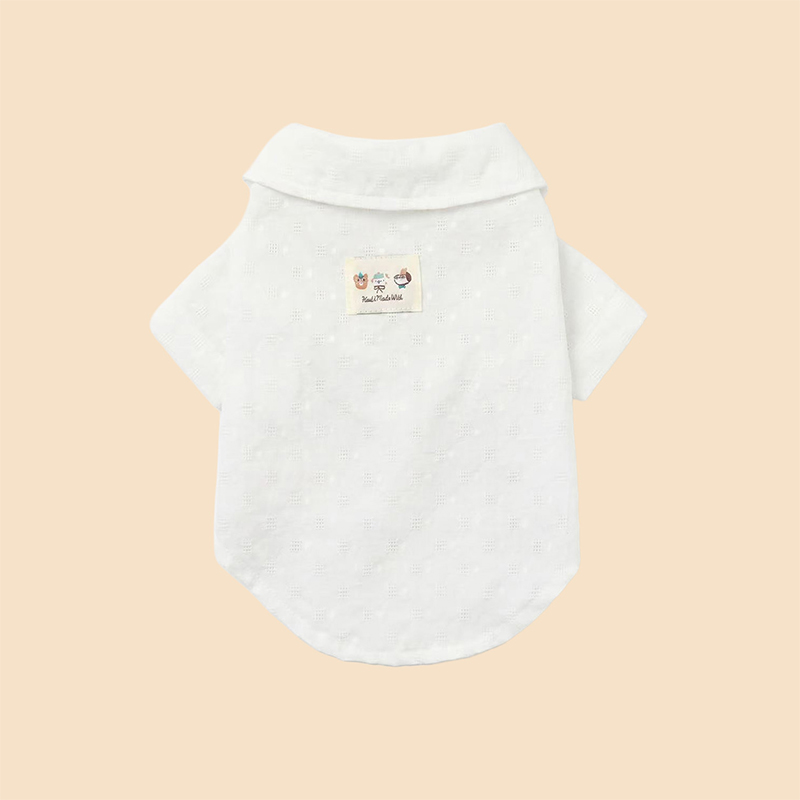
- Cream Embroidered Dog Blouse Elegant Pet Shirt
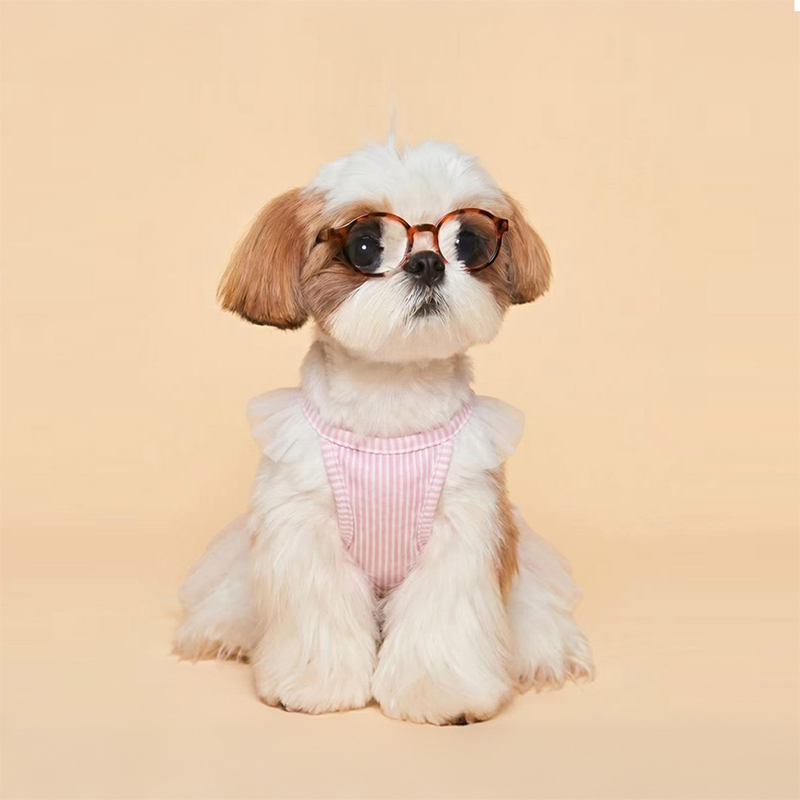
- Korean Style Pink Textured Tulle Camisole Small Dog Fashion Top
- Star & Letter Casual Pet T-Shirt Daily Wear Dog Top
- +86-13362661217
- 13362661217@163.com
- 128 Houxin Street, Hongjia, Jiaojiang, Taizhou, Zhejiang, China
