
 English
 русский
 Español
 عربى


Qiu Manzhen — Product After-Sales Service Supervisor
Elegant Monogram Gentleman Style Pet Trousers: A Premium OEM/ODM Opportunity for Modern Pet Fashion
Pet clothing has moved beyond purely functional protection. For many consumers, pets are family members, lifestyle companions, and important parts of personal identity. As a result, the market for stylish dog apparel continues to develop from a basic accessories category into a specialized fashion segment. Retailers, online sellers, boutique operators, and private-label brands are actively searching for products that combine visual distinction, practical comfort, reliable sizing, and efficient production support.
The Elegant Monogram Gentleman Style Pet Trousers are designed for this changing market. They bring together a refined formalwear-inspired silhouette, a recognizable monogram design element, soft structured fabric, breathable lining, and flexible customization options. The result is a product that can support premium pet fashion collections while remaining suitable for daily wear, indoor use, casual outdoor occasions, photography, and boutique retail presentation.
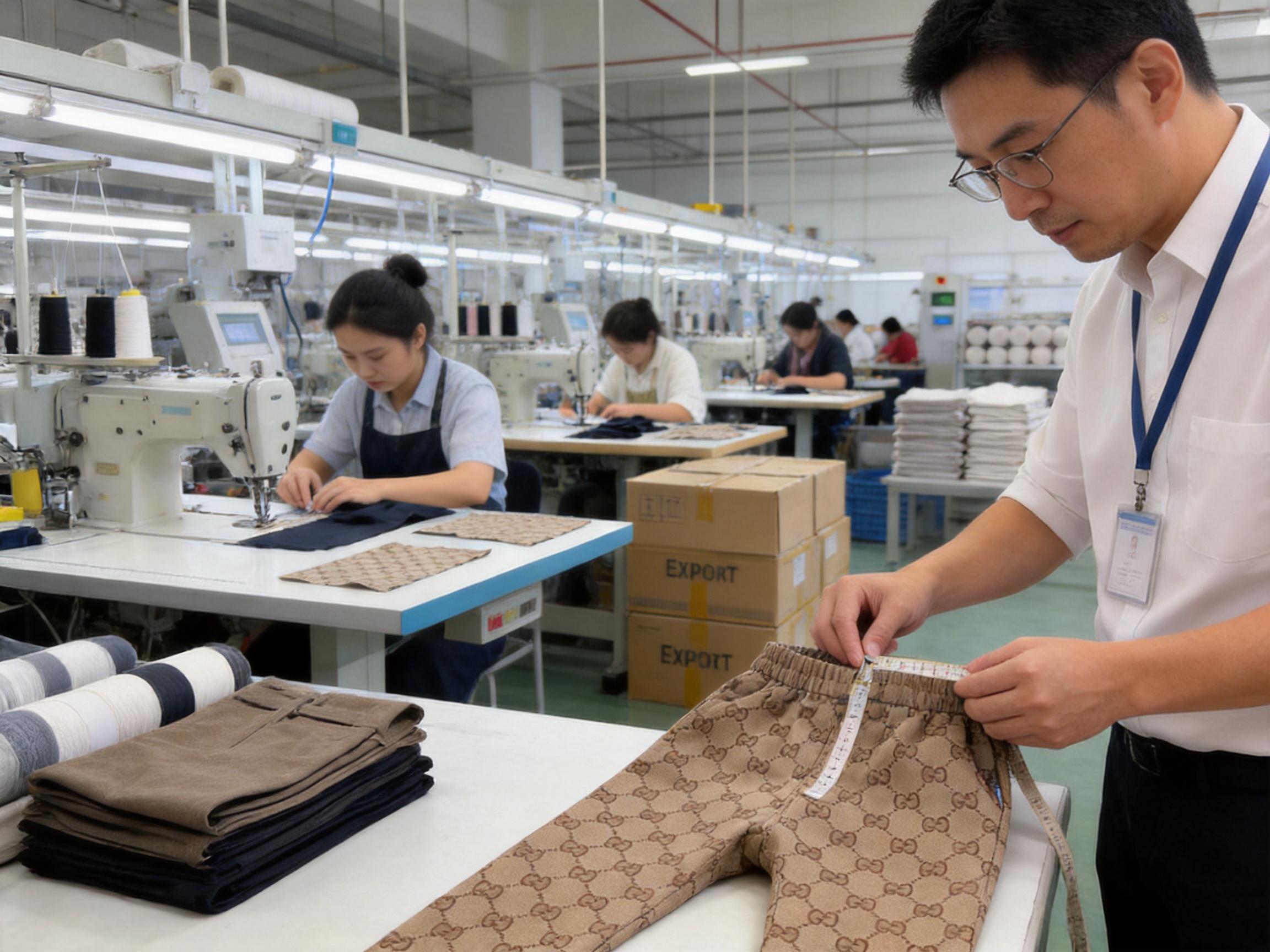
For brands and distributors, the value of this product extends beyond its appearance. The trousers are supported by an OEM/ODM production system capable of handling design development, pattern making, private labeling, packaging customization, and scaled manufacturing. The supplier operates 48 fully automatic sewing production lines, employs a 77-person professional team, and maintains a stated daily production capacity of approximately 3,000 pieces. These capabilities create a foundation for consistent production and responsive product development.
This article examines the product’s design advantages, customer applications, sizing, customization potential, production process, quality considerations, and commercial value. It also explains why the trousers can compete effectively with ordinary pet pants and generic dog apparel in a crowded marketplace.
1. Product Positioning in the Premium Pet Apparel Market
The modern pet apparel customer often expects more than a simple garment. A successful product must look attractive in photographs, feel comfortable during use, fit a clearly defined pet-size range, and provide enough visual identity for retailers to build a distinctive collection. Generic pet pants may satisfy a basic clothing need, but they frequently lack a strong design theme or a clear positioning strategy.
The Elegant Monogram Gentleman Style Pet Trousers occupy a more specialized position. Their design is influenced by gentleman-style formalwear, giving them a polished and recognizable character. Instead of presenting the dog as wearing an ordinary utility garment, the trousers create a fashion statement. This is especially valuable for brands that sell themed pet clothes, coordinated owner-and-pet styling, seasonal collections, or photo-oriented accessories.
The monogram element adds another layer of commercial potential. It can function as a decorative pattern, a collection identifier, or a foundation for customized branding. A monogram can communicate elegance, heritage, exclusivity, or boutique positioning. When combined with an appropriate color palette and premium packaging, it can help a product appear more distinctive on a retail shelf or in an online product image.
The trousers are intended for small to medium dog breeds and are available in six sizes from XS to XXL. This range enables sellers to serve multiple body types without limiting the product to only the smallest toy breeds. The available size options also make it easier for a retailer to create a complete product listing and reduce the risk of losing customers because of a narrow size selection.
2. Main Design Advantages
2.1 A Formalwear-Inspired Silhouette
The most important design advantage is the formalwear-inspired silhouette. Many dog pants are designed around simple stretch shapes, loose covers, or basic protective constructions. These products can be useful, but they may not offer the visual refinement expected by premium consumers. The gentleman-style silhouette of this product is intended to simulate the appearance of human formal clothing while remaining adapted to pet apparel requirements.
This approach gives retailers a strong story to communicate. The garment can be promoted as a fashion item for special occasions, portrait sessions, holidays, social media content, boutique displays, or daily styling. A product with a clear concept is generally easier to present than an item whose only selling point is that it is a basic pair of pet trousers.
The tailored appearance also supports collection building. A seller may pair the trousers with formal-style pet shirts, bow accessories, vests, collars, or matching owner accessories. Even when the trousers are sold separately, the design can become part of a larger gentleman or classic-luxury theme.
2.2 Monogram Detail for Differentiation
Monogram design elements are widely associated with personalized fashion and premium branding. In pet apparel, they offer a way to create visual recognition without relying solely on large logos. The monogram can be developed as a repeating pattern, a subtle surface detail, or a customized motif that reflects the identity of a particular brand.
This feature helps the trousers stand apart from plain single-color pet pants. In online retail, where buyers often compare multiple products quickly, a recognizable pattern can improve visual impact. In physical boutiques, the monogram can contribute to an organized display theme and make the product appear more curated.
The monogram also creates opportunities for different market positions. A seller can choose understated elegant tones for a luxury collection, brighter colors for seasonal campaigns, or customized patterns for a private-label range. This flexibility gives the same basic product concept the ability to serve different customer groups and retail environments.
2.3 Balance Between Structure and Comfort
A formal appearance can sometimes create concerns about stiffness or restricted movement. The product specification addresses this issue by describing a soft structured fabric with a breathable lining. The structure is intended to help the trousers maintain their shape, while the softness and lining are intended to support a more comfortable wearing experience.
This balance is important because pet clothing must satisfy both the owner’s aesthetic expectations and the pet’s practical needs. A garment that looks attractive but feels uncomfortable may be rejected by pets or removed by owners. Conversely, a highly comfortable garment with no visual character may have limited appeal in the premium fashion market.
The fabric structure can help the trousers retain a neat silhouette during wear, photography, and retail display. The breathable lining is particularly relevant for indoor use and transitional seasons. The product is positioned for spring, autumn, and indoor year-round wear, rather than as an extremely heavy winter garment. This seasonal positioning allows sellers to plan releases around moderate-weather collections and indoor lifestyle campaigns.
2.4 Broad Usage Scenarios
The product is suitable for daily wear, fashion styling, indoor and outdoor casual occasions, photo shooting, and boutique retail display. This range of applications improves its commercial versatility. A retailer does not need to market the trousers for only one event or one season.
For daily wear, the trousers can serve as a distinctive outfit for owners who enjoy dressing their dogs regularly. For photo shooting, the formal silhouette can create a strong visual theme. For boutique retail, the product can function as a high-style item that attracts attention even when customers are initially browsing other categories.
The product may also be suitable for event-related promotions, such as pet birthday parties, adoption campaigns, holiday photography, pet cafés, and themed social media content. These applications should be communicated responsibly, with fit and comfort checked for every individual dog.
3. Comparison with Ordinary Dog Pants
Competition in pet apparel comes from several product types, including basic cotton pants, stretch leggings, protective garments, casual shorts, and decorative costumes. The Elegant Monogram Gentleman Style Pet Trousers compete by offering a more complete design proposition rather than by relying on a single functional feature.
| Evaluation Area | Basic Generic Dog Pants | Elegant Monogram Gentleman Style Pet Trousers |
|---|---|---|
| Visual positioning | Often simple, casual, or utility-focused | Formalwear-inspired gentleman styling |
| Pattern identity | May use plain colors or common prints | Monogram design element supports stronger recognition |
| Shape retention | May depend mainly on soft or stretch construction | Soft structured fabric is intended to maintain a tailored appearance |
| Brand customization | May offer limited decoration options | Embroidery, silicone or rubber print, monogram development, labels, and hang tags are available |
| Retail positioning | Usually mass-market or basic accessory category | Suitable for premium collections and boutique presentation |
| Production support | May focus on standard finished goods | OEM/ODM support covers design, production, branding, and packaging |
| Size range | Varies by supplier and may be narrow | Six listed sizes from XS through XXL for small to medium dogs |
This comparison does not mean that basic dog pants have no value. They may be appropriate for customers seeking low-cost everyday products. However, brands targeting premium pet fashion need a stronger combination of appearance, customization, and collection potential. The gentleman-style trousers are designed to answer that requirement.
The product also benefits from a clearer emotional appeal. Pet owners often purchase fashion products because they enjoy expressing affection, personality, humor, or lifestyle through their pets. The formalwear theme creates an immediate emotional image: a well-dressed companion with a refined, memorable appearance. This can be more persuasive than a purely technical product description.
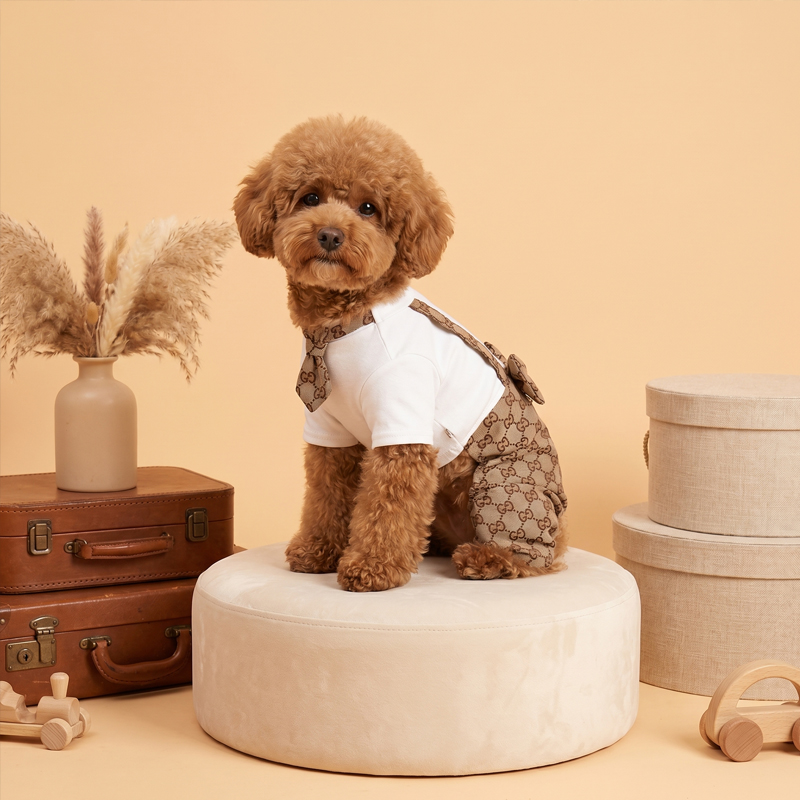
Elegant Monogram Gentleman Style Pet Trousers
4. Materials and Construction Concept
The listed material concept consists of soft structured fabric with breathable lining. Because the material can be customized based on OEM requirements, brands have an opportunity to align the final garment with their target market, climate, price level, and visual direction. The exact material selection should be confirmed during product development and sampling.
Softness is important for reducing the likelihood of irritation and improving acceptance by the pet. A structured outer fabric is valuable for maintaining the garment’s formal outline. Breathability is relevant to wearing comfort, especially when the product is used indoors or during mild weather. These three qualities—softness, structure, and ventilation—work together to support the product’s intended premium positioning.
The construction should be evaluated through physical samples before bulk production. Brands should review seam finishing, lining attachment, waistband or opening design, leg coverage, ease of movement, and the relationship between decorative details and pet comfort. A well-designed sample process helps identify problems before the order reaches mass production.
For wholesale and private-label customers, the material discussion should include colorfastness, surface appearance, print or embroidery compatibility, care requirements, and packaging presentation. If a brand intends to sell in a warmer climate, it may prioritize lighter and more breathable fabric options. If the product is primarily intended for photography or indoor boutiques, the brand may place greater emphasis on structure and visual texture.
4.1 Decorative Application Options
The product supports several branding and decoration methods. Embroidery can provide a classic, dimensional appearance that matches the gentleman theme. It may be used for a brand mark, initials, a small emblem, or a customized monogram. Embroidery placement should be selected carefully so that the decoration does not create pressure points or interfere with movement.
Silicone or rubber print detailing can provide a more contemporary appearance. These applications may be useful for modern pet fashion brands that want a clean graphic effect or a slightly raised surface. They can also help create contrast between the monogram and the base fabric.
Customized monogram development is another important option. A brand may submit its own pattern direction or request design assistance in developing a new motif. The development process should confirm repeat size, line thickness, color combinations, print scale, and the visual result on the selected fabric.
4.2 Private-Label Components
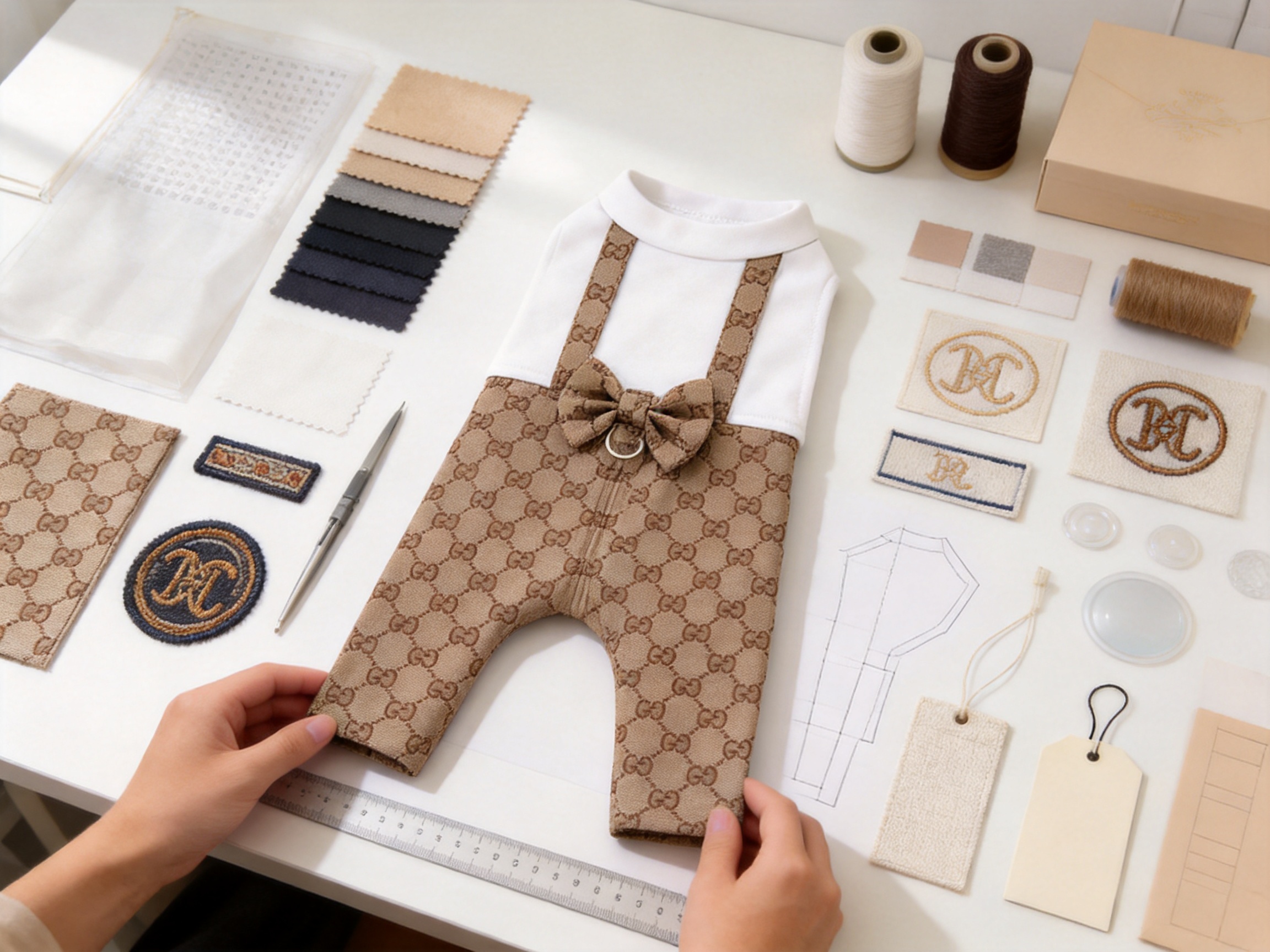
Private labeling can extend beyond the garment itself. The available solutions include woven brand labels, wash care labels, and premium hang tags. These details help transform a standard product into a coherent branded offering.
A woven label can communicate brand ownership and improve the perceived completeness of the garment. A wash care label provides practical information and supports professional retail standards. A premium hang tag can explain the design concept, material features, size guidance, or brand story.
Packaging is also customizable. Export standard packaging can support efficient shipping and basic wholesale requirements, while branded retail packaging can improve presentation for boutiques, online orders, gift purchases, and premium collections. The packaging decision should reflect the intended sales channel, shipping conditions, and target price.
5. Manufacturing Strength and Production Infrastructure
The supplier’s manufacturing system is a central advantage for brands that need more than a catalog product. Taizhou Feile Pet Products Co., Ltd. is described as a professional pet apparel manufacturer integrating design, production, and sales. The business has five years of offline manufacturing experience, while its cross-border online division began operating in November 2025 to support international sellers and brands.
The production facility is equipped with 48 fully automatic sewing production lines. This equipment base indicates a production structure designed for repeatable garment manufacturing rather than purely manual small-batch work. Automatic sewing lines can support consistent operation, improve production organization, and help the factory handle multiple styles and orders.
The company has a 77-person professional team covering design, pattern making, production, and quality control. This division of responsibilities is valuable because successful pet apparel manufacturing requires more than sewing capacity. Product development must translate a visual concept into a wearable pattern. Production teams must follow specifications accurately. Quality control personnel must inspect finished goods and identify deviations.
The stated daily production capacity is approximately 3,000 pieces. Capacity at this level can support wholesale orders, seasonal releases, and repeat production when schedules are properly coordinated. It also gives brands an opportunity to scale a successful product rather than changing suppliers when demand increases.
The supplier’s product range includes dog apparel, cat apparel, and small pet apparel, with more than 800 SKUs in total. This broad category experience may help the manufacturer understand differences in body shape, size grading, garment construction, and customer expectations across pet types. The company also states that it launches 8 to 12 new styles each week, showing an emphasis on continuous product development and market responsiveness.
6. Manufacturing Process from Concept to Finished Product
6.1 Design Interpretation
The first stage of an OEM or ODM project is the interpretation of the product concept. For the Elegant Monogram Gentleman Style Pet Trousers, this includes understanding the desired formal silhouette, monogram style, color direction, intended dog-size range, and retail positioning.
An OEM customer may provide a complete design package, including sketches, reference images, measurements, artwork, and material preferences. An ODM customer may select the existing product concept and request modifications such as different colors, decorative elements, labels, or packaging.
Clear communication at this stage is essential. The brand should define whether the trousers are intended primarily for fashion styling, daily wear, photography, or a combination of uses. It should also identify the target customer, sales channel, climate, and expected retail price. These factors affect material selection and construction decisions.
6.2 Pattern Making and Size Development
Pattern making converts the design concept into garment components. Pet bodies vary significantly by breed, weight, chest shape, back length, and body proportion. A pattern that looks suitable on one dog may not fit another dog with the same weight but a different body structure.
The factory’s professional pattern-making function is therefore important. Samples should be assessed on suitable pet models or through detailed measurement references. The goal is to create a garment that maintains its appearance while allowing reasonable movement and avoiding excessive pressure around the neck, chest, waist, legs, or other contact areas.
The listed size range includes XS, S, M, L, XL, and XXL. Because the supplied chart includes neck, chest, back length, and approximate weight, retailers can present customers with several reference points instead of relying on weight alone. Weight is useful as an initial guide, but chest and back measurements should receive priority when selecting a size.
6.3 Sample Development
Sampling allows the brand and factory to evaluate the actual product before bulk production. A sample should be reviewed for overall silhouette, fabric hand feel, lining comfort, monogram clarity, seam quality, opening and closing method, and ease of dressing.
The sample stage is also the appropriate time to test colors and decorations. A monogram may appear different on a computer screen than on the finished fabric. Embroidery density, print scale, and contrast can influence whether the design looks refined or visually crowded. Early sample review allows these issues to be corrected.
For international customers, sample approval should be documented through clear comments, approved artwork, measurement records, and reference photographs. This reduces ambiguity during bulk production and establishes a shared standard for quality evaluation.
6.4 Material and Component Preparation
Once the sample is approved, the factory prepares the selected outer fabric, lining, thread, labels, decorative applications, and packaging components. Material preparation must correspond with the approved specifications. Color, texture, thickness, and surface finish should be checked before cutting.
Branding components require particular attention. Woven labels should match the approved dimensions and artwork. Hang tags should contain accurate product and brand information. Wash care labels should be prepared according to the agreed instructions. If silicone, rubber, or embroidery applications are included, their placement and color should be verified before production begins.
6.5 Cutting and Sewing
Cutting accuracy is important for maintaining consistent sizing and a balanced silhouette. The structured nature of the garment means that inaccurate panels may affect the formal appearance. After cutting, sewing operations are organized according to the construction sequence.
The use of fully automatic sewing production lines supports standardized operations and production efficiency. Skilled personnel remain important for setup, supervision, adjustment, inspection, and handling of design-specific details. The combination of equipment and professional staff helps the factory manage both productivity and product requirements.
During sewing, the factory should monitor seam alignment, thread tension, lining attachment, edge finishing, and decorative placement. These checks are particularly important for premium apparel, where small inconsistencies can affect the overall perception of quality.
6.6 Quality Control and Final Inspection
Quality control should take place throughout production rather than only at the end. In-process checks can identify problems while correction is still efficient. Final inspection should review appearance, measurements, stitching, labels, decoration, packaging, and the quantity of completed goods.
For pet trousers, quality control should also consider practical wear factors. The garment should not have loose threads, sharp exposed components, or poorly finished edges that could cause discomfort. Decorative elements should be securely attached. The fit should correspond with the approved size specification.
Although no single inspection system can guarantee suitability for every individual dog, a structured manufacturing quality process improves consistency from piece to piece. Brands should still conduct their own sample review and, where appropriate, product testing before launch.
7. Size Information and Fit Guidance
The available size chart covers six sizes. The measurements are provided as references and should be checked against the individual dog before ordering. Breed labels alone are not sufficient because dogs of the same breed may differ in weight, body length, chest depth, and overall build.
| Size | Neck | Chest | Back Length | Approximate Weight |
|---|---|---|---|---|
| XS | 22 cm | 33 cm | Approximately 22 cm | Approximately 3 lb |
| S | 24 cm | 37 cm | Approximately 25 cm | Approximately 5 lb |
| M | 30 cm | 44 cm | Approximately 29 cm | Approximately 5–8 lb |
| L | 33 cm | 48 cm | Approximately 33 cm | Approximately 8–14 lb |
| XL | 36 cm | 53 cm | Approximately 36 cm | Approximately 14–17 lb |
| XXL | 40 cm | 58 cm | Approximately 39 cm | Approximately 17–22 lb |
Retailers should explain how customers can measure their dogs. The neck should be measured around the area where a collar naturally rests, without pulling the tape tightly. The chest should be measured around the broadest part of the rib cage. The back length should be measured from the base of the neck to the desired endpoint according to the product’s fitting method.
When a dog’s measurements fall between two sizes, the preferred choice depends on the garment design, the dog’s body shape, and the desired level of ease. Customers should not select a size based only on approximate weight. The size chart should be presented clearly on product pages, packaging, and sales materials.
Because the product is intended for small to medium dog breeds, retailers should avoid implying that it fits every dog within the listed weight range. Some dogs have broad chests, long backs, or compact bodies that require additional fitting consideration. A clear measurement policy helps reduce returns and improves customer confidence.
8. OEM and ODM Customization Opportunities
The product is suitable for both OEM and ODM projects. In an OEM arrangement, a brand generally supplies its own design or detailed specifications, while the manufacturer produces according to the approved requirements. In an ODM arrangement, the brand may use the supplier’s existing design concept and request adjustments or branding.
Customization may include color selection, monogram development, embroidery, silicone or rubber print detailing, woven labels, wash care labels, hang tags, and packaging. These options allow a seller to create a product that feels specific to its own collection rather than appearing identical to products sold by other retailers.
8.1 Color Strategy
Color is one of the fastest ways to adapt the trousers to a target market. Elegant neutral tones can support a classic luxury collection. Darker tones may emphasize the formal gentleman theme. Softer colors can make the garment more suitable for spring collections or boutique lifestyle photography.
Brands should consider how the selected color interacts with the monogram. A low-contrast monogram may create a subtle premium effect, while a higher-contrast design may be more visible in online product images. The best choice depends on the intended brand identity and customer preference.
8.2 Monogram and Logo Development
A customized monogram should be evaluated at the actual production scale. Fine lines may lose clarity when reduced, while oversized patterns may overpower the garment. The repeat direction should also be considered because the pattern may appear differently across front, side, and rear panels.
Logo placement can be subtle or prominent. A small embroidered logo may be appropriate for an understated luxury brand. A repeated monogram can support stronger visual recognition. Silicone or rubber detailing may suit a contemporary brand that wants a tactile and modern finish.
8.3 Packaging for Different Sales Channels
Export standard packaging is suitable for many wholesale shipments and can help control logistics costs. Branded retail packaging is more appropriate when the product is sold as a premium gift, displayed in boutiques, or shipped directly to consumers.
Packaging may include the brand name, product story, size guidance, care information, and a concise explanation of the monogram or formalwear concept. Retailers should ensure that packaging information matches the final product and does not make unsupported performance claims.
9. Order Terms and Commercial Planning
The standard minimum order quantity is 500 pieces per order. The stated single-color minimum is at least 300 pieces for each color. These quantities are designed for wholesale, private-label, and brand development projects rather than individual consumer purchases.
The listed production lead time is 10 to 15 days after order confirmation and receipt of the deposit. Actual scheduling may depend on the design complexity, material availability, decoration method, packaging requirements, order quantity, and confirmation speed. Brands should establish the production schedule in writing before placing an order.
The stated payment terms are 50 percent deposit to confirm the order, with the remaining 50 percent balance paid before shipment. Buyers should coordinate artwork approval, sample confirmation, quantity confirmation, and packaging approval before the production deposit is finalized.
| Commercial Item | Stated Standard Term | Planning Consideration |
|---|---|---|
| Minimum order quantity | 500 pieces per order | Suitable for wholesale and private-label programs |
| Single-color minimum | At least 300 pieces per color | Color assortment should be planned before ordering |
| Production lead time | 10–15 days after confirmation and deposit receipt | Confirm material, artwork, and packaging readiness |
| Payment | 50% deposit and 50% balance before shipment | Coordinate payment with approval and shipping planning |
For a new brand, the MOQ can be used to establish a focused launch collection. Instead of ordering many unrelated styles, the brand may select a small number of colors and invest in consistent labels and packaging. For an established distributor, the MOQ may support multi-channel inventory, seasonal campaigns, or regional distribution.
10. Why the Supplier Is Suitable for International Pet Brands
International buyers often require more than a product sample. They need a supplier capable of communicating specifications, managing repeat orders, coordinating branding, and supporting product expansion. The company’s cross-border online division was established to focus on global sellers and brands, complementing its offline manufacturing experience.
The combination of design, pattern making, production, and quality control within one organization can simplify communication. Instead of transferring a project between unrelated design and manufacturing companies, a brand can discuss the product concept and production requirements with an integrated pet apparel partner.
The company’s broad catalog of more than 800 SKUs also provides opportunities for collection expansion. A brand beginning with the gentleman-style trousers may later develop coordinated dog apparel, cat apparel, or small pet apparel. This can support a broader brand identity and make future sourcing more efficient.
The stated weekly introduction of 8 to 12 new styles indicates an active approach to product development. Pet fashion trends change quickly, and sellers often need new designs for seasonal campaigns, social media content, and marketplace differentiation. A supplier that continuously develops styles may provide more opportunities than a factory focused only on a static catalog.
11. Retail and Marketing Applications
11.1 Boutique Pet Shops
Boutique pet shops can use the trousers as a feature product within a premium clothing display. The formalwear concept makes it suitable for mannequins, seasonal windows, and curated outfit collections. Retail staff can explain the monogram, structured silhouette, and available customization options to customers who are looking for something more distinctive than a standard pet garment.
11.2 Online Pet Fashion Stores
Online stores can emphasize the visual character of the product through photography and styling. Images should show the silhouette clearly, include close views of the monogram, and provide a complete size chart. Since fit is a major concern for online shoppers, measurement instructions and realistic product information are essential.
11.3 Social Media and Pet Photography
The trousers are naturally suited to pet photography and social media content. The gentleman theme can support creative campaigns involving formal portraits, seasonal greetings, celebration posts, and owner-and-pet lifestyle imagery. A strong visual theme may encourage customers to share photographs, generating additional visibility for the retailer.
11.4 Private Events and Themed Collections
Pet cafés, photography studios, event organizers, and specialty retailers may use the trousers for themed promotions. They can be included in formal portrait packages, pet birthday events, adoption campaigns, or holiday styling collections. The garment’s visual identity allows it to participate in experiences as well as ordinary retail sales.
12. Product Presentation Recommendations
A premium product requires premium presentation. The product title should communicate the formal gentleman theme and monogram detail without becoming difficult to understand. The description should explain the fabric concept, usage scenarios, size range, customization options, and care guidance in a clear order.
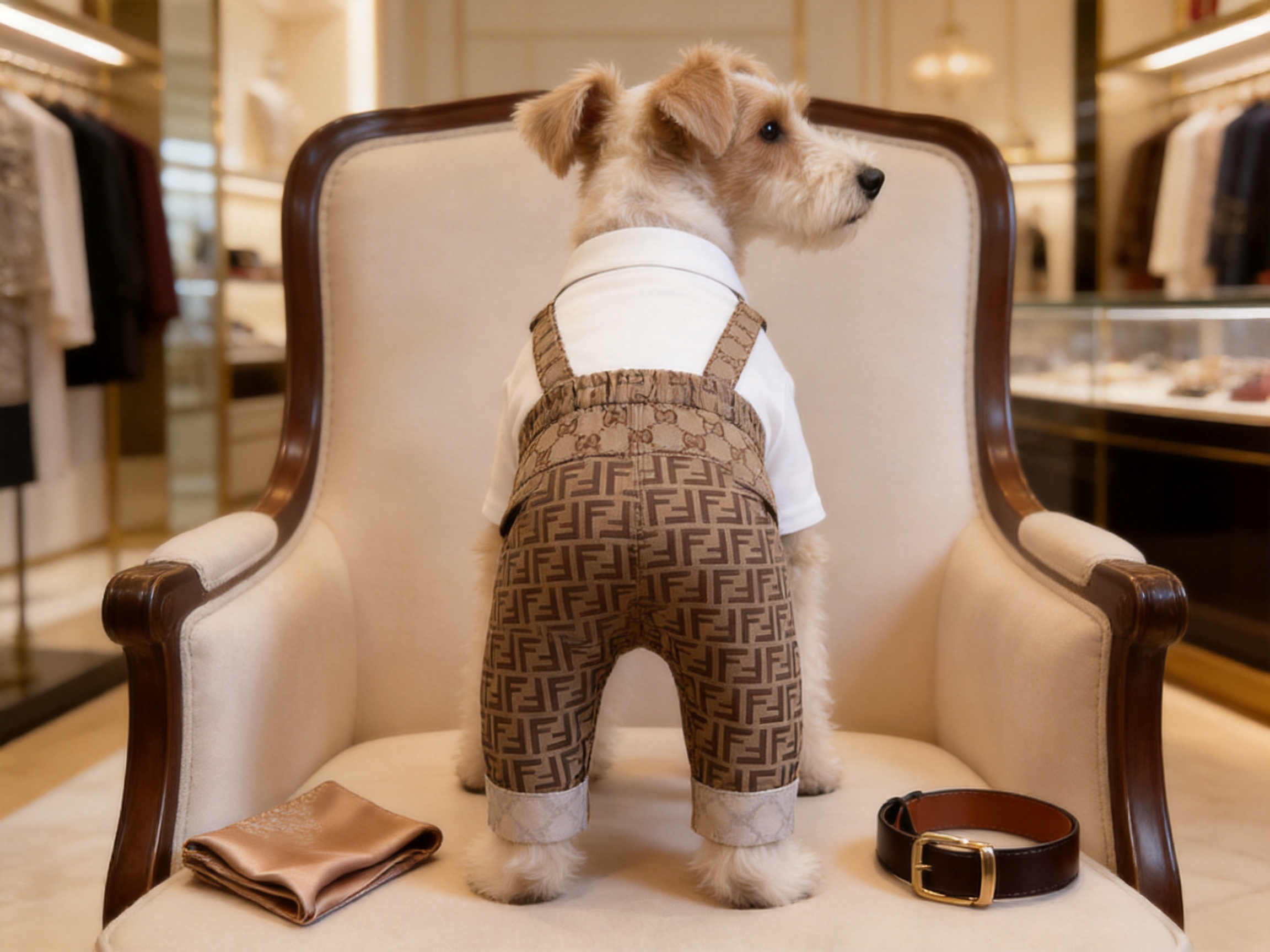
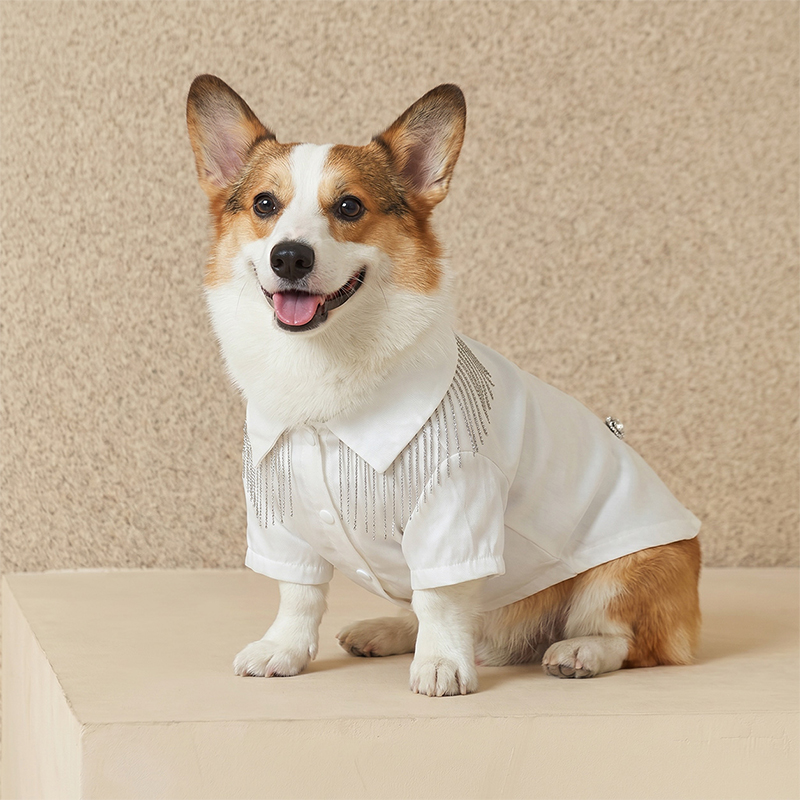
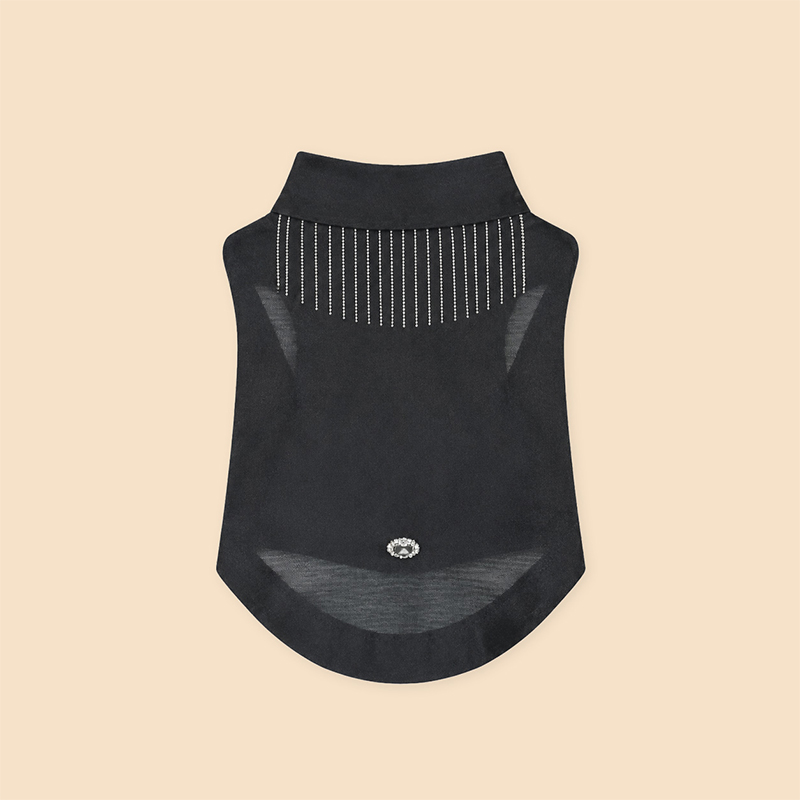
Photography should include a full-body image, a close-up of the monogram, a view showing the garment’s structure, and a size-reference presentation. The four supplied product images can support different parts of the product page or marketing material. Retailers should ensure that the images accurately represent the final version of the product and any customized color or decoration.
Product copy should avoid overstating performance. The trousers should be presented as stylish pet apparel for moderate-weather and indoor use, not as protective technical equipment unless additional testing supports such a claim. Honest communication helps reduce unsuitable purchases and protects long-term brand credibility.
Retailers may also explain that the fabric, color, monogram, labels, and packaging can be customized for qualified orders. This gives business customers a reason to inquire while keeping the consumer-facing description easy to understand.
13. Quality, Comfort, and Responsible Use
Fashion should never override the basic comfort and safety needs of the pet. Owners should introduce the trousers gradually and observe the dog’s behavior. If the dog shows signs of distress, restricted movement, overheating, skin irritation, or discomfort, the garment should be removed and the fit reassessed.
The trousers should be used under appropriate supervision, particularly during the first fitting. Owners should check that the garment is not too tight around the neck, chest, waist, or legs. Decorative components should remain securely attached, and the garment should be inspected periodically for damage or loose threads.
Care instructions should be confirmed according to the final fabric and decoration. Washing methods, water temperature, drying instructions, and ironing limitations may vary depending on the selected material. Wash care labels should be included in private-label versions where appropriate.
For brands, responsible product communication is part of quality management. Clear size guidance, accurate material descriptions, and practical usage information help customers use the product correctly. This can reduce complaints and support a better ownership experience.
14. A Practical Development Workflow for Buyers
A buyer considering this product can follow a structured workflow. First, define the target market and intended sales channel. Decide whether the product will be sold as everyday premium wear, a boutique fashion item, a photography accessory, or part of a larger seasonal collection.
Second, select the preferred color direction and monogram concept. Prepare artwork in a clear format and identify whether embroidery, silicone print, rubber print, or another application is preferred.
Third, confirm the target size range and review the supplied measurements. If the brand serves a particular regional market, it should determine whether additional size communication or measurement conversion is required.
Fourth, review and approve the material and sample. Evaluate comfort, shape, color, decoration, seams, labels, and packaging. Any required revisions should be confirmed before bulk production.
Fifth, confirm the order quantity, color quantities, packaging requirements, production schedule, and payment terms. The stated MOQ is 500 pieces per order, with at least 300 pieces for each color, so the color plan should be finalized early.
Finally, arrange quality inspection and shipment preparation. The brand should retain approved samples, artwork, size specifications, and packaging references for future repeat orders. This creates a useful benchmark for maintaining consistency as the product line grows.
15. Frequently Asked Questions
Q1: What type of pets are these trousers designed for?
They are designed primarily for small to medium dog breeds. The available sizes range from XS to XXL. Buyers should select a size using neck, chest, back length, and approximate weight references rather than relying only on breed names.
Q2: What makes the trousers different from basic dog pants?
The product combines a gentleman-style formalwear silhouette, a monogram design element, soft structured fabric, breathable lining, and private-label customization options. These features give it a more premium and collection-oriented position than many basic dog pants.
Q3: Can the monogram be customized?
Yes. Customized monogram design development is available for suitable OEM or ODM projects. The final pattern, artwork, colors, scale, and application method should be confirmed during product development.
Q4: Which branding methods are available?
Available branding solutions include embroidery, silicone or rubber print detailing, woven brand labels, wash care labels, and premium hang tags. The appropriate method depends on the desired appearance, material, budget, and order specifications.
Q5: Can the colors be customized?
Standard elegant tones are available, and customized colors are supported for qualified orders. Buyers should confirm color references, sample approval requirements, and the minimum quantity for each color before production.
Q6: Is the product suitable for all seasons?
The product is positioned for spring, autumn, and indoor year-round wear. It is not described as heavy winter protective clothing. Suitability depends on the selected fabric, local climate, indoor temperature, and the individual dog’s comfort.
Q7: What is the minimum order quantity?
The stated minimum order quantity is 500 pieces per order. The stated single-color minimum is at least 300 pieces per color.
Q8: How long is the production lead time?
The standard stated production lead time is 10 to 15 days after order confirmation and receipt of the deposit. Actual timing should be confirmed according to the selected materials, decoration, packaging, and order details.
Q9: What are the payment terms?
The standard terms are a 50 percent deposit to confirm the order and a remaining 50 percent balance before shipment.
Q10: Can the trousers be sold under a private label?
Yes. Private-label support includes woven labels, wash care labels, premium hang tags, customized monogram details, and branded retail packaging where required.
Q11: Does the manufacturer support other pet apparel categories?
Yes. The company’s stated product scope includes dog apparel, cat apparel, and small pet apparel, with more than 800 SKUs. This may help brands expand into coordinated product categories.
Q12: How should buyers evaluate the sample?
Buyers should examine the silhouette, fabric hand feel, lining, stitching, decoration, label placement, size accuracy, ease of dressing, and pet movement. Sample approval should be documented before bulk production begins.
Q13: Is weight enough to determine the correct size?
No. Weight is only an approximate reference. Chest, neck, and back measurements are more useful for choosing a suitable size because dogs with similar weights can have different body proportions.
Q14: Can the trousers be used for photography?
Yes. Photo shooting is one of the listed usage scenarios. The formal silhouette and monogram detail can create a distinctive visual theme for portraits, social media campaigns, and boutique marketing.
Q15: Where can business customers request project details?
Business customers can contact the manufacturer for customized design, private-label orders, large-volume purchasing, production schedules, and pricing. Contact details should be confirmed directly during the business inquiry process.
16. Overall Commercial Assessment
The Elegant Monogram Gentleman Style Pet Trousers offer a clear alternative to undifferentiated dog pants. Their strongest advantages are the formalwear-inspired design, recognizable monogram concept, balance of structure and softness, six-size range, and broad customization support. These attributes make the product particularly relevant to premium pet boutiques, online fashion retailers, private-label brands, and distributors seeking more distinctive collections.
The manufacturing foundation strengthens the product’s commercial potential. The supplier combines five years of offline manufacturing experience with a cross-border online division focused on international sellers and brands. Its 48 fully automatic sewing production lines, 77-person professional team, approximately 3,000-piece daily capacity, integrated design and production functions, and broad pet apparel catalog provide valuable support for development and scale.
For buyers, the main success factors will be accurate size communication, careful sample approval, appropriate color planning, and consistent branding execution. The MOQ and color requirements should be incorporated into inventory planning from the beginning. With these points managed effectively, the product can serve as a strong centerpiece for a formal, classic, or luxury-themed pet fashion range.
In a market where pet owners increasingly value design, personalization, and shareable style, these trousers provide more than a basic clothing function. They create a recognizable fashion idea that can be adapted through materials, colors, monograms, labels, and packaging. Supported by an organized production system and OEM/ODM capabilities, the product presents a practical opportunity for brands that want to build differentiated pet apparel collections.
References
1. Product specification and size information supplied for the Elegant Monogram Gentleman Style Pet Trousers.
2. Manufacturer-provided information concerning OEM/ODM services, production capacity, equipment, team structure, product categories, and order terms.
3. General apparel product-development principles concerning design interpretation, pattern making, sample approval, sewing production, quality inspection, labeling, and packaging.
4. General pet apparel merchandising principles concerning fit communication, comfort observation, responsible use, and retail presentation.
Product: Elegant Monogram Gentleman Style Pet Trousers

NEXT:Green Leopard Jacquard Christmas Pet Cape: A Comfortable Korean-Style Winter Apparel Solution for Modern Pet Collections
- Lolita Cake Dress
- Cool Style Tassel Top Pet Lolita Dress
- Sweet Bow Princess Dog Dress
- Denim Pinafore Dress With Pockets Cute Casual Small Dog Outfit
- French Doll-neck Dog Dress Elegant Pet Wear
- Korean Sweet Lolita Dog Dress Cute Party Outfit
- Flutter Sleeve Dog Dress Lightweight Summer Pet Wear
- Ruffle Flutter Sleeve Pet Dress Cute Princess Style
- French Style Embroidered Dog Dress Elegant Pet Apparel
- Mint Green Heart Spaghetti Strap Tulle Dog Dress Princess Party Outfit
- Gingham Bow Dog Dress Cute Summer Pet Outfit
- Navy Star Pleated Dog Dress Elegant Casual Pet Wear
- Summer Sailor Dog Dress Nautical Style Pet Apparel
- Dog Cooling Shirt Color-Block Lightweight Summer Pet Wear
- Dog Printed High-Neck Base Layer Top Thermal Stretch Pet Underwear
- Lightning Racing Performance Sportswear Breathable Athletic Pet Shirt
- Rustic Brown Plaid Dog Shirt Casual Outdoor Pet Wear
- Cream Embroidered Dog Blouse Elegant Pet Shirt
- Korean Style Pink Textured Tulle Camisole Small Dog Fashion Top
- Star & Letter Casual Pet T-Shirt Daily Wear Dog Top
- +86-13362661217
- 13362661217@163.com
- 128 Houxin Street, Hongjia, Jiaojiang, Taizhou, Zhejiang, China
