
 English
 русский
 Español
 عربى


Lin Ruoqi — International Pet Apparel Sales Manager
Rose Jacquard Denim Dog Jacket: A Sweet-Cool Pet Fashion Solution for Modern Apparel Collections
The Rose Jacquard Denim Dog Jacket combines romantic floral texture with the structured character of classic denim. Designed for small dogs, this garment offers a distinctive alternative to ordinary solid-color pet coats, basic fleece jackets, and generic quilted outerwear. Its low-saturation rose pink tone gives the jacket a soft visual identity, while the jacquard pattern introduces a recognizable decorative surface that can strengthen the overall appeal of a seasonal pet apparel collection.
For wholesalers, distributors, retailers, and private label brands, the product provides more than a fashionable appearance. It represents a practical opportunity to introduce a visually differentiated item into the small-dog clothing market. The combination of rose jacquard denim, a neat jacket silhouette, broad size availability, and flexible customization support makes it suitable for boutique collections, fashion-led online stores, seasonal assortments, pet photography products, and coordinated brand programs.
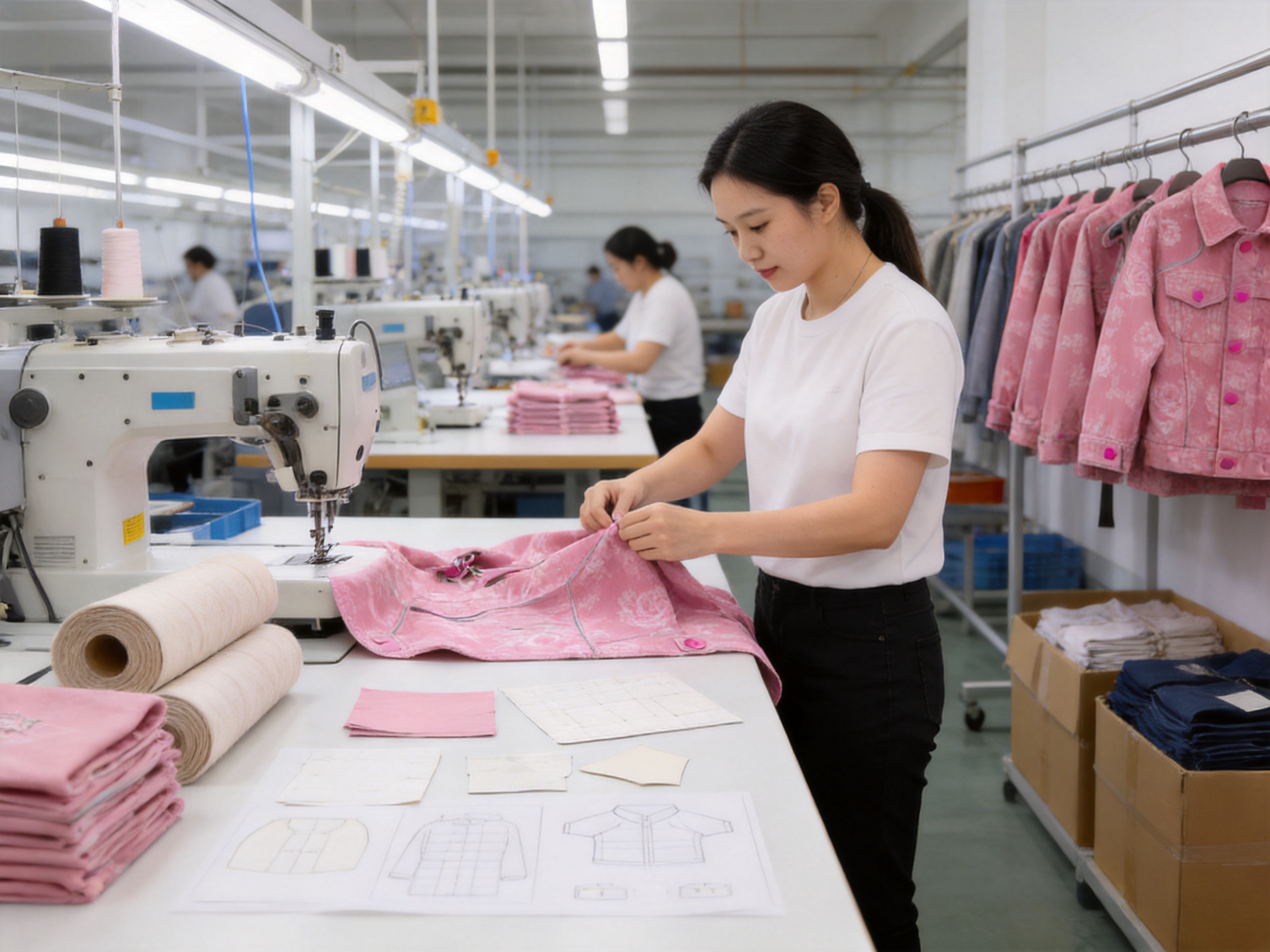
The product is manufactured by Taizhou Feile Pet Products Co., Ltd., a professional pet apparel manufacturer based in Taizhou, Zhejiang, China. The company integrates design, pattern making, production, quality control, and sales support. Its manufacturing operation includes 48 fully automatic sewing production lines, a 77-person professional team, and a reported daily production capacity of approximately 3,000 pieces. With more than 800 pet apparel styles and 8–12 new styles launched weekly, the manufacturer is positioned to support both individual product sourcing and broader private label development.
1. Product Overview
The Rose Jacquard Denim Dog Jacket is a small-dog outerwear product created around a clear design concept: sweet-cool pet fashion. Rather than presenting denim as purely rugged, casual, or workwear-inspired, the garment softens the fabric story through rose pink coloring and floral jacquard texture. The result is a balanced visual effect that can appeal to consumers looking for clothing with both charm and character.
The low-saturation rose color is an important part of the product’s identity. Highly saturated pink can appear overly playful or difficult to coordinate with other accessories, while a muted rose shade offers greater styling flexibility. It can work with neutral collars, brown leather leads, cream knitwear, white accessories, denim bags, and other soft seasonal colors. For retailers, this creates a product that can be merchandised as part of a broader color story instead of being treated as an isolated novelty item.
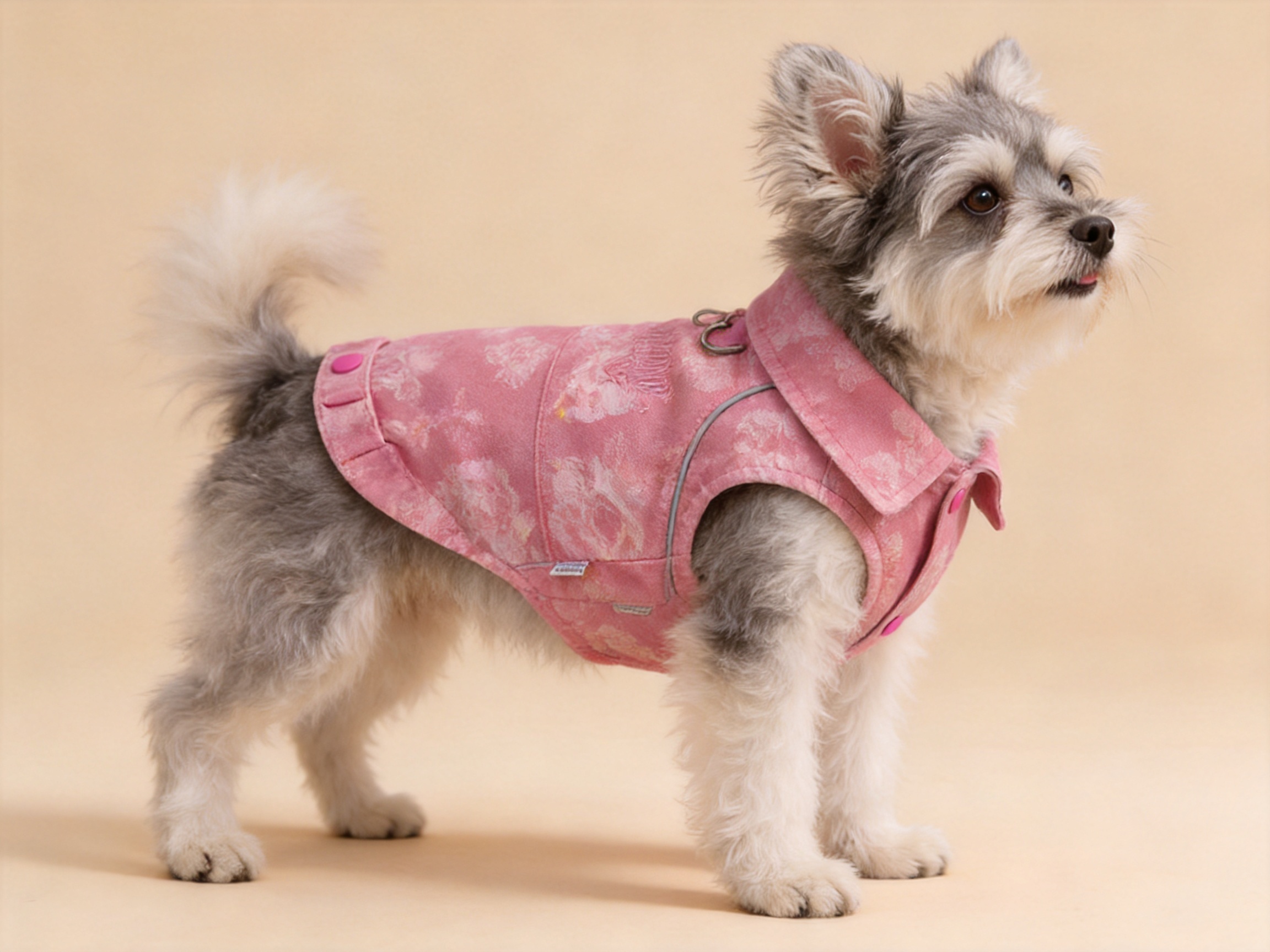
The jacquard surface adds another point of distinction. Many mass-market dog jackets rely on plain polyester, smooth nylon, or simple printed fabric. A jacquard structure gives the material a more tactile and decorative appearance. The rose motif is integrated into the fabric design, creating a visual effect that can appear more refined than a basic surface print. This characteristic is especially valuable for boutique brands that want their pet clothing to resemble fashion apparel rather than purely functional equipment.
The jacket silhouette maintains the recognizable structure of denim outerwear. This helps the product communicate a neat, contemporary appearance. It can be styled for casual walks, weekend outings, pet cafés, photography sessions, seasonal gatherings, and everyday urban wear. Its design language is suitable for customers who view pet clothing as part of a lifestyle and who expect their pets’ garments to reflect current fashion preferences.
2. Why Rose Jacquard Denim Creates a Stronger Product Position
Competition in the pet apparel market is intense. Retailers can find many simple dog coats, printed shirts, padded vests, and fleece garments at different price points. A product therefore needs a recognizable reason to be selected. The Rose Jacquard Denim Dog Jacket creates differentiation through the interaction of color, fabric, texture, silhouette, and collection potential.
2.1 A Distinctive Color Direction
Rose pink provides an alternative to the most common dog clothing colors, including black, navy, gray, red, and standard blue denim. At the same time, the muted tone remains sufficiently versatile for commercial use. It is soft without looking excessively childish, feminine without being overly decorative, and fashionable without depending on an extreme seasonal trend.
This balance can help retailers serve customers who want a noticeable garment but still prefer tasteful styling. The color is also suitable for visual merchandising. It can be placed beside cream, ivory, light blue, dusty mauve, beige, or soft gray products to create an attractive collection display. In online retail, the rose tone can provide a strong thumbnail presence while remaining consistent with premium lifestyle photography.
2.2 Jacquard Texture Instead of a Generic Surface
Fabric texture can significantly affect how customers evaluate a garment. A plain fabric may be practical, but it often gives little information about design value. The rose jacquard surface helps the product communicate detail even before a customer examines the construction closely. The floral pattern can catch light differently across the fabric, creating a richer appearance in product photography and in-store presentation.
Because the pattern is associated with the fabric structure, it can offer a more integrated visual effect than a simple graphic placed on top of a plain textile. This does not mean that jacquard is automatically superior for every application, but it does provide a clear aesthetic advantage for fashion-focused pet apparel. The surface can make the jacket feel more considered, more boutique-oriented, and more suitable for curated collections.
2.3 The Contrast of Romantic and Structured Design
The product’s main design strength comes from contrast. Floral rose elements suggest softness and romance, while denim suggests confidence, durability, and casual street style. Combining these characteristics creates a sweet-cool identity that is more memorable than a garment built around only one design direction.
This contrast can broaden the product’s customer appeal. Consumers who prefer feminine pet accessories may be attracted to the rose pattern, while shoppers who prefer casual or urban styling may respond to the denim structure. Retailers can present the jacket in multiple ways: as a romantic spring item, a fashionable autumn layer, a boutique denim piece, or a photo-ready outfit for small dogs.
2.4 A More Fashion-Oriented Outerwear Silhouette
Many dog garments are designed primarily around coverage and basic warmth. Those functions are important, but fashion-conscious customers also pay attention to proportion, neatness, and the overall impression of the garment on the dog. The structured jacket format creates a sharper outline and gives the product a more finished appearance.
A neat silhouette can improve product photography because it helps the garment retain its shape when worn. It also allows retailers to position the item at a more design-conscious level than basic pullovers or unstructured blankets. When combined with the rose jacquard material, the silhouette supports a clear premium-fashion message without requiring excessive decoration.
3. Product Specifications and Size Planning
The jacket is designed for small dog breeds and is offered in six sizes: XS, S, M, L, XL, and XXL. The size range provides useful coverage for a variety of small-bodied dogs, but buyers should always confirm measurements against the manufacturer’s actual sample and their target market’s fitting preferences before placing a production order.
| Size | Neck | Chest | Back Length | Approximate Weight Reference |
|---|---|---|---|---|
| XS | 22 cm | 33 cm | Approx. 22 cm | Approx. 3 lbs |
| S | 24 cm | 37 cm | Approx. 25 cm | Approx. 5 lbs |
| M | 30 cm | 44 cm | Approx. 29 cm | Approx. 5–8 lbs |
| L | 33 cm | 48 cm | Approx. 33 cm | Approx. 8–14 lbs |
| XL | 36 cm | 53 cm | Approx. 36 cm | Approx. 14–17 lbs |
| XXL | 40 cm | 58 cm | Approx. 39 cm | Approx. 17–22 lbs |
The measurements should be treated as a starting reference rather than a replacement for proper fitting. Small dogs can have very different body shapes. A short-backed breed, a long-bodied breed, and a compact breed may require different proportions even when their body weight is similar. Chest circumference is particularly important because it affects comfort during movement, while neck and back length help determine whether the garment sits correctly.
For wholesale buyers, the availability of six sizes makes it easier to build a complete product listing. A broad size range can reduce the risk of losing customers whose dogs fall outside a narrow size bracket. It also allows retailers to display a more professional size chart and to serve a wider group of small-dog owners.
For private label projects, custom size grading and fit adjustments are available. Buyers may request modifications based on their target breeds, regional customer data, or existing brand blocks. A retailer specializing in toy breeds may require smaller proportions, while a store serving compact terrier or spaniel types may need adjustments to chest depth, back length, or opening dimensions.
4. Seasonal and Lifestyle Applications
The product is intended for spring, autumn, and winter assortments. Its fashion-led appearance makes it especially suitable for transitional seasons, when customers often look for lightweight or medium-weight outerwear rather than heavy winter protection alone. The rose color can support spring merchandising, while the denim structure allows the product to remain relevant in autumn and mild winter collections.
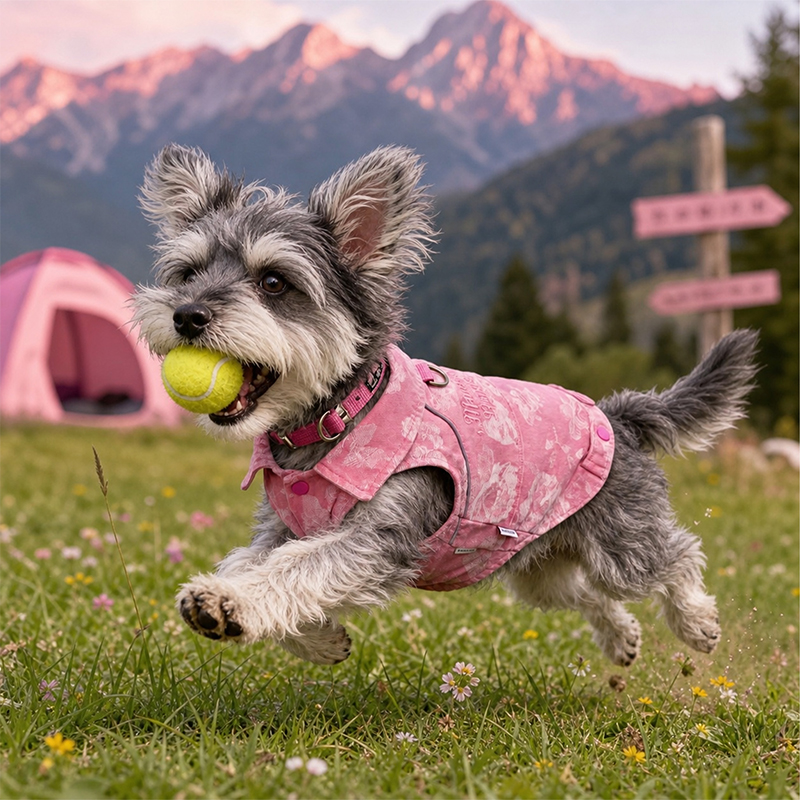
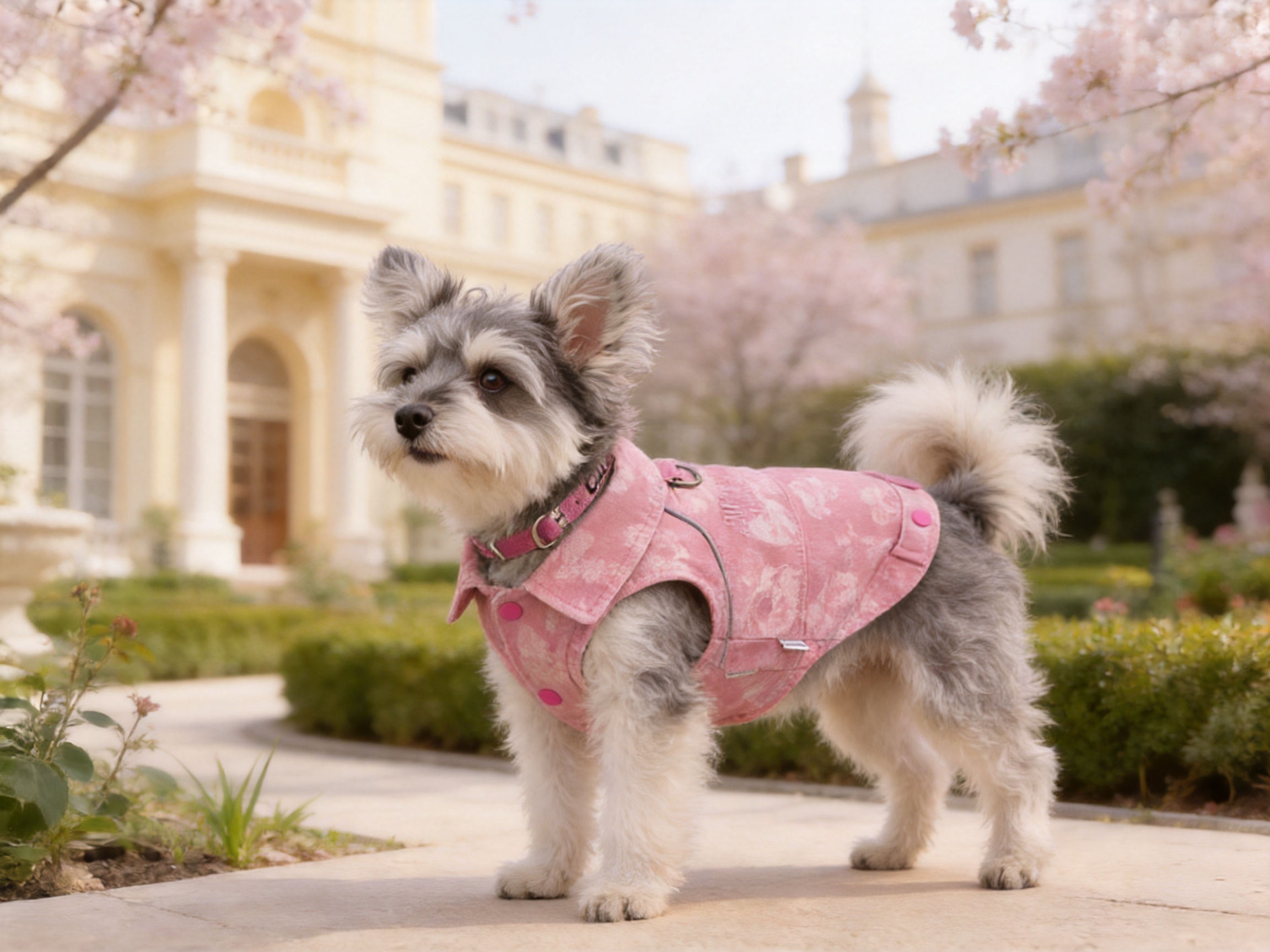
In spring, the jacket can be presented alongside floral collars, light scarves, soft-tone harnesses, and pastel accessories. The jacquard rose pattern naturally supports floral and romantic themes without requiring additional printed graphics. It can become part of a “garden walk,” “soft weekend,” or “spring boutique” campaign.
In autumn, the denim identity becomes more prominent. Retailers can coordinate the jacket with brown, tan, cream, rust, or muted blue products. The jacket can be promoted as a casual layer for urban walks, outdoor cafés, weekend travel, or seasonal pet photography.
In winter, the garment can be used as part of a layered small-dog wardrobe, depending on the final construction, lining, and local climate. Buyers should confirm the exact warmth performance and lining specifications for their intended market instead of making unsupported claims. In moderate climates, the jacket may function as a fashionable outer layer. In colder regions, customers may combine it with a sweater or indoor base layer.
The product is also appropriate for specific retail and promotional applications:
Daily outings: The structured style gives ordinary walks a more polished appearance.
Boutique collections: The rose jacquard texture helps the product stand apart from basic pet clothing.
Pet photography: The contrasting floral and denim elements create a visually recognizable outfit.
Casual gatherings: The jacket can be styled for pet-friendly cafés, social events, and weekend activities.
Seasonal assortments: The product can support spring, autumn, and mild winter merchandising plans.
Private label collections: The design can be adapted with brand labels, custom colors, and related garment details.
Rose Jacquard Denim Dog Jacket Sweet-Cool Pet Fashion
5. Advantages Over Generic Competitor Products
A comparison with generic competitor products helps clarify the commercial value of this jacket. Many competing dog garments are built around one basic feature, such as a plain color, a simple printed graphic, or a functional layer with limited style development. The Rose Jacquard Denim Dog Jacket is stronger when a buyer is seeking visual identity and collection-level differentiation.
5.1 Compared with Plain Denim Jackets
Plain denim dog jackets offer a familiar casual look, but they may appear similar across different suppliers. Their main visual message is usually based on color and silhouette. The rose jacquard version adds an additional layer of design through the floral texture. This gives retailers more storytelling material and makes the product easier to position as a boutique fashion item.
The rose shade also separates the product from conventional blue, black, or washed-gray denim. It can attract customers who enjoy denim styling but want something less ordinary. This is particularly useful for online retailers competing through product photography, where a unique surface and color can increase visual recognition.
5.2 Compared with Plain Pink Pet Coats
Plain pink coats may appeal to customers seeking a soft or cute appearance, but they do not always provide the structure or visual complexity associated with fashion outerwear. The denim construction of this product introduces a stronger garment identity. The result is not simply a pink coat; it is a rose-textured jacket with a defined sweet-cool personality.
This distinction allows a retailer to target a wider emotional range. The product can be described as charming, modern, casual, boutique, romantic, or street-inspired depending on the merchandising context. Such flexibility is valuable when the same style is distributed through several retail channels.
5.3 Compared with Basic Printed Jackets
Printed graphics can be attractive, but they may be affected by changing trends, printing limitations, or concerns about surface wear. A jacquard pattern creates a different type of visual effect by making the fabric itself part of the design. It can appear more integrated and textile-focused, supporting a higher perceived level of product development.
For brands building a consistent apparel identity, fabric-based pattern development can also be more distinctive than placing a common graphic on multiple garment types. Custom jacquard patterns may be developed according to collection requirements, giving buyers the possibility of creating a more exclusive product direction.
5.4 Compared with Unstructured Pet Capes
Unstructured capes can be easy to wear, but their appearance may be less tailored. The jacket format provides a more organized outline and a stronger fashion message. This matters to consumers who want a pet garment that resembles a miniature version of contemporary human outerwear.
The structured appearance can also support better presentation on retail racks, folded displays, and e-commerce images. A garment with recognizable form is easier for customers to understand at a glance.
5.5 Compared with Highly Decorative Costumes
Some pet costumes rely on excessive bows, sequins, large graphics, or novelty shapes. These designs may be suitable for special events but can be difficult to use as everyday clothing. The Rose Jacquard Denim Dog Jacket takes a more balanced approach. Its decorative quality comes from color and textile pattern rather than from excessive ornamentation.
This balance can extend the product’s usable selling period. A customer may purchase it for daily outings as well as photographs, whereas a highly theatrical costume may be used only occasionally. From a retailer’s perspective, everyday wearability can support a broader customer base and more repeatable sales.
6. Material and Design Development Considerations
The product uses rose jacquard denim fabric. Denim is widely recognized for its structured appearance and casual fashion association, while jacquard construction adds pattern and texture. Buyers evaluating the product for a specific market should confirm fabric weight, composition, hand feel, colorfastness, shrinkage, lining, closures, and finishing details during sample development.
These technical details can vary according to the final customization plan. A lightweight spring version may require a different fabric weight from an autumn version. A market with cooler weather may request a lining or additional internal layer. A fashion label may prioritize a softer hand feel, while a retailer focused on structured styling may prefer a firmer fabric body.
The manufacturer supports customized denim colors and jacquard patterns. This allows the product concept to evolve beyond the initial rose pink version. A brand could develop dusty blue, muted lavender, cream denim, soft sage, or other colors that match its seasonal palette, subject to material feasibility and production confirmation. Pattern scale, floral arrangement, and visual density may also be adjusted for different collection directions.
Customization should be handled through a controlled development process. The buyer normally provides a design brief, target color references, preferred measurements, logo requirements, packaging expectations, and estimated order quantity. The manufacturer can then assess fabric availability, pattern development, sample requirements, production timing, and cost implications.
7. Manufacturing Capabilities and Production Strengths
The supplier’s manufacturing capabilities are a central advantage for buyers seeking consistent pet apparel production. Taizhou Feile Pet Products Co., Ltd. integrates product design, production, and sales, which can simplify communication between development and manufacturing teams. Instead of treating design as a separate activity from production, the company presents itself as a one-stop OEM and ODM partner for pet apparel programs.
7.1 Automatic Sewing Production Lines
The factory is equipped with 48 fully automatic sewing production lines. This production infrastructure is significant for buyers who require repeatable output across different styles and sizes. Automatic or semi-automated sewing systems can help support consistent operations, particularly when a product requires repeated construction steps across multiple size specifications.
For the Rose Jacquard Denim Dog Jacket, production consistency is important because the garment includes a structured silhouette and patterned fabric. Maintaining reliable seam placement, balanced panels, and consistent proportions helps protect the visual quality of the finished product. A factory with multiple dedicated production lines can also organize workflow more effectively when handling several styles or order groups.
Automatic equipment does not replace human technical judgment. Fabric handling, pattern interpretation, quality inspection, and production coordination remain important. The strongest manufacturing results normally come from combining equipment efficiency with experienced staff and controlled procedures.
7.2 A Cross-Functional Professional Team
The company reports a 77-person professional team covering design, pattern making, production, and quality control. This cross-functional structure supports communication throughout the product lifecycle. Design decisions influence pattern development, pattern decisions influence sewing methods, and sewing methods influence quality inspection. When these areas coordinate effectively, the final garment is more likely to match the intended design.
For a fashion-focused product, pattern making is particularly important. Small-dog apparel must balance appearance with movement and comfort. A visually attractive jacket can still underperform if the proportions restrict movement or create poor fit. Pattern-making expertise helps translate the design concept into a wearable garment across multiple sizes.
7.3 Daily Production Capacity
The reported daily production capacity is approximately 3,000 pieces. This capacity can be valuable for wholesalers, distributors, and online brands that need reliable replenishment. It also provides a foundation for handling multiple styles within a seasonal program, although actual capacity for any individual order depends on fabric availability, style complexity, order volume, production scheduling, and inspection requirements.
For buyers, capacity should be evaluated together with communication, sample approval, material planning, and quality procedures. A high production figure is most useful when it is supported by clear order coordination. The manufacturer’s stated lead time for standard orders is 10–15 days after order confirmation and receipt of the deposit, while customized projects may require a different schedule.
7.4 A Broad Product Development Base
The company offers more than 800 pet apparel stock-keeping units across dog apparel, cat apparel, and small pet apparel. This broad product base suggests experience with different garment categories, body shapes, fabrics, and construction methods. Such experience can benefit buyers who want to build a full pet fashion collection rather than source a single jacket.
The company also reports launching 8–12 new styles weekly. Frequent development can help retailers monitor changing market preferences and refresh their product catalogs. For private label customers, a broad design environment may provide useful starting points for adapting silhouettes, colors, fabrics, and decorative details.
8. OEM and ODM Support for Brands
The product is suitable for both OEM and ODM cooperation. OEM production is generally appropriate when a buyer has an established design, technical specification, logo, or brand standard and needs a manufacturer to produce according to those requirements. ODM cooperation is useful when a buyer wants to develop a product from an existing concept, reference style, or market direction with support from the manufacturer’s design and production resources.
Available customization options include custom denim colors, custom jacquard patterns, custom size grading, fit adjustments, garment details, decorative elements, logo embroidery, heat transfer printing, silicone logo applications, rubber logo applications, woven labels, wash labels, hang tags, and branded packaging.
These options allow the jacket to serve as a starting point for a complete private label program. A buyer may retain the rose jacquard concept while changing the logo and packaging, or may use the same sweet-cool direction to develop a coordinated set of coats, vests, shirts, and accessories. The most effective approach depends on the target market, price position, sales channel, and planned order volume.
Branding should be integrated carefully. A small woven label may preserve the refined character of the jacket, while a bold rubber logo may create a more contemporary streetwear identity. Heat transfer printing may be appropriate for certain interior or exterior placements. Packaging can also influence perceived value through branded hang tags, retail cards, protective bags, and coordinated color presentation.
9. Quality Control and Production Management
Quality control is essential for fashion pet apparel because customers evaluate both appearance and wearability. A product may be rejected by the market if its color varies significantly between pieces, if the floral pattern is poorly aligned, if stitching is uneven, or if the sizing is inconsistent. The manufacturer identifies quality control as one of the functions covered by its professional team.
A practical quality program for this type of jacket should include inspection at several stages. Fabric inspection can help identify visible flaws, shade variation, pattern irregularity, or damage before cutting. During cutting, pattern accuracy and panel matching should be monitored. During sewing, operators and inspectors can review seam quality, garment shape, label placement, and decorative details. Finished-product inspection can verify measurements, appearance, cleanliness, and packaging requirements.
For jacquard denim, surface presentation deserves particular attention. The rose pattern should maintain a consistent visual direction across the garment panels where the design requires coordination. The finished fabric should be reviewed for weaving defects, loose threads, stains, and unacceptable color differences. Buyers may establish their own inspection standards based on product positioning and customer expectations.
Size control is also important. A difference of only a few centimeters can affect the fit of small-dog apparel. Buyers should approve a measurement chart and tolerances before bulk production begins. Samples should be checked on suitable dog models or compared with established brand blocks whenever possible.
Packaging inspection helps protect the product during international transportation. Standard export packaging is available, and customized retail packaging can be developed for branded programs. Buyers should confirm carton quantities, folding methods, individual packaging, labeling, and shipping marks as part of the order process.
10. Order Terms and Commercial Planning
The standard minimum order quantity is 500 pieces per order. The stated single-color minimum is at least 300 pieces for each color. These requirements are relevant for buyers planning a launch collection, a seasonal replenishment, or a private label program.
A 500-piece order can be allocated across six sizes according to the expected customer profile. Buyers should avoid dividing quantities evenly without reviewing market data. A retailer serving very small breeds may require a higher proportion of XS and S, while a store serving larger compact breeds may need more L, XL, and XXL units. Initial size allocation can be adjusted after sales data becomes available.
The standard production lead time is 10–15 days after order confirmation and deposit receipt. This timing should be understood as a standard reference rather than an unconditional guarantee. Custom fabrics, new jacquard patterns, special labels, complex packaging, sample revisions, holidays, material delays, and large-volume orders may extend the schedule.
The stated payment terms are a 50 percent deposit to confirm the order, with the remaining 50 percent balance paid before shipment. Buyers should confirm all commercial terms, including currency, shipping method, inspection arrangements, production schedule, packaging, documentation, and responsibility for customs or import charges, before finalizing an order.
For customized designs, private label orders, or large-volume purchases, the manufacturer provides detailed production schedules and pricing after reviewing the project requirements. This approach is appropriate because customization can affect fabric sourcing, sampling, labor, tooling, packaging, and lead time.
11. Recommended Buyer Workflow
A clear development workflow can reduce misunderstandings and improve the efficiency of production. The following sequence is suitable for buyers considering the Rose Jacquard Denim Dog Jacket.
Step One: Define the Commercial Position
First, identify whether the product will be sold as an accessible boutique garment, a premium private label item, a seasonal online bestseller, or part of a broader designer pet apparel line. This decision influences fabric selection, branding, packaging, quality expectations, and target price.
Step Two: Confirm the Target Customer
Review the intended customer’s preferences, dog sizes, climate, shopping channel, and typical purchase occasions. A retailer selling to urban small-dog owners may emphasize style and photography appeal, while a practical pet supply store may prioritize ease of use and everyday wearability.
Step Three: Approve Measurements and Sample Details
Confirm the size chart, garment measurements, fabric hand feel, color, jacquard appearance, logo placement, labels, and packaging. Sample approval should include a visual review and, where possible, a fitting review on representative dogs.
Step Four: Review Production Requirements
Discuss the order quantity, size breakdown, color quantity, material availability, production schedule, inspection process, and shipping plan. Any requested modifications should be recorded in a written specification or approved sample reference.
Step Five: Confirm Branding and Packaging
Provide artwork for logos, labels, hang tags, and packaging in an appropriate format. Confirm dimensions, colors, placement, language, barcode requirements, and retail presentation. Branding details should be approved before bulk production.
Step Six: Arrange Quality Inspection
Buyers may establish inspection checkpoints before production, during production, or before shipment. The inspection scope can include measurements, appearance, sewing quality, label placement, color consistency, quantity, and packaging condition.
Step Seven: Plan Replenishment
If the product performs well, future orders should be planned early enough to account for seasonal demand and material preparation. A successful product may require a revised size ratio, additional color, updated packaging, or a coordinated new style.
12. Merchandising and Marketing Ideas
The Rose Jacquard Denim Dog Jacket has several strong storytelling angles. Retailers can emphasize the contrast between soft rose femininity and confident denim structure. They can also focus on the jacquard texture, the boutique appearance, the six-size range, or the product’s suitability for transitional seasons.
Photography should show the garment from multiple angles. A front view can communicate the overall silhouette, while close-up images can reveal the rose jacquard texture. Side and back views can help customers understand coverage and proportions. Images featuring small dogs in natural outdoor settings can support everyday wear messaging, while studio images can highlight the garment’s fashion character.
Retailers can create themed collections around the product. A “rose denim” collection might include matching collars, leashes, bows, carriers, or owner accessories. A “sweet-cool weekend” campaign could pair the jacket with casual lifestyle photography. A seasonal “pet fashion edit” could place the product alongside other boutique outerwear pieces.
Product descriptions should remain accurate. Buyers should distinguish between style benefits and technical performance. The jacket can be described as fashion-oriented, structured, decorative, and suitable for seasonal styling. Specific claims about waterproofing, thermal insulation, wind resistance, or durability should be made only if they have been confirmed through product testing and final construction details.
Size guidance is another important marketing tool. Customers should be instructed to measure the dog’s neck, chest, and back length and compare those measurements with the provided chart. Weight can be offered as a general reference, but it should not replace body measurements because dogs with the same weight may have significantly different proportions.
13. Sustainability and Responsible Product Development Considerations
Although the supplied product information does not define a specific sustainability certification or recycled material content, responsible buyers can still discuss sustainability through product planning and production efficiency. Accurate forecasting, appropriate size allocation, durable construction, and coordinated replenishment can help reduce unnecessary inventory.
Brands may also ask about fabric composition, production waste management, packaging materials, and the possibility of reducing excessive packaging. If a buyer requires recycled fibers, certified materials, low-impact dyes, or specific compliance documentation, those requirements should be discussed during development and confirmed through appropriate documentation.
Longer product relevance can also contribute to responsible merchandising. The jacket’s combination of floral texture and denim styling is not limited to a single holiday or novelty event. Its use across spring, autumn, and mild winter collections may help retailers maintain sales beyond a very short trend window.
14. Frequently Asked Questions
Q1: What type of pet is this jacket designed for?
The jacket is designed primarily for small dog breeds. It is offered in XS, S, M, L, XL, and XXL. Buyers should compare the dog’s actual neck, chest, and back measurements with the size chart before ordering.
Q2: What makes the product different from a standard denim dog jacket?
The product combines a low-saturation rose pink color with a rose jacquard surface. This adds floral texture and a boutique appearance to the structured denim silhouette, creating a sweet-cool fashion identity rather than a conventional plain denim look.
Q3: Is the rose color suitable for year-round retail?
The color is especially suitable for spring and transitional-season merchandising, but it can also be used in autumn and mild winter collections. Its muted tone makes it easier to coordinate with neutral and seasonal accessories.
Q4: Can the fabric color be customized?
Yes. Custom denim colors can be developed according to collection requirements, subject to material feasibility, sampling, minimum quantities, and production confirmation.
Q5: Can the jacquard pattern be customized?
Yes. Custom jacquard patterns can be discussed for private label collections. Buyers should provide a design direction or reference and allow time for development and sample approval.
Q6: Can the size grading be changed?
Yes. Custom size grading and fit adjustments are available for different dog breeds and target markets. The buyer should provide a clear measurement chart or fitting requirement.
Q7: What branding options are available?
Available options include logo embroidery, heat transfer printing, silicone or rubber logo applications, woven labels, wash labels, hang tags, and branded packaging.
Q8: What is the minimum order quantity?
The standard minimum order quantity is 500 pieces per order. The stated minimum for a single color is at least 300 pieces per color. Customized projects should be confirmed individually.
Q9: What is the standard production lead time?
The stated standard lead time is 10–15 days after order confirmation and receipt of the deposit. Custom materials, special patterns, packaging, large orders, and sample revisions may require additional time.
Q10: What are the payment terms?
The standard terms are a 50 percent deposit to confirm the order and a remaining 50 percent balance paid before shipment. Buyers should confirm the full commercial agreement before placing an order.
Q11: Can the product be sold as part of a larger pet apparel collection?
Yes. The manufacturer supports dog apparel, cat apparel, and small pet apparel and has more than 800 styles. The jacket can be developed as an individual item or as part of a coordinated seasonal or private label collection.
Q12: Does the manufacturer support sample development?
Yes. Sample development is available. Buyers should provide their requirements for color, fabric, fit, branding, packaging, and intended market so that the sample can be evaluated accurately.
Q13: Is the jacket suitable for cold weather?
The product is listed for spring, autumn, and winter use, but actual warmth depends on the final fabric weight, lining, construction, and local climate. Buyers should confirm the specific insulation and lining details before making technical warmth claims.
Q14: How should customers choose the right size?
Customers should measure the dog’s neck circumference, chest circumference, and back length. These measurements should be compared with the product size chart. Weight can be used as a general reference, but body measurements should guide the final selection.
Q15: Who is the manufacturer suitable for?
The manufacturer is suitable for wholesalers, distributors, retailers, online sellers, fashion pet brands, and private label companies seeking OEM or ODM pet apparel production.
15. Overall Evaluation
The Rose Jacquard Denim Dog Jacket is a strong choice for buyers seeking a more differentiated small-dog fashion product. Its principal advantage is not one isolated feature, but the way several design elements work together. The rose pink color adds softness, the jacquard pattern adds texture, and the denim structure adds confidence and shape. Together, they create a recognizable sweet-cool product position.
Compared with plain jackets and generic printed garments, the product offers stronger visual identity and broader merchandising potential. It can be marketed as romantic, casual, boutique, contemporary, or seasonal depending on the retailer’s presentation. Its six-size range supports a more complete small-dog offering, while available customization allows brands to adapt the product to their own color, fit, logo, and packaging requirements.
The manufacturing platform adds commercial value for buyers who need more than a single sample. With 48 fully automatic sewing production lines, a 77-person professional team, an estimated daily capacity of 3,000 pieces, and experience across more than 800 pet apparel styles, the supplier provides a foundation for repeat production and collection development. The reported launch of 8–12 new styles weekly also indicates an active product development environment.
For the best results, buyers should treat the jacket as a complete product program rather than simply a stock garment. Clear specifications, sample approval, size planning, branding coordination, quality inspection, and timely production communication will help protect the final result. When these elements are managed carefully, the Rose Jacquard Denim Dog Jacket can become a distinctive addition to a fashion-led pet apparel assortment and a practical starting point for private label growth.
References
1. Product specification and size information supplied for the Rose Jacquard Denim Dog Jacket Sweet-Cool Pet Fashion.
2. Manufacturer-provided company information concerning design, production, OEM/ODM services, production lines, staffing, capacity, and product development.
3. Manufacturer-provided customization, packaging, minimum order, lead-time, and payment-term information.
4. General apparel product development principles concerning measurement control, sample approval, quality inspection, merchandising, and private label production.
5. General textile and fashion merchandising principles concerning color coordination, jacquard surface design, denim styling, seasonal product planning, and collection development.
Product: Rose Jacquard Denim Dog Jacket Sweet-Cool Pet Fashion
NEXT:Navy Star Pleated Dog Dress: A Premium Small-Dog Apparel Opportunity for Modern Pet Retailers
- Lolita Cake Dress
- Cool Style Tassel Top Pet Lolita Dress
- Sweet Bow Princess Dog Dress
- Denim Pinafore Dress With Pockets Cute Casual Small Dog Outfit
- French Doll-neck Dog Dress Elegant Pet Wear
- Korean Sweet Lolita Dog Dress Cute Party Outfit
- Flutter Sleeve Dog Dress Lightweight Summer Pet Wear
- Ruffle Flutter Sleeve Pet Dress Cute Princess Style
- French Style Embroidered Dog Dress Elegant Pet Apparel
- Mint Green Heart Spaghetti Strap Tulle Dog Dress Princess Party Outfit
- Gingham Bow Dog Dress Cute Summer Pet Outfit
- Navy Star Pleated Dog Dress Elegant Casual Pet Wear
- Summer Sailor Dog Dress Nautical Style Pet Apparel
- Dog Cooling Shirt Color-Block Lightweight Summer Pet Wear
- Dog Printed High-Neck Base Layer Top Thermal Stretch Pet Underwear
- Lightning Racing Performance Sportswear Breathable Athletic Pet Shirt
- Rustic Brown Plaid Dog Shirt Casual Outdoor Pet Wear
- Cream Embroidered Dog Blouse Elegant Pet Shirt
- Korean Style Pink Textured Tulle Camisole Small Dog Fashion Top
- Star & Letter Casual Pet T-Shirt Daily Wear Dog Top
- +86-13362661217
- 13362661217@163.com
- 128 Houxin Street, Hongjia, Jiaojiang, Taizhou, Zhejiang, China
