
 English
 русский
 Español
 عربى


He Yutong — OEM/ODM Pet Apparel Sales Executive
Green Leopard Jacquard Christmas Pet Cape: A Comfortable Korean-Style Winter Apparel Solution for Modern Pet Collections
Pet apparel has developed from a seasonal novelty into an important part of the wider pet lifestyle market. Dogs and cats are increasingly treated as family members, and owners are looking for clothing that combines comfort, practicality, attractive styling, and photographic appeal. For wholesalers, retailers, distributors, and private-label brands, this trend creates an opportunity to offer products that are more distinctive than basic fleece coats or ordinary printed garments.
The Green Leopard Jacquard Christmas Pet Cape Korean-Style Winter Wear is designed to meet that demand. It combines a muted avocado green color, a softly textured leopard jacquard fabric, matching pom-pom trim, and a sleeveless fan-shaped silhouette. The result is a winter pet garment with a seasonal character that feels refined rather than excessively decorative. It can be presented as a Christmas product, a general autumn and winter accessory, or part of a coordinated Korean-style pet clothing collection.
Unlike many conventional pet coats that use sleeves, tight openings, or rigid body panels, this cape prioritizes freedom of movement. The legs remain uncovered, the lower hem is relaxed, and the chest and belly area provide additional room for different body shapes. These details make the product suitable for small and medium-sized dogs and cats that need warmth and visual styling without the restriction associated with fitted outerwear.
For business buyers, the product also offers advantages beyond its appearance. The style is suitable for OEM and ODM development, color adjustments, custom jacquard patterns, branded trims, private labels, and coordinated collection planning. It is supported by a manufacturer with integrated design, pattern development, production, quality control, and shipping capabilities. This allows buyers to develop a complete pet apparel program rather than purchasing one isolated seasonal item.
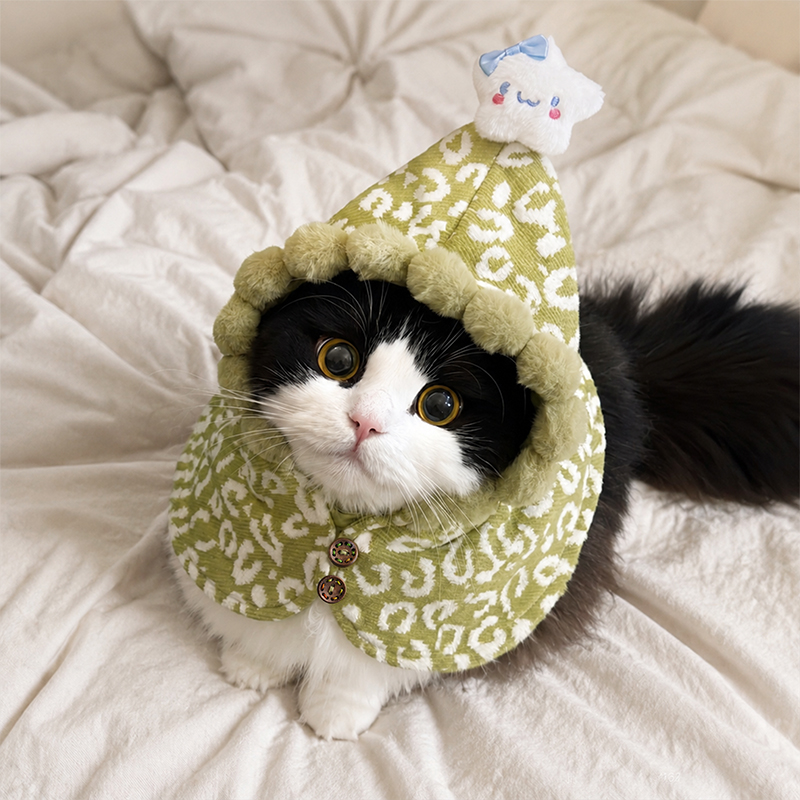
Green Leopard Jacquard Christmas Pet Cape Korean-Style Winter Wear
1. Product Positioning in the Pet Apparel Market
The pet clothing market contains many similar-looking products, including quilted jackets, hoodies, sweaters, raincoats, and holiday costumes. Competition is especially strong in the autumn and winter seasons, when retailers introduce Christmas collections and cold-weather accessories. A product must therefore offer more than a festive color or a decorative motif. It must have a clear visual identity, practical construction, flexible sizing, and sufficient commercial adaptability.
This green leopard jacquard cape occupies a useful position between everyday outerwear and holiday fashion. Its Christmas association is created through the seasonal styling, matching pom-pom trim, and winter-weight appearance, while the avocado green color allows it to remain wearable after the holiday period. The product can be displayed in Christmas campaigns, winter walking collections, indoor pet fashion selections, or social media photography themes.
The design also responds to a growing preference for understated pet fashion. Some consumers enjoy festive products but do not want bright red, oversized bows, glitter, or highly elaborate decorations. The low-saturation green palette gives the leopard pattern a softer character. Instead of presenting animal print as bold or aggressive, the jacquard texture becomes a subtle surface detail. This makes the garment easier to coordinate with other accessories and more appealing to owners who prefer modern, neutral, or Korean-inspired styling.
For retailers, this positioning creates several merchandising possibilities. The cape can be placed beside Christmas accessories, winter beds, pet scarves, matching owner-and-pet products, or other green-toned garments. It can also function as a premium-looking item within a small pet clothing range because the woven jacquard appearance provides more visual depth than a flat printed surface.
From Seasonal Costume to Repeatable Collection Item
Many holiday pet garments have a narrow sales window. Once Christmas has passed, products with highly specific graphics or bright seasonal colors may become difficult to sell. The green leopard cape is more flexible because its design communicates winter and holiday styling without depending entirely on Christmas symbols. The color, texture, and silhouette can support sales throughout autumn and winter.
This flexibility is valuable for buyers who need to manage inventory carefully. A retailer may introduce the cape as part of a Christmas launch, then continue promoting it during winter walks, indoor gatherings, pet photography sessions, and cold-weather daily wear. The product’s broader use can reduce the risk associated with overly specialized seasonal stock.
The same principle supports collection development. A manufacturer can adapt the style into different colorways, alternative jacquard patterns, or related hooded garments. A buyer may therefore begin with the avocado green cape and later introduce complementary hoodies, scarves, or additional capes under the same visual theme.
2. Design Advantages of the Green Leopard Jacquard Cape
Muted Avocado Green for a Softer Seasonal Look
Color is one of the first factors noticed by customers, especially when pet apparel is photographed for online stores and social media. Bright holiday red and green remain familiar choices, but they can also make products look repetitive. The avocado green color used for this cape offers a more contemporary alternative. It retains a connection with winter greenery while appearing calmer, softer, and easier to coordinate with modern home interiors and lifestyle photography.
The low-saturation tone also allows the leopard motif to remain visible without dominating the garment. This is important because animal-print products can sometimes appear overly busy. Here, the color reduces the visual intensity of the pattern, creating a fashion-oriented surface that can appeal to a broader customer group.
Jacquard Texture Instead of a Flat Printed Pattern
The leopard design is expressed through jacquard fabric, giving the garment a woven texture and a more substantial visual finish. Compared with a simple printed pattern, jacquard construction can add depth to the surface and create a richer appearance when viewed from different angles. The texture can also help the product look more premium in product photography and retail displays.
For buyers, fabric texture is a practical tool for product differentiation. Two garments may share a similar color and silhouette, yet the one with a structured woven surface can appear more developed and distinctive. This helps retailers build a collection that stands apart from low-cost, flat-print alternatives.
Matching Pom-Pom Trim
The pom-pom trim adds a seasonal detail without requiring excessive decoration across the entire garment. Because the trim matches the main color family, it supports visual unity instead of creating a sharp contrast. This is useful for customers who want a Christmas-inspired appearance but prefer a coordinated and restrained design.
Decorative trim also creates opportunities for customization. Wholesale buyers can request alternative trim colors, different decorative details, or coordinated trims for related products. A single base silhouette can therefore be adapted into several collection themes while maintaining a recognizable design language.
Sleeveless Fan-Shaped Cape Silhouette
The sleeveless fan-shaped construction is one of the product’s most important functional features. Traditional pet coats with four sleeves can look complete, but some dogs and cats find sleeves uncomfortable or restrictive. Sleeves may interfere with running, turning, lying down, climbing, or interacting with other animals. They can also create more complicated fitting requirements because the garment must match both the body and the leg positions.
This cape leaves the legs free. Pets can move their front and rear legs naturally while the garment remains positioned over the upper body. The open structure is especially suitable for pets that are not accustomed to wearing clothing or for owners who prioritize easy dressing and unrestricted movement.
The fan-shaped silhouette also creates visual volume without requiring a rigid, heavily structured body. When the pet walks, the lower portion can move naturally, contributing to a lively appearance in photographs. This shape is practical and visually distinctive at the same time, which is an important advantage in fashion-oriented pet apparel.
Relaxed Lower Hem for Daily Use
A common concern with pet clothing is whether the garment interferes with bathroom routines. A relaxed lower hem provides additional clearance and reduces the need for highly precise positioning around the abdomen and rear area. This makes the cape more convenient for everyday use than garments with long, tightly fitted lower panels.
The open lower structure is also beneficial for pets with different body proportions. A garment that fits closely around the entire torso may be comfortable for one animal but too restrictive for another. The cape format offers greater tolerance while still providing visible coverage over the chest and back.
Generous Chest and Belly Area
Dogs and cats vary significantly in chest depth, torso length, body width, and overall shape. Even pets with similar weights may require different proportions. The generous chest and belly area helps the cape accommodate a wider range of small and medium-sized body types.
This does not eliminate the need for accurate measuring, but it can make the product easier to fit than narrow, body-hugging designs. For retailers, a forgiving silhouette can reduce customer frustration and support a more positive purchasing experience. For manufacturers, it creates a practical foundation for developing additional size grades and fit adjustments.
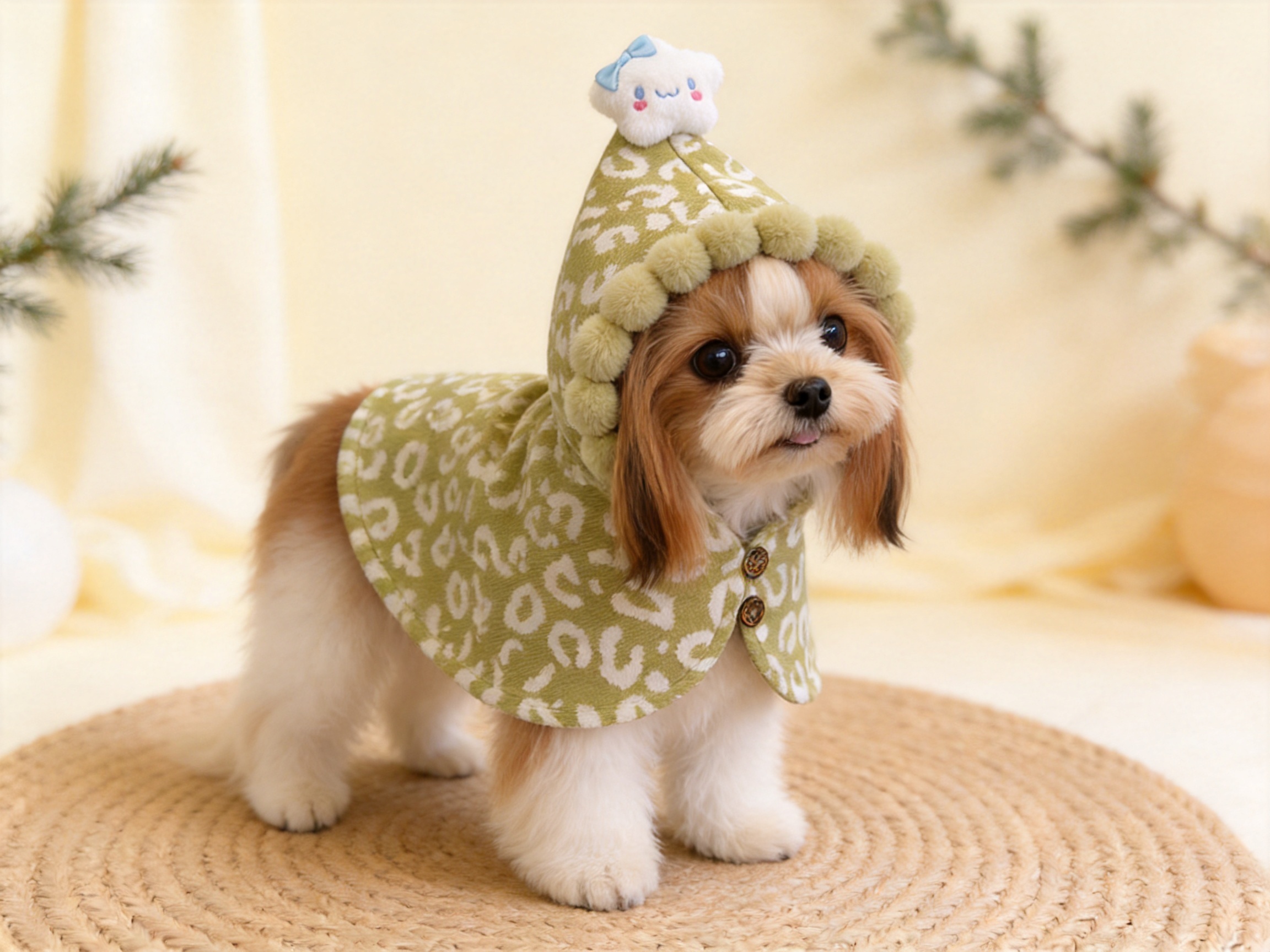
3. Comfort and Everyday Wearability
Pet apparel must be attractive, but comfort determines whether owners continue using the product. A garment that looks appealing in a product photograph but restricts movement, causes overheating, or complicates daily routines is unlikely to generate repeat satisfaction. The cape design addresses several common usability concerns through its open construction.
Because the legs are free from sleeves, pets can move without fabric wrapping around the limbs. This is particularly useful for active small dogs and cats that frequently change direction or move between indoor and outdoor spaces. The garment can be worn during short walks, family gatherings, indoor celebrations, and controlled photography sessions.
The relaxed shape also makes dressing simpler. Owners do not need to guide each leg through a separate sleeve, which can be difficult with nervous, energetic, or uncooperative pets. A cape can generally be positioned over the upper body more quickly, making it suitable for occasional holiday styling as well as regular winter use.
Comfort should also be considered from the perspective of the animal’s behavior. Some pets dislike close-fitting garments, while others tolerate a loose outer layer more easily. The cape design gives buyers an option for animals that need coverage but are unlikely to accept a structured jacket.
Suitable Activities
The product is intended for a range of low- to moderate-intensity activities. It can be used for daily walks, indoor winter wear, holiday gatherings, pet cafés, family photography, seasonal parties, and social media content. The sleeveless design is appropriate for movement, but owners should always select the correct size and observe the pet during initial use.
The cape is not presented as technical performance outerwear for extreme weather or as a substitute for specialized protective equipment. Its strength is its balance of light seasonal coverage, attractive design, and convenient wearability. This makes it particularly appropriate for lifestyle-oriented pet retail rather than highly technical outdoor equipment categories.
4. Size Range and Fit Planning
The product is available in six sizes: XS, S, M, L, XL, and XXL. This range supports small and medium-sized dogs and cats with different body dimensions. The measurements provided for each size are shown below.
| Size | Neck | Chest | Approximate Back Length | Suggested Weight Range |
|---|---|---|---|---|
| XS | 22 cm | 33 cm | 22 cm | Approximately 3 lb |
| S | 24 cm | 37 cm | 25 cm | Approximately 5 lb |
| M | 30 cm | 44 cm | 29 cm | Approximately 5–8 lb |
| L | 33 cm | 48 cm | 33 cm | Approximately 8–14 lb |
| XL | 36 cm | 53 cm | 36 cm | Approximately 14–17 lb |
| XXL | 40 cm | 58 cm | 39 cm | Approximately 17–22 lb |
Weight ranges are useful for general reference, but chest and back measurements should be treated as the primary fitting criteria. Different breeds and individual animals distribute body mass differently. A compact pet may have a shorter back but a wider chest, while another pet may be longer and slimmer. Buyers should therefore encourage customers to measure the neck, chest, and back before ordering.
For the neck, measure around the base of the neck where a collar normally sits, leaving enough room for comfortable movement. The chest should be measured around the widest part of the rib cage, usually immediately behind the front legs. Back length should be measured from the base of the neck to the desired ending point along the back. Measurements should be taken while the pet is standing naturally rather than sitting or lying down.
For wholesale buyers, the six-size range simplifies assortment planning. Retailers can stock a complete size run rather than offering only one or two options. The graduated sizing also provides a starting point for custom size grading if a buyer serves a specific breed group, regional market, or private-label customer base.
Custom Fit Development
Custom size grading and fit adjustments are available for different dog and cat sizes. This is important for buyers who need to respond to local demand. A retailer specializing in toy breeds may request finer size distinctions at the smaller end, while a distributor serving broader medium-sized breeds may need additional chest depth or back-length adjustments.
Fit development may include changing the neck opening, increasing the chest allowance, adjusting the lower hem, modifying the back length, or revising the overall flare of the cape. These changes can be discussed during sample development before bulk production begins.
5. Competitive Advantages Compared with Conventional Pet Coats
Greater Freedom of Movement
The most direct advantage over many sleeve-based coats is the freedom provided by the open leg area. Pets can walk, turn, lie down, and play without the fabric following every leg movement. This can make the garment more acceptable to animals that resist traditional jackets.
Easier Dressing and Removal
Because there are no individual sleeves, the cape can be easier to put on and take off. This helps owners who dress pets only for short periods, such as during holiday photographs or visits. It can also reduce handling time in retail demonstrations and professional grooming environments.
More Adaptable Visual Identity
The green leopard jacquard surface gives the product a distinctive appearance without depending on licensed characters or highly specific printed graphics. The design can be marketed as Christmas apparel, Korean-style fashion, winter outerwear, or a photography accessory. This adaptability can extend the product’s commercial life.
Less Restrictive Lower Construction
The relaxed lower hem provides more room for toilet use and reduces the likelihood that the garment will feel tight around the abdomen. Compared with close-fitting coats, the cape is more forgiving when pets have different torso shapes or when owners are uncertain about exact proportions.
Stronger Collection Potential
The design can coordinate with matching green leopard hoodies and related products. A coordinated collection encourages multi-item purchasing and gives retailers more opportunities to create themed displays. It also helps private-label brands establish a recognizable seasonal identity.
Suitable for Both Dogs and Cats
Although many pet garments are designed primarily for dogs, the open cape format can be suitable for cats as well. Cats often have different movement patterns and may be less tolerant of sleeves or restrictive body panels. A lightweight, easy-to-position cape can provide an alternative for cat owners seeking seasonal styling.
6. Manufacturing Strengths Behind the Product
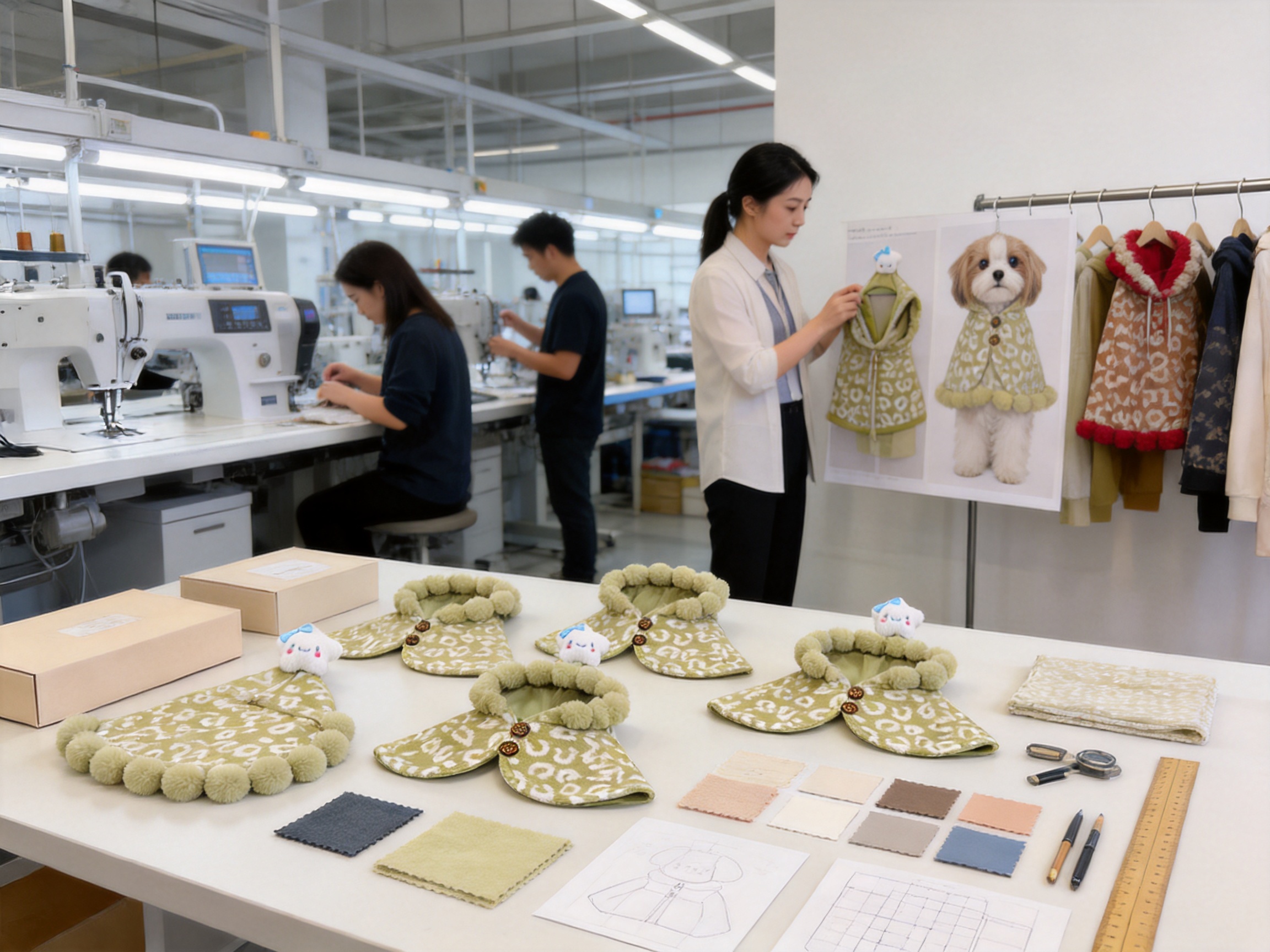
A successful pet apparel program depends on more than a good design. Consistent sizing, repeatable sewing quality, reliable materials, accurate trimming, and timely delivery are all important for commercial buyers. Taizhou Feile Pet Products Co., Ltd. integrates product design, production, sales, pattern making, and quality control within its manufacturing operation.
The company is headquartered in Taizhou, Zhejiang, and has five years of offline manufacturing experience. Its cross-border online division officially began operation in November 2025, with a focus on one-stop OEM and ODM pet apparel solutions for global sellers and brands. This combination of physical manufacturing experience and international-oriented service allows the company to support both standard product purchasing and customized development.
Automated Sewing Production Lines
The factory is equipped with 48 fully automatic sewing production lines. This equipment base supports organized production for different styles, materials, and seasonal requirements. Automated sewing processes can help improve repeatability, particularly when a product must be manufactured in multiple sizes or repeated across several purchase orders.
Automation does not replace the need for skilled supervision. Instead, it provides a stable production framework in which workers can manage material preparation, machine operation, process inspection, finishing, and quality checks. For a cape with decorative trim and shaped panels, consistent handling is important because variations in seam position or edge finishing can affect both appearance and fit.
Professional Team Structure
The company has a professional team of 77 people covering design, pattern making, production, and quality control. This structure supports a complete development cycle. Design staff can translate market trends into product concepts, pattern makers can convert those concepts into workable specifications, production teams can organize bulk manufacturing, and quality personnel can monitor finished goods.
For OEM and ODM buyers, the presence of different functional teams is a major benefit. Product development does not depend solely on a sales contact or a single sample maker. Instead, the design and technical requirements can move through a defined process from concept to sample and from sample to production.
Daily Production Capacity
The reported daily production capacity is 3,000 pieces. This capacity gives the manufacturer the ability to support both developing brands and larger wholesale programs. Buyers can begin with a focused seasonal order and later increase volume if the product performs well in the market.
Capacity is particularly important for holiday collections, where delivery windows are often fixed. A product that arrives after the Christmas selling period can lose much of its commercial value. The stated production lead time is 10–15 days after order confirmation and receipt of the deposit, although customized designs and larger programs should be evaluated according to their specific technical requirements.
Broad Product Development Experience
The manufacturer offers more than 800 pet apparel SKUs and introduces approximately 8–12 new styles weekly. This broad product base indicates experience with multiple silhouettes, fabrics, themes, and decorative treatments. Such experience can be useful when adapting the green leopard cape into a broader collection.
For example, a buyer may request a matching hoodie, a different neckline, a revised trim, or an alternative seasonal color. Experience across many SKUs helps the development team understand how changes to fabric weight, seam placement, and garment shape may affect production requirements.
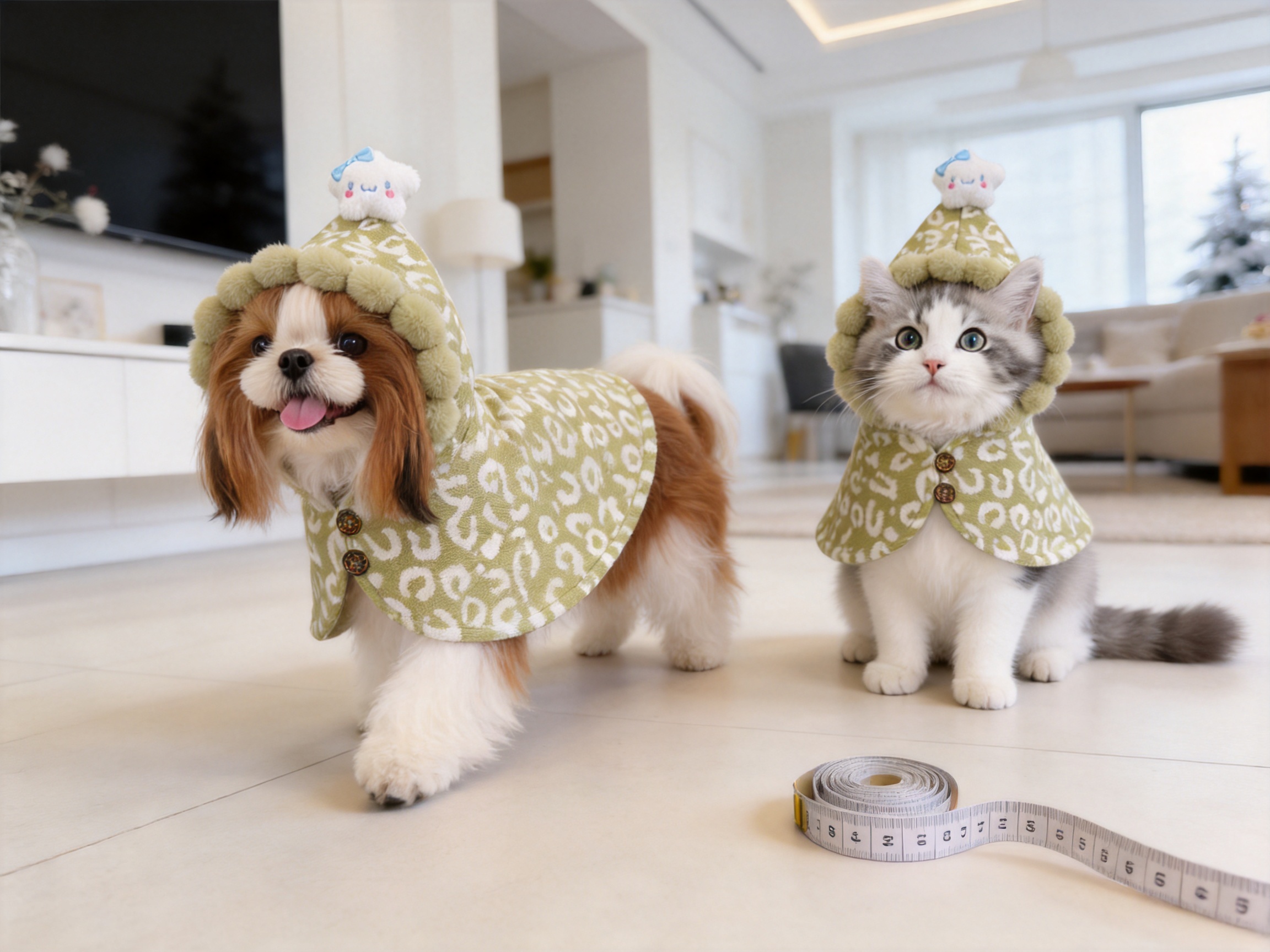
7. OEM and ODM Customization Opportunities
The product is suitable for buyers who want a ready-to-develop foundation rather than a completely fixed item. Customization options include colors, jacquard patterns, trim colors, decorative details, size grading, fit adjustments, logos, labels, hang tags, and branded packaging.
Custom Colors and Jacquard Patterns
The avocado green base can be adapted to suit different retail environments. Buyers may request deeper forest green, soft sage, warm beige, muted red, cream, or other collection-specific shades. Jacquard motifs can also be adjusted to create a different visual identity while retaining the textured woven effect.
Custom pattern development is useful for private-label brands that want to avoid selling an identical design to multiple competitors. A brand may use one leopard-inspired pattern for holiday stock and another geometric or botanical pattern for a wider winter collection.
Custom Trim and Decorative Details
Pom-pom trim is one of the visible features of the original design, but the trim treatment can be customized. Buyers may select a contrasting color, a tonal color, a different size, or another decorative finish. These modifications allow the same base silhouette to be aligned with a brand’s broader visual system.
Logo Applications
Available branding options include logo embroidery, heat transfer printing, and silicone or rubber logo applications. The most suitable method depends on the material, logo complexity, desired appearance, and order requirements.
Embroidery can provide a classic textile finish, especially for small brand marks. Heat transfer printing may be suitable for detailed graphics or lightweight branding. Silicone and rubber applications can offer a modern raised effect that complements fashion-oriented pet apparel. Placement options may include the back, chest area, trim region, or a branded accessory attached to the garment.
Labels and Retail Packaging
Personalized woven labels, wash labels, hang tags, and branded packaging can be added. These details are important for companies selling through boutiques, online marketplaces, independent websites, and multi-brand retail channels.
A woven label can communicate the brand name while maintaining a soft apparel appearance. A wash label provides care information and product identification. A hang tag can explain sizing, material, or seasonal features. Branded packaging can improve the unboxing experience and create a more consistent presentation across a collection.
Sample Development
Sample development allows buyers to review color, fabric texture, trim, construction, branding, and fit before approving bulk production. For this cape, sample evaluation should include checking the drape of the fan-shaped body, the position of the pom-pom trim, the comfort of the neck area, and the relationship between the lower hem and the pet’s movement.
Sample review is also the appropriate stage for confirming the size chart. A buyer should test the garment on representative pets or use controlled measurements to determine whether the chest allowance, back coverage, and neck opening meet the intended market requirements.
8. Production Workflow from Concept to Finished Garment
A professional pet apparel manufacturing process usually begins with product confirmation. The buyer and manufacturer review the design, material, color, size range, trim, branding, packaging, order quantity, and delivery schedule. Once these details are agreed, the factory can prepare the technical information needed for production.
Design and Technical Review
The first stage is a review of the design concept. The manufacturer evaluates the silhouette, fabric behavior, decorative components, and intended use. For a cape, the team needs to consider how the material drapes around the chest, how the shape spreads across the back, and how the lower hem behaves when the pet walks or sits.
Technical review also identifies potential production issues. Jacquard fabrics may have directional texture or pattern alignment requirements. Pom-pom trim must be attached securely and positioned consistently. The neckline must be comfortable while remaining stable during movement. These considerations are addressed before bulk cutting begins.
Pattern Making and Size Grading
Pattern makers convert the design into production patterns. The base size is developed first, followed by grading into the remaining sizes. Each size should maintain the intended proportions rather than simply being enlarged or reduced mechanically.
For example, the chest measurement, back length, neck opening, and cape flare must work together. An overly narrow chest may restrict movement, while an excessively wide opening may cause the garment to shift. Proper grading helps preserve the original design across XS through XXL.
Material Preparation and Cutting
Before cutting, the jacquard fabric should be inspected for color consistency, surface defects, pattern direction, and usable width. Panels are then arranged to manage fabric consumption and maintain visual continuity. If the jacquard pattern has a specific direction, cutting must account for alignment across the garment.
Cutting accuracy directly affects sewing quality. Inconsistent panel shapes can lead to uneven hems, mismatched seams, or distorted cape proportions. Organized cutting procedures help control these risks, especially when several size sets are being produced simultaneously.
Sewing and Trim Attachment
The cut panels move into sewing production, where the main body is assembled and the edge finishing is completed. The pom-pom trim is attached according to the approved sample. Workers and production supervisors monitor seam consistency, trim positioning, and the smoothness of the neckline and lower hem.
Automated sewing lines can support consistent stitching, while trained personnel remain responsible for handling, adjustment, and inspection. The balance between equipment and human oversight is important for fashion products because visual details often require judgment in addition to mechanical repetition.
Finishing and Inspection
After sewing, the garments are checked for loose threads, uneven seams, incomplete trim attachment, stains, fabric damage, and measurement deviations. Finished pieces may be pressed or shaped as needed so that the cape presents properly during packing and display.
Quality control should include both appearance and measurement checks. A garment can look acceptable but still have an incorrect neck opening or back length. Inspecting representative pieces from each size helps ensure that the final assortment corresponds with the approved specification.
Packing and Shipment Preparation
Products can be prepared in standard export packaging or customized retail packaging. Packaging requirements should be confirmed before production because labels, hang tags, folding methods, polybags, cartons, and outer marks may affect the packing workflow.
The manufacturer supports worldwide shipping, allowing buyers to coordinate production with their distribution plans. Customers should provide destination information, required documents, carton specifications, and target delivery dates as early as possible, especially for seasonal orders.
9. Quality Control Considerations for This Product
Quality control for the green leopard cape should focus on fabric appearance, size accuracy, construction strength, trim security, and overall comfort. Since the product is sold as fashion-oriented winter wear, visual consistency is particularly important.
Fabric inspection should verify that the avocado green tone is consistent throughout the order. The leopard jacquard pattern should be checked for weaving irregularities, broken yarns, stains, or obvious surface damage. If multiple production lots are used, color matching between lots should be monitored.
Construction inspection should confirm that seams are secure and that the cape retains its intended fan shape. The neckline should lie smoothly without excessive pulling. The lower hem should remain relaxed and even. Pom-pom trim should be firmly attached, with no obvious gaps or loose components.
Size inspection should compare finished garments with the approved measurements. Small variations may occur in textile production, but significant deviations can affect fit and customer satisfaction. Each size should be reviewed separately because grading errors may appear only at particular points in the size range.
Packaging inspection should verify that labels, hang tags, and branded materials are correct. The wrong size label or incorrect packaging can create unnecessary returns even when the garment itself is well made.
10. Commercial Uses and Retail Presentation
The cape can be marketed through several retail themes. A Christmas display may combine it with seasonal toys, pet stockings, green or red accessories, and holiday photography props. A winter collection may pair it with sweaters, hoodies, blankets, and indoor comfort products. A Korean-style fashion display may emphasize the muted palette, jacquard texture, and coordinated silhouettes.
Photography is another important use. The fan-shaped silhouette creates visible movement and shape when the pet is standing or walking. The soft green color works well with neutral backgrounds, wood textures, winter foliage, cream-colored interiors, and seasonal decorations. Retailers can present the product as both functional clothing and a styling accessory for memorable pet images.
Online retailers should show multiple views, including front, side, and back images. The size chart should be placed near the product description, and customers should be instructed to measure the chest and back rather than relying only on weight. Detail photographs of the jacquard surface and pom-pom trim can help communicate the product’s quality more effectively than a single full-body image.
Bundling Opportunities
The product can be bundled with matching green leopard hoodies or complementary accessories. A retailer might offer a cape for special occasions and a hoodie for everyday winter wear. Bundles can increase average order value while allowing customers to create a more complete wardrobe for their pets.
For wholesalers, coordinated products can be ordered under one color story. A collection may include the cape, hoodie, scarf, bow, blanket, or pet carrier accessory. Consistent colors and motifs make it easier for retailers to build attractive displays and online category pages.
11. Order Terms and Supply Planning
The standard minimum order quantity is 500 pieces per order. The minimum order quantity for a single color is at least 300 pieces. These requirements are suitable for wholesalers, distributors, established online sellers, and private-label brands preparing a seasonal launch.
The stated production lead time is 10–15 days after order confirmation and receipt of the deposit. This timeline applies to standard production conditions. Buyers should allow additional time for new jacquard development, custom trims, logo applications, sample approval, packaging design, and more complex size or color programs.
Payment terms are 50 percent deposit to confirm the order, with the remaining 50 percent balance paid before shipment. Clear confirmation of specifications, packaging, and delivery requirements before deposit payment helps reduce delays during production.
Seasonal planning should begin early. Christmas products require time for design selection, sample review, production, inspection, ocean or air freight, customs procedures, and local distribution. Buyers who wait until the peak season may face tighter capacity and fewer shipping options. Early planning also allows time to test the product with representative customers or through a limited market launch.
Large-volume buyers and private-label customers should request a detailed production schedule. The schedule can cover material preparation, sample confirmation, bulk cutting, sewing, inspection, packaging, and shipment. This creates a clearer basis for inventory planning and promotional activity.
12. Why an Integrated Manufacturer Matters to Buyers
Working with an integrated manufacturer can simplify the product development process. Instead of coordinating separately with a fabric supplier, pattern maker, sewing factory, packaging company, and inspection provider, a buyer can work through one production partner for the major stages of development.
This arrangement can improve communication. Design changes can be discussed directly with teams that understand patterns and production constraints. Problems discovered during sampling can be addressed before bulk manufacturing. Branding and packaging information can also be incorporated into the production plan rather than treated as last-minute additions.
Integrated production is especially valuable for pet apparel because the category contains many small but important details. A change to the neck opening may affect the pattern, sewing sequence, trim placement, and final packaging. A change to fabric weight may affect drape, size grading, and shipping volume. Coordinated decision-making helps manage these relationships.
The manufacturer’s experience across dog apparel, cat apparel, and small pet apparel further supports product adaptation. Different animals require different proportions and movement considerations. A team accustomed to multiple pet categories may be better prepared to adjust a cape for specific customer needs.
13. Frequently Asked Questions
What type of product is the Green Leopard Jacquard Christmas Pet Cape?
It is a Korean-style winter pet cape designed for small and medium-sized dogs and cats. It features an avocado green leopard jacquard fabric, matching pom-pom trim, and a sleeveless fan-shaped silhouette.
Is the cape suitable only for Christmas?
No. Although it has a seasonal Christmas character, the muted green color and understated jacquard pattern make it suitable for autumn and winter wear, daily walks, indoor use, pet gatherings, and photography after the holiday period.
Does the cape have sleeves?
No. It is sleeveless, leaving the legs free. This design helps reduce sleeve restriction and allows pets to walk, turn, lie down, and move more naturally.
Can cats wear this product?
Yes. The product is designed for both small and medium-sized dogs and cats. Owners should select the size according to the animal’s neck, chest, and back measurements and observe the pet during initial use.
How should the correct size be selected?
Measure the neck at its base, the chest around the widest part of the rib cage, and the back from the base of the neck to the desired ending point. Compare these measurements with the size chart. Weight can be used as a general reference but should not replace body measurements.
What sizes are available?
The available sizes are XS, S, M, L, XL, and XXL. The listed chest measurements range from approximately 33 cm to 58 cm, and the listed back lengths range from approximately 22 cm to 39 cm.
What material is used?
The product uses low-saturation green leopard jacquard fabric with matching pom-pom trim. The jacquard surface creates a woven texture and gives the leopard pattern a softer, more refined appearance.
Can the colors or pattern be customized?
Yes. Custom colors and jacquard patterns can be developed according to collection requirements. Buyers can also request custom trim colors and decorative details.
Can a private label be added?
Yes. Available branding options include logo embroidery, heat transfer printing, silicone logo applications, rubber logo applications, woven labels, wash labels, hang tags, and branded packaging.
What is the standard minimum order quantity?
The standard minimum order quantity is 500 pieces per order. The minimum quantity for a single color is at least 300 pieces.
What is the production lead time?
The stated production lead time is 10–15 days after order confirmation and receipt of the deposit. Customized designs, new materials, special branding, and large-volume programs may require a separately confirmed schedule.
What are the payment terms?
The standard payment terms are a 50 percent deposit to confirm the order and a 50 percent balance paid before shipment.
Can the product be developed into a larger collection?
Yes. The cape can be coordinated with matching green leopard hoodies and adapted through new colors, patterns, trims, sizes, and branding details. Buyers can use it as the foundation for a complete seasonal pet apparel collection.
What manufacturing capabilities support this product?
The manufacturer has 48 fully automatic sewing production lines, a 77-person professional team, a reported daily production capacity of 3,000 pieces, more than 800 pet apparel SKUs, and a new product development rate of approximately 8–12 styles per week.
Is the cape designed for extreme cold or technical outdoor use?
The product is designed as autumn and winter lifestyle apparel. It provides seasonal styling and light coverage but should not be represented as specialized extreme-weather or technical performance equipment unless additional specifications are developed and confirmed.
14. Buyer Checklist Before Placing an Order
Buyers should first confirm the target market and intended sales period. If the product is being purchased for Christmas, the complete schedule should include sample approval, bulk production, quality inspection, transportation, customs clearance, and local distribution.
The next step is to confirm whether the standard avocado green version is suitable or whether a custom color is required. Custom colors and jacquard patterns may require material development, so they should be discussed before the order is finalized.
Buyers should also determine the size assortment. The six standard sizes provide a useful starting point, but the ideal ratio may vary by market. A retailer serving toy breeds may require more XS and S pieces, while a broader distributor may need a greater proportion of L, XL, and XXL garments.
Branding details should be finalized early. The buyer should provide approved logo files, label dimensions, placement instructions, packaging requirements, and any legal or care information required for the destination market.
Finally, buyers should request a sample or pre-production confirmation for customized projects. The sample should be reviewed for color, jacquard appearance, pom-pom attachment, measurements, drape, label placement, and packaging presentation.
15. Conclusion
The Green Leopard Jacquard Christmas Pet Cape Korean-Style Winter Wear combines understated seasonal design with practical pet-friendly construction. Its avocado green leopard jacquard fabric offers a distinctive alternative to ordinary printed coats, while the matching pom-pom trim adds a coordinated holiday detail. The sleeveless fan-shaped silhouette leaves the legs free, and the relaxed lower hem supports daily usability and easier movement.
For consumers, the product offers a comfortable and visually appealing option for winter walks, indoor wear, gatherings, and photography. For retailers, it provides a flexible item that can be marketed during Christmas and throughout the wider autumn and winter season. For wholesalers and private-label brands, it offers a foundation for custom colors, jacquard patterns, trims, sizing, logos, labels, and packaging.
The product is further supported by an integrated manufacturing operation with design, pattern making, production, quality control, and shipping capabilities. Forty-eight fully automatic sewing production lines, a 77-person professional team, a reported daily capacity of 3,000 pieces, and experience across more than 800 pet apparel SKUs provide a structured base for both standard and customized orders.
In a competitive pet apparel market, the strongest products are those that combine a clear visual identity with real everyday usefulness. This cape achieves that balance through its soft color palette, textured fabric, adaptable silhouette, comfortable movement, and collection potential. For buyers seeking a Korean-inspired winter pet apparel item with OEM and ODM flexibility, it presents a practical and commercially versatile development opportunity.
References
1. Taizhou Feile Pet Products Co., Ltd. Product specification sheet for the Green Leopard Jacquard Christmas Pet Cape Korean-Style Winter Wear.
2. Taizhou Feile Pet Products Co., Ltd. Manufacturing and company profile information, including production capacity, personnel structure, product range, and development services.
3. Internal product size chart covering neck, chest, back length, and suggested pet weight ranges from XS through XXL.
4. General apparel product development principles concerning pattern grading, textile inspection, sewing quality control, trim attachment, packaging, and private-label production.
5. General pet apparel fitting guidance concerning neck measurement, chest measurement, back length, movement allowance, and routine wear observation.
Product: Green Leopard Jacquard Christmas Pet Cape Korean-Style Winter Wear

NEXT:Rose Jacquard Denim Dog Jacket: A Sweet-Cool Pet Fashion Solution for Modern Apparel Collections
- Lolita Cake Dress
- Cool Style Tassel Top Pet Lolita Dress
- Sweet Bow Princess Dog Dress
- Denim Pinafore Dress With Pockets Cute Casual Small Dog Outfit
- French Doll-neck Dog Dress Elegant Pet Wear
- Korean Sweet Lolita Dog Dress Cute Party Outfit
- Flutter Sleeve Dog Dress Lightweight Summer Pet Wear
- Ruffle Flutter Sleeve Pet Dress Cute Princess Style
- French Style Embroidered Dog Dress Elegant Pet Apparel
- Mint Green Heart Spaghetti Strap Tulle Dog Dress Princess Party Outfit
- Gingham Bow Dog Dress Cute Summer Pet Outfit
- Navy Star Pleated Dog Dress Elegant Casual Pet Wear
- Summer Sailor Dog Dress Nautical Style Pet Apparel
- Dog Cooling Shirt Color-Block Lightweight Summer Pet Wear
- Dog Printed High-Neck Base Layer Top Thermal Stretch Pet Underwear
- Lightning Racing Performance Sportswear Breathable Athletic Pet Shirt
- Rustic Brown Plaid Dog Shirt Casual Outdoor Pet Wear
- Cream Embroidered Dog Blouse Elegant Pet Shirt
- Korean Style Pink Textured Tulle Camisole Small Dog Fashion Top
- Star & Letter Casual Pet T-Shirt Daily Wear Dog Top
- +86-13362661217
- 13362661217@163.com
- 128 Houxin Street, Hongjia, Jiaojiang, Taizhou, Zhejiang, China
