
 English
 русский
 Español
 عربى


He Yutong — OEM/ODM Pet Apparel Sales Executive
Vintage Christmas Plaid Hunting Vest Sherpa-Lined Pet Wear: A Distinctive Winter Apparel Opportunity for Modern Pet Brands
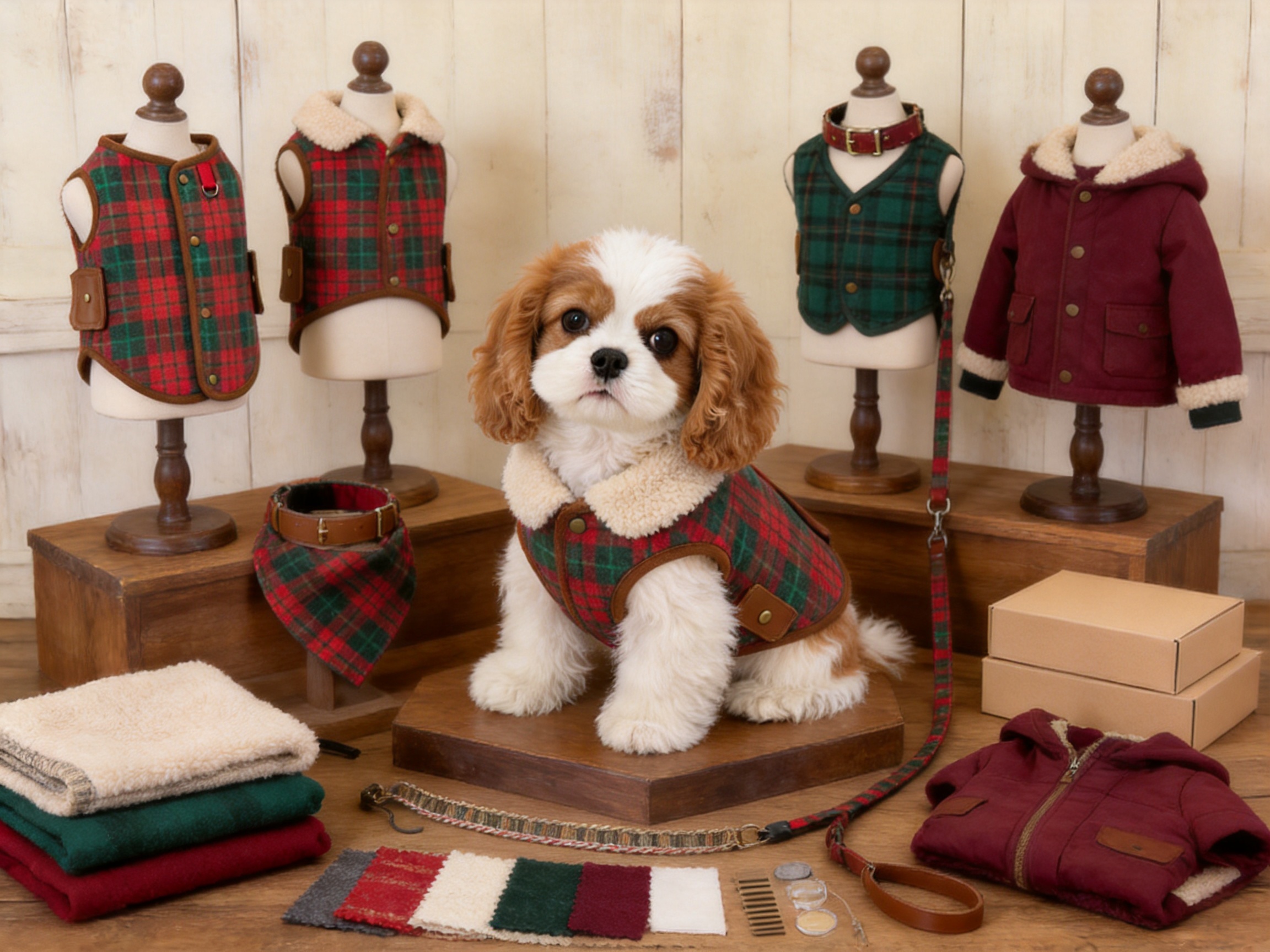
Seasonal pet apparel has developed beyond simple novelty products. Today, pet owners increasingly look for garments that combine recognizable visual themes, practical winter comfort, attractive photography potential, and a sense of individuality. Retailers and pet brands are also searching for products that can create a clear identity within a crowded festive marketplace. The Vintage Christmas Plaid Hunting Vest Sherpa-Lined Pet Wear is designed to meet these requirements through a coordinated combination of Scottish-inspired plaid, warm sherpa-style lining, brown PU leather trim, and a classic hunting-vest silhouette.
This product is not positioned as an ordinary Christmas sweater with a seasonal print. Instead, it presents a complete visual concept based on countryside traditions, autumn landscapes, European Christmas settings, and heritage outdoor clothing. The red-and-green plaid exterior immediately communicates a festive message, while the structured vest shape gives the garment a more refined and versatile appearance. The cream-brown interior and contrasting brown trim add warmth and depth, creating a product that can serve both holiday campaigns and broader autumn and winter apparel collections.
For wholesalers, distributors, boutique retailers, private label businesses, and online pet brands, the style offers an opportunity to build a more focused seasonal assortment. It can be presented as a statement winter layer, a Christmas photography garment, a country-inspired pet fashion item, or a premium alternative to conventional festive sweaters. Its appearance is distinctive enough to support themed merchandising while remaining practical enough for everyday winter outings.
A Complete Seasonal Design Concept
The strongest feature of this pet vest is the way its individual design elements work together. The Scottish Christmas plaid establishes the seasonal color story. The sherpa-style lining introduces a warm and tactile interior. The PU leather trim adds visual definition around the edges. The hunting-vest silhouette gives the garment a recognizable country character. Rather than depending on a single Christmas graphic, the product creates a layered appearance that feels coordinated from every angle.
Red and green are traditionally associated with Christmas, but the plaid treatment gives these colors a more mature and versatile presentation. The pattern can be styled with rustic holiday displays, woodland-themed campaigns, country Christmas collections, or classic winter photography. This makes the garment suitable for retailers that want a festive product without relying on cartoon graphics, large printed slogans, or overly decorative elements.
The vintage influence also helps the vest appeal to consumers who prefer heritage-inspired clothing for their pets. Many pet owners now treat apparel as part of a lifestyle presentation. They may coordinate their pet’s clothing with home décor, family outfits, holiday photography, or outdoor activities. A plaid hunting vest fits naturally into these settings because it suggests warmth, tradition, countryside leisure, and seasonal celebration at the same time.
For product planners, this combination creates a wider range of merchandising possibilities. The vest may be grouped with Christmas accessories, winter beds, seasonal collars, outdoor pet gear, or matching owner-and-pet lifestyle products. It can also serve as an anchor style within a collection that includes plaid bandanas, fleece coats, holiday scarves, and other country-inspired items.
Why the Hunting-Vest Silhouette Matters
Traditional festive pet apparel frequently uses the same design categories: knitted sweaters, printed hoodies, decorative dresses, or simple fleece coats. These formats remain commercially useful, but they also create a high level of visual competition. A hunting-vest silhouette provides an alternative shape that allows a retailer’s product assortment to appear more specialized.
The vest structure communicates outdoor functionality even when the garment is primarily used for seasonal styling. Its shape is visually associated with country walks, rural estates, woodland environments, and classic outdoor clothing. This association can make the product especially effective in lifestyle photography. A dog wearing the vest beside autumn leaves, a Christmas tree, a country fireplace, or a winter trail can be presented as part of a complete seasonal story rather than as a pet wearing a random festive costume.
The silhouette also supports gender-neutral merchandising. Because the design is based on a classic outerwear form rather than a highly gendered decorative style, it can be marketed to a broad range of dogs and small pets within the available size range. Retailers can position it as a practical-looking winter layer, a family holiday outfit, or a premium seasonal gift item.
Another advantage is its compatibility with different brand personalities. A boutique can present the vest as rustic and handmade-inspired. An online retailer can promote it as a Christmas photo essential. A private label brand can emphasize the heritage outdoor influence. A distributor can include it in a broader winter collection for pet shops. The same base design can therefore support multiple commercial narratives.
Material and Appearance Advantages
Scottish-Inspired Christmas Plaid
The red-and-green plaid exterior provides immediate seasonal recognition. Plaid is commercially valuable because it has a strong visual identity without requiring complex artwork. It can communicate Christmas, autumn, tradition, and outdoor style in a single pattern. Compared with a plain-colored vest, plaid creates more visual interest on product pages and retail displays. Compared with a novelty print, it can appear more timeless and easier to coordinate with other products.
The plaid presentation is also well suited to visual merchandising. Product photographs can use natural wood, evergreen branches, wrapped gifts, stone walls, fireplaces, or neutral winter backgrounds. Because the pattern already contains strong seasonal colors, retailers can create attractive imagery without adding excessive props. This can be particularly helpful for small brands that need efficient content production for online catalogs and social media campaigns.
Sherpa-Style Interior
The warm cream-brown sherpa-style lining contributes a soft and insulated visual impression. Its texture contrasts with the woven plaid exterior, giving the garment a more substantial appearance than a single-layer fabric item. Consumers often associate sherpa-style fleece with warmth, comfort, and winter readiness, which makes the lining an important part of the product story.
The lighter interior color also helps distinguish the garment from the darker red, green, and brown exterior elements. This contrast creates a layered look that can be seen around the neckline and edges. It supports the vintage country aesthetic while adding a softer appearance suitable for pet fashion.
As with all pet garments, the exact warmth and comfort experience depends on the final production materials, construction, fit, and the individual pet. Retailers should present the product as a warm winter-oriented layer and should encourage customers to select a suitable size and monitor their pets during wear.
Brown PU Leather Trim
The brown PU leather trim provides a structured finishing detail. It frames the plaid fabric and reinforces the hunting-vest influence. The brown tone works naturally with both the red-and-green pattern and the cream-brown lining, resulting in a coordinated palette rather than a collection of unrelated colors.
PU leather trim can also support private label development. Depending on the customer’s requirements, trim details may be adjusted during customization to create different levels of rustic, premium, or contemporary styling. Brands may explore alternative brown tones, different trim widths, logo applications, or coordinated accessory designs.
Advantages Over Conventional Seasonal Pet Apparel
The product’s primary competitive advantage is its coordinated identity. Many seasonal pet garments use a festive color or graphic but do not establish a broader design direction. This vest combines pattern, silhouette, texture, and trim to create a recognizable product story. That distinction can help a retailer avoid competing only on price or basic holiday decoration.
A second advantage is versatility. The vest is suitable for Christmas collections, winter outings, holiday photography, seasonal retail displays, and autumn-themed campaigns. A conventional Christmas sweater may have strong appeal during a limited holiday window, while this vest can begin selling earlier in the season as part of an autumn and winter range.
A third advantage is its photography potential. The combination of plaid, sherpa-style lining, and leather-look trim creates texture and contrast that can be captured clearly in product images. This is important for online sales, where a garment must communicate its value through a small number of photographs. The visual details can be shown in full-product images, close-up texture photographs, outdoor scenes, and holiday lifestyle content.
A fourth advantage is collection compatibility. The vest can be used as a leading style for a coordinated line of country-inspired pet products. It can sit beside matching accessories or complementary garments without looking generic. For private label brands, this creates opportunities for repeat seasonal development and recognizable visual language.
A fifth advantage is its suitability for multiple sales channels. Boutique shops may value its distinctive styling. E-commerce sellers may emphasize its holiday photography appeal. Wholesale distributors may include it in winter outerwear assortments. Pet lifestyle brands may use it as part of a broader countryside or heritage collection. The design therefore has commercial flexibility beyond one specific retail format.
Size Range and Fit Planning
The garment is available in six sizes: XS, S, M, L, XL, and XXL. The provided measurements include neck, chest, back length, and approximate pet weight guidance. These measurements give buyers a starting point for assortment planning, but they should not replace individual fitting. Dogs with similar body weights may have very different chest depths, neck proportions, body lengths, and coat thicknesses.
| Size | Neck | Chest | Back Length | Approximate Weight |
|---|---|---|---|---|
| XS | 22 cm | 33 cm | Approximately 22 cm | Approximately 3 lb |
| S | 24 cm | 37 cm | Approximately 25 cm | Approximately 5 lb |
| M | 30 cm | 44 cm | Approximately 29 cm | Approximately 5–8 lb |
| L | 33 cm | 48 cm | Approximately 33 cm | Approximately 8–14 lb |
| XL | 36 cm | 53 cm | Approximately 36 cm | Approximately 14–17 lb |
| XXL | 40 cm | 58 cm | Approximately 39 cm | Approximately 17–22 lb |
For wholesale purchasing, size distribution should be determined by the target market rather than by an equal quantity of every size. A retailer specializing in toy breeds may require a larger proportion of XS, S, and M units. A general pet store may need a balanced range. A distributor serving multiple regions can use previous sales data to determine the appropriate size curve.
It is advisable for retailers to display the neck, chest, and back-length measurements clearly on product pages. Weight guidance can be useful, but chest and back measurements are often more reliable when customers are choosing clothing. The product should fit comfortably without restricting movement, breathing, or normal activity. Pets should be supervised during wear, especially when the garment is introduced for the first time.
For customized development, the manufacturer supports size grading and garment styling adjustments. This allows brands to request a revised size chart, expanded size range, or fit structure more closely aligned with their customer base. Any such changes should be confirmed through sample development and fitting evaluation before bulk production.
Suitable Retail and Marketing Applications
Christmas Collections
The product can serve as a leading item in a Christmas pet apparel collection. Its plaid pattern is immediately associated with the season, while its classic design helps it stand apart from highly decorative alternatives. Retailers can merchandise it with holiday collars, festive leashes, Christmas toys, stockings, and seasonal grooming accessories.
Autumn and Winter Outerwear
The vest can also be introduced before the main holiday shopping period. Plaid and brown trim have strong autumn associations, allowing the garment to be marketed for fall walks, outdoor photographs, harvest festivals, and cooler-weather outings. This longer selling period may help retailers reduce dependence on a short Christmas sales window.
Holiday Photography
Pet photography is a major use case for distinctive seasonal apparel. The vest provides clear color contrast and a recognizable silhouette, making it suitable for professional studio sessions, family photographs, social media campaigns, and user-generated content. Retailers may promote it as a photo-ready winter outfit or as a gift for pet owners who enjoy documenting seasonal occasions.
Boutique and Gift Retail
Independent pet boutiques and gift stores can use the vest as a visually strong display item. Its vintage country character is suitable for stores with rustic, traditional, premium, or lifestyle-oriented identities. It may be hung near holiday décor, displayed on a pet mannequin, or combined with coordinated products in a seasonal window presentation.
Private Label Collections
Private label brands can use the base concept as a starting point for a more exclusive product. Custom plaid development, color combinations, lining options, trim details, labels, and packaging can create a product that feels specific to the brand. This is especially useful for companies that want to establish a recognizable seasonal signature rather than resell an undifferentiated item.
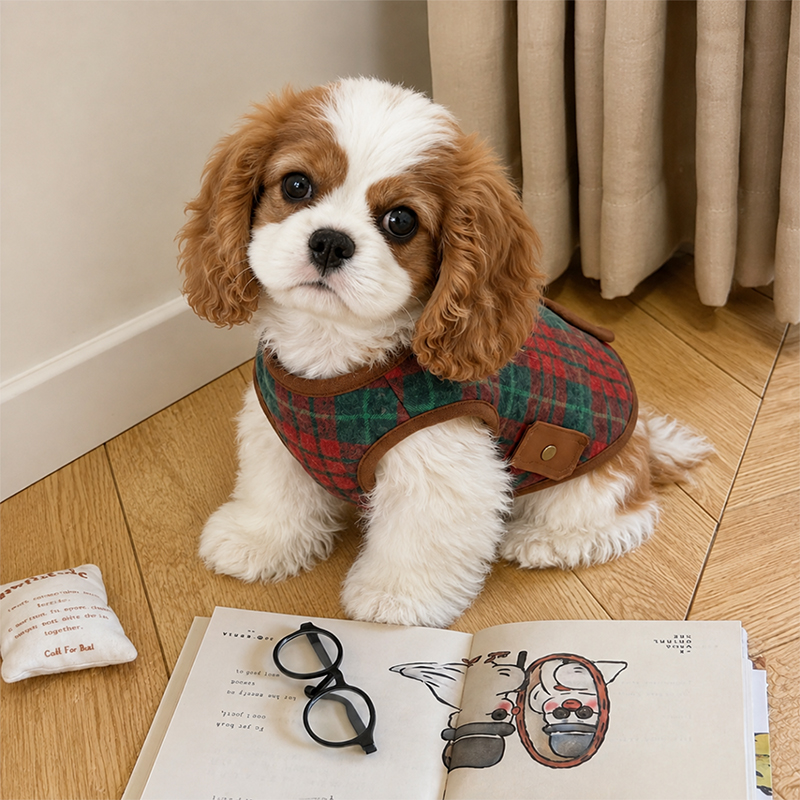
Vintage Christmas Plaid Hunting Vest Sherpa-Lined Pet Wear
OEM and ODM Customization Possibilities
The garment is suitable for OEM and ODM development for pet apparel brands, wholesalers, distributors, boutiques, and private label retailers. OEM production allows a buyer to develop the product according to specific branding and packaging requirements. ODM development can involve broader design adjustments, including changes to the plaid pattern, color palette, garment construction, lining, trim, and size grading.
Pattern development is one of the most important customization opportunities. A buyer may request a brighter Christmas plaid, a muted heritage plaid, a black-and-red hunting check, or a color combination designed to match an existing product line. The scale of the plaid can also influence the visual result. Larger checks may create a bold, rustic appearance, while smaller checks can appear more refined and detailed.
Lining options can be reviewed according to the intended market, climate, price point, and product positioning. A brand focused on lightweight seasonal fashion may prefer a less substantial interior. A brand serving colder regions may request a warmer or more insulated construction. The final material selection should be evaluated for comfort, durability, weight, and compatibility with the outer fabric.
Trim details offer another way to develop a private label identity. Buyers may review the width, placement, shade, and finish of the brown PU leather trim. Logo patches, woven labels, embroidered details, or other branding elements can be added where suitable. Any decorative component should be securely attached and reviewed for pet safety before production approval.
Branding options include embroidered logos, silicone or rubber logo applications, printed graphics, custom woven labels, wash labels, hang tags, and branded packaging. These options allow the same basic garment to serve different retail tiers. A boutique may prefer a woven heritage label and premium hang tag, while an online private label brand may require a complete branded retail package with barcode and product information.
Customization should begin with a clear technical brief. The brief may include target customer, intended climate, preferred size range, color standards, logo files, packaging requirements, order quantity, delivery schedule, and quality expectations. A clear brief helps reduce misunderstanding during sampling and provides a practical basis for confirming the final product.
Manufacturing Capabilities and Production Strengths
Taizhou Feile Pet Products Co., Ltd. is a pet apparel manufacturer headquartered in Taizhou, Zhejiang, China. The company integrates design, production, and sales, with five years of offline manufacturing experience. Its cross-border online division officially began operation in November 2025, with a focus on one-stop OEM and ODM pet apparel solutions for global cross-border sellers and brands.
The manufacturer operates 48 fully automatic sewing production lines and has a professional team of 77 people covering design, pattern making, production, and quality control. The stated daily production capacity is 3,000 pieces. These resources provide a foundation for handling both standard product orders and customized development projects.
Production capacity is particularly important for seasonal products. Christmas and autumn/winter ranges operate according to defined selling windows, and delays can reduce the available retail period. A manufacturer with established sewing lines, dedicated production personnel, and coordinated quality control can help buyers plan more confidently around seasonal launches.
The company’s product range includes dog apparel, cat apparel, and small pet apparel, with more than 800 SKUs in total. It launches approximately 8–12 new styles weekly. This level of product activity indicates an operating environment familiar with frequent style development, seasonal updates, and varied pet apparel requirements.
For buyers, a broad existing SKU base can be useful because it suggests access to accumulated experience across different garment types, size structures, materials, and decorative details. A manufacturer that works across multiple pet apparel categories may also be able to support collection development rather than only one isolated product.
Design and Pattern-Making Coordination
Design and pattern making are essential to the development of a structured vest. The plaid alignment, neckline shape, trim placement, body proportions, and opening construction must work together to create a balanced garment. Pattern makers also need to consider how the lining affects the final fit and how the garment will sit on different body shapes.
When a buyer requests a modified size range or a new variation, pattern development becomes especially important. A successful size grade should preserve the appearance and functional proportions of the original design rather than simply enlarging or reducing every measurement mechanically. The manufacturer’s integrated design and pattern-making functions support this type of product development.
Production and Quality Control
Quality control should cover fabric appearance, plaid consistency, stitching, trim attachment, lining security, size accuracy, and overall finishing. For this product, visual consistency is particularly important because the value of the design depends on a coordinated relationship between the plaid, sherpa-style lining, and brown trim.
Inspection may also review loose threads, seam irregularities, uneven edges, incorrect labels, packaging accuracy, and color variation between production batches. Buyers should establish their inspection requirements during order confirmation and, when appropriate, request pre-production samples or production approval samples.
The company’s professional team includes personnel responsible for quality control, supporting a process in which product checks are integrated into the broader production workflow. Buyers with detailed quality standards should provide written specifications, approved samples, measurement tolerances, packaging instructions, and labeling requirements to support consistent execution.
Order Terms and Supply Planning
The standard minimum order quantity is 500 pieces per order. The stated single-color minimum is at least 300 pieces for each color. These requirements are suitable for wholesalers, distributors, established online sellers, and private label brands that are preparing a structured seasonal launch.
The stated production lead time is 10–15 days after order confirmation and receipt of the deposit. Actual timing may depend on design approval, material availability, customization complexity, packaging requirements, order quantity, and production scheduling. Buyers should confirm the final timetable before placing an order, especially when the goods are intended for a fixed holiday launch.
Payment terms are 50 percent deposit to confirm the order, with the remaining 50 percent balance payable before shipment. For customized designs, private label orders, or larger-volume purchases, buyers should request detailed pricing and production schedules. It is also advisable to clarify whether sampling, custom packaging, labels, inspection, and shipping are included or quoted separately.
Seasonal procurement should begin with backward planning. Buyers can calculate the target retail launch date, allow time for sample review, confirm artwork and labels, approve packaging, schedule production, arrange inspection, and reserve international transportation. Starting early can reduce pressure during peak holiday production periods and provide more time to correct issues if the first sample requires changes.
How the Product Can Support Brand Differentiation
In a competitive pet apparel market, differentiation often depends on the clarity of the product story. The Vintage Christmas Plaid Hunting Vest offers a narrative that is easy for customers to understand: classic plaid, countryside influence, winter warmth, and holiday charm. This story can be expressed consistently across product photography, packaging, descriptions, social media, and in-store presentation.
Brands can position the vest as a heritage-inspired item rather than a disposable novelty. Words such as classic, country, traditional, rustic, winter-ready, and seasonal can help communicate the intended aesthetic. Marketing content should focus on the complete design relationship rather than describing only the plaid pattern.
Visual storytelling can further increase perceived value. A brand might photograph the garment in a country house setting, beside a decorated tree, on a winter trail, or near natural wood and evergreen materials. Close-up images can show the plaid weave, soft lining, and trim details. Lifestyle images can demonstrate how the vest appears during a walk or family gathering.
Packaging can reinforce the same identity. A kraft-style hang tag, traditional typography, dark green accents, and brown or cream details could support the heritage concept. Custom packaging should be developed according to the brand’s market positioning and local packaging requirements. The manufacturer supports customized retail packaging for buyers seeking a more complete branded presentation.
Responsible Product Presentation
Accurate product communication is important for customer satisfaction. Retailers should describe the garment as a sherpa-style lined pet vest and should avoid making unsupported claims about medical benefits, extreme-weather protection, or guaranteed performance. The product is designed for seasonal pet apparel use, and its practical suitability may vary according to the pet, climate, activity level, and final construction.
Size information should be displayed clearly. Customers should be encouraged to measure the pet’s neck, chest, and back length before ordering. If the pet falls between sizes, the retailer may provide guidance based on the garment’s construction and the pet’s body shape. A proper fit should allow comfortable movement without excessive looseness or restriction.
Pets should be supervised while wearing clothing. Owners should check for signs of discomfort, overheating, irritation, or restricted movement. The garment should be removed if the pet appears distressed. Care instructions should follow the approved material and construction specifications supplied for the final production version.
This type of responsible presentation can improve customer trust while reducing avoidable returns. It also helps distinguish a professional pet apparel brand from sellers that rely on exaggerated claims or incomplete measurement information.
Collection-Building Opportunities
The hunting vest can function as the centerpiece of a broader collection. A coordinated assortment may include matching plaid bandanas, bow ties, collars, leashes, blankets, scarves, or seasonal toys. These additions can increase average order value and allow customers to create a complete holiday look.
A collection could also explore different levels of warmth. The sherpa-lined vest may serve as the main winter style, while a lighter plaid garment could target early autumn or indoor holiday events. Complementary colors such as forest green, burgundy, cream, brown, and muted gold can maintain a consistent visual identity across multiple products.
Private label brands may develop an annual seasonal program around the concept. One year might emphasize classic red-and-green plaid. Another might introduce a navy and burgundy country check. Additional styles could use the same trim language or label design so that customers recognize the collection as part of the same brand family.
For distributors, the product can be grouped with multiple winter silhouettes. A wholesale catalog may include the hunting vest alongside fleece jackets, quilted coats, knit sweaters, and rain-resistant layers. This gives retailers a choice of price points and use cases while allowing the vest to occupy a more distinctive fashion-oriented position.
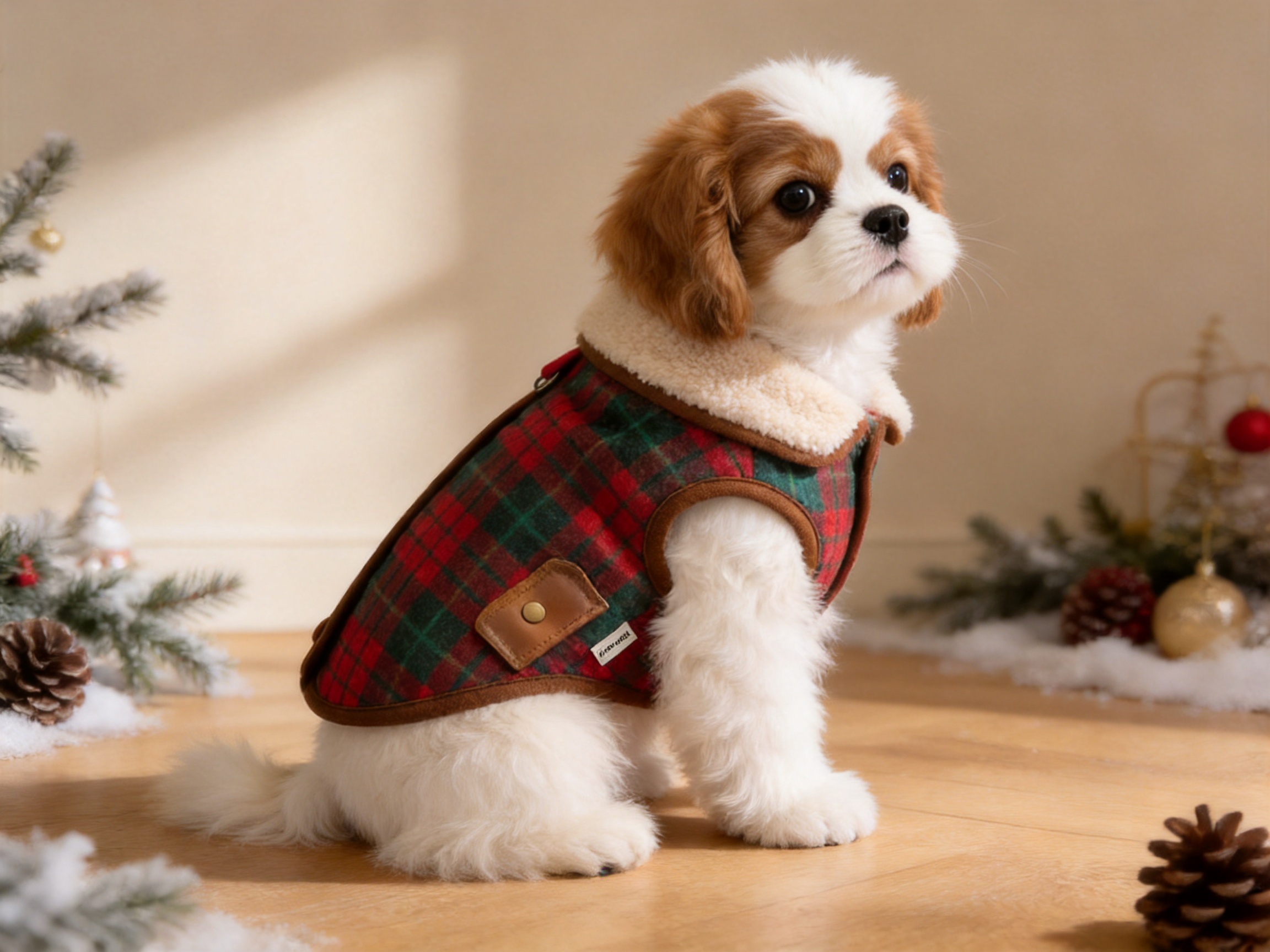
Recommended Buyer Evaluation Process
Step One: Define the Market
Before ordering, the buyer should identify the intended customer and sales channel. A boutique may prioritize premium appearance and packaging. A marketplace seller may prioritize strong photography and competitive pricing. A distributor may focus on reliable size coverage and repeat supply. The same product can support each channel, but the required specifications may differ.
Step Two: Confirm the Product Specification
The buyer should confirm the exterior fabric, lining, trim, closure method, labels, available colors, measurements, packaging, and care instructions. Any difference between the reference sample and the bulk production version should be documented. If the product is being modified, the buyer should request a revised specification sheet.
Step Three: Review Samples
Sample review should assess appearance, fit, stitching, trim attachment, lining feel, finishing, and overall comfort. The sample should be evaluated on a suitable pet when possible, while observing movement and fit. If the garment is intended for photography, buyers may also evaluate how the colors appear under studio and natural lighting.
Step Four: Approve Branding and Packaging
Logo placement, label design, hang tags, barcode information, folding method, polybag requirements, carton markings, and retail packaging should be approved before bulk production. Clear artwork files and written approval records can reduce production errors.
Step Five: Plan Inspection and Shipping
The buyer should define whether inspection will be conducted by the factory, an independent inspection agency, or the buyer’s own representative. Shipment planning should account for production time, inspection, documentation, customs procedures, and transportation. Seasonal products require careful logistics planning because late arrival can significantly reduce sales potential.
Frequently Asked Questions
What type of pet clothing is this product?
It is a sherpa-style lined pet vest designed for autumn and winter use. The garment features red-and-green Scottish-inspired Christmas plaid, brown PU leather trim, and a hunting-vest inspired silhouette.
Is the vest only suitable for Christmas?
No. The color palette has a clear Christmas association, but the plaid and country-inspired design can also be marketed for autumn, winter walks, holiday photography, rustic events, and broader seasonal pet apparel collections.
What sizes are available?
The standard size range includes XS, S, M, L, XL, and XXL. Neck, chest, back-length, and approximate weight guidance are available for each size. Buyers should confirm measurements and fitting details before ordering.
Can the colors or plaid pattern be changed?
Yes. Customization can include plaid pattern development and color combinations. Buyers should discuss the desired colors, pattern scale, fabric availability, and minimum order requirements with the manufacturer.
Can the lining be customized?
Lining options can be reviewed as part of OEM or ODM development. The final choice should consider warmth, comfort, product weight, price target, climate, and construction compatibility.
Can a private label logo be added?
Yes. Available branding options may include embroidered logos, silicone or rubber logo applications, printed graphics, custom woven labels, wash labels, hang tags, and branded packaging. Specific methods should be confirmed during sample development.
What is the standard minimum order quantity?
The standard MOQ is 500 pieces per order. The stated minimum for a single color is at least 300 pieces for each color. Customized projects may require separate confirmation.
What is the production lead time?
The stated production lead time is 10–15 days after order confirmation and receipt of the deposit. The final schedule may vary depending on customization, material preparation, order volume, packaging, and production capacity.
What are the payment terms?
The standard terms are a 50 percent deposit to confirm the order and a 50 percent balance payable before shipment. Buyers should confirm the complete commercial terms for customized or large-volume orders.
Does the manufacturer support OEM and ODM projects?
Yes. The manufacturer supports OEM and ODM development for pet apparel brands, wholesalers, distributors, boutiques, and private label retailers. Services include sample development, customization, bulk production, quality inspection support, and international shipping assistance.
How should customers choose the correct size?
Customers should measure the pet’s neck, chest, and back length and compare the results with the provided size chart. Weight can be used as a general reference, but body measurements are more reliable. The garment should fit comfortably without restricting movement.
Is the vest suitable for every winter climate?
The vest is designed as autumn and winter pet wear, but suitability depends on the individual pet, local climate, activity level, and final product construction. It should not be presented as a guarantee of protection against extreme cold or severe weather.
What makes this product different from a standard Christmas sweater?
The product combines a structured hunting-vest silhouette with Scottish-inspired plaid, sherpa-style lining, and brown PU leather trim. This creates a vintage country aesthetic and a more complete outerwear concept than a basic printed sweater.
Conclusion
The Vintage Christmas Plaid Hunting Vest Sherpa-Lined Pet Wear offers a strong combination of seasonal recognition, classic styling, and customization potential. Its red-and-green plaid communicates Christmas immediately, while the hunting-vest silhouette, cream-brown sherpa-style lining, and brown PU leather trim create a more distinctive visual identity. The result is a product that can be positioned as a festive gift, a winter outing layer, a photography garment, or the foundation of a broader country-inspired pet apparel collection.
Its advantages over conventional seasonal pet clothing come from the coordination of multiple design elements. It is not dependent on a single printed graphic or temporary novelty. Instead, it uses pattern, texture, shape, and color to create a recognizable product story that can remain commercially relevant throughout the autumn and winter season.
For brands and wholesale buyers, the product is supported by an established manufacturing structure. Taizhou Feile Pet Products Co., Ltd. integrates design, pattern making, production, and quality control, operates 48 fully automatic sewing production lines, employs a 77-person professional team, and reports a daily production capacity of 3,000 pieces. With more than 800 pet apparel SKUs and regular new-style development, the manufacturer is positioned to support standard orders as well as customized OEM and ODM programs.
Buyers seeking a differentiated holiday product should evaluate the style through sample review, size planning, material confirmation, branding development, and seasonal logistics preparation. With appropriate positioning and accurate product communication, this vintage plaid vest can become a visually strong and commercially flexible addition to dog outerwear and winter pet fashion collections.
References
1. Product specification materials for Vintage Christmas Plaid Hunting Vest Sherpa-Lined Pet Wear, including size information, design features, customization options, and order terms.
2. Company information supplied for Taizhou Feile Pet Products Co., Ltd., including manufacturing experience, production lines, team structure, product categories, SKU range, and production capacity.
3. General apparel product development practices relating to size grading, sample approval, trim application, packaging development, production inspection, and seasonal inventory planning.
4. General pet apparel merchandising principles concerning fit communication, responsible product presentation, seasonal photography, and collection development.
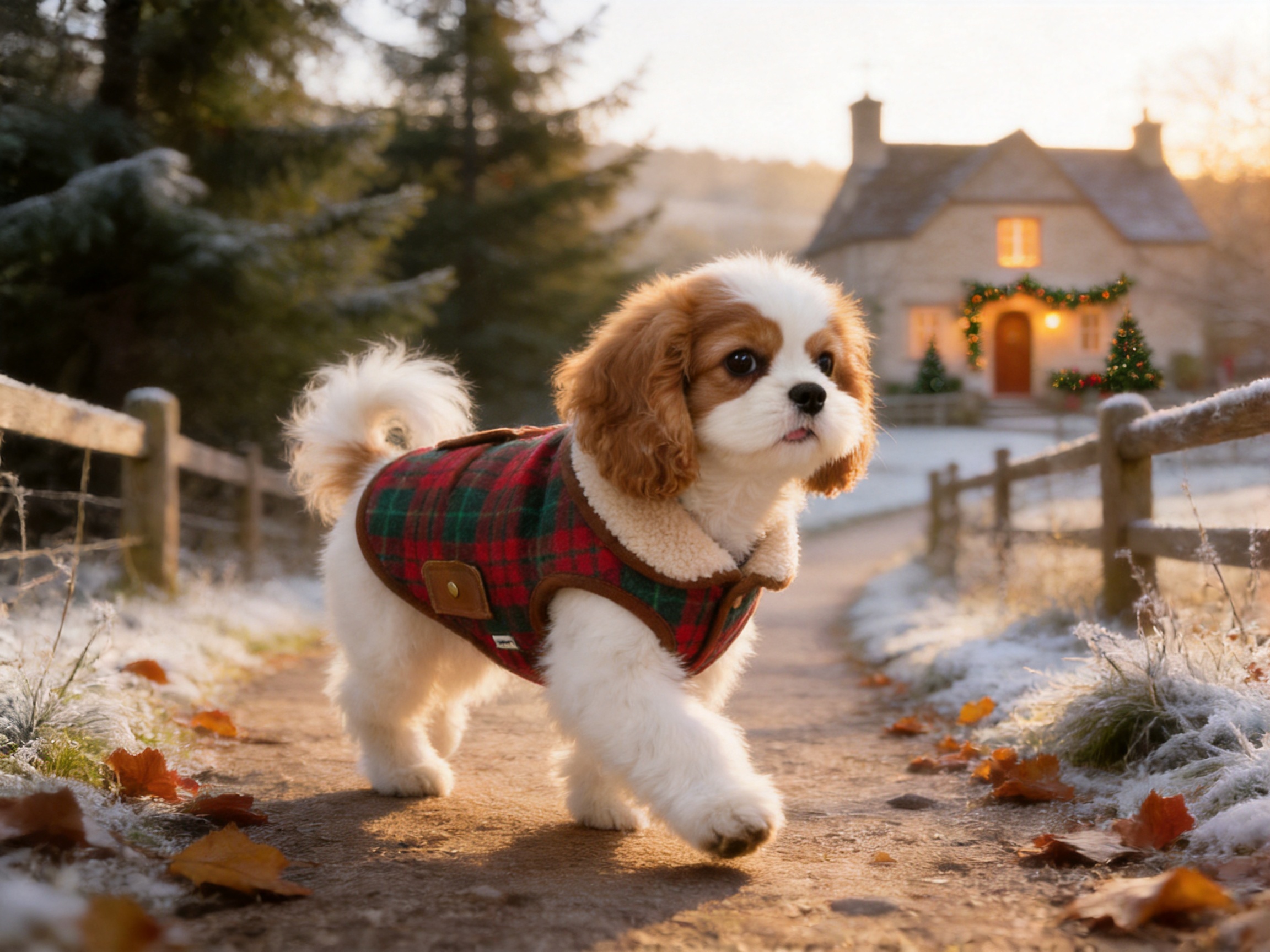
For OEM, ODM, private label, bulk production, customized packaging, or detailed sourcing requirements, buyers may contact Taizhou Feile Pet Products Co., Ltd. at +86-13362661217 or 13362661217@163.com.
Product: Vintage Christmas Plaid Hunting Vest Sherpa-Lined Pet Wear

NEXT:Ruffle Flutter Sleeve Pet Dress: A Refined Princess-Style Collection for Modern Pet Apparel Brands
- Lolita Cake Dress
- Cool Style Tassel Top Pet Lolita Dress
- Sweet Bow Princess Dog Dress
- Denim Pinafore Dress With Pockets Cute Casual Small Dog Outfit
- French Doll-neck Dog Dress Elegant Pet Wear
- Korean Sweet Lolita Dog Dress Cute Party Outfit
- Flutter Sleeve Dog Dress Lightweight Summer Pet Wear
- Ruffle Flutter Sleeve Pet Dress Cute Princess Style
- French Style Embroidered Dog Dress Elegant Pet Apparel
- Mint Green Heart Spaghetti Strap Tulle Dog Dress Princess Party Outfit
- Gingham Bow Dog Dress Cute Summer Pet Outfit
- Navy Star Pleated Dog Dress Elegant Casual Pet Wear
- Summer Sailor Dog Dress Nautical Style Pet Apparel
- Dog Cooling Shirt Color-Block Lightweight Summer Pet Wear
- Dog Printed High-Neck Base Layer Top Thermal Stretch Pet Underwear
- Lightning Racing Performance Sportswear Breathable Athletic Pet Shirt
- Rustic Brown Plaid Dog Shirt Casual Outdoor Pet Wear
- Cream Embroidered Dog Blouse Elegant Pet Shirt
- Korean Style Pink Textured Tulle Camisole Small Dog Fashion Top
- Star & Letter Casual Pet T-Shirt Daily Wear Dog Top
- +86-13362661217
- 13362661217@163.com
- 128 Houxin Street, Hongjia, Jiaojiang, Taizhou, Zhejiang, China
