
 English
 русский
 Español
 عربى


Zhan Shiqin — Customer Service and After-Sales Coordinator
Ruffle Flutter Sleeve Pet Dress: A Refined Princess-Style Collection for Modern Pet Apparel Brands
In the expanding pet apparel market, consumers increasingly expect clothing to provide more than basic coverage. They look for comfort, attractive styling, practical sizing, reliable construction, and an appearance that photographs beautifully. Retailers and pet brands, meanwhile, need products that combine visual appeal with dependable manufacturing, flexible customization, consistent quality, and commercial scalability. The Ruffle Flutter Sleeve Pet Dress is designed to meet these combined requirements through a soft, lightweight construction and a distinctive princess-inspired design.
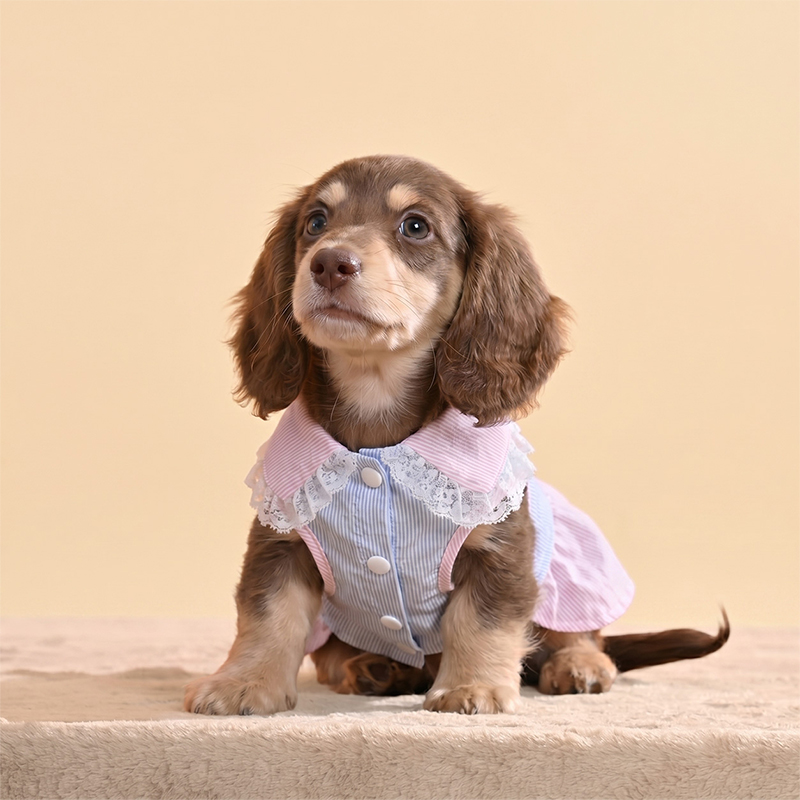
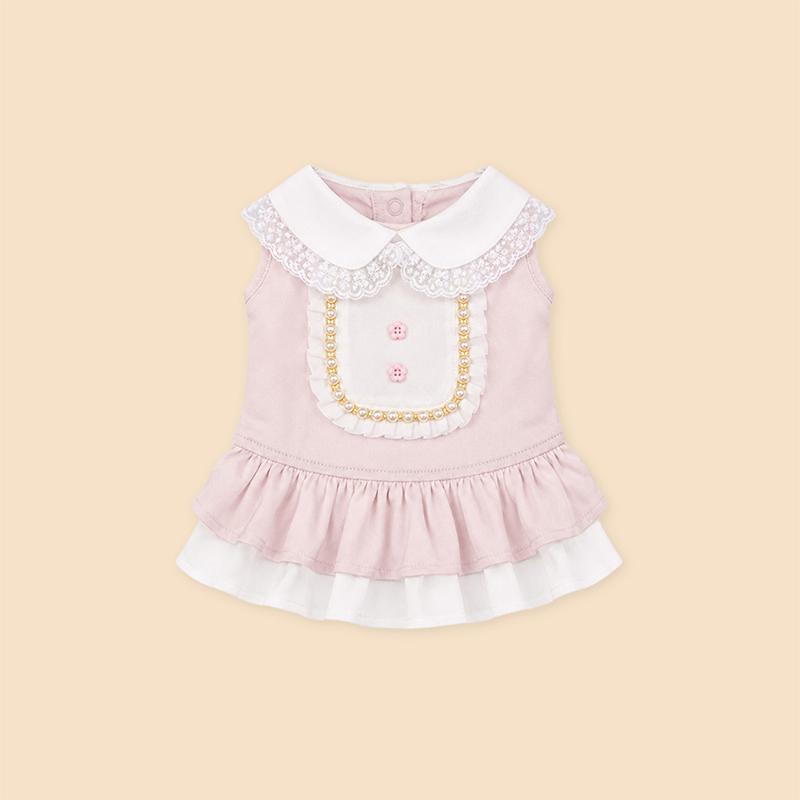
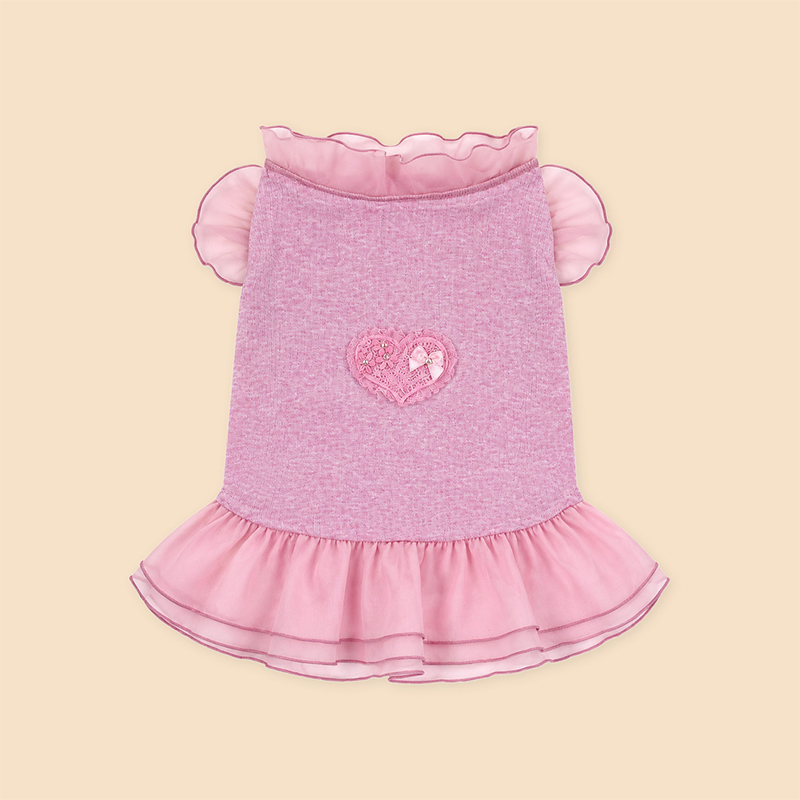
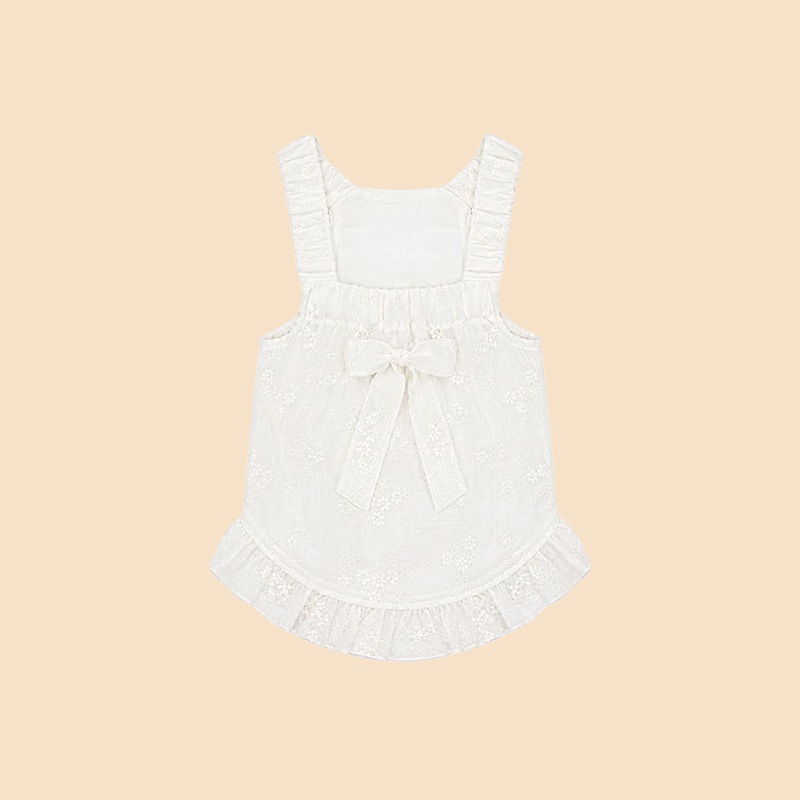
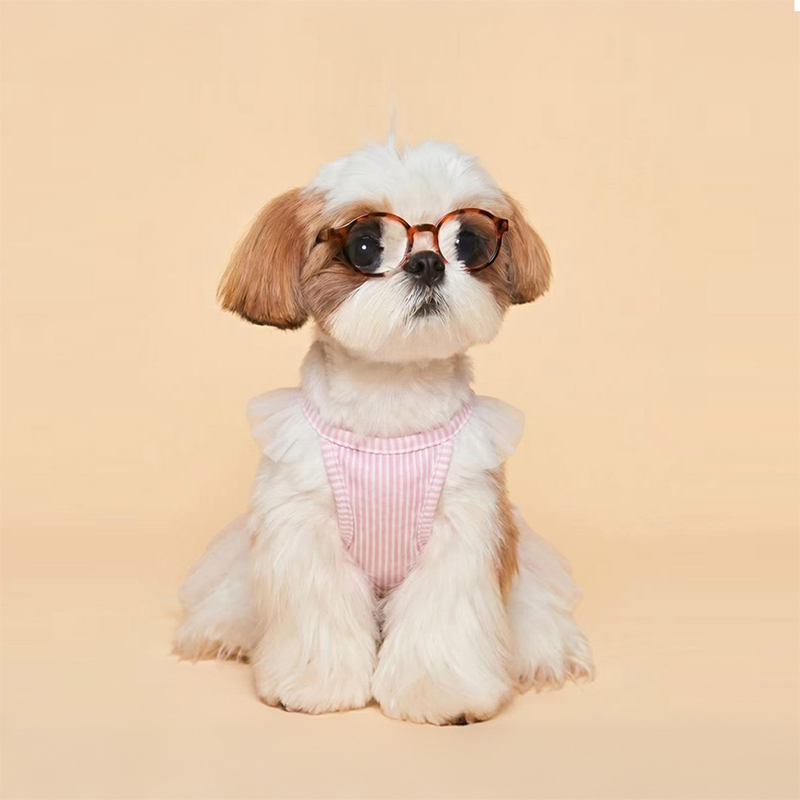
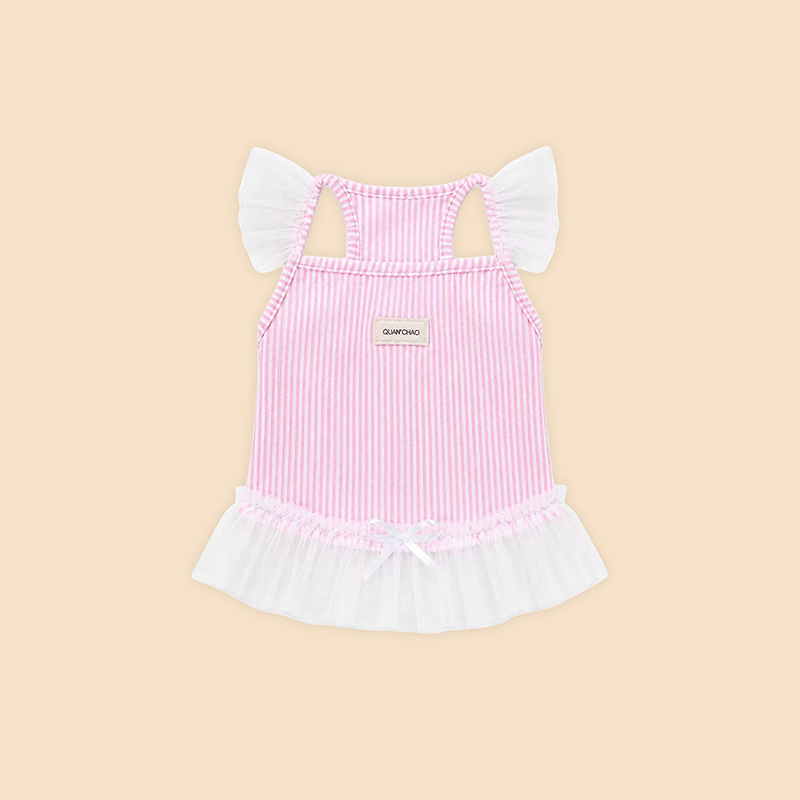
Created for small dogs and cats, this pink pet dress features layered flutter sleeves, a ruffled skirt, and delicate embroidered chest detailing. These elements give the garment a boutique appearance while preserving the relaxed feel required for everyday pet wear. Its spring and summer positioning makes it suitable for warm-weather collections, pet photography, birthdays, holiday occasions, seasonal displays, and fashionable daily outfits.
For wholesalers, distributors, retailers, and private label brands, the dress offers a commercially attractive combination of decorative styling, lightweight comfort, multiple size options, and customization potential. It can serve as a standalone fashion item or as part of a coordinated pet apparel collection developed around princess, romantic, celebration, or seasonal themes.
Product Overview and Market Positioning
The Ruffle Flutter Sleeve Pet Dress is a fashion-oriented garment developed for customers who want a more expressive alternative to plain pet shirts, basic cotton dresses, or undecorated everyday clothing. Its silhouette is feminine and decorative without becoming excessively heavy or restrictive. The layered sleeves create movement around the shoulders, while the ruffled skirt adds volume and visual softness. A small embroidered chest detail provides an additional point of interest and helps the garment appear more carefully designed than standard entry-level pet clothing.
The pink color supports a broad range of retail themes. It can be presented as a princess dress, a birthday outfit, a spring collection item, a photo-shoot accessory, or a special-occasion garment for small pets. Pink also works well in boutique displays because it is immediately recognizable as a soft, playful, and visually friendly color. Brands can use the style in collections aimed at pet parents who enjoy sharing photographs of their animals on social media or who purchase clothing for celebrations and memorable events.
Unlike heavy winter coats or highly structured costumes, this dress is intended for spring and summer use. The lightweight fabric helps reduce the feeling of bulk and supports better comfort during warm-weather wear. The design is appropriate for short periods of daily use, indoor events, outdoor photography, family gatherings, and retail-led seasonal promotions.
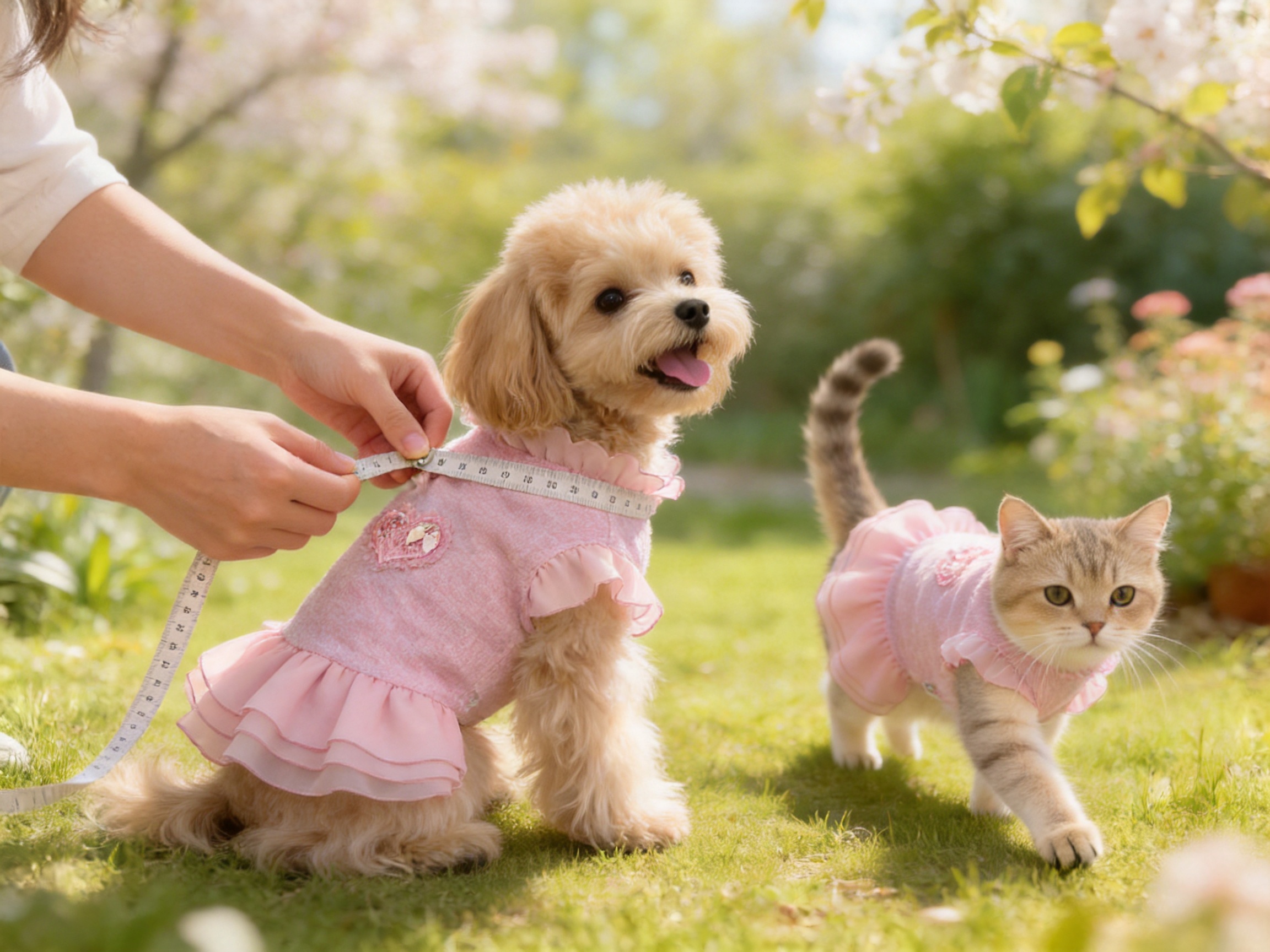
The garment is available in six size options: XS, S, M, L, XL, and XXL. This range gives sellers the opportunity to serve different small-dog body types as well as cats with comparable proportions. Since pet sizing varies significantly between breeds and individual animals, the measurement table should be used as the primary fitting reference rather than relying only on breed names or estimated weight.
Design Features That Create a Stronger Retail Proposition
Layered Flutter Sleeves
The flutter sleeves are one of the most recognizable details of the product. Instead of using a plain sleeveless or short-sleeve construction, the layered fabric creates a gentle, flowing effect around the front shoulders. This gives the dress a more elaborate appearance while allowing the garment to remain lightweight.
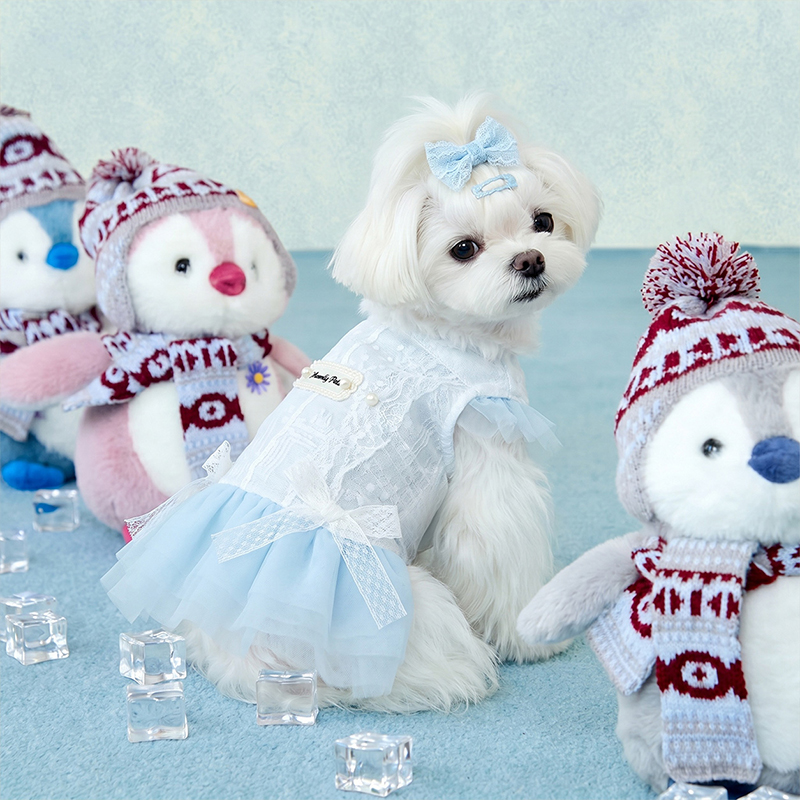
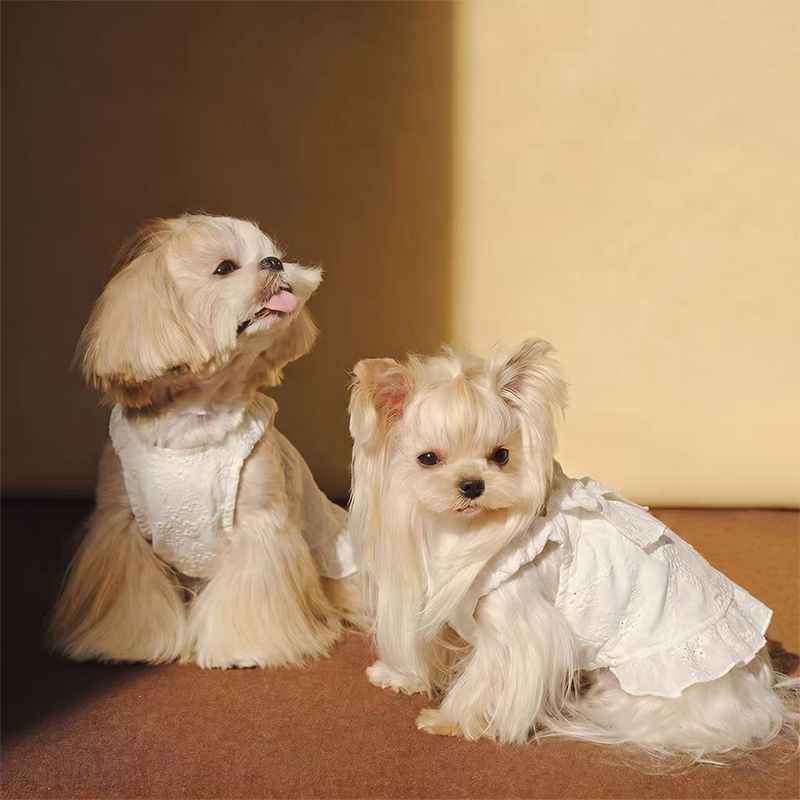
Layered sleeves are especially valuable in pet fashion because they create visual movement in product photographs. When a dog or cat turns, walks, or sits, the sleeve layers can add softness and dimension to the silhouette. This makes the product easier to present in online retail images, seasonal lookbooks, boutique displays, and social media campaigns.
From a product development perspective, the sleeve detail also gives brands a recognizable design feature that can be carried into future colors or coordinated styles. A private label customer may retain the flutter-sleeve structure while changing the color, embroidery, trim, or packaging to create a consistent collection identity.
Ruffled Skirt Construction
The ruffled skirt contributes to the princess-inspired character of the dress. It creates a fuller lower silhouette than a simple straight-cut pet shirt and helps distinguish the item from basic apparel products. The ruffle also provides an attractive edge detail that can be emphasized in close-up product photography.
For retailers, a ruffled skirt gives the garment a clear visual story. It can be marketed as elegant, playful, romantic, festive, or photo-ready depending on the target customer. These different positioning options allow the same basic design to reach multiple sales occasions without requiring a completely new garment structure.
The skirt should remain comfortable and appropriately proportioned for small pets. A successful pet dress must balance decoration with freedom of movement. Excessively stiff or heavy skirt materials may cause discomfort, while a lightweight ruffle can provide the desired visual effect with less impact on mobility.
Embroidered Chest Detail
The embroidered chest detail adds a refined decorative element to the front of the garment. Embroidery can communicate a higher level of product attention than printed decoration alone, particularly when the motif is neat, proportionate, and coordinated with the overall color palette.
Embroidery also creates customization opportunities for brands. Depending on the development plan, a customer may request a brand-related emblem, a small symbol, a seasonal motif, or another decorative graphic. The final embroidery size, thread colors, placement, and stitch density should be reviewed during sampling to ensure that the design remains comfortable and visually balanced.
Soft Pink Colorway
The standard pink colorway is suitable for boutique collections and emotionally driven retail presentation. It complements princess, celebration, spring, and photography themes. Pink is also easy to coordinate with accessories such as bows, collars, harnesses, blankets, gift boxes, and seasonal props.
For customers seeking a more differentiated assortment, custom colors are available. A brand may choose pastel blue, cream, lavender, peach, red, black, or another color based on its market positioning. Custom color development can help private label sellers reduce direct comparison with generic marketplace products and build a more recognizable visual identity.
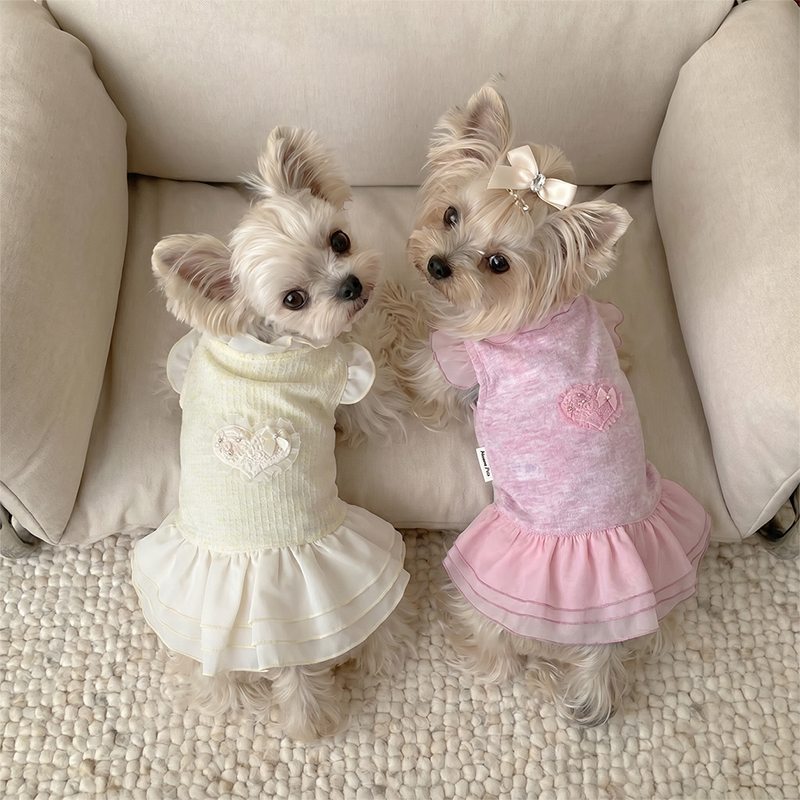
Ruffle Flutter Sleeve Pet Dress Cute Princess Style
Comfort and Practical Wearability
Decorative pet clothing must be comfortable enough for animals to tolerate. The Ruffle Flutter Sleeve Pet Dress addresses this requirement through its lightweight fabric and relaxed fashion-oriented construction. The material is intended to provide breathability for spring and summer use, helping the garment feel less cumbersome than thick or heavily lined alternatives.
Comfort is particularly important for small dogs and cats because they may be sensitive to weight, heat, rough seams, or restrictive openings. A suitable dress should allow the pet to stand, walk, sit, and rest without excessive pulling around the neck, chest, or back. Retailers should advise customers to compare the pet’s actual measurements with the product chart before ordering.
The dress is not positioned as protective outerwear or technical performance clothing. Its primary purpose is fashion, comfort, and seasonal styling. This clear product positioning helps brands communicate accurately with their customers. It is well suited to indoor use, mild weather, supervised outdoor wear, photography, celebrations, and short-term special occasions.
Responsible use also requires basic pet-wear precautions. Owners should check the fit, monitor the animal during initial wear, and remove the garment if the pet shows discomfort or attempts to chew the fabric. Clothing should not interfere with breathing, movement, toileting, or the use of a harness and leash. These considerations are relevant to retailers creating product instructions and customer-service guidelines.
Size Range and Fitting Guidance
The six-size range supports a variety of small pets, but size selection should always be based on measurements. The neck measurement helps determine whether the upper opening will be comfortable. The chest measurement is especially important because it influences movement and overall ease. Back length helps confirm how the dress will sit from the neck area toward the lower body.
| Size | Neck | Chest | Back Length | Approximate Weight |
|---|---|---|---|---|
| XS | 22 cm | 33 cm | Approx. 22 cm | Approx. 3 lbs |
| S | 24 cm | 37 cm | Approx. 25 cm | Approx. 5 lbs |
| M | 30 cm | 44 cm | Approx. 29 cm | Approx. 5–8 lbs |
| L | 33 cm | 48 cm | Approx. 33 cm | Approx. 8–14 lbs |
| XL | 36 cm | 53 cm | Approx. 36 cm | Approx. 14–17 lbs |
| XXL | 40 cm | 58 cm | Approx. 39 cm | Approx. 17–22 lbs |
The measurements are supplied in centimeters, while the approximate weight references are supplied in pounds. Weight is only a general guide because animals with the same weight can have different neck, chest, and back proportions. A compact, broad-chested dog may require a different size from a longer, slimmer dog of similar weight.
For wholesale customers, including a clear size chart in product packaging and online listings can reduce returns and improve buyer confidence. Brands may also request adjustments to the standard grading during development. Custom sizing is available for small, medium, and large dog breeds, subject to sample review and production requirements.
Potential Pattern Adjustments
Private label customers may request loose-fit or slim-fit pattern adjustments. A loose fit can provide additional ease for pets that dislike close-fitting garments or for customers who prefer a more relaxed silhouette. A slim-fit version may create a more tailored appearance for fashion-focused collections.
Pattern changes should be evaluated through physical samples. A change to the chest width may affect the sleeve position, skirt fall, arm movement, and overall balance. Professional pattern development helps ensure that modifications do not create unwanted tension or distort the decorative elements.
Customers may also request seasonal adaptations. Although the current product is designed for spring and summer, the underlying design concept could be developed in alternative fabrics or with additional layers for autumn and winter collections. Such changes require separate technical evaluation because warmth, weight, thickness, and wash performance can significantly alter the garment’s behavior.
Advantages Over Basic and Generic Competitor Products
The pet apparel market includes a wide variety of products, from simple printed shirts to elaborate costumes. The Ruffle Flutter Sleeve Pet Dress occupies a useful middle position: it offers more visual distinction than a basic garment while remaining lighter and more wearable than a heavily decorated costume.
More Distinctive Than Plain Pet Shirts
Basic pet shirts often rely on a single fabric panel, a simple neckline, and a printed graphic. These products may be useful for entry-level price points, but they can be difficult for brands to differentiate. The flutter sleeves, ruffled skirt, and embroidered chest detail give this dress a more complete fashion identity.
For retailers, this difference may support stronger merchandising. The garment can be displayed as a special style rather than as an interchangeable basic. It can be grouped with bows, accessories, gift items, and event-related products to create a higher-value presentation.
Lighter Than Heavy Occasion Costumes
Some formal pet costumes use multiple layers, dense trims, rigid accessories, or thick synthetic materials. These details may look dramatic but can be uncomfortable during extended wear, particularly in warm weather. The lightweight construction of this dress offers a softer alternative for customers who want a decorative appearance without excessive bulk.
This balance can expand the product’s use beyond a single holiday. A heavy costume may be purchased once for a particular event, while a light and attractive dress can be marketed for birthdays, photography, spring outings, family gatherings, and everyday style.
More Suitable for Boutique Presentation
Boutique retailers generally need products with a clear visual identity and a polished appearance. Small details such as layered sleeves, ruffle shaping, and embroidery can make a meaningful difference when the garment is folded, hung, or photographed. The pink princess styling is easy to understand at a glance and can work effectively in curated displays.
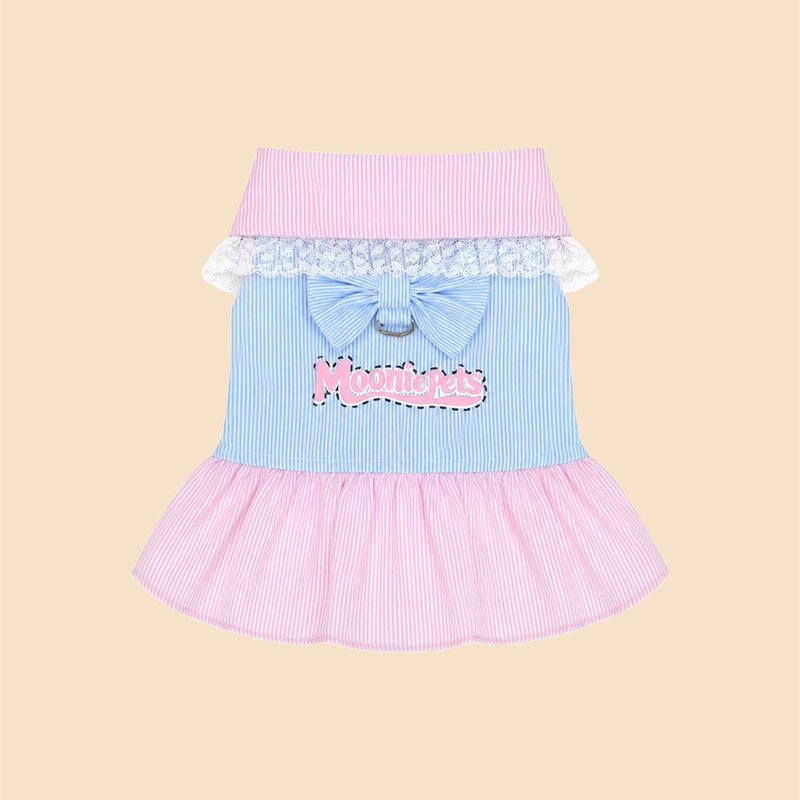
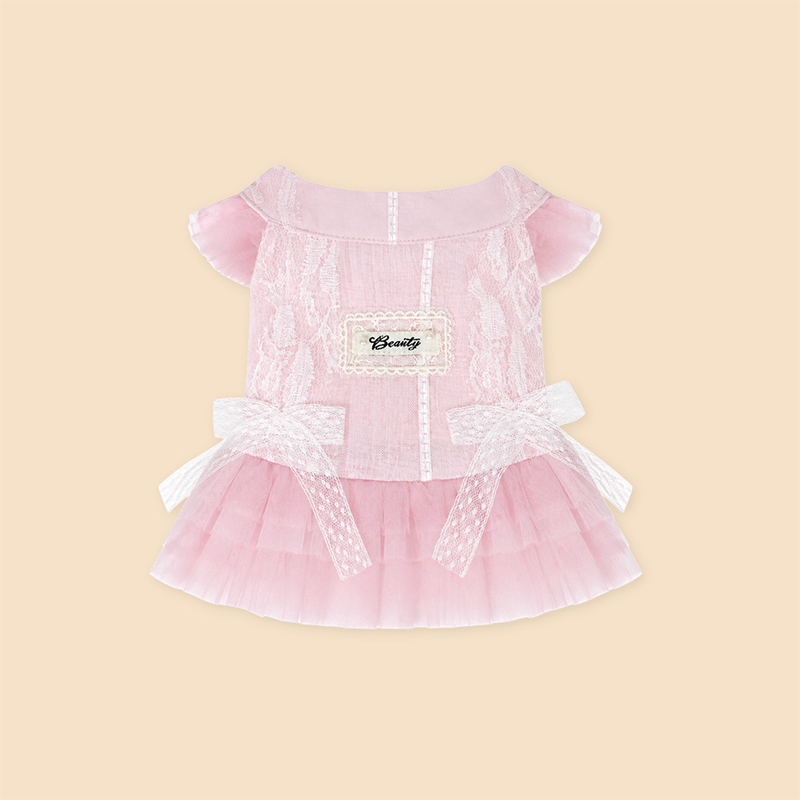
For online sellers, the dress also offers multiple image opportunities. Close-up images can show embroidery and sleeve layering. Full-body pet photographs can demonstrate the silhouette. Flat-lay images can highlight the color and skirt shape. These content possibilities help sellers build a more complete product page.
Flexible for Private Label Development
Generic products are often sold in fixed colors, fixed packaging, and fixed decoration. The supplied customization program allows brands to develop a more individual market offer. Options include custom colors, custom sizing, closure alternatives, logos, printed graphics, woven labels, wash labels, hang tags, and branded packaging.
This flexibility is valuable for businesses that want to launch a coordinated collection rather than purchase a single unbranded item. A brand can use the standard princess style as a starting point and then adjust the visual details to match its own customer base and price segment.
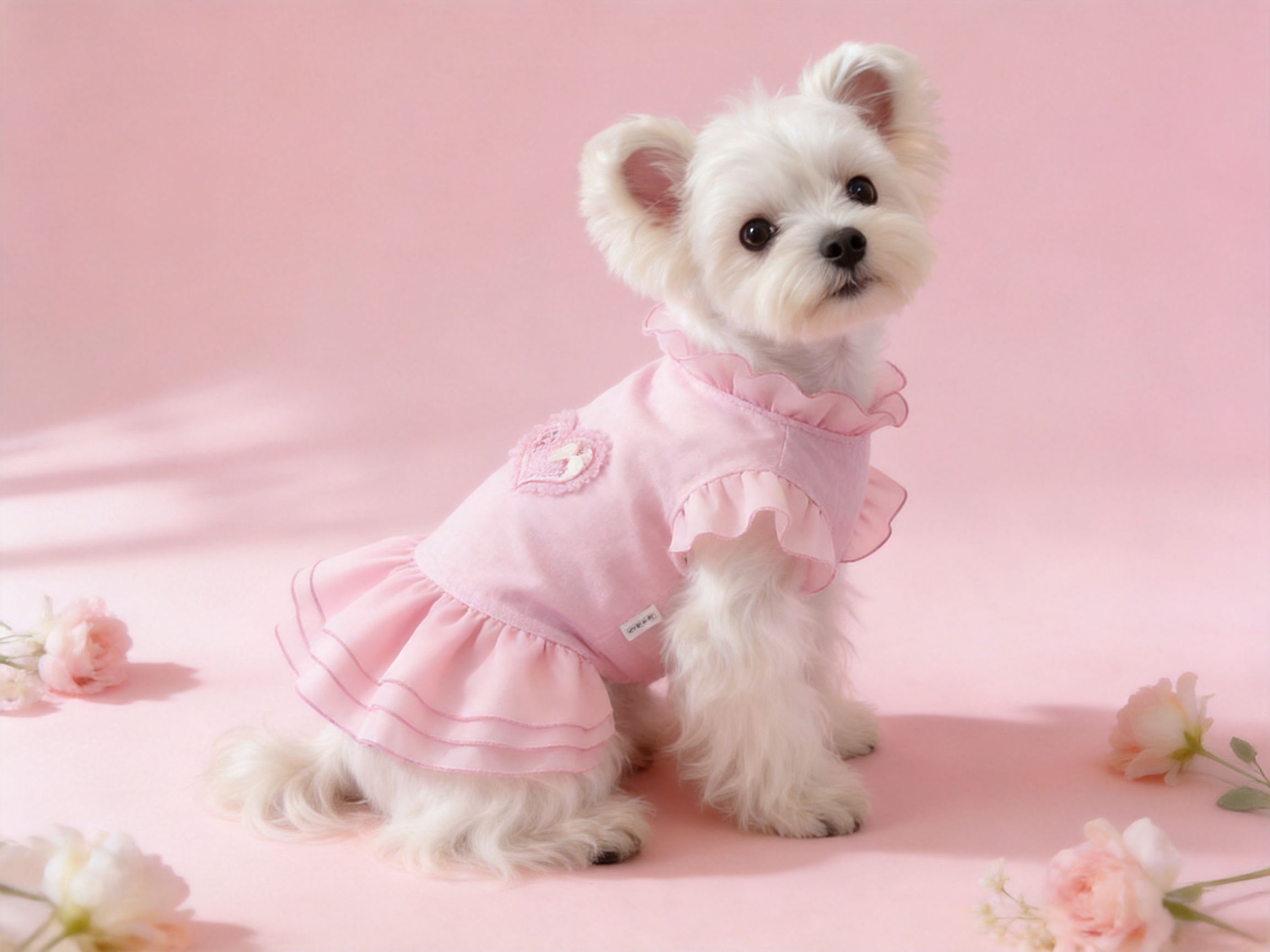
Customization and Private Label Opportunities
OEM and private label services make the product suitable for a range of commercial customers. Wholesalers may order the standard design in volume, while retailers and online brands may request a tailored version with unique labels or packaging. Distributors can also develop market-specific color assortments and size mixes.
Custom Colors
Color development can be used to align the dress with an existing brand palette or seasonal sales plan. A soft lavender variation may support a romantic collection, while cream or champagne may be suitable for premium celebrations. Bright colors can be used for playful summer campaigns, and darker tones may create a more formal autumn interpretation.
Color approval should be based on physical or approved laboratory samples where appropriate. Lighting, fabric composition, dyeing conditions, and screen display can influence how color is perceived. Confirming color standards before bulk production helps minimize variation between the approved sample and the finished order.
Logo and Graphic Applications
Customers may request embroidered logos, silicone logos, rubber patches, or custom graphic printing. The most suitable technique depends on the artwork, placement, quantity, target price, and intended visual effect.
Embroidery works well for small refined symbols and text. Silicone logos or rubber patches can create a modern, tactile appearance. Printing may be appropriate for larger graphics or multicolor artwork. The production team can evaluate the design and recommend a practical application method during development.
Logo placement should consider both visibility and animal comfort. Decorative applications should not be positioned where they may rub against the neck, legs, or sensitive areas. The scale should also remain proportionate to the small garment size.
Labels and Packaging
Custom woven labels, wash labels, premium hang tags, and branded packaging can transform a standard garment into a more complete private label product. Labels communicate ownership, care information, sizing, and brand identity. Hang tags can be used to explain the princess styling, fabric benefits, suggested occasions, and fitting guidance.
Branded packaging is especially useful for online sellers and gift-oriented retailers. A carefully designed package can improve the unboxing experience and make the product more suitable for birthdays, pet showers, adoption gifts, and seasonal campaigns.
Closure Options
Optional zipper or snap-button closure designs are available for customers who require a different dressing experience. Closure selection can affect convenience, fit, production cost, and the garment’s appearance. A zipper may offer a clean fitted look, while snap buttons can support quick dressing and removal.
Any closure change should be tested on representative samples. The selected system must be compatible with the fabric weight and should not create hard edges or pressure points. Brands should also consider whether their target customers prioritize easy dressing, a tailored appearance, or simple maintenance.
Manufacturing Capabilities and Production Strength
The product is manufactured by Taizhou Feile Pet Products Co., Ltd., a professional pet apparel company based in Taizhou, Zhejiang, China. The company integrates design, pattern making, production, quality control, and sales support, allowing customers to manage multiple stages of product development through one manufacturing partner.
The company reports five years of offline manufacturing experience. Its cross-border online division began operations in November 2025, with a focus on providing one-stop OEM and ODM pet apparel solutions to international sellers and brands. This combination of practical factory experience and a dedicated cross-border business structure supports communication with overseas customers seeking a more organized sourcing process.
48 Fully Automatic Sewing Production Lines
The factory is equipped with 48 fully automatic sewing production lines. This production infrastructure provides a strong foundation for handling repeat orders, multiple styles, and larger-volume programs. Automated sewing equipment can help improve process consistency when correctly programmed, maintained, and supported by trained operators and quality personnel.
For a ruffled pet dress, production consistency is important because the product includes multiple visual details. Sleeve layers need to be balanced, skirt gathering should remain even, and embroidery placement must be controlled. A structured production environment helps reduce variation between pieces and supports more reliable bulk manufacturing.
Professional 77-Person Team
The company’s 77-person professional team covers design, pattern making, production, and quality control. This functional structure is important for OEM and ODM customers because product development rarely ends with the first sample. Changes to measurements, materials, trims, labels, and packaging must be communicated across several departments.
A coordinated team can review customer requirements from both a design and manufacturing perspective. Designers can focus on appearance, pattern makers can evaluate fit and construction, production personnel can assess efficiency, and quality-control staff can define inspection points. This cross-functional process can help identify problems before bulk production begins.
Daily Capacity of 3,000 Pieces
The stated daily production capacity is 3,000 pieces. Capacity at this level can support wholesale programs, replenishment orders, and the development of broader seasonal collections. It also gives brands greater flexibility when planning launches around spring and summer retail calendars.
Capacity alone does not determine a successful order. Production scheduling, material availability, sample approval, packaging preparation, and quality inspection must all be coordinated. The stated standard production lead time is 10–15 days after order confirmation and receipt of the deposit, while customized projects may require additional planning depending on their complexity.
More Than 800 Pet Apparel SKUs
The company’s product range covers dog apparel, cat apparel, and small pet apparel, with more than 800 SKUs in total. This breadth can benefit customers that want to build a broader assortment rather than source one isolated product. A buyer may combine princess dresses with other dog garments, cat clothing, seasonal items, or small-pet apparel within one supplier relationship.
The company also reports launching 8–12 new styles weekly. Frequent style development may help brands respond to changing consumer preferences and seasonal opportunities. For customers operating in fast-moving online markets, a supplier with ongoing design activity can provide more options for refreshing product pages and testing new collections.
Quality Control for Decorative Pet Garments
Quality control should address both appearance and function. Decorative products are judged quickly by visual presentation, but wearability and construction determine whether customers remain satisfied after purchase. The Ruffle Flutter Sleeve Pet Dress therefore requires attention to fabric quality, stitching, decoration, sizing, and finishing.
Material and Fabric Inspection
Incoming fabric should be checked for color consistency, surface defects, weight, hand feel, and width. For a pink dress, shade variation between production lots can affect the uniformity of a wholesale order. Fabric inspection also helps identify marks, weaving irregularities, or damage that could become visible after cutting.
The lightweight material should maintain a balance between softness and sufficient structure. If the fabric is too thin or unstable, the ruffle may not hold its shape. If it is too stiff, the dress may lose the soft and comfortable character expected from a spring and summer garment.
Cutting and Pattern Accuracy
Pattern accuracy affects the fit of every subsequent operation. Neck, chest, and back pieces must be cut according to approved specifications. Small garments require careful handling because even minor dimensional differences can affect the final fit.
For custom orders, the approved sample should serve as the reference for grading and construction. Any requested changes to the standard pattern should be documented clearly so that the production team can distinguish between approved modifications and unintended deviations.
Stitching and Seam Inspection
Seams should be checked for secure stitching, clean finishing, and appropriate tension. Loose threads, skipped stitches, open seams, and uneven hems can affect both appearance and durability. Special attention should be given to the sleeve layers and ruffled skirt because these areas contain additional fabric and may require more handling during production.
Seam placement should also support comfort. Areas that contact the pet’s body should be reviewed for rough edges or excessive bulk. Proper trimming and finishing contribute to a more pleasant wearing experience and a more polished retail appearance.
Embroidery and Decoration Inspection
Embroidery should be reviewed for correct position, clean edges, consistent density, and thread security. The design should match the approved artwork in scale and color. Decorative components such as patches, printed graphics, or silicone logos should be firmly attached and tested for surface quality.
Quality staff can use first-piece approval and in-line inspection to identify issues before a large quantity is completed. Final inspection should confirm that the finished products match the approved sample and packaging instructions.
Final Packing Inspection
Before shipment, finished garments should be checked for size labels, care labels, thread trimming, stains, decoration, folding, and packaging accuracy. Carton quantities and assortment details should also be verified. Organized final inspection helps reduce shipment errors and supports smoother receiving for overseas customers.
Order Terms for Wholesale and Brand Customers
The standard minimum order quantity is 500 pieces per order. The single-color minimum order quantity is at least 300 pieces for each color. These quantities are structured for wholesalers, distributors, retailers, and private label customers planning commercial sales rather than one-off purchases.
The standard production lead time is 10–15 days after order confirmation and receipt of the deposit. This timeline applies to standard production conditions and should be confirmed for each order. Customized designs, new patterns, special trims, custom colors, and branded packaging may require additional development and preparation time.
Payment terms are 50% deposit to confirm the order, with the remaining 50% balance due before shipment. This arrangement allows production to begin after commercial confirmation while providing a clear payment milestone before goods leave the factory.
| Order Item | Standard Term | Commercial Consideration |
|---|---|---|
| Minimum order quantity | 500 pieces per order | Suitable for wholesale and private label programs |
| Single-color quantity | At least 300 pieces per color | Useful for planning a focused color assortment |
| Production lead time | 10–15 days after confirmation and deposit | Custom projects may require a separate schedule |
| Initial payment | 50% deposit | Confirms the production order |
| Final payment | 50% before shipment | Completed after production and before dispatch |
Customers planning a seasonal launch should allow time for design selection, sampling, size confirmation, artwork approval, label preparation, packaging development, production, inspection, and transportation. Early planning is particularly important for spring and summer collections because retailers often need inventory before the beginning of the warm-weather selling period.
How Brands Can Merchandise the Dress
Boutique Pet Fashion Collections
The dress can serve as a central style in a boutique collection built around feminine details, soft colors, and small-pet fashion. Retailers may display it alongside bows, decorative collars, matching leads, blankets, and seasonal accessories. The layered sleeves and ruffled skirt create enough visual interest to function as a collection anchor.
Birthday and Celebration Programs
Pet birthdays and family celebrations create opportunities for dress-up apparel. The princess styling is suitable for birthday photography, small gatherings, adoption anniversaries, and gift-oriented promotions. Retailers can pair the garment with birthday accessories or offer it as part of a themed gift set.
Pet Photography and Social Content
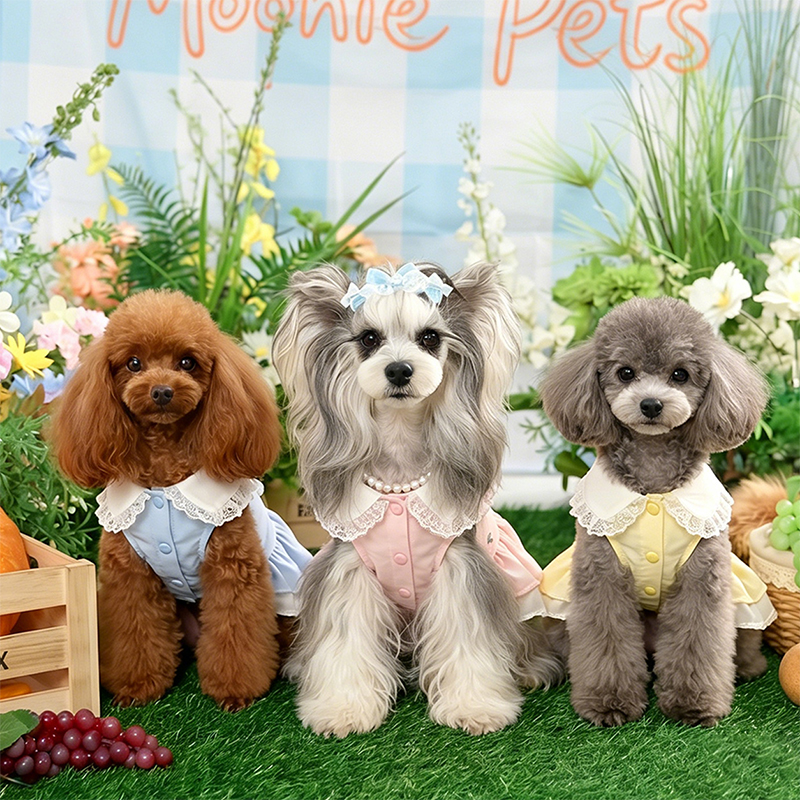
Because the product has a clear silhouette and decorative details, it can be used in pet photography. The soft pink color is easy to coordinate with neutral backgrounds, floral props, pastel settings, and celebration scenes. Online sellers can demonstrate the garment through walking images, sitting portraits, close-ups of the embroidery, and flat-lay photographs.
Seasonal Spring and Summer Displays
The lightweight construction makes the dress appropriate for warm-weather merchandising. Retailers can use window displays, website banners, email campaigns, and social media content to introduce the product as a seasonal fashion item. A coordinated color story can include pink, cream, lavender, and other pastel variations if custom development is selected.
Premium Packaging and Gift Sales
With custom hang tags and branded packaging, the dress can be positioned as a giftable product. Packaging should protect the ruffle and sleeves from excessive crushing while keeping the garment neat for presentation. Care information, size guidance, and brand storytelling can be included to improve the buyer experience.
Recommended Product Content for Retail Listings
A strong product listing should explain both the appearance and the practical use of the dress. The title can emphasize the ruffle, flutter sleeve, princess styling, and pet category. Product descriptions should identify the recommended pet types, available sizes, season, color, and key construction details.
Measurement information should be displayed clearly and should not be replaced by vague labels such as “small” or “medium.” Customers should be encouraged to measure the neck, chest, and back length before ordering. If a pet falls between sizes, the brand should provide a clear recommendation based on the intended fit.
Product imagery should show the full front view, side profile, back length, sleeve construction, chest embroidery, ruffle edge, and packaging where relevant. Images featuring real small dogs or cats can help shoppers understand scale and movement. Brands should avoid presenting the garment as protective technical clothing unless the design has been specifically modified and tested for that purpose.
Care instructions should be finalized according to the actual production materials and decoration. Retailers should use the approved wash label information and explain how to preserve the shape of the ruffles and embroidery. Gentle handling and suitable storage can help the garment remain attractive over repeated use.
Why Work with an OEM and ODM Pet Apparel Factory
Working directly with an experienced pet apparel manufacturer can give brands more control over product development. Instead of choosing only from fixed wholesale listings, customers can discuss measurements, fabrics, colors, decoration, labels, packaging, and seasonal adaptations in one project.
OEM production is useful when a customer already has a design or brand specification and needs a capable factory to manufacture it. ODM development is useful when the customer wants to select, adapt, or expand an existing factory design. The Ruffle Flutter Sleeve Pet Dress can be supplied as a standard product or used as a development foundation for a broader princess-style collection.
The manufacturer’s capabilities in design, pattern making, production, and quality control support this process. A customer can begin with a product concept, review a sample, request changes, approve the final specifications, and proceed to bulk production under defined order terms.
Factory experience is also important when adapting garments for different pet types. Dogs and cats may have different body proportions, movement patterns, and tolerance for clothing. Professional pattern development can help ensure that the final design is not simply scaled mechanically but is considered for the intended animal category.
Company Manufacturing Profile
Taizhou Feile Pet Products Co., Ltd. is headquartered in Taizhou, Zhejiang, China, and focuses on the design, production, and sale of pet apparel. Its product coverage includes dog apparel, cat apparel, and small pet apparel. The company’s reported product range exceeds 800 SKUs, providing customers with access to a broad assortment across multiple pet categories.
The factory’s cross-border online division officially began operating in November 2025. This division is focused on serving global cross-border sellers and brands with one-stop OEM and ODM pet apparel solutions. Such a structure is relevant to international customers that need assistance with product selection, customization, production coordination, and export-oriented order handling.
The company reports five years of offline manufacturing experience, a 77-person professional team, 48 fully automatic sewing production lines, and a daily production capacity of 3,000 pieces. These resources are designed to support stable manufacturing schedules and the development of new styles. The company also reports releasing 8–12 new styles every week, reflecting an emphasis on ongoing product development.
For customers considering a long-term supplier relationship, these capabilities may support more than one seasonal order. A brand can begin with the pink Ruffle Flutter Sleeve Pet Dress, evaluate market response, and then request related styles, colors, patterns, labels, or seasonal versions. This approach can reduce the need to search for a new factory for every product extension.
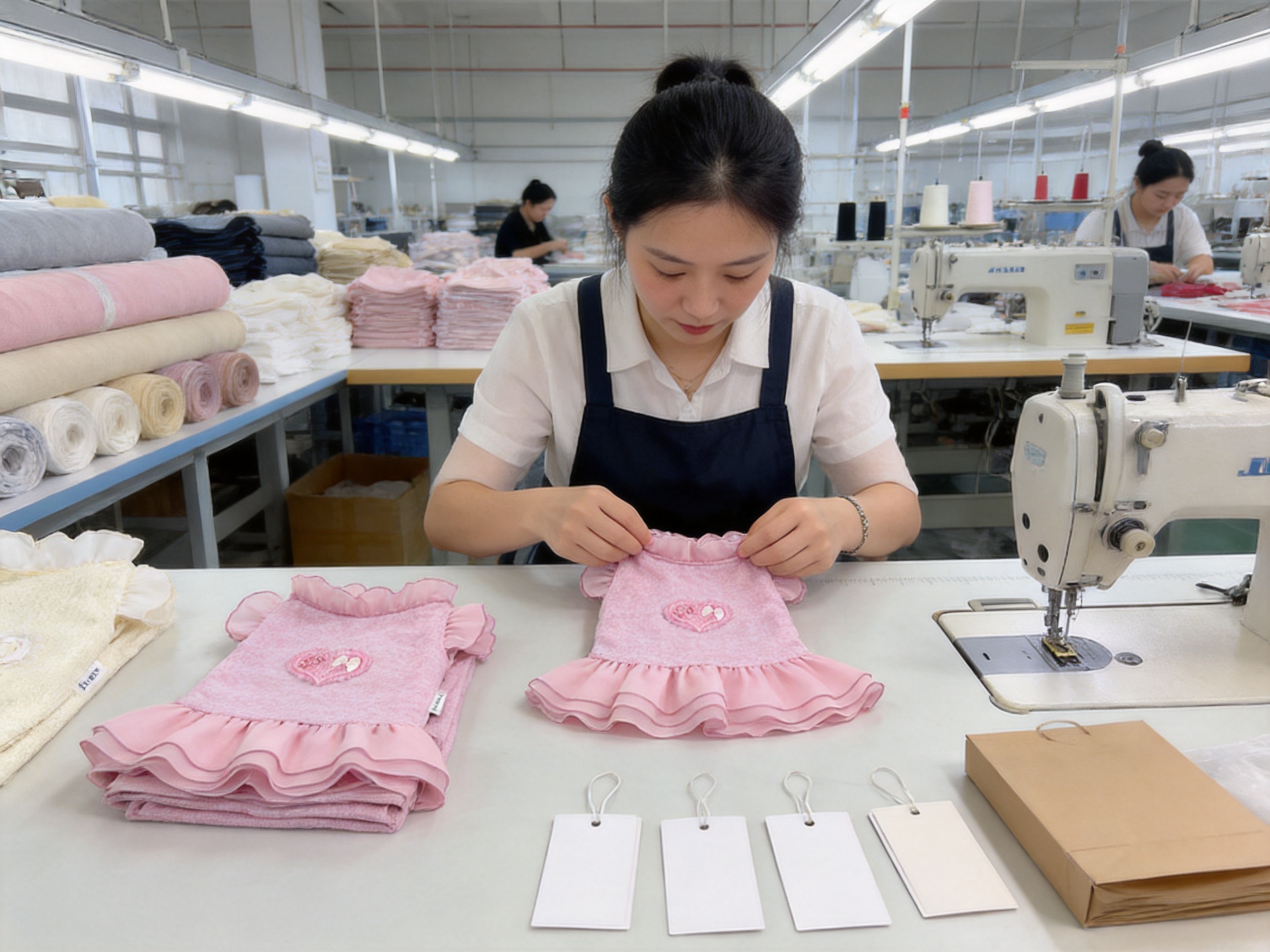
Q&A: Ruffle Flutter Sleeve Pet Dress
What type of pets is this dress designed for?
The dress is designed primarily for small dog breeds and cats. Available sizes range from XS to XXL, but buyers should compare the pet’s neck, chest, and back-length measurements with the size chart before ordering.
Is the dress suitable for warm weather?
Yes. The product is positioned for spring and summer use and features a lightweight, breathable construction intended to provide a more comfortable experience in mild and warm conditions. It is fashion apparel rather than technical heat-protection clothing.
What gives the dress its princess-style appearance?
The princess appearance comes from the layered flutter sleeves, ruffled skirt, soft pink color, and embroidered chest detail. Together, these features create a feminine and decorative silhouette suitable for boutique and occasion-based pet fashion.
Can the standard pink color be changed?
Custom colors are available for suitable OEM and private label orders. The final color selection, minimum quantities, sampling process, and production schedule should be confirmed before bulk production.
Can a brand add its own logo?
Yes. Customization options include embroidered logos, silicone logos, rubber patches, and custom graphic printing. The appropriate method depends on the artwork, placement, quantity, and desired appearance.
Are custom labels and packaging available?
Yes. Customers can request custom woven labels, wash labels, premium hang tags, and branded packaging solutions. These options help create a more complete private label presentation.
Can the fit be modified?
Custom sizing and loose-fit or slim-fit pattern adjustments are available. Customers should review development samples carefully because changes to one measurement may affect sleeve placement, skirt shape, and overall balance.
Are alternative closures available?
Optional zipper or snap-button closure designs can be developed. Closure selection should be confirmed during sampling to ensure that it supports convenient dressing, secure construction, and pet comfort.
What is the minimum order quantity?
The standard minimum order quantity is 500 pieces per order. The single-color minimum is at least 300 pieces for each color. Customized projects may require additional discussion regarding materials, colors, trims, and packaging.
How long does standard production take?
The stated standard production lead time is 10–15 days after order confirmation and receipt of the deposit. Custom designs and private label programs may require a separate schedule based on sampling and material preparation.
What are the payment terms?
The standard payment terms are a 50% deposit to confirm the order and a 50% balance paid before shipment.
Can the dress be included in a larger pet apparel collection?
Yes. The manufacturer offers dog apparel, cat apparel, and small pet apparel, with more than 800 reported SKUs. Customers can discuss coordinated products, seasonal collections, and related private label styles.
What should retailers emphasize when selling the product?
Retailers should emphasize the princess-inspired appearance, flutter sleeves, ruffled skirt, embroidered detail, lightweight spring and summer construction, six-size range, and suitability for small dogs and cats. Clear measurement guidance should be included to help customers select the appropriate size.
Conclusion
The Ruffle Flutter Sleeve Pet Dress combines decorative fashion appeal with the practical requirements of modern pet apparel retail. Its layered flutter sleeves, ruffled skirt, embroidered chest detail, soft pink color, and lightweight fabric create a product that is visually distinctive without relying on excessive bulk. The result is a versatile garment for boutique displays, seasonal collections, pet photography, celebrations, and everyday style for small dogs and cats.
For commercial buyers, the product offers additional value through six available sizes, custom color development, pattern adjustments, closure options, logo applications, branded labels, and packaging services. These features make it suitable not only as a standard wholesale item but also as a foundation for OEM and private label development.
The manufacturer supports the product with a reported 48 fully automatic sewing production lines, a 77-person professional team, a daily capacity of 3,000 pieces, more than 800 pet apparel SKUs, and regular new-style development. Its integrated design, pattern-making, production, and quality-control capabilities can help brands move from product concept to finished collection with greater coordination.
As pet owners continue to treat animals as family members and seek attractive products for both daily life and special occasions, fashion-focused garments such as this princess-style dress have strong collection potential. With appropriate sizing, careful quality control, responsible pet-wear guidance, and suitable private label development, the product can help wholesalers, distributors, retailers, and online brands create a more compelling small-pet apparel assortment.
References
1. Product specification materials for the Ruffle Flutter Sleeve Pet Dress Cute Princess Style, including design features, size information, customization options, and order terms.
2. Manufacturer-provided company information for Taizhou Feile Pet Products Co., Ltd., including factory capabilities, team structure, production lines, product categories, and reported production capacity.
3. Manufacturer-provided OEM and ODM service information covering custom sizing, closures, embroidery, labels, hang tags, packaging, and seasonal collection development.
4. Manufacturer-provided pet apparel size chart for XS, S, M, L, XL, and XXL garments.
5. General apparel product-development principles relating to garment fit, pattern grading, decorative construction, quality inspection, labeling, and wholesale production planning.
Product: Ruffle Flutter Sleeve Pet Dress Cute Princess Style

NEXT:Fresh Preppy Plaid and Denim Dog Outfit Set: A Flexible Two-Piece Solution for Modern Petwear Collections
- Lolita Cake Dress
- Cool Style Tassel Top Pet Lolita Dress
- Sweet Bow Princess Dog Dress
- Denim Pinafore Dress With Pockets Cute Casual Small Dog Outfit
- French Doll-neck Dog Dress Elegant Pet Wear
- Korean Sweet Lolita Dog Dress Cute Party Outfit
- Flutter Sleeve Dog Dress Lightweight Summer Pet Wear
- Ruffle Flutter Sleeve Pet Dress Cute Princess Style
- French Style Embroidered Dog Dress Elegant Pet Apparel
- Mint Green Heart Spaghetti Strap Tulle Dog Dress Princess Party Outfit
- Gingham Bow Dog Dress Cute Summer Pet Outfit
- Navy Star Pleated Dog Dress Elegant Casual Pet Wear
- Summer Sailor Dog Dress Nautical Style Pet Apparel
- Dog Cooling Shirt Color-Block Lightweight Summer Pet Wear
- Dog Printed High-Neck Base Layer Top Thermal Stretch Pet Underwear
- Lightning Racing Performance Sportswear Breathable Athletic Pet Shirt
- Rustic Brown Plaid Dog Shirt Casual Outdoor Pet Wear
- Cream Embroidered Dog Blouse Elegant Pet Shirt
- Korean Style Pink Textured Tulle Camisole Small Dog Fashion Top
- Star & Letter Casual Pet T-Shirt Daily Wear Dog Top
- +86-13362661217
- 13362661217@163.com
- 128 Houxin Street, Hongjia, Jiaojiang, Taizhou, Zhejiang, China
