
 English
 русский
 Español
 عربى


Lin Ruoqi — International Pet Apparel Sales Manager
Waffle Knit Light Outdoor Dog Sweatshirt: A Structured, Customizable Solution for Modern Pet Apparel Collections
Waffle Knit Light Outdoor Dog Sweatshirt
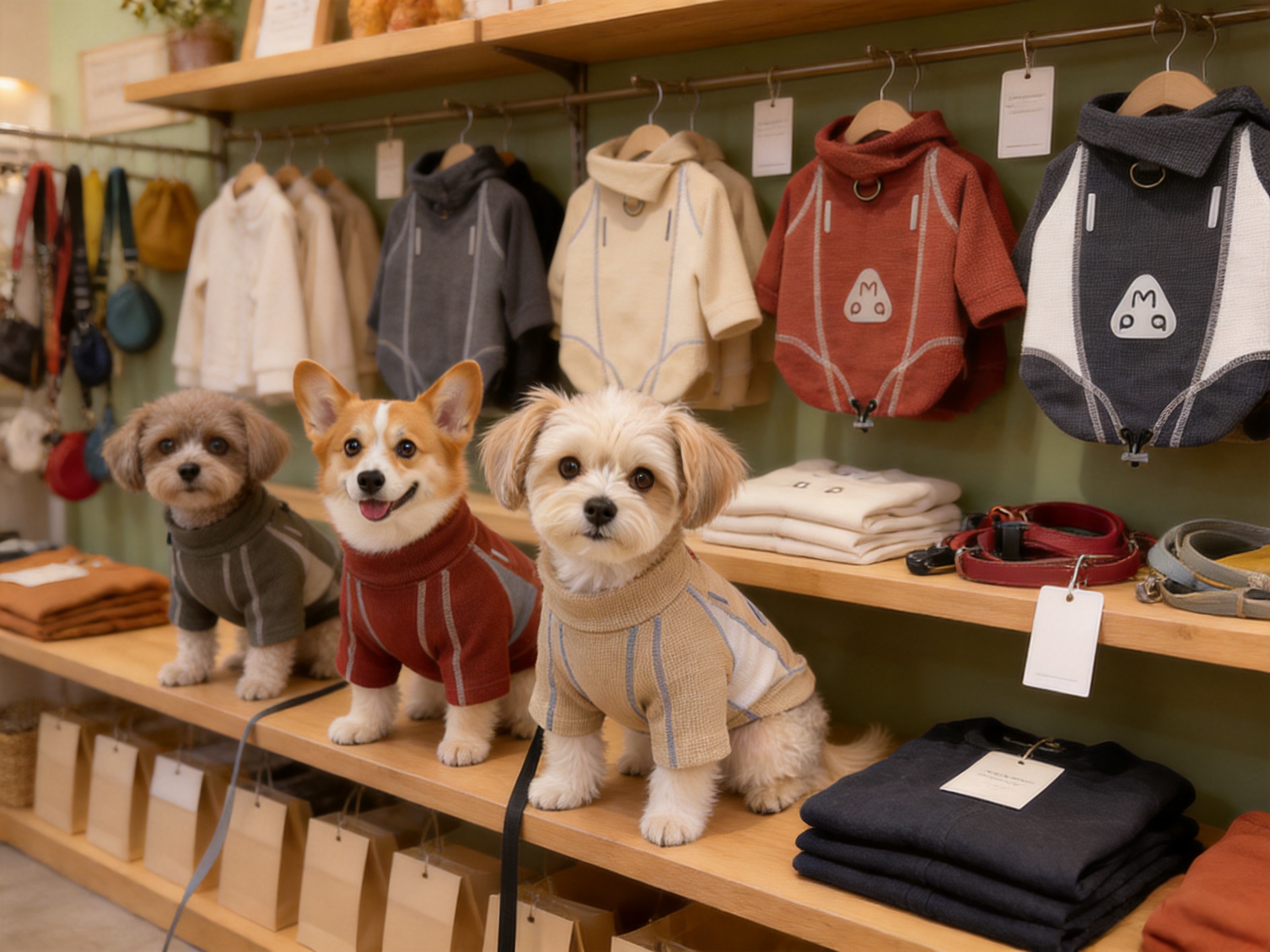
The Waffle Knit Light Outdoor Dog Sweatshirt is designed for pet apparel buyers who want more than a basic pullover. It combines a recognizable waffle knit surface with a half-high-neck silhouette, chest harness-inspired lines, side-panel construction, and an adjustable hem. Together, these details create a practical-looking garment with a casual sports and light outdoor character.
For retailers, wholesalers, private-label businesses, and pet apparel brands, the product offers a balanced option between everyday dog clothing and more technical outdoor-inspired garments. It is not positioned as heavy protective equipment or specialized performance clothing. Instead, its value comes from its construction language, visual identity, adaptable styling, and suitability for autumn and winter collections.
The sweatshirt is developed for small and medium dog breeds and is available in six sizes from XS to XXL. Its design can be produced in customized colorways, with additional options for fabric selection, panel combinations, decorative lines, labels, packaging, and selected structural details. This makes it suitable for businesses building coordinated collections rather than purchasing isolated stock items.
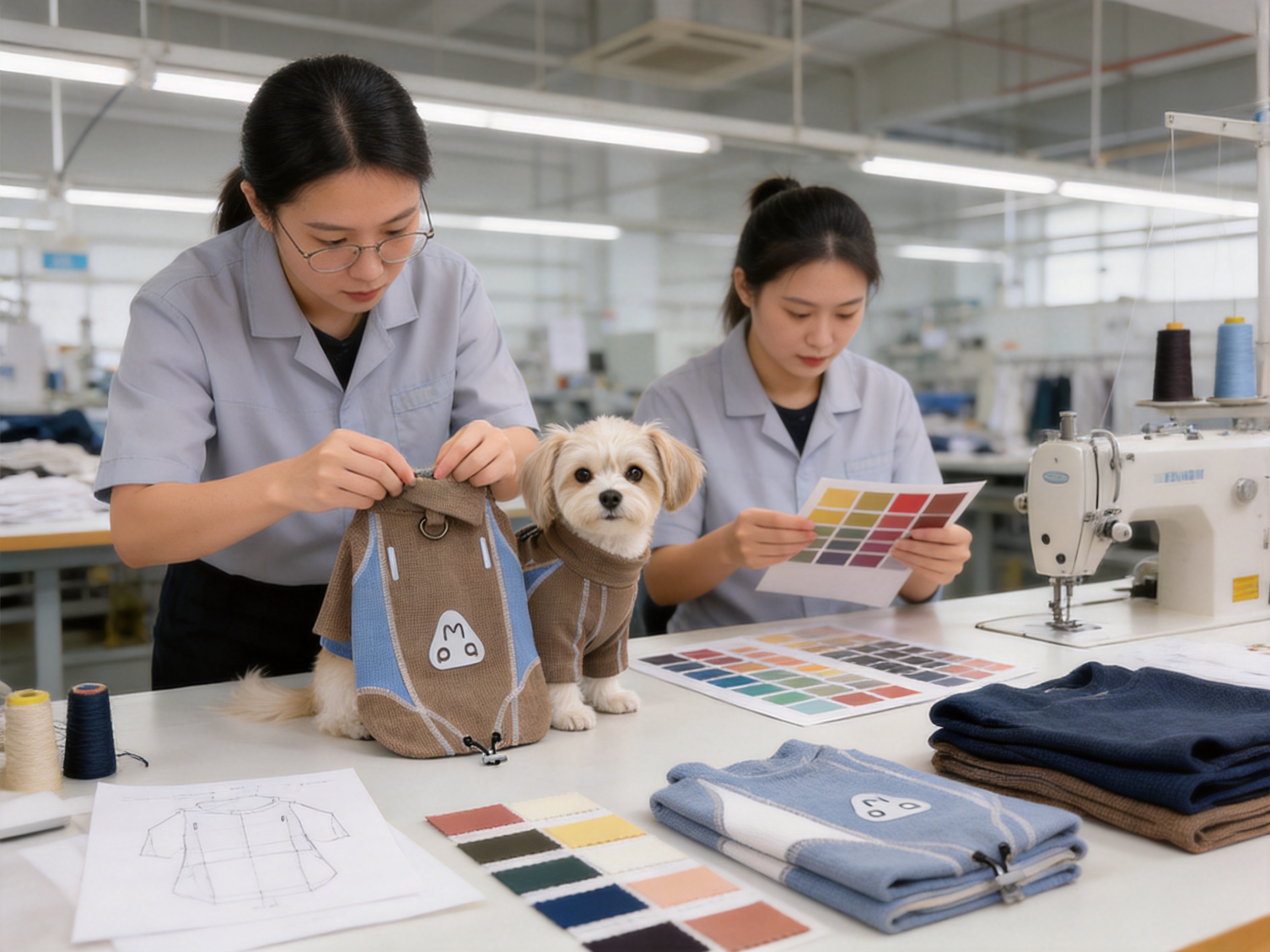
Behind the product is a manufacturing operation with experience in design, pattern making, sewing, quality control, and international order fulfillment. The factory operates 48 fully automatic sewing production lines and has a professional team of 77 employees. Its stated daily production capacity reaches approximately 3,000 pieces, supporting both recurring wholesale programs and seasonal product launches.
Product Overview and Market Positioning
The Waffle Knit Light Outdoor Dog Sweatshirt occupies a useful position within the growing dog clothing market. At one end of the market are simple cotton or fleece pullovers with minimal visual differentiation. At the other end are highly technical coats, rainwear, insulated jackets, and specialized outdoor products. This sweatshirt sits between these categories.
Its primary purpose is everyday pet apparel with an outdoor-inspired appearance. The design can be used for urban walks, casual outings, autumn merchandising, winter lifestyle photography, and coordinated owner-and-pet fashion concepts. It gives retailers a stronger visual story than a plain sweatshirt without requiring the product to carry complex technical claims.
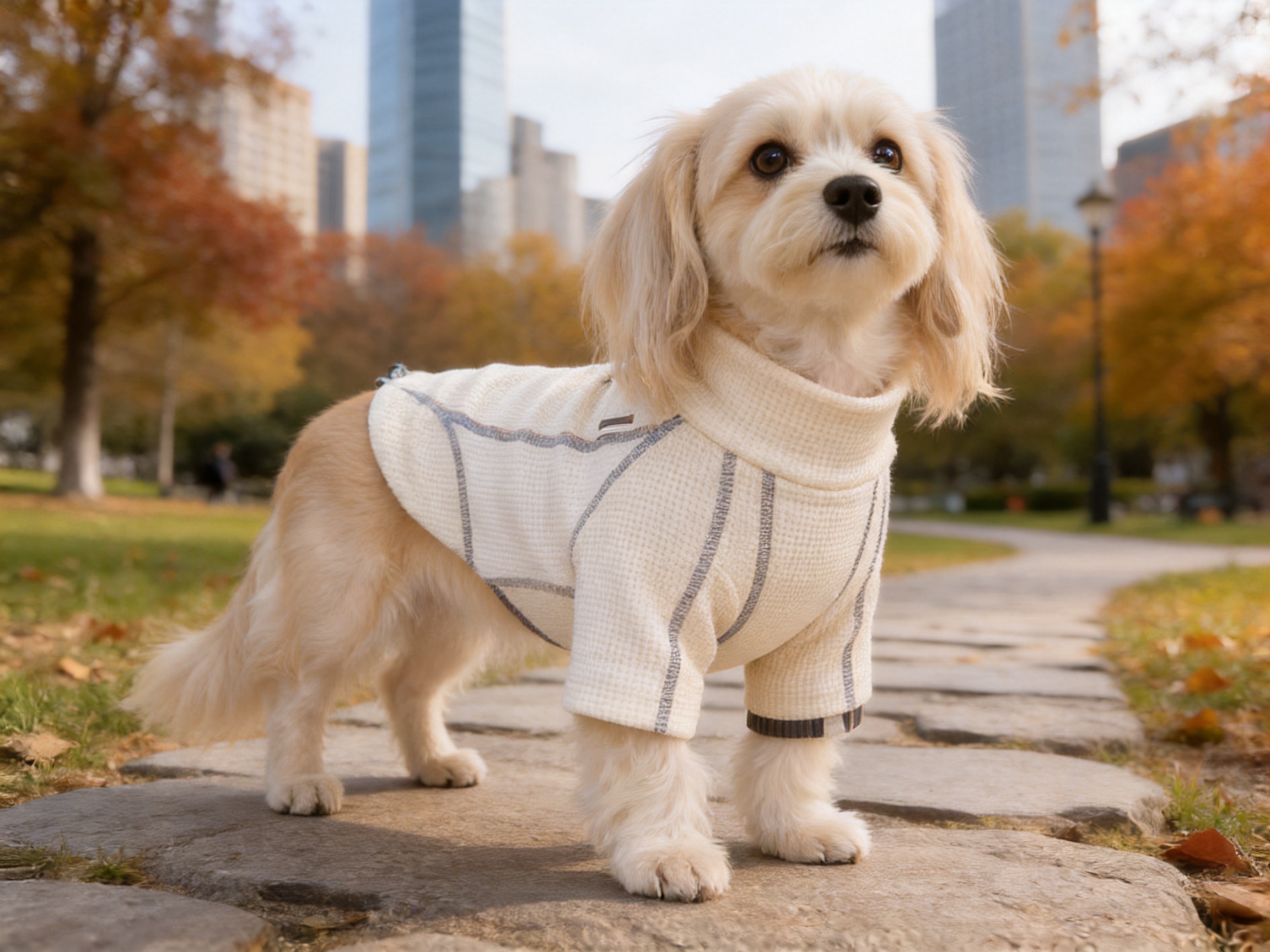
The waffle knit fabric adds texture and depth to the garment surface. This is important in product photography and online retail presentation, where texture can help a garment stand apart from flat basic styles. The raised knit structure also gives the sweatshirt a more substantial visual impression than a smooth, undecorated pullover.
The half-high-neck construction introduces a more defined neckline. Compared with a standard crewneck, it creates a slightly more protective and structured appearance while maintaining the familiar convenience of a pullover. The chest lines and side panels reinforce the outdoor direction without making the sweatshirt look excessively tactical or complicated.
This balance gives the product broad merchandising potential. It can be displayed in a casual dogwear section, an autumn collection, an urban outdoor range, or a utility-inspired pet apparel assortment. Retailers can position it as a fashionable everyday layer rather than limiting it to one narrow usage scenario.
Key Design Features
Waffle Knit Surface
The defining material feature is the waffle knit texture. Its grid-like surface creates a dimensional appearance that can improve the perceived design value of the garment. In a competitive pet apparel market, surface texture helps differentiate one product from smooth jersey pullovers and basic fleece items.
The waffle knit structure also provides opportunities for varied color presentation. Solid colors can emphasize the texture, while contrasting panels or trim can make the construction details more visible. For private-label customers, the fabric can become part of a recognizable seasonal identity across multiple colorways.
From a merchandising perspective, waffle knit is especially appropriate for autumn and winter collections. It visually communicates comfort, casual layering, and seasonal styling without requiring a bulky winter coat silhouette. It can therefore fill the space between lightweight indoor clothing and heavier outdoor protection.
Half-High-Neck Pullover Construction
The half-high-neck design gives the garment a more structured upper body. It visually extends the neckline and creates a stronger relationship between the collar, chest, and shoulder areas. This makes the sweatshirt appear more deliberate and developed than a basic one-piece pullover.
The neckline also supports the light outdoor aesthetic. It suggests additional coverage and a more active design direction while keeping the garment easy to understand for consumers. The pullover format remains familiar to pet owners, which can reduce the visual complexity often associated with more specialized dog jackets.
For product developers, the half-high-neck structure creates another area for customization. Brands may explore different collar colors, contrast binding, woven labels, embroidered marks, or coordinated seasonal palettes. These options allow the same basic silhouette to serve multiple brand identities.
Chest Harness-Inspired Lines
Decorative chest lines are a central part of the sweatshirt’s utility-inspired appearance. They introduce visual organization across the front of the garment and create the impression of layered construction. These lines are inspired by harness styling, but the product itself should be understood as a sweatshirt rather than a substitute for a safety harness or walking restraint.
This distinction is useful for responsible product marketing. The lines provide a functional-looking design language without requiring the sweatshirt to make unsupported claims about load-bearing performance, restraint safety, or technical protection. Their role is primarily visual and structural within the garment’s fashion concept.
For competing products that rely mainly on printed graphics, sewn or integrated line details can create a more dimensional appearance. The chest area becomes a key design feature, giving online images and retail displays a stronger point of interest.
Side-Panel Construction
The side panels add segmentation to the body. This helps break up the visual mass of the sweatshirt and supports a more athletic silhouette. Side-panel color blocking can also be used to create different versions of the same style for separate collections or customer groups.
From a manufacturing perspective, panel construction requires accurate cutting, alignment, sewing, and inspection. When properly controlled, it provides a clean, organized appearance. It also gives OEM and ODM customers more flexibility than a single-color tubular or minimally constructed garment.
Brands may use tonal panels for a refined look, contrasting panels for a sportier appearance, or seasonal combinations for limited collections. This flexibility can help retailers build depth within a product range while maintaining a consistent base silhouette.
Adjustable Hem
The adjustable hem gives the lower edge a more refined and adaptable appearance. It allows the silhouette to be visually tightened or relaxed depending on the intended styling. This is particularly helpful for retailers who want to present the garment as more considered than a standard loose sweatshirt.
Because dogs have different body shapes, an adjustable lower silhouette can also be useful during styling and fitting. However, the product should still be selected according to the dog’s measured neck, chest, and back dimensions. An adjustable hem does not replace the need for accurate size selection.
Advantages Compared with Basic Dog Sweatshirts
Many dog sweatshirts compete primarily through color, printed graphics, or low price. These approaches can be effective, but they may make it difficult for a retailer to establish a distinctive seasonal collection. The Waffle Knit Light Outdoor Dog Sweatshirt provides several additional points of differentiation.
First, its texture creates immediate visual interest. A waffle knit surface photographs differently from smooth fabric and can make product images appear more dimensional. This can be valuable in online catalogs, marketplace listings, social media campaigns, and collection lookbooks.
Second, the product has a recognizable construction story. The half-high neck, chest lines, side panels, and adjustable hem work together as a coherent design system. Instead of relying on one isolated decoration, the sweatshirt communicates its outdoor character through several connected details.
Third, the style can be marketed across multiple retail environments. A basic sweatshirt may fit only within a general dog clothing category. This product can be presented in casual apparel, outdoor-inspired clothing, urban pet fashion, seasonal gifts, or private-label lifestyle collections.
Fourth, the product supports customization at several levels. Buyers can modify colors, fabric selection, panel combinations, logos, labels, tags, and packaging. This gives businesses the opportunity to create a product that supports their own brand rather than simply reselling a generic garment.
Finally, the design avoids excessive technical positioning. Some outdoor pet products depend on claims such as waterproofing, insulation ratings, or extreme-weather performance. This sweatshirt takes a more practical fashion approach, allowing buyers to sell it as a comfortable-looking seasonal layer without creating expectations that belong to specialized protective equipment.
Advantages Compared with Heavier Outdoor Dogwear
Heavier dog coats and technical jackets have an important place in the market, but they are not suitable for every customer or every occasion. They may be more expensive to produce, more complicated to put on, and less appropriate for indoor use or mild seasonal weather.
The Waffle Knit Light Outdoor Dog Sweatshirt offers a lighter visual and product concept. Its pullover construction is easy for consumers to understand, and its styling can transition between indoor settings, urban walks, casual photography, and everyday outings.
For retailers, the sweatshirt can complement heavier outerwear rather than compete with it directly. A collection may include insulated coats for colder conditions, rain shells for wet weather, fleece layers for warmth, and this waffle knit sweatshirt for casual seasonal styling. Such a product mix gives customers more choices and creates opportunities for cross-selling.
The sweatshirt also has a less specialized appearance than technical outdoor gear. Some pet owners prefer clothing that looks fashionable and comfortable rather than heavily engineered. The product responds to this preference through texture, proportion, and decorative construction.
Size Range and Fit Considerations
The product is offered in XS, S, M, L, XL, and XXL. The size range is intended for small and medium dog breeds, with approximate size guidance based on neck, chest, back length, and dog weight. Because dog body shapes vary significantly between breeds, measurements should be treated as a starting point rather than an absolute guarantee.
| Size | Neck | Chest | Approximate Back Length | Suggested Dog Weight |
|---|---|---|---|---|
| XS | 22 cm | 33 cm | Approximately 22 cm | Approximately 3 lb |
| S | 24 cm | 37 cm | Approximately 25 cm | Approximately 5 lb |
| M | 30 cm | 44 cm | Approximately 29 cm | Approximately 5–8 lb |
| L | 33 cm | 48 cm | Approximately 33 cm | Approximately 8–14 lb |
| XL | 36 cm | 53 cm | Approximately 36 cm | Approximately 14–17 lb |
| XXL | 40 cm | 58 cm | Approximately 39 cm | Approximately 17–22 lb |
Retailers should advise customers to measure the dog while standing naturally. The chest should generally be measured around the fullest part of the rib cage, while the neck should be measured around the area where the garment collar will sit. Back length should be measured from the base of the neck to the desired lower body point.
Weight guidance can help shoppers make an initial selection, but it should not replace body measurements. A compact, muscular dog and a long-bodied dog may have similar weights but require different sizes. Providing both the measurement chart and fitting guidance can reduce avoidable returns.
For OEM customers, size grading can be discussed during product development. The standard range covers six sizes, but private-label programs may request adjustments to proportions, measurement increments, or target breed groups. Any change should be confirmed through sampling and fit evaluation before bulk production.
Material and Seasonal Suitability
The specified material is waffle knit fabric. Its main contribution is texture, visual depth, and a seasonal appearance. It supports the product’s casual autumn and winter positioning while keeping the silhouette closer to a sweatshirt than to a heavy coat.
Material selection is important because fabric hand feel, stretch, weight, recovery, and surface appearance can influence the final fit. During OEM or ODM development, buyers can discuss available waffle knit options and determine which version best matches the intended price point and market positioning.
The product is suitable for mild to moderate everyday seasonal use according to the planned apparel concept. It should not be promoted as waterproof, windproof, insulated, flame-resistant, or suitable for extreme weather unless those characteristics are separately developed, tested, and documented.
This careful positioning is an advantage for professional buyers. Clear product communication helps retailers align customer expectations with the actual garment. It also allows the sweatshirt to occupy a reliable role within a broader collection of dog clothing products.
OEM and ODM Customization Opportunities
The Waffle Knit Light Outdoor Dog Sweatshirt is designed as a foundation for private-label and collection-based development. Customization can begin with fabric selection and extend through color, panel design, decoration, sizing, labeling, and packaging.
Color and Panel Customization
Color is one of the simplest ways to adapt the sweatshirt to a brand identity. Buyers can request custom garment colors, side-panel combinations, collar treatments, and decorative line colors. Tonal combinations may support a premium or minimalist concept, while contrasting colors can reinforce a sportier retail direction.
Seasonal color planning can also make the style more commercially flexible. Neutral colors may support core inventory, while limited seasonal shades can be introduced for autumn launches, holiday campaigns, or special capsule collections.
Branding and Decoration
Branding options include embroidered logos, printed graphics, silicone or rubber logo applications, custom woven labels, wash labels, hang tags, and branded packaging. The most suitable method depends on the logo complexity, placement, target price, desired visual effect, and production schedule.
Embroidery can provide a traditional textile finish, while printed graphics allow more detailed artwork and larger decorative areas. Silicone or rubber applications may complement the utility-inspired design language. Woven labels and hang tags support brand storytelling and can provide care, sizing, and product information.
Structural Development
Selected structural details can also be discussed during development. These may include panel proportions, decorative line placement, hem treatment, collar details, and size grading. Not every requested change will have the same production implications, so buyers should confirm feasibility through technical review and sampling.
Sample development is especially important when a buyer wants to modify the balance between fashion styling and everyday wearability. A sample allows the customer to review the fabric, construction, logo placement, color relationship, and fit before confirming bulk quantities.
Packaging Development
The product can be supplied in standard export packaging or customized retail packaging. Customized packaging may include branded polybags, cartons, hang tags, inserts, product cards, and coordinated collection presentation.
Packaging is particularly important for online sellers and boutique retailers. A coherent package can reinforce the product’s seasonal identity and help communicate sizing, care instructions, material information, and brand positioning to the end customer.
Manufacturing Capabilities and Production Strengths
The manufacturer is a professional pet apparel company integrating design, production, and sales. Its operations are based in Taizhou, Zhejiang, a region with established garment and manufacturing activity. The company reports five years of offline manufacturing experience and began operating its cross-border online division in November 2025.
This combination of factory experience and newer cross-border service development is relevant to international buyers. Experienced production processes can support practical communication about patterns, sewing, materials, and quality control, while the online division is positioned to serve global sellers and brands seeking more direct OEM and ODM cooperation.
Automatic Sewing Production Lines
The factory is equipped with 48 fully automatic sewing production lines. Production-line capacity can provide several benefits when managed effectively, including improved process organization, repeatability, and support for larger order volumes.
Automatic or semi-automated equipment does not eliminate the importance of skilled personnel. Pet apparel involves small garment dimensions, curved seams, variable sizes, stretch or textured fabrics, and decorative components. Equipment must be supported by correct programming, material preparation, operator supervision, and inspection procedures.
For buyers, the significance of the production lines is the factory’s ability to organize repeat production across multiple styles and sizes. This is useful for seasonal collections that include several coordinated pet garments, as well as for repeat orders where consistency is important.
Professional Production Team
The company reports a 77-person professional team covering design, pattern making, production, and quality control. These functions are central to successful pet apparel development.
Design staff help translate market concepts into wearable silhouettes. Pattern makers convert those concepts into size-specific pieces and sewing specifications. Production personnel organize cutting, sewing, finishing, and packing. Quality control staff review materials, workmanship, measurements, and final presentation.
The interaction between these functions can reduce communication gaps. A design may look attractive in a sketch but require adjustment during pattern development. A pattern may need modification after a sample fitting. A production team may identify a sewing sequence that improves efficiency. Quality control may identify recurring points that should be addressed in the technical file. Cross-functional cooperation helps these issues move through the process more efficiently.
Daily Production Capacity
The stated daily production capacity is approximately 3,000 pieces. Capacity is an important consideration for wholesalers, distributors, and growing online brands, particularly when a product becomes part of a seasonal campaign.
Capacity should always be understood alongside order complexity. A simple single-color order may move differently from a multi-color private-label program with several logo applications, custom labels, special packaging, and multiple sizes. The final production schedule depends on material availability, sample approval, order confirmation, deposit receipt, and customization requirements.
Nevertheless, the reported capacity indicates that the factory is structured to handle more than small experimental orders. It can support commercial production while also maintaining the development services needed by brands entering or expanding within the pet apparel category.
Broad Product Development Experience
The company offers more than 800 pet apparel SKUs across dog apparel, cat apparel, and small pet apparel. It also reports launching approximately 8–12 new styles weekly. This breadth suggests ongoing exposure to different garment categories, animal sizes, style directions, and seasonal requirements.
For a buyer developing a complete collection, this experience can be useful. A brand may begin with the waffle knit sweatshirt and later add matching dog tops, outerwear, cat clothing, or small-pet garments. Working with a supplier familiar with several pet categories can simplify collection planning and reduce the need to coordinate multiple factories.
A large SKU base also provides reference points during product development. Buyers can discuss preferred collar shapes, panel methods, label placements, packaging approaches, and size structures using related products as a starting point.
Production Process from Concept to Bulk Order
Design Review
The first stage is design review. Buyers provide the desired style, target market, color direction, size range, branding requirements, and packaging expectations. The factory evaluates the concept and identifies information needed to prepare a sample or quotation.
For the Waffle Knit Light Outdoor Dog Sweatshirt, review may include the preferred waffle knit quality, panel colors, chest line treatment, hem adjustment, logo placement, and size specifications. Clear reference images, technical drawings, measurement charts, and artwork files can make the process more efficient.
Pattern Making and Sample Development
Pattern makers develop the garment structure based on the agreed design. The pattern must account for canine body proportions, movement, neck opening, chest depth, back length, and the relationship between fabric stretch and finished measurements.
A sample is then produced for evaluation. Buyers should review the sample on the intended dog size or use a suitable fitting method. Important points include ease around the chest, comfort at the neck, hem position, panel alignment, logo scale, and the overall appearance when the dog is standing and moving.
Material and Color Confirmation
Before bulk production, fabric and color details should be confirmed. Waffle knit fabrics can vary in texture, weight, stretch, and surface finish. A color that appears accurate on a screen may look different under natural light, retail lighting, or photography conditions.
Color approvals, lab dips, fabric swatches, or sample garments can help reduce uncertainty. Buyers should also confirm whether all panels and trims are intended to match, contrast, or follow a specific color standard.
Bulk Production Preparation
Once the sample and specifications are approved, the factory prepares bulk production. This can include material ordering, cutting plans, size breakdowns, label preparation, packaging confirmation, and production scheduling.
The stated standard minimum order quantity is 500 pieces per order, with a single-color minimum of at least 300 pieces for each color. These requirements help the factory organize materials and production resources. For customized designs, private-label orders, or large-volume programs, specific quantities and schedules should be confirmed directly.
Sewing and Assembly
During assembly, the body, neckline, side panels, chest details, hem components, and labels are joined according to the approved construction. Textured fabric requires careful handling to maintain consistent appearance and alignment.
Panel garments require additional attention because uneven seams or mismatched lines can be more visible than on a simple solid garment. Production teams should check seam quality, panel positioning, thread trimming, and the appearance of the chest details throughout the run.
Quality Inspection and Packing
Quality control may cover fabric appearance, color consistency, sewing integrity, measurement accuracy, logo placement, label information, and packaging. Inspection procedures help identify issues before the products are packed and shipped.
Final packing should preserve the garment’s appearance and keep sizes and colorways organized. For customized retail programs, packaging details should be checked against the approved artwork and packing instructions before shipment.
Quality Control Priorities for This Product
Because this sweatshirt contains textured fabric and multiple design components, quality control should focus on both appearance and construction.
Fabric inspection should review the consistency of the waffle pattern, unwanted marks, holes, excessive distortion, and color variation. The texture should support the intended visual identity across the production lot.
Measurement inspection should verify neck, chest, and back length according to the approved size chart. Small garments can show proportion changes more clearly than larger apparel, so consistency between sizes is important.
Seam inspection should focus on the neckline, side panels, chest details, hem adjustment, and areas exposed to repeated movement. Loose threads, skipped stitches, uneven seam allowances, and weak attachment points can affect the product’s appearance and service life.
Branding inspection should confirm that embroidery, printing, silicone applications, woven labels, and hang tags match the approved artwork. Placement should be checked against the sample or technical specification.
Packaging inspection should verify size identification, color labeling, carton quantities, and any private-label requirements. Accurate packing information helps reduce warehouse errors and supports smoother distribution.
Commercial Applications for Retailers and Brands
The sweatshirt can serve as a core item in an autumn and winter dog apparel range. Its design is distinctive enough to attract attention but familiar enough for consumers to understand quickly.
Pet boutiques can display it near casual dog tops, knitted accessories, seasonal collars, and walking products. Online retailers can present it through lifestyle photography that emphasizes the waffle texture, structured neckline, and outdoor-inspired construction.
Wholesalers may offer the product in several core colors to independent pet shops. Distributors can include it in seasonal catalogs alongside jackets, vests, sweatshirts, and utility-style accessories. Private-label brands can use custom colors and branding to make the item part of a broader identity.
The sweatshirt may also work well for capsule collections. A brand could develop a small range using the same waffle knit base with different colors, labels, or panel arrangements. This creates visual consistency while giving customers several purchase options.
Merchandising and Marketing Suggestions
Marketing should focus on the product’s visible design advantages and realistic use cases. Suitable phrases may include textured waffle knit, structured half-high neck, outdoor-inspired styling, adjustable hem, casual autumn layer, and customizable private-label dog apparel.
Retailers should avoid presenting the garment as a technical harness, safety restraint, waterproof coat, or extreme-weather jacket unless those properties are separately engineered and validated. The chest lines are decorative and stylistic elements inspired by harness construction.
Photography should show the garment from the front, side, and back. Close-up images can highlight the waffle surface, while full-body images can show the relationship between the neckline, body length, side panels, and hem.
Size communication should be clear and practical. Providing a measurement chart, fitting instructions, and a recommendation to compare the chart with the dog’s actual measurements can improve customer confidence.
For B2B catalogs, buyers may respond well to a combination of lifestyle images and technical information. The design story attracts attention, while the material, size range, customization options, MOQ, lead time, and packaging details support purchasing decisions.
Order Terms and Supply Planning
The standard minimum order quantity is 500 pieces per order. The stated minimum for a single color is at least 300 pieces per color. These requirements should be considered when planning a seasonal launch or private-label collection.
The standard production lead time is 10–15 days after order confirmation and receipt of the deposit. Customized orders may require additional time for sample approval, special materials, logo production, packaging preparation, or other development work.
The stated payment terms are a 50 percent deposit to confirm the order, with the remaining 50 percent balance paid before shipment. Buyers should confirm all commercial details, specifications, shipping arrangements, inspection requirements, and documentation before placing an order.
Good supply planning begins with a realistic sales forecast. Autumn and winter products should be ordered early enough to allow time for sampling, production, shipping, customs processing, warehouse receiving, and retail launch preparation.
For repeat programs, buyers can benefit from maintaining an approved specification file. This file may include fabric details, color standards, measurements, logo artwork, label layouts, packaging instructions, and inspection points. A clear reference package supports consistency between orders.
Why the Product Is Suitable for Private Label Development
Private-label buyers need products that are recognizable, adaptable, and practical to produce. The Waffle Knit Light Outdoor Dog Sweatshirt meets these requirements through its defined design language and multiple customization points.
Its silhouette is distinctive without being overly complicated. This helps a brand achieve a recognizable appearance while keeping the product understandable for consumers. The waffle surface, half-high neck, chest lines, side panels, and adjustable hem provide enough identity for branding and collection development.
Its color flexibility allows a buyer to align the product with an existing brand palette. Branding can be applied through several methods, and packaging can be developed to support retail presentation.
Its size range gives the product broad coverage within the small and medium dog segment. A buyer can also discuss size grading or structural adjustments when targeting a particular breed group or regional market.
Finally, the factory’s design, production, and quality-control capabilities provide a foundation for ongoing cooperation. A private-label customer can begin with one sweatshirt and later develop related apparel through the same manufacturing partner.
Responsible Product Positioning
Accurate product positioning is essential for long-term customer satisfaction. The Waffle Knit Light Outdoor Dog Sweatshirt should be described as a casual, light outdoor-inspired pet garment for autumn and winter styling.
Its features support an attractive and structured appearance, but they should not be exaggerated into claims of certified protection. The chest lines should not be described as a functional harness unless a separate load-bearing system has been designed and tested. The waffle knit material should not be described as waterproof or highly insulated unless those properties are verified.
This approach benefits both manufacturers and retailers. Clear communication helps prevent misuse and supports a better relationship between the product promise and the actual customer experience.
Responsible positioning also creates room for complementary products. Retailers can explain that the sweatshirt is appropriate for casual seasonal wear, while dedicated rainwear, insulated coats, or safety harnesses should be selected for specialized conditions.
Q&A
What type of product is the Waffle Knit Light Outdoor Dog Sweatshirt?
It is a casual dog top with a light outdoor and utility-inspired appearance. It features waffle knit fabric, a half-high neck, chest harness-inspired decorative lines, side panels, and an adjustable hem.
Which dogs are suitable for this sweatshirt?
The product is designed for small and medium dog breeds. It is available in XS, S, M, L, XL, and XXL. Buyers should compare the dog’s neck, chest, and back measurements with the size chart before selecting a size.
Is the chest detail a functional harness?
No. The chest detail is harness-inspired decorative styling. It should not be used as a walking restraint or treated as a substitute for a certified pet harness.
Is the sweatshirt suitable for winter?
It is positioned for autumn and winter everyday petwear, but it should not automatically be considered a heavy winter coat or extreme-weather garment. Suitability depends on the dog, local climate, activity, and layering requirements.
Can the colors be customized?
Yes. Custom garment colors, panel color combinations, and decorative line details are available for OEM and ODM programs, subject to development and production confirmation.
Can a brand add its own logo?
Yes. Branding options include embroidery, printed graphics, silicone or rubber logo applications, woven labels, wash labels, hang tags, and branded packaging.
Can the size range be modified?
Selected size grading and structural details can be discussed during product development. Any size modification should be confirmed through sampling and fit evaluation before bulk production.
What is the minimum order quantity?
The standard MOQ is 500 pieces per order. The stated minimum for a single color is at least 300 pieces per color. Customized programs should be confirmed according to the exact design and production requirements.
How long does production take?
The standard production lead time is 10–15 days after order confirmation and receipt of the deposit. Special materials, custom packaging, logo applications, and sample development may affect the final schedule.
What are the payment terms?
The standard terms are a 50 percent deposit to confirm the order and a 50 percent balance before shipment. Buyers should confirm all commercial and shipping details before placing an order.
Does the factory provide samples?
Yes. Sample development is available for customized designs and private-label projects. Samples allow buyers to review fit, fabric, construction, colors, branding, and packaging before bulk production.
What makes this product different from a plain dog sweatshirt?
The main differences are the waffle knit texture, structured half-high neck, chest harness-inspired lines, side-panel construction, and adjustable hem. These details create a stronger outdoor and utility-inspired identity than a basic pullover.
Can the product be included in a larger collection?
Yes. It can be merchandised with outdoor vests, casual sweatshirts, utility-inspired jackets, dog tops, walking accessories, and other autumn or winter pet apparel products.
Conclusion
The Waffle Knit Light Outdoor Dog Sweatshirt provides a practical combination of texture, structure, customization, and seasonal commercial appeal. Its waffle knit surface gives the garment a stronger visual identity, while the half-high neck, chest lines, side panels, and adjustable hem establish a coherent light outdoor design direction.
Compared with plain dog sweatshirts, it offers more construction detail and better opportunities for collection storytelling. Compared with heavy technical outerwear, it presents a lighter and more versatile everyday option. This position makes it suitable for pet boutiques, wholesalers, distributors, online retailers, private-label brands, and seasonal apparel programs.
The manufacturing operation further supports the product through design, pattern making, sewing, quality control, customization, and international order services. With 48 fully automatic sewing production lines, a 77-person professional team, a reported daily capacity of approximately 3,000 pieces, and more than 800 pet apparel SKUs, the factory is equipped to support both individual product orders and broader collection development.
For businesses seeking a customizable dog top with a distinctive autumn and winter appearance, the product offers a balanced foundation. Its commercial potential comes not from exaggerated technical promises, but from a clear design concept, adaptable branding options, organized manufacturing support, and compatibility with modern pet apparel merchandising.
References
1. Taizhou Feile Pet Products Co., Ltd. Product specification sheet for the Waffle Knit Light Outdoor Dog Sweatshirt.
2. Taizhou Feile Pet Products Co., Ltd. Company manufacturing profile and OEM/ODM service information.
3. Internal product size chart covering neck, chest, back length, and suggested dog weight ranges.
4. General apparel product-development principles covering design review, pattern making, sampling, bulk production, and quality inspection.
5. General pet apparel merchandising practices for seasonal dog clothing collections.
Product: Waffle Knit Light Outdoor Dog Sweatshirt

NEXT:Denim Overall Dress Cake Skirt for Small Dogs and Cats: Design, Sourcing, and Manufacturing Guide
- Lolita Cake Dress
- Cool Style Tassel Top Pet Lolita Dress
- Sweet Bow Princess Dog Dress
- Denim Pinafore Dress With Pockets Cute Casual Small Dog Outfit
- French Doll-neck Dog Dress Elegant Pet Wear
- Korean Sweet Lolita Dog Dress Cute Party Outfit
- Flutter Sleeve Dog Dress Lightweight Summer Pet Wear
- Ruffle Flutter Sleeve Pet Dress Cute Princess Style
- French Style Embroidered Dog Dress Elegant Pet Apparel
- Mint Green Heart Spaghetti Strap Tulle Dog Dress Princess Party Outfit
- Gingham Bow Dog Dress Cute Summer Pet Outfit
- Navy Star Pleated Dog Dress Elegant Casual Pet Wear
- Summer Sailor Dog Dress Nautical Style Pet Apparel
- Dog Cooling Shirt Color-Block Lightweight Summer Pet Wear
- Dog Printed High-Neck Base Layer Top Thermal Stretch Pet Underwear
- Lightning Racing Performance Sportswear Breathable Athletic Pet Shirt
- Rustic Brown Plaid Dog Shirt Casual Outdoor Pet Wear
- Cream Embroidered Dog Blouse Elegant Pet Shirt
- Korean Style Pink Textured Tulle Camisole Small Dog Fashion Top
- Star & Letter Casual Pet T-Shirt Daily Wear Dog Top
- +86-13362661217
- 13362661217@163.com
- 128 Houxin Street, Hongjia, Jiaojiang, Taizhou, Zhejiang, China
